
Plot Summary
Voices in the Things
Benny Oh, a sensitive boy, begins to hear the voices of things after his jazz musician father, Kenji, dies in a bizarre accident. The world becomes noisy with the chatter of objects—shoes, scissors, even the refrigerator—each with its own story and need. Benny's mother, Annabelle, is consumed by grief and clutter, and their home fills with the detritus of loss. Benny's new ability is both a gift and a curse, isolating him from others and making him question what is real. The voices are sometimes comforting, sometimes overwhelming, and Benny struggles to find meaning in the cacophony, setting the stage for a journey through grief, madness, and the search for connection.
Loss, Grief, and Clutter
Kenji's death leaves Annabelle and Benny adrift. Annabelle, once a hopeful librarian-in-training, is now a single mother working a dead-end job, surrounded by the accumulating clutter of her life and memories. She tries to hold her family together, but her grief manifests as hoarding and inertia. Benny, meanwhile, withdraws into himself, haunted by his father's absence and the relentless voices of things. Their home becomes a physical manifestation of their emotional chaos, filled with unsorted archives, broken dreams, and the weight of what's been lost. The world outside offers little solace, and both mother and son are trapped in cycles of longing and regret.
The Book Speaks
As Benny's reality grows more fractured, a new voice emerges: the Book itself. This Book is not just a passive object but an active narrator, sometimes addressing Benny directly, sometimes the reader, blurring the line between fiction and reality. The Book offers comfort, commentary, and even envy of human experience, longing for the embodied pleasures it can only describe. It becomes Benny's companion and chronicler, guiding him through memories of his parents' love, his father's music, and the pain of loss. The Book's presence is both grounding and destabilizing, raising questions about agency, destiny, and the stories we tell ourselves to survive.
Annabelle's Unraveling
Annabelle's life spirals as she loses her job, her sense of purpose, and her ability to manage the household. The house fills with newspapers, archives, and the remnants of Kenji's life. Annabelle clings to objects for comfort, unable to let go, even as the clutter threatens her and Benny's well-being. She turns to self-help books, especially "Tidy Magic," hoping for transformation, but finds only temporary relief. Her isolation deepens, and her relationship with Benny grows strained. Annabelle's struggle is not just with things, but with the emptiness left by loss, and her desperate attempts to fill it with meaning, memory, and material goods.
Benny's Unquiet Mind
Benny's ability to hear things becomes unbearable. The voices grow louder and more insistent, sometimes urging him toward violence or self-harm. School becomes impossible, and he is misunderstood by teachers, doctors, and even his mother. After a frightening incident with scissors, Benny is hospitalized in a pediatric psychiatric ward. There, he meets other troubled kids, including the enigmatic Aleph, and the Bottleman, a homeless poet. The ward is both a refuge and a prison, a place where Benny must confront the reality of his condition and the limits of medical understanding. His journey through madness is marked by pain, but also by moments of connection and insight.
The Library's Sanctuary
The public library becomes Benny's sanctuary, a place where the voices quiet and he can lose himself in stories. He discovers a secret world within the stacks, guided by mysterious notes and the presence of the Aleph, a radical artist who leaves trails for others to follow. The library is a space of order and possibility, where Benny can explore history, philosophy, and the boundaries of reality. It is also a place of danger, as the lines between fiction and life blur, and Benny is drawn deeper into the mysteries of the Bindery, the heart of the library where all stories begin and end.
The Aleph Appears
The Aleph, a gender-fluid, streetwise artist, becomes Benny's guide and friend. She introduces him to the Bottleman and a community of outsiders who challenge his understanding of sanity, art, and resistance. Through the Aleph, Benny learns about Fluxus art, the power of small interventions, and the importance of listening to the world's pain. Their relationship is intense, sometimes romantic, always transformative. The Aleph's own struggles with addiction and trauma mirror Benny's, and together they navigate the dangers of the city, the library, and their own minds. The Aleph's presence is a catalyst for Benny's growth, teaching him to question authority and embrace his unique way of being.
The Bottleman's Wisdom
The Bottleman, a Slovenian poet and philosopher, becomes a mentor to Benny. He teaches Benny that hearing voices is not necessarily madness, but a form of creativity and sensitivity. The Bottleman's own life is marked by loss, exile, and the struggle to finish his epic poem, "Earth." Through their conversations, Benny learns about the history of voice-hearers, the power of poetry, and the importance of finding one's own story. The Bottleman encourages Benny to write down what he hears, to become an amanuensis for the world's suffering and beauty. His wisdom helps Benny reframe his experiences, finding meaning in what others call illness.
The Bindery Unbound
In a climactic episode, Benny enters the Bindery, the mysterious heart of the library where books are born and unbound. There, he experiences a visionary unbinding, seeing the interconnectedness of all things, the stories of objects, people, and the planet itself. The boundaries between self and world dissolve, and Benny is flooded with insight, pain, and awe. The Book speaks to him directly, offering both comfort and challenge. This experience is both a breakdown and a breakthrough, marking a turning point in Benny's journey toward healing and self-acceptance.
Falling Apart
As Benny's crisis deepens, Annabelle's life unravels. She faces job loss, eviction, intervention by Child Protective Services, and the threat of losing Benny to foster care. The house is cleared by a motley crew of library friends, homeless patrons, and social workers, but the process is traumatic and incomplete. Annabelle's grief and guilt reach a breaking point, and she is forced to confront the reality of her situation. Benny, meanwhile, is hospitalized again, mute and immobilized, struggling to find a way back to himself and his mother. The family's survival hangs in the balance, dependent on their ability to let go, forgive, and start anew.
Tidy Magic and Hope
Annabelle's journey through "Tidy Magic" and her friendship with the children's librarian, Cory, offer a path toward healing. With help from friends, Annabelle begins to clear the clutter, both physical and emotional, making space for new possibilities. The process is painful, marked by setbacks and resistance, but also by moments of grace and community. Annabelle learns that tidying is not just about things, but about love, compassion, and the willingness to change. Benny, too, finds hope in peer support, art, and the acceptance of his voices. Together, they begin to rebuild their lives, one small act at a time.
Protest and Breaking Point
The city erupts in protest after a political crisis, and Benny is swept up in the chaos. Manipulated by older boys, he participates in vandalism and violence, culminating in a dangerous encounter with police and a near-fatal episode in the library. The breaking of glass, both literal and metaphorical, marks the shattering of old patterns and the possibility of something new. Benny's actions force a reckoning for himself and his mother, bringing their struggles into the open and demanding a response from the world around them.
The Ward and Recovery
Benny's time in the psychiatric ward is both harrowing and redemptive. He is forced to confront his pain, his voices, and the reality of his family's situation. With the support of Dr. Melanie, peer groups, and the memory of the Aleph and the Bottleman, Benny begins to heal. Annabelle, too, finds strength in community, therapy, and the slow work of rebuilding. The process is not linear or easy, but marked by small victories, setbacks, and the gradual return of hope. The family's story becomes one of survival, resilience, and the power of love.
Letting Go, Coming Home
After much struggle, Annabelle and Benny are reunited at home. The house is cleared, the threat of eviction passes, and Annabelle finds new purpose in work and volunteering. Benny returns to school, joins a peer support group, and learns to live with his voices. The memory of Kenji is honored in a proper ceremony, and the family begins to dream again. The process of letting go—of things, guilt, and old stories—makes space for new beginnings. The Book, once a source of confusion and pain, becomes a companion and witness to their ongoing journey.
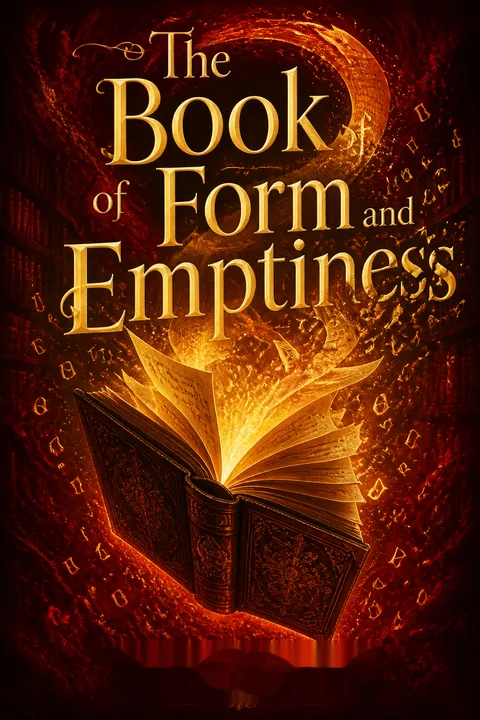
The Book of Form and Emptiness
In the end, Benny and Annabelle learn that life is a balancing act between form and emptiness, holding on and letting go. The voices of things, the stories we tell, and the connections we make are all part of being human. The Book, as narrator and companion, reminds us that every life is a story, every object a witness, and every act of attention a form of love. Healing comes not from perfection, but from acceptance, compassion, and the willingness to listen—to ourselves, to others, and to the world. The story ends, but the conversation continues, in the space between form and emptiness.
Analysis
Ruth Ozeki's The Book of Form and Emptiness is a profound meditation on grief, madness, creativity, and the search for meaning in a world overflowing with noise—literal, emotional, and material. Through the story of Benny and Annabelle Oh, Ozeki explores how loss can unmoor us, how the voices of things (and the stories we tell about them) can both haunt and heal. The novel's metafictional structure, with the Book as narrator, invites readers to question the boundaries between fiction and reality, sanity and madness, self and other. Ozeki's animist vision—where objects speak and books have agency—challenges Western notions of materialism and individualism, offering instead a Buddhist-inflected understanding of interconnectedness, impermanence, and compassion. The novel is also a critique of consumer culture, the medicalization of difference, and the ways in which society fails the vulnerable. Yet, for all its darkness, the book is ultimately hopeful: it affirms the possibility of healing through attention, community, and the willingness to listen—to ourselves, to others, and to the world. The lesson is clear: life is a balancing act between form and emptiness, holding on and letting go, and the stories we tell—however messy, broken, or unfinished—are what make us human.
Review Summary
The Book of Form and Emptiness by Ruth Ozeki tells the story of Benny Oh, a teenager who begins hearing voices from inanimate objects after his father's death, while his mother Annabelle becomes a compulsive hoarder. The novel features an unconventional narrator—the Book itself—which interacts with Benny throughout. Reviewers praised its philosophical depth, compassionate portrayal of grief and mental health, and beautiful prose, though some found it overlong and overly didactic. The novel won the Women's Prize for Fiction 2022, with many calling it inventive and emotionally resonant, while others felt it didn't quite connect.
People Also Read









Characters
Benny Oh
Benny is a mixed-race teenager whose life is upended by the sudden death of his father, Kenji. Gifted—or cursed—with the ability to hear the voices of things, Benny is both isolated and uniquely attuned to the world's suffering. His journey is one of grief, madness, and the search for meaning. Benny's relationship with his mother, Annabelle, is strained by mutual pain and misunderstanding, but also marked by deep love. Through encounters with the Aleph, the Bottleman, and the Book itself, Benny learns to accept his difference, find his voice, and take responsibility for his life. His psychological arc moves from confusion and despair to self-acceptance and hope, embodying the struggle to be seen and heard in a noisy, indifferent world.
Annabelle Oh
Annabelle is a former librarian-in-training whose dreams are derailed by early motherhood, the death of her husband, and the demands of survival. Her grief manifests as hoarding, inertia, and a desperate attachment to things. Annabelle's relationship with Benny is fraught with guilt, love, and the fear of losing him. She seeks solace in self-help books, especially "Tidy Magic," and in the rituals of tidying, but finds true healing only through connection—with friends, community, and her own capacity for change. Annabelle's psychological journey is one of letting go—of things, guilt, and the illusion of control—so she can make space for love, forgiveness, and new beginnings.
Kenji Oh
Kenji, Benny's father, is a Japanese-Korean jazz musician whose tragic death haunts the family. Charismatic, creative, and troubled by addiction, Kenji represents both the joy and pain of life. His presence lingers in memories, music, and the objects he leaves behind. For Benny, Kenji is both an ideal and a wound, a source of longing and inspiration. For Annabelle, he is the lost partner, the one who made life bearable and meaningful. Kenji's absence is the catalyst for the family's unraveling, but his memory also becomes a source of healing and closure.
The Book
The Book is both a literal object and a metafictional narrator, chronicling Benny's life and addressing the reader directly. It is self-aware, envious of human experience, and deeply invested in Benny's story. The Book blurs the line between fiction and reality, raising questions about agency, destiny, and the power of stories. It is both a comfort and a challenge, urging Benny to listen, remember, and take responsibility for his life. The Book's psychological role is that of a guide, a mirror, and a sometimes unreliable friend, embodying the tension between form and emptiness, order and chaos.
The Aleph (Alice)
The Aleph is a gender-fluid, streetwise artist who becomes Benny's friend, guide, and sometimes love interest. She is a survivor of trauma, addiction, and the psychiatric system, and her art is both subversive and healing. The Aleph introduces Benny to new ways of seeing, thinking, and resisting, challenging him to embrace his difference and question authority. Her relationship with Benny is intense, marked by moments of connection, misunderstanding, and mutual care. The Aleph's psychological arc is one of survival, creativity, and the ongoing struggle to find a place in a world that often rejects the mad, the queer, and the broken.
The Bottleman (Slavoj)
The Bottleman is a Slovenian poet and philosopher who becomes a mentor to Benny and the Aleph. Wise, eccentric, and haunted by his own losses, the Bottleman teaches Benny that hearing voices is not necessarily madness, but a form of creativity and sensitivity. His epic poem, "Earth," is a testament to the power of stories to hold suffering and beauty. The Bottleman's psychological role is that of the wise fool, the outsider who sees more clearly than those inside the system. He embodies resilience, compassion, and the belief that every life, no matter how broken, has value and meaning.
Dr. Melanie Stack
Dr. Melanie is Benny's psychiatrist, earnest and diligent but constrained by the medical model and institutional pressures. She wants to help Benny and Annabelle, but often misunderstands or pathologizes their experiences. Her relationship with Benny is marked by both care and frustration, as she struggles to reconcile his creativity with her training. Dr. Melanie's psychological arc is one of gradual humility and openness, as she learns to listen more deeply and question her own assumptions.
Cory Johnson
Cory is the children's librarian who becomes a friend to Annabelle and a quiet hero in the story. She is practical, compassionate, and skilled at bringing people together. Cory's role is to facilitate connection—between Annabelle and the community, between Benny and the world of books, and among the motley crew who help clear the house. Her psychological strength lies in her ability to listen, empathize, and act without judgment.
No-Good Wong
No-Good is the son of Annabelle's landlady, Mrs. Wong, and serves as an antagonist in the story. He is driven by greed, resentment, and a sense of powerlessness, seeking to evict Annabelle and profit from the sale of the house. His actions force Annabelle to confront her situation and mobilize her community. No-Good's psychological role is that of the scapegoat and the embodiment of social forces that threaten the vulnerable.
Aikon (Ai Konishi)
Aikon is the Japanese Zen nun and author of "Tidy Magic," the self-help book that inspires Annabelle. Wise, compassionate, and pragmatic, Aikon's teachings offer a path through suffering by embracing impermanence, letting go, and finding joy in small acts of care. Her presence in the story is both literal and symbolic, representing the possibility of transformation through attention, compassion, and the willingness to change.
Plot Devices
The Book as Narrator
The Book is not just a passive object but an active, self-aware narrator, addressing both Benny and the reader. This device allows for shifts in perspective, direct commentary, and the blurring of boundaries between story and life. The Book's voice is playful, wise, and sometimes unreliable, raising questions about agency, destiny, and the power of stories to shape reality. The metafictional structure invites the reader to participate in meaning-making, emphasizing the interconnectedness of all things.
Polyphony and Interconnectedness
The novel is structured as a polyphonic tapestry, with multiple narrators, timelines, and perspectives. The voices of things, people, and books intermingle, creating a sense of interconnectedness and complexity. This device reflects the novel's central themes: the porous boundaries between self and other, sanity and madness, form and emptiness. The structure is nonlinear, recursive, and open-ended, mirroring the chaos and beauty of life itself.
Magical Realism and Animism
The world of the novel is infused with magical realism and animism. Objects have voices, books have agency, and the boundaries between the material and the spiritual are fluid. This device allows for the exploration of trauma, creativity, and healing in ways that transcend the limits of realism. The magical elements are not escapist, but deeply grounded in the characters' psychological realities, offering both challenge and comfort.
The Library and the Bindery
The public library is both a literal and symbolic space—a sanctuary for the lost, a labyrinth of stories, and the site of Benny's visionary unbinding. The Bindery, at the heart of the library, is where books are born and unbound, where the boundaries between self and world dissolve. This device serves as a metaphor for healing, creativity, and the ongoing work of making meaning from chaos.
Letters, Notes, and Found Objects
The novel is rich with letters, notes, and found objects—fan mail, fortune cookie slips, snow globes, and more. These fragments serve as plot devices to connect characters, reveal backstory, and advance the narrative. They embody the novel's themes of communication, misunderstanding, and the search for meaning in a noisy world.
Foreshadowing and Recursion
The narrative is marked by foreshadowing, echoes, and recursive patterns. Events in the past reverberate in the present; stories within stories mirror the characters' journeys. This device creates a sense of inevitability and possibility, inviting the reader to see connections and patterns that the characters themselves may miss.
Download PDF
Download EPUB
.epub digital book format is ideal for reading ebooks on phones, tablets, and e-readers.








































