
Plot Summary
Snails and Rebellion
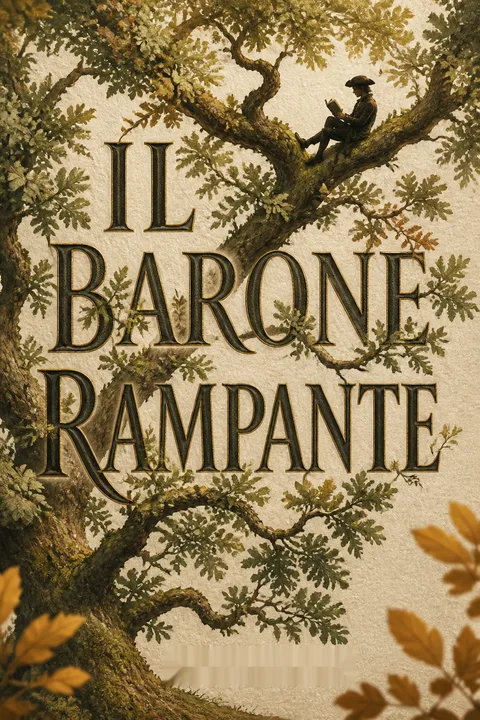
In the noble Piovasco di Rondò household, a simple act of defiance changes everything. Young Cosimo, refusing to eat his sister Battista's grotesque snail dish, is punished by his father. The family's rigid traditions, eccentricities, and underlying tensions come to a head. Cosimo, feeling misunderstood and stifled, climbs into the trees outside their home and declares he will never come down. This impulsive act is more than childish stubbornness—it is a break from the suffocating expectations of his aristocratic family and the world below. His younger brother Biagio, both awed and saddened, watches as Cosimo's rebellion becomes a lifelong vow, setting the stage for a life lived above the ground, in pursuit of freedom and authenticity.
Into the Trees Forever
Cosimo's first days in the trees are filled with both exhilaration and hardship. He explores the interconnected branches, discovering a new perspective on the world and a sense of liberation. The trees become his kingdom, offering both sanctuary and challenge. He learns to move from tree to tree, improvising tools and shelters, and begins to interact with the people below in new ways. His family, at first expecting his return, gradually realizes the seriousness of his vow. Cosimo's resolve hardens, and he adapts to the practicalities of living above ground—finding food, shelter, and even companionship among the birds and animals. The trees become not just a refuge, but a stage for his growing independence and curiosity.
The Girl on the Swing
While exploring the neighboring Ondariva estate, Cosimo encounters a girl his own age, Violante (Viola), swinging beneath the magnolia trees. Their playful, competitive banter quickly turns into a battle of wits and pride. Viola, spirited and unpredictable, challenges Cosimo's sense of self and belonging. Their encounter is charged with rivalry, attraction, and the promise of future entanglements. Viola's presence awakens in Cosimo a longing for connection and recognition, even as he clings to his new identity as a denizen of the trees. This meeting marks the beginning of a lifelong, tumultuous relationship that will shape both their destinies.
Fruit Thieves and Friendship
As Cosimo explores further, he encounters a band of ragged fruit thieves—children who live on the margins of society. Initially an outsider, Cosimo earns their respect through his agility and daring, eventually becoming their leader and friend. He learns the unwritten rules of their world, sharing in their adventures and mischief. Through these friendships, Cosimo discovers a sense of belonging and camaraderie that contrasts sharply with the rigid hierarchy of his own family. The trees become a space of equality and possibility, where social status is irrelevant and survival depends on wit and courage.
Viola and the Band
Cosimo learns that Viola, the girl on the swing, is also known as Sinforosa among the fruit thieves. She is both a noble's daughter and a secret ally of the outcasts, leading raids and orchestrating escapes. Cosimo is captivated by her complexity and independence, but also frustrated by her elusiveness. Their relationship is marked by rivalry, jealousy, and moments of deep connection. Viola's departure for boarding school leaves Cosimo bereft, but her memory continues to haunt him, fueling his longing and shaping his ideals of love and freedom.
The Wildcat's Challenge
Alone in the woods, Cosimo faces a wildcat—a symbol of the untamed world he has chosen. In a desperate struggle, he kills the beast, earning both wounds and a new sense of self-reliance. The wildcat's pelt becomes his signature cap, a badge of his victory over nature and his commitment to his chosen life. This episode marks a turning point: Cosimo is no longer a boy playing at rebellion, but a young man forging his own path, tested by danger and isolation. The wildcat's challenge cements his identity as the baron in the trees.
Family, Outcasts, and Survival
As months pass, Cosimo's life in the trees becomes more sophisticated. He builds shelters, invents tools, and forms alliances with peasants, outcasts, and even his eccentric uncle, the Cavalier. His family's attempts to lure him down—through punishment, persuasion, and even glue traps—fail. Cosimo's relationship with his brother Biagio remains close, with Biagio acting as a bridge between the world above and below. The trees become a microcosm of society, where Cosimo experiments with new forms of community, justice, and self-sufficiency.
The World Above Ground
Over time, Cosimo develops a unique philosophy, blending Enlightenment ideals with the practical wisdom of survival. He becomes a student of nature, a reader of books, and a helper to those in need. His daily routines—hunting, washing, building, and even tending to his bodily needs—are adapted to his arboreal existence. He befriends a dachshund, Ottimo Massimo, who becomes his loyal companion. Cosimo's life is both solitary and deeply connected to the rhythms of the land and the people who inhabit it. His reputation grows, and he becomes a local legend, both admired and mocked.
The Brigand's Library
Cosimo's world is shaken by his encounter with Gian dei Brughi, a notorious brigand who becomes obsessed with reading. Cosimo supplies him with books, and their unlikely friendship flourishes. Through Gian, Cosimo discovers the transformative power of literature and the complexities of human nature. The brigand's eventual capture and execution mark the end of an era, but his passion for books leaves a lasting imprint on Cosimo. This chapter explores themes of redemption, the hunger for knowledge, and the blurred lines between outlaw and philosopher.
Lessons in the Canopy
Cosimo's thirst for knowledge leads him to correspond with philosophers and scientists across Europe. He becomes both student and teacher, sharing ideas with his old tutor, the Abbé, and the people of Ombrosa. His hanging library and makeshift classrooms in the trees symbolize his commitment to enlightenment and progress. The arrest and exile of the Abbé, accused of heresy, is a blow to Cosimo, but he continues his intellectual pursuits, driven by curiosity and a sense of duty to improve the world around him.
The Dog Named Ottimo Massimo
Ottimo Massimo, the dachshund, becomes Cosimo's constant companion, sharing in his hunts, adventures, and moments of solitude. The dog's loyalty and intelligence provide comfort and connection, especially as Cosimo faces the challenges of aging and loss. Ottimo Massimo's presence is a reminder of the enduring bonds between humans and animals, and of the simple joys that persist even in a life of self-imposed exile. The dog's eventual disappearance marks the end of Cosimo's last uncomplicated friendship.
Fires, Floods, and Leadership
When Ombrosa is threatened by fire and flood, Cosimo emerges as a leader, organizing the townspeople to defend their land. His knowledge of the trees and the landscape proves invaluable, and he inspires cooperation and solidarity among people of all classes. These crises reveal Cosimo's capacity for leadership and his commitment to the common good. He becomes a symbol of resilience and ingenuity, earning the respect of those who once doubted him. The experience also deepens his understanding of community and the responsibilities of power.
The Pirate's Secret
Cosimo uncovers a secret: his uncle, the Cavalier, has been aiding pirates, driven by nostalgia and longing for a lost love. The revelation leads to a dramatic confrontation, ending in the Cavalier's death at sea. Cosimo is torn between loyalty to family and the demands of justice. The episode exposes the complexities of human motivation and the pain of betrayal. The loss of his uncle and, soon after, his father, leaves Cosimo as the new Baron, but the title means little to him. He remains committed to his life in the trees, even as the world below changes.
Love and Exile
Cosimo's encounters with love are marked by longing and disappointment. His brief, passionate affair with Ursula, a Spanish exile, ends with her departure. The colony of Spanish nobles, living in the trees of Olivabassa, offers Cosimo a glimpse of community and shared purpose, but their eventual return to Spain leaves him alone once more. These experiences deepen Cosimo's understanding of love as both a source of joy and pain, and reinforce his commitment to his chosen path, even as it isolates him from others.
Ursula and the Spaniards
Cosimo's relationship with Ursula is tender and transformative. Together, they create a world of intimacy and invention among the exiled Spaniards. Cosimo teaches them the art of living in the trees, and Ursula becomes his confidante and lover. Their happiness is short-lived, as political changes allow the exiles to return home. Ursula's departure is bittersweet, leaving Cosimo with memories of love and the knowledge that true connection is always fleeting. The episode underscores the tension between belonging and independence, and the sacrifices required by both.
Return of Viola
Years after their childhood encounter, Viola returns to Ombrosa, now a widow and more enigmatic than ever. Her arrival rekindles Cosimo's passion, and their love affair is intense, tumultuous, and ultimately destructive. Viola's independence and capriciousness clash with Cosimo's ideals, leading to jealousy, misunderstandings, and heartbreak. Their relationship is a microcosm of the struggle between freedom and attachment, desire and pride. Viola's final departure leaves Cosimo devastated, marking the end of his last great love and the beginning of his decline.
Love's Triumph and Turmoil
Cosimo and Viola's love is both ecstatic and agonizing. Their union is marked by moments of perfect harmony and violent quarrels, by mutual admiration and deep wounds. Viola's need for absolute devotion and Cosimo's insistence on autonomy create a cycle of attraction and repulsion. Their love is tested by rivals, misunderstandings, and the impossibility of reconciling their differences. When Viola leaves for good, Cosimo is plunged into despair, his spirit broken by the loss of the only person who truly matched him. The trees, once a symbol of freedom, become a prison of memory and regret.
Revolution in Ombrosa
The French Revolution and its aftermath reach Ombrosa, bringing chaos, hope, and disappointment. Cosimo becomes a leader in the local resistance, organizing the townspeople and advocating for justice and equality. He witnesses the rise and fall of ideals, the corruption of power, and the persistence of human folly. The revolution changes the landscape of Ombrosa, but Cosimo remains an outsider, committed to his own vision of a better world. As the years pass, he grows old, watching the world change from his perch in the trees, both participant and observer.
War and the Passing World
As Cosimo ages, the world around him transforms. Wars, political upheavals, and the relentless march of progress erode the forests and the way of life he has known. Friends and family die or move on, and Cosimo becomes a living legend, a relic of a vanished world. In his final days, he is cared for by the people of Ombrosa, who have come to respect and love him. When death approaches, Cosimo refuses to come down, instead leaping from the trees to catch the anchor of a passing balloon, vanishing into the sky. His life, lived between earth and heaven, becomes a myth—a testament to the power of imagination, freedom, and the courage to live by one's own truth.
Analysis
Italo Calvino's The Baron in the Trees is a luminous meditation on freedom, individuality, and the costs of living authentically. Through Cosimo's lifelong refusal to descend from the trees, Calvino explores the tension between belonging and independence, the allure and pain of love, and the challenge of remaining true to oneself in a world that demands compromise. The novel's episodic structure, rich symbolism, and playful yet profound tone invite readers to reflect on their own choices and the meaning of a life well-lived. In an age of conformity and distraction, Cosimo's story is both a celebration of the imagination and a cautionary tale about the loneliness that can accompany radical autonomy. Ultimately, Calvino suggests that the pursuit of one's own truth—however quixotic or impractical—is a noble, if bittersweet, endeavor. The trees, with their endless branches and shifting perspectives, become a metaphor for the complexity and beauty of existence, and Cosimo's final ascent into the sky is a fitting tribute to a life spent reaching for the unattainable.
Review Summary
The Baron in the Trees is a whimsical tale of rebellion and individualism. Readers praise Calvino's imaginative storytelling, following Cosimo's life in the treetops. The novel explores themes of freedom, social conventions, and the role of intellectuals. Many find it charming and thought-provoking, though some criticize the later chapters. The book's fantastical elements and philosophical undertones resonate with readers, who appreciate Calvino's unique perspective on society and nature. Overall, it's considered an enjoyable and captivating read, despite occasional pacing issues.
People Also Read



Characters
Cosimo Piovasco di Rondò
Cosimo is the heart of the story—a boy who, in a moment of rebellion, climbs into the trees and never comes down. His journey from impulsive child to wise, eccentric old man is marked by a relentless pursuit of freedom, authenticity, and meaning. Cosimo's relationships—with his family, with Viola, with outcasts and brigands—reveal his deep need for connection and his fear of losing himself in the world below. He is both solitary and communal, a lover of books and nature, a leader and an outsider. Cosimo's psychological complexity lies in his refusal to compromise, his longing for love, and his acceptance of the pain that comes with true independence. His life is a metaphor for the struggle between conformity and individuality, and his legacy is one of courage, curiosity, and compassion.
Biagio Piovasco di Rondò
Biagio is Cosimo's younger brother and the story's gentle, reflective narrator. He serves as a bridge between Cosimo's world in the trees and the family's life on the ground. Biagio admires Cosimo's courage and originality, but also feels the pain of separation and the burden of normalcy. His loyalty, empathy, and humility make him an ideal observer, able to appreciate both the beauty and the cost of Cosimo's choices. Biagio's psychological journey is one of acceptance—of his brother's difference, of his own limitations, and of the inevitability of change and loss.
Viola (Violante, Sinforosa)
Viola is a force of nature—brilliant, capricious, and fiercely independent. She is both Cosimo's first love and his greatest challenge, embodying the contradictions of desire and freedom. Viola's double life as a noble's daughter and a leader of outcasts mirrors Cosimo's own duality. Her psychological complexity lies in her refusal to be possessed, her need for absolute devotion, and her capacity for both tenderness and cruelty. Viola's relationship with Cosimo is a dance of attraction and repulsion, shaping both their destinies and leaving them forever marked by love and loss.
Battista Piovasco di Rondò
Battista is Cosimo's older sister, known for her bizarre culinary experiments and her reclusive, almost monastic lifestyle. Her creativity is tinged with cruelty, and her isolation mirrors Cosimo's in a darker, more destructive form. Battista's psychological makeup is shaped by repression, resentment, and a need for control. Her relationship with Cosimo is antagonistic but also rooted in a shared sense of alienation from the family and the world.
Baron Arminio Piovasco di Rondò
Cosimo's father is obsessed with tradition, status, and the restoration of the family's ducal title. His inability to adapt to changing times and his disappointment in Cosimo's rebellion create a gulf between father and son. Arminio's psychological rigidity masks a deep vulnerability and a longing for recognition. His relationship with Cosimo is marked by conflict, misunderstanding, and, ultimately, a grudging respect for his son's integrity.
The Generalessa (Corradina von Kurtewitz)
Cosimo's mother is a woman of action, shaped by her upbringing in military camps. Her love is expressed through discipline, organization, and a pragmatic approach to life's challenges. The Generalessa's psychological strength lies in her ability to accept Cosimo's difference and to support him in her own way. Her relationship with Cosimo is less emotional than practical, but deeply loyal and accepting.
Cavalier Enea Silvio Carrega
The Cavalier is a mysterious figure—an illegitimate brother, a failed lawyer, and a man haunted by nostalgia and lost love. His secret dealings with pirates and his ultimate betrayal reveal a deep sense of alienation and longing for belonging. The Cavalier's psychological complexity is rooted in his inability to reconcile his past with his present, and his tragic end underscores the dangers of living between worlds.
Abbé Fauchelefleur
The Abbé is Cosimo's childhood tutor, a man of learning and doubt. His Jansenist rigor is tempered by moments of apathy and resignation. The Abbé's psychological journey mirrors Cosimo's intellectual quest, but he is ultimately undone by his inability to reconcile faith and reason. His relationship with Cosimo is one of mutual respect and affection, but also of missed opportunities and unfulfilled potential.
Gian dei Brughi
Gian is a notorious outlaw whose passion for reading transforms him from a feared criminal into a tragic, almost comic figure. His friendship with Cosimo is based on a shared love of books and a longing for redemption. Gian's psychological complexity lies in his capacity for change, his hunger for meaning, and his ultimate inability to escape his past.
Ottimo Massimo
Ottimo Massimo, the dachshund, is more than a pet—he is Cosimo's alter ego, sharing in his adventures and embodying the virtues of loyalty, courage, and resilience. The dog's presence provides comfort and continuity in a life marked by change and loss. Ottimo Massimo's eventual disappearance is a poignant reminder of the impermanence of all things.
Plot Devices
Arboreal Setting and Perspective
The central device of the novel is Cosimo's life in the trees, which serves as both a literal setting and a metaphor for independence, perspective, and the search for meaning. The trees allow Cosimo to observe the world from above, to remain connected yet apart, and to experiment with new forms of living. This device enables Calvino to explore themes of freedom, isolation, and the tension between individuality and community.
First-Person Narration
The story is told through the eyes of Biagio, Cosimo's younger brother. This narrative choice creates both intimacy and distance, allowing readers to experience Cosimo's world through the lens of love, admiration, and occasional bewilderment. Biagio's perspective provides context, commentary, and emotional depth, while also highlighting the limits of understanding and the inevitability of loss.
Episodic Structure
The novel unfolds as a series of episodes, each focusing on a pivotal event, relationship, or challenge in Cosimo's life. This structure mirrors the unpredictability and variety of life in the trees, and allows for a rich exploration of character, theme, and setting. The episodic form also reflects the fragmentary nature of memory and the impossibility of capturing a life in its entirety.
Foreshadowing and Recurrence
Calvino uses recurring motifs—snails, swings, wildcats, books, and balloons—to foreshadow future events and to create a sense of continuity and resonance. These motifs serve as touchstones for Cosimo's development and as symbols of the novel's central themes. The recurrence of certain images and situations underscores the cyclical nature of life and the persistence of longing and loss.
Allegory and Satire
The novel uses Cosimo's arboreal existence as an allegory for the human condition, exploring questions of freedom, conformity, love, and the search for meaning. Satirical elements—such as the absurdities of family life, the follies of revolution, and the pretensions of nobility—provide both humor and critique, inviting readers to question their own assumptions and values.
About the Author
Other books by Italo Calvino


Download PDF
Download EPUB
.epub digital book format is ideal for reading ebooks on phones, tablets, and e-readers.








































