

Summary Temporarily Unavailable
This summary is temporarily unavailable and is currently being updated. You can still explore the FAQs and other metadata below.
Key Takeaways
1. Acknowledge the Pervasive Damage of Assholes
It doesn’t matter whether the assholes around you are getting ahead or (more likely) screwing up their lives, careers, and companies. They pose a danger to you and others.
Assholes are everywhere. The author, known as "The Asshole Guy," receives thousands of emails daily from people dealing with jerks in every conceivable setting—from hospitals and churches to Silicon Valley boards and even family gatherings. This widespread problem highlights a universal human experience: encountering individuals who leave others feeling oppressed, demeaned, disrespected, or de-energized. The book aims to provide practical strategies for navigating these challenging interactions.
High cost of assholes. Research overwhelmingly demonstrates the severe negative impact of assholes, collectively termed the "Total Cost of Assholes" (TCA). Their behavior undermines performance, creativity, and willingness to cooperate, leading to increased waste, theft, absenteeism, and surliness. For instance, studies show rude encounters can impair doctors' ability to treat sick babies and lead to more errors.
Contagious negativity. Beyond direct harm, asshole behavior is highly contagious, spreading like a disease. Working with jerks increases the likelihood of becoming one yourself, creating vicious cycles of hostility. The psychological damage is profound, including anxiety, depression, sleep problems, and even increased risk of heart disease and premature death for those working under abusive bosses.
2. Assess the Severity of Your Asshole Problem
If anybody tells you that they have a step-by-step, complete, and surefire cure for all your asshole problems, they are lying to themselves and to you.
Avoid snap judgments. When confronted with a potential asshole, resist the urge for immediate conclusions. Nobel Prize winner Daniel Kahneman advises slowing down, studying the situation, considering different paths, and consulting trusted individuals before acting. This deliberate assessment helps avoid misdiagnoses and inappropriate responses.
Six diagnostic questions. To gauge the problem's severity, ask yourself (and trusted allies) these questions:
- Do you feel treated like dirt? (The core indicator)
- How long will the ugliness persist? (Duration and aftershocks)
- Temporary or certified asshole? (Occasional lapse vs. persistent pattern)
- Individual or systemic disease? (Isolated jerk vs. widespread toxicity)
- Power dynamic? (Your power relative to the asshole's)
- How much are you really suffering? (The bottom line of personal impact)
Tailor your strategy. Not all asshole problems are equal, and a one-size-fits-all solution is ineffective. The answers to these questions determine how diligently and drastically you need to craft and execute a survival strategy. The worse the situation, the more urgent and comprehensive your protective measures must be.
3. Prioritize Making a Clean Getaway or Reducing Exposure
I BELIEVE in quitting.
Quitting is often winning. Legendary football coach Vince Lombardi was wrong; winners do quit, especially when faced with toxic environments. Escaping a certified jerk or a "Jerk City" workplace can provide immense relief and prevent further damage. Examples include a convenience store cashier who quit a degrading contest and an IT employee who suffered for eight years before leaving.
Beware "Asshole Blindness." Many people endure unnecessary abuse due to denial, habituation, and the "sunk cost fallacy"—believing they've invested too much to leave. This "Asshole Blindness" is fueled by "Ten Lies That People Tell Themselves," such as "It's really not that bad" or "Things are going to get much better soon." Recognizing these delusions is the first step to a smart getaway.
Reduce exposure if escape isn't possible. When you can't leave, limit the frequency, duration, and intensity of abuse. Strategies include:
- Keep your distance: Physical separation (even a few feet) reduces communication and infection risk.
- Ducking strategies: Avoiding encounters by staying out of the office or arriving late/leaving early.
- Slow the rhythm: Delaying responses to deny jerks immediate gratification.
- Hide in plain sight: Blending into the background to avoid being noticed by tormentors.
- Human shields: Finding bosses or colleagues who absorb abuse on your behalf.
- Safety zones: Creating physical or mental "backstage regions" for recovery.
- Early warning systems: Collaborating with others to alert each other to incoming jerks.
4. Master Mind Tricks to Protect Your Soul
Reframing (or “reappraising”) disturbing facts or distressing experiences in a more positive light—while not a cure-all—can provide relief.
Reframing your reality. When escape or avoidance isn't possible, changing how you think about assholes can be a powerful defense. Cognitive behavioral therapy principles suggest that altering your interpretation of events can reduce emotional distress and foster more constructive responses. West Point plebe Becky Margiotta, for instance, reframed relentless hazing as "incredibly entertaining," diminishing its personal sting.
Protective mental strategies. Several "mind tricks" can act as a flak jacket against incoming abuse:
- You aren't to blame: Depersonalize the abuse; it's their problem, not yours.
- Downplay the threat: Convince yourself it's "not that bad" or you've faced worse.
- Focus on the silver lining: Find positive takeaways, like lessons learned or small moments of praise.
- Rise above it: Adopt the motto "When they go low, we go high," maintaining civility and pride.
- Develop sympathy for the devil: Forgive them in your heart, seeing them as "porcupines with hearts of gold."
- Focus on the funny side: Use humor to dampen the damage and absurdity of the situation.
- Look back from the future: Remind yourself "This too shall pass," reducing immediate worry.
Emotional detachment. This "frankly, asshole, I don't give a damn" strategy involves tuning out. It ranges from:
- Level 1 (Downtime): Mentally disengaging from work during off-hours.
- Level 2 (Worst Times): Going through the motions, giving minimal self, and thinking of better things during direct encounters.
- Level 3 (Most/All the Time): Giving the bare minimum effort and tuning out completely in highly toxic, pervasive environments.
5. Strategically Fight Back When Necessary
Doing battle with assholes is risky business.
Preparation is paramount. Fighting back is inherently risky, as jerks can become vindictive. Before engaging, assess three critical resources:
- Power: Your influence relative to the asshole's. Overconfidence is a major pitfall.
- Documentation: Ironclad evidence (emails, notes, recordings) to legitimize your claims and avoid "he said, she said" scenarios.
- Allies: Others who will join you, providing strength, encouragement, and credibility. Studies show collective action is far more effective than fighting alone.
Confrontation styles. Choose your approach carefully:
- Calm, rational, candid: Effective with clueless or temporary assholes, or when you have power/trust. It works best when justified and motivated by the greater good, as Clementine Churchill's letter to Winston demonstrated.
- Aggressive confrontation: Useful for Machiavellian personalities who interpret kindness as weakness. "Porcupine power"—a hard stare, raised voice, or even a slammed door—can deter those who only understand force.
- Passive-aggressive confrontation: Subtle tactics like humor or deliberate slowness can deliver a message without direct escalation, as seen with the movie theater example.
Using the system. In organizations with a "no asshole rule," the system can be leveraged:
- Transparency: Shining a light on bad behavior makes it harder for jerks to operate.
- Nip it in the bud: Address bad behavior quickly, as negative actions spread rapidly and are harder to stop later.
- Fair enforcement: Be tough on powerful jerks to maintain credibility and protect employees, as Bill Carmody did by firing a demanding client.
6. Beware the Treacherous Path of Revenge
A man that studieth revenge, keeps his own wounds green, which otherwise would heal, and do well.
The allure of payback. The desire for revenge is a powerful, primal urge, often fueled by righteous anger and a need to restore dignity. Successful payback can be well-targeted, well-timed, and well-tempered, aiming to end abuse rather than just inflict pain. Examples include the radio producer who used Ex-Lax chocolates or the airline employee who rerouted luggage.
Revenge is often useless. Despite its appeal, revenge frequently fails to change the perpetrator's behavior. Many efforts are poorly executed, leading to no real impact on the asshole. The satisfaction derived from petty, anonymous acts often doesn't justify the effort or the potential negative consequences.
The dangerous cycle. Ruminating about revenge can prolong negative emotions like anxiety and depression, preventing healing. Psychologist Kevin Carlsmith's research suggests that those who don't get revenge actually experience weaker and shorter-lasting negative emotions, as they are "forced, in a sense, to move on." Revenge can also ignite a vicious cycle of attack and counterattack, where both sides feel justified, escalating conflict and harming everyone involved.
7. Look in the Mirror: Are You Part of the Problem?
Every group has an asshole. If you look around and don’t see one, that means it is you.
The blind spot of self-perception. It's easy to label others as assholes, but far harder to recognize when you are one. Over 50% of Americans report experiencing or witnessing bullying, yet less than 1% admit to doing it, highlighting a pervasive self-awareness gap. We tend to view ourselves through rose-colored glasses, underestimating our flaws and their impact on others.
The Dunning-Kruger effect. Poor performers, especially in interpersonal skills, are particularly prone to overestimating their talents. If you constantly encounter jerks, it's crucial to consider if your own behavior is contributing to the problem or provoking others to treat you poorly. Unkind responses can easily ignite a cycle of hostility.
Seek candid feedback. True self-awareness comes from accepting how others see you, even if it hurts. Cultivate "truth-tellers" in your life—spouses, partners, trusted friends, or mentors—who will provide honest, unvarnished feedback. When receiving criticism, thank them, avoid arguing, and resist any urge for retribution. This painful truth is essential for personal growth and preventing you from becoming the very thing you despise.
8. Understand Your "Achilles' Heels" for Bad Behavior
Genes do not eliminate the need for hard work. They clarify it. They tell us what to work hard on.
Identify your triggers. Certain factors can cause even the most civilized people to act like jerks. Recognizing your personal "Achilles' heels" is crucial for preventing your inner asshole from rearing its ugly head. These risk factors include:
- Being surrounded by other assholes (contagion effect).
- Wielding power over others (power poisoning).
- Being rich or at the top of the pecking order.
- Working excessively hard and feeling like a martyr.
- Being a "Rule Nazi" or overly cynical.
- Lack of sleep, being rushed, or constant distractions.
- Smartphone addiction, leading to inattention and rudeness.
- Gender dynamics (e.g., men feeling threatened by female bosses).
Power poisoning. Wielding power, or even just feeling powerful, can diminish empathy, increase exploitation, and lead to rudeness and a sense that rules don't apply to you. Studies show wealthy individuals, for example, are more likely to cut off other drivers or ignore pedestrians. Counteracting this requires humility, deferring to less powerful individuals, and practicing gratitude.
Overload and distractions. Being constantly busy, rushed, and distracted by technology can turn anyone into a jerk. Over half of employees admit to uncivil behavior due to overload, claiming "no time to be nice." Reducing meeting times, limiting multitasking, and consciously putting away smartphones can help mitigate this risk, fostering greater civility and presence.
9. Apologize Sincerely When You Err
I said a number of things about Keira which were petty, mean and hurtful. I’m ashamed of myself that I could say such things and I’ve been trying to account for what they say about me.
The power of a good apology. When you've behaved like an asshole, a well-crafted apology can reduce your target's pain, repair relationships, improve your reputation, and foster personal growth. Film director John Carney's apology to Keira Knightley serves as a pitch-perfect example of how to do it right.
Key elements of an effective apology:
- Accept full responsibility: Acknowledge your fault without qualification or blaming the other person's feelings ("I'm sorry if you felt bad").
- Make repairs: Take concrete steps to mend the damage, such as apologizing privately first, then publicly, and praising the offended party.
- Express regret: Clearly state your remorse for your actions.
- Explain (but don't excuse): Offer context for your behavior without justifying it.
- Commit to change: Promise not to repeat the transgression.
Caveats for apologizing. Demanding an apology from an asshole rarely works, as they may genuinely believe you are at fault or offer insincere words. Furthermore, if you find yourself apologizing repeatedly for the same behavior, it signals a lack of genuine change and diminishes the impact of your apologies, turning them into a manipulative "hearts and flowers" ploy.
10. Avoid Being a Toxic Enabler
Toxic enablers make it easier for jerks to do their dirty deeds and to avoid suffering the negative consequences of their destructive behavior.
Fueling the problem. You might not be an asshole yourself, but you can inadvertently fuel asshole problems by acting as a "toxic enabler." These individuals, often "handlers" or "good cops," clean up the messes left by abusive bosses, explaining away their behavior and softening the blows for victims. While providing temporary relief, they ultimately allow the abuse to continue unchecked.
The "good cop/bad cop" dynamic. Toxic enablers often become part of a destructive configuration, where they manage the pain inflicted by an abusive boss, making things "go more smoothly." This prevents the abuser from facing the negative consequences of their actions and shields them from their ugly selves, perpetuating a cycle of pain and lack of accountability.
Spineless leadership. Bosses who make excuses for destructive underlings and tell victims to "toughen up" are classic toxic enablers. By failing to discipline, move, or fire offenders, they signal that abuse is tolerated, eroding trust and allowing the problem to fester. Being part of the solution means actively addressing bad behavior, not just managing its symptoms.
11. Live the "No Asshole Rule" as a Personal Philosophy
No one ever says, when they are on their deathbed, ‘I wish I had been meaner.’
The da Vinci rule. Living the "no asshole rule" is a personal philosophy that shapes your life choices. It means resisting involvement with jerks from the outset, as "it is easier to resist at the beginning than at the end." This proactive approach prevents you from getting entangled in destructive relationships or environments that are hard to escape later due to sunk costs.
Protect others and break cycles. Beyond self-preservation, this philosophy entails protecting others from abuse. Whether through formal policies like Ochsner Health System's "10/5 Way" or informal rituals like the "Attending Asshole of the Week" journal, collective action can create safe havens and prevent the spread of toxicity. It's about breaking the cycle of abuse for future generations.
Time travel for better choices. Harness your capacity for "mental time travel" to guide your daily actions. Imagine yourself on your deathbed, looking back at your life. How do you want to feel about how you treated others and responded to adversity? This perspective can inspire you to act with dignity, respect, and courage in the present, ensuring you feel proud of your choices when you reflect on them later.
Last updated:
Report IssueReview Summary
The Asshole Survival Guide receives mixed reviews (3.52/5). Readers appreciate its practical advice for dealing with difficult people, particularly in workplaces, using research-backed strategies like avoidance, reframing, and mindful confrontation. Many find it depressing yet necessary, noting it emphasizes coping rather than changing toxic environments. Critics argue it places too much burden on victims, offers obvious advice, and could be more concise. Some praise the humor and accessible tone, while others find it repetitive with excessive name-dropping. The book's core message—prioritizing self-preservation and knowing when to escape—resonates with those facing workplace toxicity.
About the Author
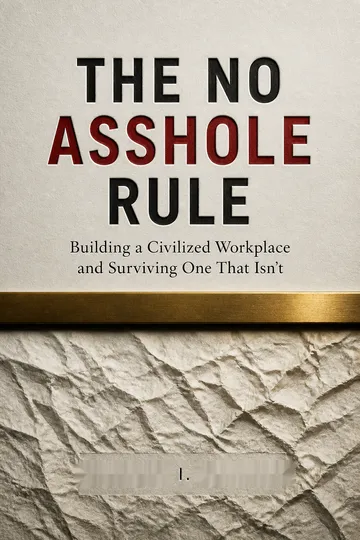
Robert I. Sutton is a Professor of Management Science and Engineering at Stanford University and a courtesy Professor of Organizational Behavior at Stanford Graduate School of Business. His research focuses on innovation, leadership, evidence-based management, and workplace civility. He has authored several influential books including The No Asshole Rule, which won the 2007 Quill Award for best business book. Named a BusinessWeek "B-School All-Star" in 2007, Sutton is recognized as a leading management guru. He co-founded Stanford's d.school and serves as a Fellow at IDEO, bridging academic research with practical organizational solutions.
Other books by Robert I. Sutton


Download PDF
Download EPUB
.epub digital book format is ideal for reading ebooks on phones, tablets, and e-readers.








































