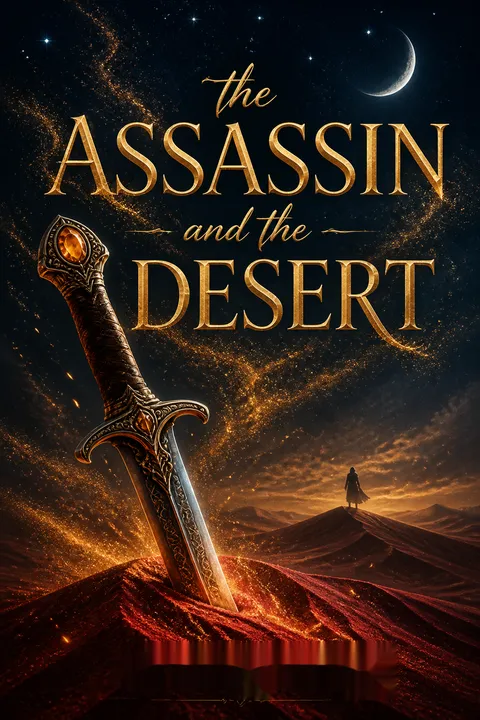

Plot Summary
Crimson Dunes, Silent Shadows
Celaena Sardothien, Adarlan's infamous assassin, is exiled to the Red Desert as punishment for defying her master, Arobynn Hamel. Sent to train with the legendary Silent Assassins, she must earn the respect of their enigmatic leader, the Mute Master, or risk losing her place in the assassin's world. The journey is grueling, the desert unforgiving, and Celaena's wounds—both physical and emotional—are still raw from Arobynn's brutal retribution. As she arrives at the oasis fortress, she is acutely aware that this is not just a test of skill, but of her very identity and resilience. The fortress, alive with the sounds of training and life, is a stark contrast to the silence and discipline demanded within. Celaena steels herself, knowing that obedience and humility are the lessons she must learn if she is to survive and return home.
The Master's Test
Upon arrival, Celaena is brought before the Mute Master, a figure of quiet authority whose reputation precedes him. The meeting is wordless but charged with expectation. Instead of a warm welcome, Celaena is immediately tested—four assassins attack her in a display meant to gauge her abilities and resolve. She dispatches them with skill, but the message is clear: she is not above anyone here. The Master's silence is both a challenge and an invitation to humility. Celaena's pride is bruised, but she recognizes the necessity of proving herself on new terms. She is assigned a roommate, Ansel, a striking and enigmatic girl whose friendliness is as disarming as her wolf-themed armor. The stage is set for a month of trials, both physical and emotional, as Celaena begins her reluctant journey toward discipline.
New Bonds, Old Wounds
As Celaena settles into the fortress, she is forced to share space and time with Ansel, whose warmth and humor contrast sharply with Celaena's guarded nature. Their camaraderie grows, but beneath the surface, both girls carry deep wounds—Ansel's from a tragic past in the Flatlands, Celaena's from Arobynn's recent violence and the guilt of her choices. Training is relentless, and Celaena is frustrated by the lack of direct instruction from the Master. She is forced to run grueling miles in the desert, learning humility and endurance. The fortress is a place of silent observation, where every action is watched and judged. Through shared hardship, Celaena and Ansel begin to trust each other, but the pain of their histories lingers, shaping every interaction and ambition.
Running the Red Desert
The daily runs across the dunes become a crucible for Celaena, testing her limits and stripping away her arrogance. The desert's harshness is matched only by the discipline of the Silent Assassins, who value collective wisdom over individual glory. Celaena's failures humble her, but also forge resilience. She observes the camaraderie among the assassins, noting the absence of Arobynn's cruelty and the presence of genuine mentorship. The attack by Lord Berick's men reveals the ever-present danger and the need for unity. Celaena's participation in the defense, and her willingness to help Ansel on a diplomatic mission, mark a turning point—she is no longer just an outsider, but a part of the fortress's fragile community.
Lessons in Silence
After a reckless escapade involving stolen Asterion horses, Celaena and Ansel face the Master's judgment. Surprisingly, their punishment is lenient, and Celaena is finally granted personal lessons. The Master's teaching is unconventional: she must observe and mimic the movements of animals—snakes, bats, jackrabbits—to learn stealth, patience, and deadly precision. These silent lessons are transformative, forcing Celaena to internalize the values of restraint and observation. Her skills sharpen, but so does her understanding of herself and her place in the world. The Master's approval is hard-won, and Celaena begins to glimpse the possibility of redemption and belonging, even as tensions simmer beneath the surface.
Market of Secrets
Accompanying Ansel to the city of Xandria, Celaena is immersed in a vibrant market teeming with merchants, secrets, and temptations. She encounters a mysterious Spidersilk merchant, whose wares and stories hint at the high cost of ambition and desire. Ansel's secretive dealings with Lord Berick raise suspicions, but Celaena is distracted by the allure of rare goods and the fleeting sense of freedom. The city is a crossroads of cultures and motives, and Celaena senses that not all is as it seems. The seeds of betrayal are sown, even as the bonds of friendship are tested by hidden truths and unspoken fears.
Stolen Horses, Stolen Trust
In a bold and reckless move, Ansel and Celaena steal the prized Asterion horses from Lord Berick, racing across the desert in a breathtaking escape. The exhilaration of the ride is tempered by the realization that their actions have consequences—both for themselves and the fortress. The adventure cements their friendship but also exposes underlying tensions and jealousy. Ansel's ambitions and Celaena's pride collide, leading to a heated argument that leaves both girls wounded. The thrill of freedom is shadowed by the knowledge that trust, once broken, is hard to repair. The desert, once a place of trial, becomes a stage for betrayal and regret.
Night of Stars and Betrayal
The fortress celebrates Midsummer Eve with a silent, moonlit festival. Amidst the dancing and wine, Celaena and Ansel's friendship seems to mend, but undercurrents of envy and longing persist. Celaena's growing connection with Ilias, the Master's son, is complicated by memories of Sam and the impossibility of new love. The night is a bittersweet interlude, filled with laughter and unspoken pain. As dawn approaches, the fragile peace is shattered by a poisoned goblet—Ansel's final act of betrayal. Celaena awakens alone in the desert, exiled and heartbroken, her trust shattered and her purpose uncertain.
Poisoned Wine, Broken Friendship
Drugged and abandoned, Celaena awakens to find herself cast out with only a blank letter of approval and her horse, Kasida. The truth of Ansel's betrayal dawns slowly—her friend has conspired with Lord Berick, orchestrating an attack on the fortress in exchange for an army to reclaim her homeland. The pain of personal betrayal is compounded by the knowledge that the assassins are in mortal danger. Despite her hurt, Celaena's sense of duty prevails. She races back across the desert, determined to warn the fortress and confront the consequences of trust misplaced. The journey is a crucible of resolve, as Celaena chooses action over despair.
The Fortress Falls
Arriving at the fortress, Celaena finds it under siege, the walls breached and bodies strewn across the sands. The chaos of battle is mirrored by the turmoil within—loyalty, guilt, and vengeance collide. She fights her way through the carnage, desperate to reach the Master before Ansel can complete her betrayal. The cost of trust is measured in blood, and the line between friend and foe blurs. The fortress, once a sanctuary, becomes a battlefield where every choice carries the weight of life and death. Celaena's skills and courage are tested as never before, as she faces the ultimate betrayal at the hands of someone she once called friend.
Duel of Betrayal
In a climactic confrontation, Celaena faces Ansel, who stands poised to kill the paralyzed Master. The duel is as much emotional as physical—Ansel's hatred and desperation clash with Celaena's plea for mercy and understanding. Memories of shared pain and lost innocence surface, but the violence is real and immediate. Celaena's training and compassion converge as she disarms Ansel, choosing to spare her life rather than seek vengeance. The act of mercy is both a victory and a loss—Ansel is exiled, her dreams in ruins, and Celaena is left to grapple with the cost of forgiveness. The battle ends, but the wounds remain.
Mercy and Exile
As the fortress mourns its dead and tends its wounded, Celaena is left to reflect on the meaning of mercy and the burden of survival. The Master, recovering from the poison, acknowledges Celaena's strength and the wisdom of her choices. Ansel's fate is sealed—banished, but alive, carrying the weight of her actions and the hope of redemption. Celaena's own scars—physical and emotional—are a testament to the trials she has endured. The bonds of friendship, once broken, are not easily mended, but the possibility of healing lingers. The desert, once a place of exile, becomes a crucible of transformation.
The Master's Voice
In a rare moment, the Mute Master breaks his silence to speak with Celaena. He reveals his knowledge of Ansel's past and his reasons for allowing her to stay, hoping she would find the strength to face her pain. His words are a balm and a challenge—pain can be endured, transformed, or consumed by hate. The Master's wisdom offers Celaena a new perspective on her own suffering and the choices that define her. He entrusts her with a letter of recommendation and a chest of gold, gifts earned through courage and compassion. The conversation is a turning point, marking the end of one journey and the beginning of another.
Gold, Forgiveness, and Farewell
With the Master's blessing and the means to buy her freedom, Celaena prepares to leave the Red Desert. The scars of betrayal and loss remain, but so does the promise of a new future. The fortress, once a place of punishment, has become a crucible of growth and self-discovery. As she rides away, Celaena carries with her not just gold and a letter, but the lessons of silence, mercy, and resilience. The desert wind calls her home, and for the first time, she is unafraid—ready to face whatever awaits in Rifthold, armed with hard-won wisdom and the hope of redemption.
Analysis
Sarah J. Maas's "The Assassin and the Desert" is a masterful exploration of growth through adversity, the cost of ambition, and the redemptive power of mercy. At its heart, the novella is a coming-of-age story set against a backdrop of political intrigue and personal betrayal. Celaena's journey from prideful prodigy to humbled, compassionate warrior is mirrored in her relationships—with the Mute Master, who teaches through silence and example; with Ansel, whose tragic choices force Celaena to confront the limits of loyalty and forgiveness; and with herself, as she learns to endure pain without letting it consume her. The desert setting is both a physical and psychological crucible, stripping away illusions and forcing characters to face their deepest wounds. Maas deftly employs plot devices like exile, silent mentorship, and betrayal to probe questions of identity, agency, and the true meaning of strength. The novella's ultimate lesson is that survival is not just about skill, but about the courage to choose mercy over vengeance, to seek connection over isolation, and to find hope even in the ashes of loss. In a world where everything has a price, "The Assassin and the Desert" reminds us that the most valuable treasures—friendship, forgiveness, and self-knowledge—are earned through struggle and grace.
Review Summary
The Assassin and the Desert receives high praise from readers for its action-packed plot, character development, and emotional depth. Many consider it the best novella in the series, highlighting Celaena's growth and the introduction of compelling new characters. Readers appreciate the complex relationships, especially Celaena's friendship with Ansel, and the unexpected plot twists. Some criticize the pacing and Celaena's arrogance, but overall, fans find the novella engaging and essential to understanding the larger Throne of Glass series.
People Also Read




Characters
Celaena Sardothien
Celaena is a seventeen-year-old assassin, renowned for her deadly skill and infamous reputation. Scarred by her master Arobynn's abuse and her own choices, she arrives in the Red Desert both proud and wounded. Her journey is one of humility, as she is forced to confront her limitations and the consequences of her actions. Celaena's relationships—with Ansel, the Master, and the other assassins—reveal her longing for connection and belonging, even as she struggles with trust and vulnerability. Her psychological complexity is marked by a fierce independence, a deep sense of justice, and a capacity for both violence and mercy. Through trials, betrayal, and forgiveness, Celaena emerges not just as a formidable assassin, but as a young woman learning to define her own path.
Ansel of Briarcliff
Ansel is Celaena's roommate and eventual betrayer, a red-haired warrior with a tragic past. Her charm and humor mask deep wounds—the loss of her family and homeland to a tyrant. Ansel's longing for power and restoration leads her to make a pact with Lord Berick, betraying the Silent Assassins in exchange for an army. Her relationship with Celaena is fraught with jealousy, admiration, and genuine affection, making her betrayal all the more painful. Psychologically, Ansel is torn between hope and hate, her actions shaped by trauma and a desperate need for agency. Her arc is one of tragic ambition, but also of potential redemption, as Celaena's mercy offers her a chance to reclaim her humanity.
The Mute Master
The Mute Master leads the Silent Assassins with quiet authority and profound insight. His vow of silence is both a discipline and a teaching tool, forcing his disciples to learn through observation and introspection. He recognizes Celaena's pain and potential, guiding her through unconventional lessons that emphasize restraint, patience, and self-knowledge. The Master's compassion is evident in his handling of Ansel, whom he allows to stay despite knowing her secrets, hoping she will find healing. When he finally speaks, his words are measured and wise, offering closure and encouragement. He represents the ideal of leadership through empathy and example, shaping Celaena's journey toward maturity.
Arobynn Hamel
Arobynn is the King of the Assassins in Adarlan and Celaena's mentor-turned-tormentor. His punishment of Celaena—both physical and emotional—sets the story in motion, driving her to the Red Desert. Arobynn's influence lingers throughout, shaping Celaena's fears, ambitions, and sense of self-worth. He is a figure of power and cruelty, whose approval Celaena both craves and resents. Psychologically, Arobynn embodies the dangers of authority unchecked by compassion, and his shadow looms over Celaena's every decision. Her eventual resolve to break free from his control is a key aspect of her development.
Ilias
Ilias, the Master's son, is a skilled assassin who embodies the values of the fortress—discipline, humility, and quiet strength. His silent admiration for Celaena offers her a glimpse of acceptance and potential romance, though their connection is ultimately thwarted by circumstance and Celaena's unresolved feelings for Sam. Ilias's loyalty to his father and the assassins is unwavering, and his near-fatal wounding during Ansel's betrayal underscores the cost of trust. He represents the possibility of a life defined by community and purpose, contrasting with Celaena's isolation.
Mikhail
Mikhail is a fellow assassin and Ansel's lover, whose easy camaraderie and skill make him a respected figure in the fortress. His relationship with Ansel is marked by affection and mentorship, but also by the dangers of divided loyalties. Mikhail's death at Ansel's hand is a tragic consequence of her choices, highlighting the collateral damage of ambition and the fragility of trust within the assassin's world.
Lord Berick
Lord Berick is the ruler of Xandria and a persistent threat to the Silent Assassins. His desire to curry favor with the King of Adarlan drives him to orchestrate attacks and manipulate alliances. Berick's willingness to exploit Ansel's pain and ambition makes him a dangerous adversary, embodying the broader political machinations that shape the world beyond the fortress. His actions force the assassins to confront not just external threats, but the vulnerabilities within their own ranks.
Sam Cortland
Though physically absent, Sam's presence is felt throughout Celaena's journey. As her closest companion and fellow victim of Arobynn's wrath, Sam represents both the pain of the past and the hope of a different future. Celaena's memories of Sam—his loyalty, his suffering, and her feelings for him—shape her decisions and emotional arc. He is a touchstone for her humanity, reminding her of what she stands to lose and what she must fight to protect.
Kasida
Kasida, the Asterion mare gifted to Celaena, is more than just a horse—she is a symbol of freedom, resilience, and the bond between human and animal. Kasida's loyalty and strength mirror Celaena's own journey, carrying her through exile, battle, and ultimately, home. The mare's presence is a reminder of the rewards of compassion and the possibility of new beginnings.
The Spidersilk Merchant
The merchant in Xandria's market offers Celaena a piece of Spidersilk and a story about the price of ambition. His encounter with Celaena serves as a thematic touchstone, reinforcing the idea that everything—power, freedom, love—comes at a cost. The merchant's wisdom and the gift of Spidersilk linger with Celaena, shaping her understanding of sacrifice and value.
Plot Devices
Exile as Transformation
Celaena's exile to the Red Desert is both a literal and metaphorical journey. What begins as punishment for defiance becomes a crucible for self-discovery, humility, and transformation. The harsh environment and the fortress's discipline strip away her arrogance, forcing her to confront her vulnerabilities and redefine her sense of self. Exile is not just separation from home, but a necessary step toward maturity and autonomy.
Silent Mentorship
The Mute Master's teaching style—eschewing words for demonstration and animal mimicry—serves as a powerful narrative device. Celaena's lessons in silence, patience, and restraint are mirrored in the structure of the story, where much is conveyed through action and subtext rather than dialogue. This device emphasizes the importance of internalizing wisdom, learning from the world, and finding strength in stillness.
Betrayal and Mercy
The central plot twist—Ansel's betrayal—serves as both a personal and thematic climax. The betrayal is rooted in trauma and longing, making it deeply human and tragic. Celaena's choice to show mercy, rather than seek vengeance, is a pivotal moment of character growth. The device of betrayal followed by forgiveness underscores the complexity of relationships and the possibility of redemption, even in a world defined by violence.
Foreshadowing and Symbolism
Throughout the novella, objects like the Spidersilk, the Asterion horses, and Ansel's wolf sword serve as symbols of ambition, freedom, and legacy. Stories told by characters—about witches, lost kingdoms, and the cost of power—foreshadow the choices and sacrifices to come. These devices enrich the narrative, connecting personal struggles to broader themes of destiny and consequence.
Cyclical Structure
The story's structure—beginning with exile and ending with a return, both literal and metaphorical—reinforces the theme of transformation. Celaena leaves the desert changed, carrying with her the lessons, scars, and hopes forged in silence and fire. The cyclical nature of the plot suggests that growth is ongoing, and that every ending is also a new beginning.
Throne of Glass Series



About the Author
Other books by Sarah J. Maas







Download PDF
Download EPUB
.epub digital book format is ideal for reading ebooks on phones, tablets, and e-readers.








































