

Key Takeaways
Loneliness isn't missing people — it's missing yourself
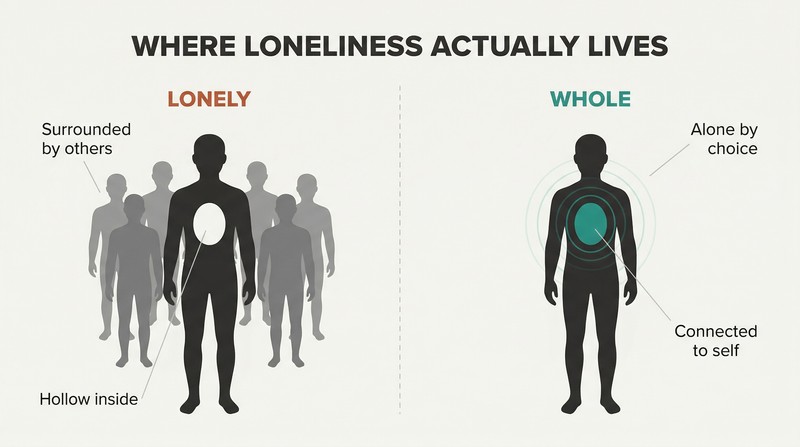
Gavrani draws a sharp line between two states we habitually conflate. Being alone is a circumstance — you're physically without company. Loneliness is an interpretation — you're viewing that circumstance through a lens of self-pity and misery. The real kicker: loneliness doesn't require solitude at all. You can sit in a room full of friends and feel hollow because you've lost touch with who you actually are.
The author lived this paradox. During five friendless months in college, not a single person around her thought she was lonely — yet she was consumed by fear of being perceived as a "loner." When she finally dropped that lens, she discovered she actually enjoyed her own company. The shift from loneliness to solitude isn't about finding people; it's about finding yourself.
Movies taught you to fear aloneness AND wait for a savior
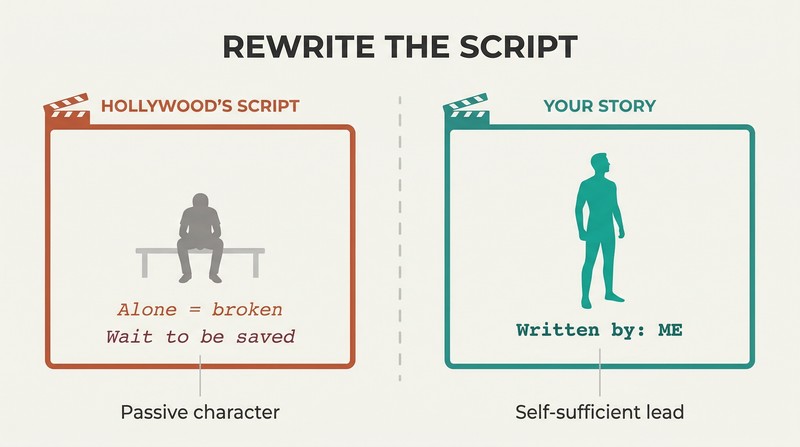
Two narratives haunt us from childhood. First, every movie and book depicts the kid eating alone as the "weirdo" — a weak character to be pitied or rescued. This trains us to treat aloneness as shameful. Second, Hollywood romance and friendship plots follow an identical arc: a broken person meets someone who saves them. Together, these scripts create a double trap — you dread being alone AND you nurture the fantasy that a perfect friend or partner will magically appear.
Gavrani calls this "romanticizing loneliness." She spent college years waiting for a F.R.I.E.N.D.S.-style bond that never materialized, and each unmet fantasy deepened her incompleteness. The antidote: stop casting yourself as the character who needs rescuing and write yourself as the self-sufficient lead of your own story.
People-pleasing hollows you out until you can't find yourself
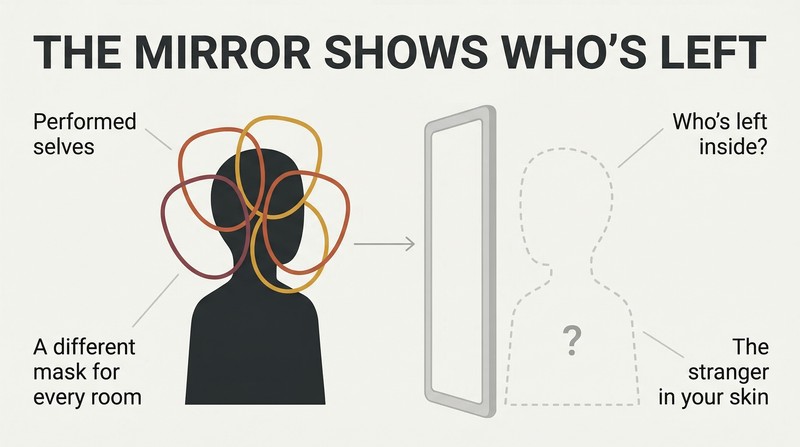
Fear of being the "weirdo" drives us to morph into whoever each room expects. We say yes to outings we dread, laugh at jokes we find hollow, and dress in clothes that feel like costumes — all to earn acceptance. Gavrani compares this to opening a different personality "tab" for each person you meet, until the real you crashes like an overloaded computer.
This identity erosion IS the root of loneliness. The further you drift from your authentic self through constant performance, the more time alone becomes unbearable — not because you lack company, but because there's a stranger inside your skin. You can't love someone you don't know, and that includes yourself. The loneliness of a crowded room starts here.
Admit your 'dark side' — that's where real self-love starts
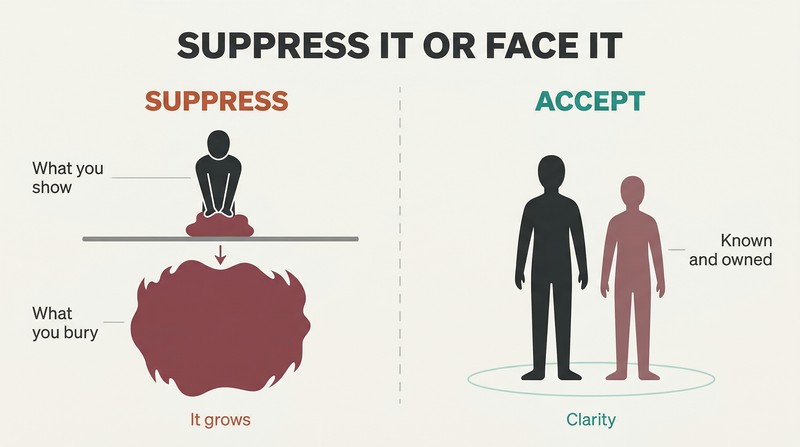
Self-love has been commercialized into bubble baths, skincare routines, and scented candles. Gavrani redefines it as two unflinching steps: know yourself completely — including the traits you hide — then accept what you find. Society trains us to present only the "good" version while suppressing anything that doesn't fit. But suppression doesn't eliminate those traits; it buries them deeper, creating internal darkness that swallows you bit by bit.
Gavrani's own example is blunt. After two years of self-examination, she admitted she can be selfish — regularly choosing herself over friends. Instead of self-loathing, she used that knowledge to set clearer expectations in relationships. Knowing her patterns gave her clarity; clarity gave her peace. She argues we sympathize with fictional villains because they validate our full emotional range.
List who you're NOT to discover who you are
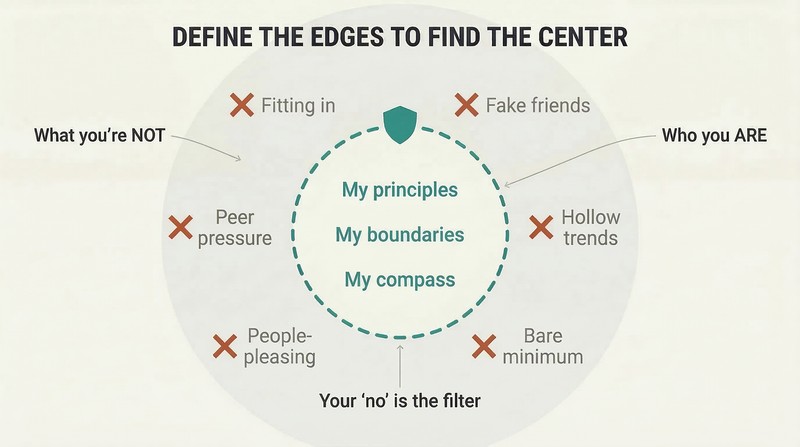
Self-discovery is overwhelming from a blank page. Gavrani's workaround: begin with what you reject. Spend five quiet minutes daily writing one or two things you don't like — even if society accepts them — and note why. In college, while peers drank regularly, she refused to try alcohol — not from superiority but from knowing it wasn't her. That single boundary naturally filtered her entire social circle.
This negative-space approach sharpens values fast. Once you know what you won't tolerate, you stop accepting bare-minimum relationships and hollow social performances. Gavrani warns against broadcasting these opinions — the world punishes dissent. Keep your list private. The goal isn't to persuade others but to build an internal compass that makes saying "no" effortless and authentic.
Accept that adult friendships are transient — stop mourning 'forever'
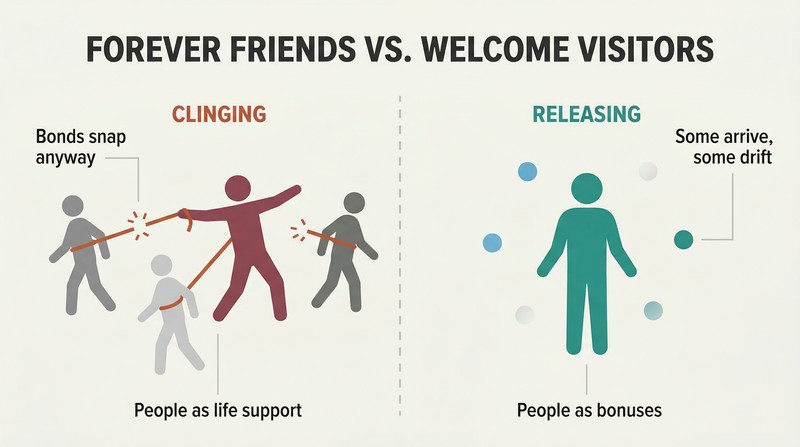
Gavrani catalogues loss after loss. She never stayed in one school longer than two years. Her college best friend replaced her within fifteen days. After graduation, her closest group drifted apart in months — not from malice, but from mismatched schedules, different cities, and shifting priorities. Each loss stung because she'd been raised on the mythology of "forever friends."
Her hard-won realization: after a certain age, you don't make "soul friends" — you mostly network. People enter your life on-and-off, not permanently. She doesn't say this bitterly; she says it to release the expectation. When you stop clinging to "forever," you can enjoy people as bonuses rather than life support — and being alone between connections stops feeling like failure.
Your brain is drowning in content — give it daily detox time
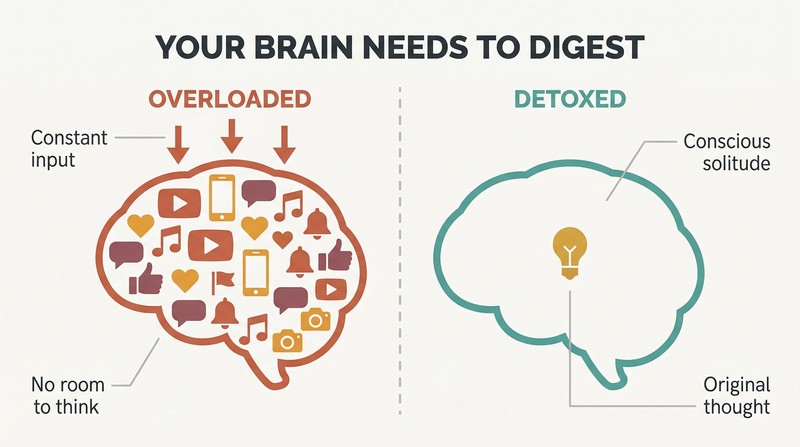
Gavrani uses a digestion analogy. Just as your stomach can't process food nonstop without getting sick, your brain can't absorb endless podcasts, TikToks, and opinions without becoming sluggish. Junk content in, junk thinking out. Yet most people never pause long enough for their minds to form an original thought. Georgia O'Keeffe moved to the New Mexico desert and created masterpieces into her nineties; Nikola Tesla insisted originality thrives in uninterrupted seclusion.
The prescription is "conscious solitude" — deliberately sitting disconnected from all input so your brain can digest, reflect, and delete. Start with 10 – 15 minutes daily. The thoughts that surface when you're offline are the ones that reveal who you actually are and what you actually think — beneath the noise of everyone else's opinions.
Write your own definitions of success before chasing anyone else's
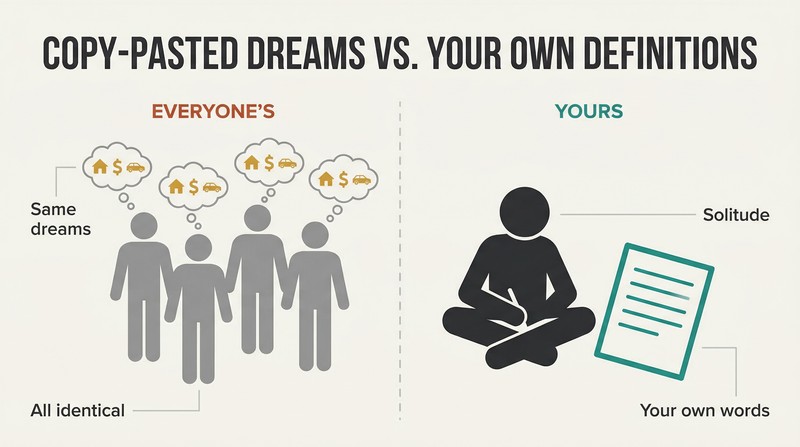
Most people's "dream life" is copy-pasted. Big house, money, travel photos, attractive partner. Gavrani asks: if we're all unique, why do our dreams look identical? Because we never sat alone long enough to ask what we actually want. She challenges readers: How much money is "enough"? What does a successful Tuesday look like? If your goal is peace, do you meditate daily or just fantasize about calm?
The fix is simple but rarely done. Sit down and define happiness, success, and fulfillment in your own words. Not YouTube's words, not your parents' words — yours. Without personal definitions, you navigate someone else's map and arrive at someone else's destination. Gavrani insists this is why solitude matters — it's the only space where your soul speaks without manipulation.
Pick one big issue and one daily action — nothing more
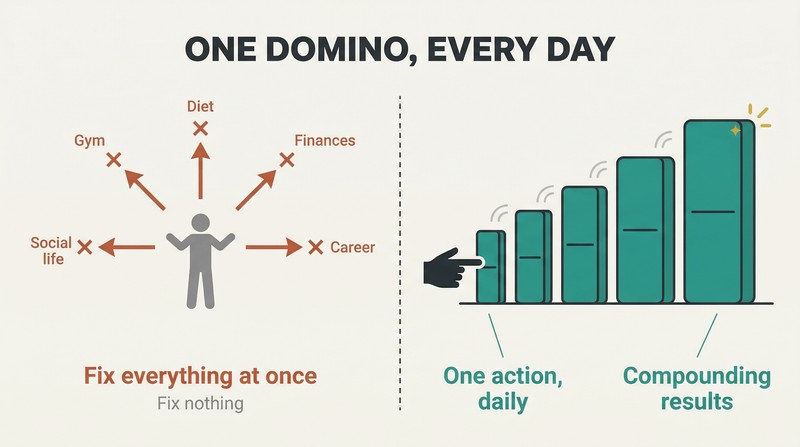
Trying to fix everything at once is the fastest path to fixing nothing. Gavrani learned this through repeated failure — gym streaks dying in a week, healthy-eating phases abandoned by Friday. Her framework: identify the ONE biggest issue dragging your life down, then set one "Action Goal" — a specific, repeatable daily behavior rather than a vague aspiration like "become successful."
Her proof is personal. In 2020, broke and directionless after quitting her job, she committed to writing one article per day on Medium. No elaborate tracking, no Excel sheets — just one action, daily. Ten months later: 10,000 followers and a published book. She didn't try to fix her health, finances, and career simultaneously. She picked one domino, and the rest followed.
Do for yourself what you kept waiting for others to do
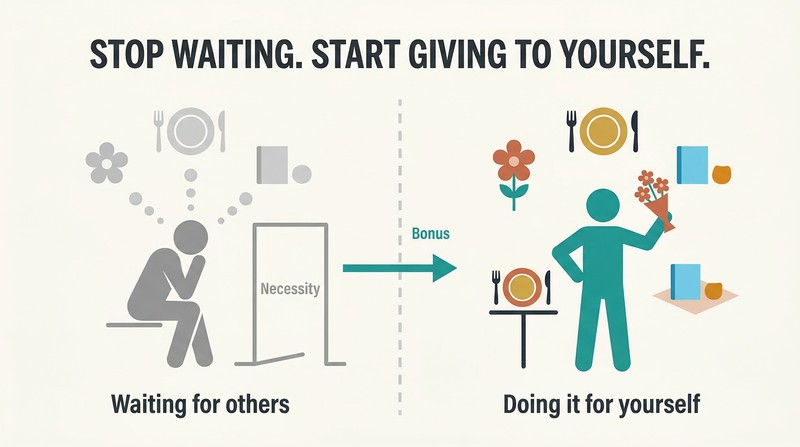
Stop outsourcing your desires. Gavrani always dreamed of friend sleepovers and monthly picnics. When adult life made group fantasies impossible, she stopped waiting. Now she dims the lights, orders pasta, makes iced coffee, and watches Christmas movies solo. Once a month, she packs a book and a doughnut and picnics alone forty minutes from home. It feels, she says, like "real self-care."
The principle extends beyond leisure. Buy yourself flowers. Write yourself a love letter. Plan a dinner date and actually dress up for it. The key is doing it intentionally and romantically — not as a consolation prize but as genuine self-celebration. When you become the person who fulfills your own desires, other people shift from necessity to bonus.
Analysis
Gavrani's book enters a crowded self-help landscape but carves space through raw biographical honesty and a culturally specific lens. Writing as a twenty-something Indian woman navigating small-town isolation, she speaks to a generation caught between curated Instagram lives and genuine existential loneliness — a tension that Western-centric solitude books rarely address with such personal stakes.
Her central thesis — that loneliness is the loss of self, not the loss of others — echoes existentialist philosophy (Kierkegaard's despair as a misrelation within the self, Sartre's concept of bad faith) without ever citing it. This is both the book's charm and its limitation. Gavrani writes from lived experience rather than academic rigor, which makes her profoundly accessible but occasionally repetitive. Her evidence relies on personal anecdote and historical vignettes — O'Keeffe, Tesla, Van Gogh — rather than the attachment theory, self-determination theory, or neuroscience of loneliness that could have fortified her arguments.
Where the book genuinely excels is its two-part architecture: Part 1 dismantles the reader's shame around aloneness; Part 2 converts that cleared space into a growth engine. This mirrors the therapeutic sequence of distress tolerance before behavioral activation in dialectical behavior therapy, suggesting intuitive psychological sophistication. The Action Goals framework — one issue, one repeatable behavior — is essentially a stripped-down version of Peter Gollwitzer's implementation intentions research, made visceral through the author's Medium-to-published-author story.
The book's most underrated contribution is its redefinition of self-love as self-knowledge plus acceptance of socially undesirable traits, pushing back against commercially sanitized wellness culture. In an era where self-care has been commodified into scented candles and spa days, Gavrani's insistence that real self-love requires confronting uncomfortable truths is both contrarian and necessary. The writing is conversational and occasionally undisciplined, but this informality mirrors the internal monologue she encourages — it reads like someone learning to be alone in real time, which may be precisely what its young audience needs.
Review Summary
The Art of Being ALONE received mixed reviews. Some readers found it relatable and inspiring, praising its insights on solitude and self-discovery. However, many criticized the writing quality, citing grammatical errors and repetitive content. Critics felt it was poorly structured and contradictory at times. Some appreciated the author's personal experiences, while others found them irrelevant. The book's target audience seems to be younger readers seeking self-help advice. Overall, opinions were divided, with some finding value in its message and others dismissing it as overhyped.
People Also Read




Glossary
Action Goals
Defined daily behavior targetsA goal-setting approach where you define a specific, repeatable action to perform daily rather than an abstract outcome. For example, 'write one article every day' is an action goal; 'become a successful writer' is not. Gavrani argues this removes overwhelm and makes progress trackable—you either did the action today or you didn't.
The Art of Getting Bored
Intentional practice of doing nothingGavrani's term for consciously choosing to do absolutely nothing—no phone, no books, no entertainment—while remaining mentally aware. It functions like meditation: you let your mind wander freely but redirect it when it turns to self-sabotage. The practice builds self-control, generates unexpected creative ideas, and trains resistance to cheap entertainment.
Conscious Solitude
Chosen alone time for reflectionA deliberate period of disconnecting from all external input—social media, conversations, content—so the brain can digest, reflect on, and filter information it has consumed. Gavrani compares it to the digestion period after eating: without it, the mind becomes sluggish and loses its capacity for independent thought. She recommends starting with 10–15 minutes daily.
Tags
Imposed identity labels from societyGavrani's term for identity labels that society, family, or individuals attach to a person—good/bad, smart/dumb, beautiful/ugly, success/failure. She argues these accumulate from childhood and gradually replace authentic self-knowledge, trapping people in rigid definitions that limit how they think, feel, and relate to others. She urges readers to become 'undefinable' by shedding them.
One Big Issue
Single priority problem to addressThe first step in Gavrani's action framework for personal change. Instead of trying to improve every area of life simultaneously—which leads to burnout and quitting—the reader identifies the single largest problem dragging their life down (career, health, mental state, etc.) and directs all improvement energy there. Only after meaningful progress does the reader move to the next issue.
Romanticizing Loneliness
Fantasizing about being rescued from alonenessGavrani's term for the unconscious habit of imagining yourself as the broken movie character who will eventually be saved by a perfect friend or partner. She argues this script—absorbed from films, books, and TV since childhood—creates false hope that deepens loneliness when reality fails to deliver the rescue scene.
FAQ
What's "The Art of Being ALONE" about?
- Exploration of Solitude: The book explores the concept of solitude as a positive and enriching experience, contrasting it with loneliness, which is often seen as negative.
- Personal Journey: It is a personal narrative by Renuka Gavrani, who shares her journey from feeling caged by loneliness to finding a home in solitude.
- Practical Guidance: The book provides practical advice on how to embrace being alone and use it as a period for personal growth and self-discovery.
- Cultural Critique: It critiques societal norms that stigmatize loneliness and encourages readers to redefine their understanding of being alone.
Why should I read "The Art of Being ALONE"?
- Self-Improvement Focus: If you're looking to transform your perception of loneliness and use solitude for personal growth, this book offers valuable insights.
- Relatable Experiences: The author shares relatable personal experiences that many readers might find comforting and inspiring.
- Actionable Advice: It provides actionable steps and exercises to help readers turn loneliness into a productive and fulfilling solitude.
- Empowerment: The book empowers readers to embrace their true selves and find joy in their own company.
What are the key takeaways of "The Art of Being ALONE"?
- Loneliness vs. Solitude: The book distinguishes between loneliness and solitude, encouraging readers to see solitude as an opportunity for self-discovery.
- Self-Acceptance: Emphasizes the importance of self-acceptance and understanding one's true self as a foundation for personal growth.
- Creating Joy: Encourages readers to create multiple sources of joy and fulfillment in their lives, independent of others.
- Action-Oriented: Provides a structured approach to setting goals and taking actionable steps towards personal development.
How does Renuka Gavrani suggest turning loneliness into a growth period?
- Identify Core Issues: Start by identifying the core issues in your life that contribute to feelings of loneliness.
- Set Action Goals: Focus on setting clear, actionable goals that address these core issues, rather than vague aspirations.
- Embrace Solitude: Use solitude as a time to reflect, reset, and engage in activities that promote personal growth.
- Continuous Learning: Encourage continuous learning and skill development as a way to enrich your alone time.
What are some specific methods or advice given in "The Art of Being ALONE"?
- Self-Exploration: Engage in self-exploration to understand your true desires and preferences, free from societal expectations.
- Mindful Solitude: Practice mindful solitude by allowing yourself time to digest and reflect on information without distractions.
- Creative Boredom: Embrace boredom as a creative state that can lead to new ideas and insights.
- Personal Definitions: Define your own meanings of success, happiness, and fulfillment, rather than adopting societal definitions.
What are the best quotes from "The Art of Being ALONE" and what do they mean?
- "You cannot be lonely if you like the person you’re alone with." This quote emphasizes the importance of self-acceptance and enjoying one's own company.
- "Stop feeling sorry for yourself because you don’t have enough people to post a cute selfie on the internet." It challenges the societal pressure to constantly seek validation from others.
- "Being alone means YOU ARE WITH YOURSELF." This highlights the positive aspect of solitude as an opportunity to connect with oneself.
- "Your real guidance is YOU." Encourages readers to trust their own instincts and inner wisdom rather than relying on external validation.
How does Renuka Gavrani address the fear of loneliness in "The Art of Being ALONE"?
- Societal Conditioning: The book discusses how societal conditioning instills a fear of loneliness from a young age.
- Reframing Loneliness: It encourages reframing loneliness as a natural part of life and an opportunity for self-reflection.
- Personal Stories: The author shares personal stories of overcoming loneliness, providing relatable examples for readers.
- Empowerment Through Solitude: Emphasizes the empowerment that comes from embracing solitude and using it for personal growth.
What is the significance of the title "The Art of Being ALONE"?
- Art of Solitude: The title suggests that being alone is an art form that can be cultivated and appreciated.
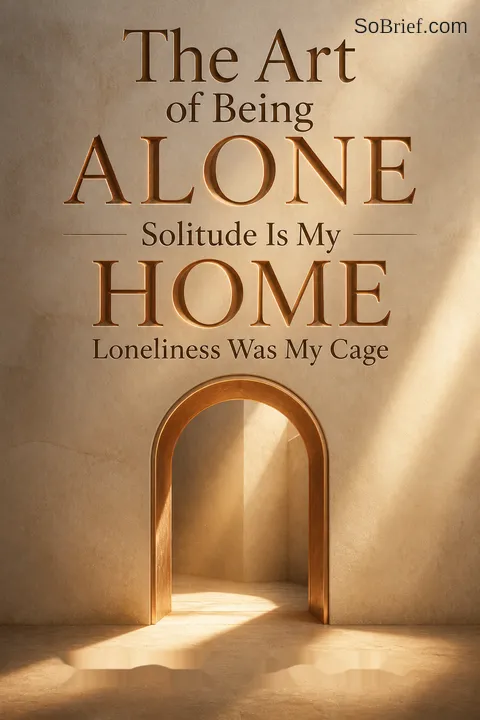
- Home vs. Cage: It contrasts solitude as a home with loneliness as a cage, highlighting the transformative potential of solitude.
- Personal Mastery: Implies that mastering the art of being alone leads to personal growth and fulfillment.
- Cultural Critique: Challenges cultural narratives that view being alone as undesirable or pitiable.
How does "The Art of Being ALONE" redefine the concept of loneliness?
- Positive Reframing: The book reframes loneliness as a potential period of growth and self-discovery rather than a negative state.
- Cultural Critique: Critiques cultural narratives that stigmatize loneliness and encourages readers to embrace it as a natural part of life.
- Personal Empowerment: Emphasizes personal empowerment and the ability to find joy and fulfillment in one's own company.
- Practical Strategies: Provides practical strategies for transforming loneliness into a productive and enriching experience.
What role does self-acceptance play in "The Art of Being ALONE"?
- Foundation for Growth: Self-acceptance is presented as the foundation for personal growth and transformation.
- Authenticity: Encourages readers to embrace their authentic selves, free from societal expectations and pressures.
- Overcoming Loneliness: Self-acceptance is key to overcoming feelings of loneliness and finding joy in solitude.
- Empowerment: Empowers readers to take control of their lives and define their own paths to fulfillment.
How does Renuka Gavrani suggest creating joy in one's life in "The Art of Being ALONE"?
- Multiple Sources of Joy: Encourages creating multiple sources of joy and fulfillment, independent of others.
- Intentional Living: Advocates for intentional living, where individuals actively seek out and create joyful experiences.
- Pursuing Passions: Suggests pursuing passions and interests as a way to enrich one's life and find personal satisfaction.
- Daily Joy: Emphasizes the importance of finding joy in everyday moments and activities.
What is the overall message of "The Art of Being ALONE"?
- Embrace Solitude: The book's overall message is to embrace solitude as a positive and enriching experience.
- Self-Discovery: Encourages readers to use solitude as an opportunity for self-discovery and personal growth.
- Redefine Loneliness: Challenges societal narratives around loneliness and encourages a redefinition of what it means to be alone.
- Empowerment and Joy: Empowers readers to find joy and fulfillment in their own company and take control of their lives.
Download PDF
Download EPUB
.epub digital book format is ideal for reading ebooks on phones, tablets, and e-readers.








































