
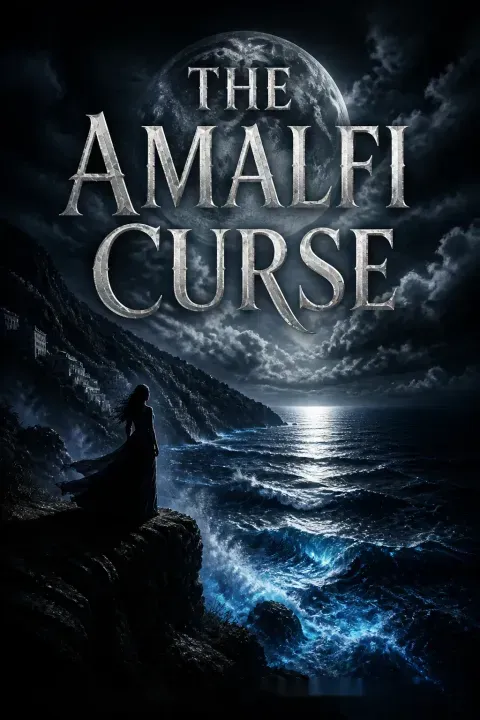


Plot Summary
Prologue
An anonymous informant9 writes to Matteo Mazza,13 owner of Naples's largest shipping company, detailing Positano's statistical impossibilities: tides too calm, erosion absent, fish abundant even at quarter moon. Most baffling, no pirate has ever landed there despite attacks on every neighboring village.
The writer9 catalogs these anomalies like a naturalist noting a new species, then offers the explanation: a secret group of women with power over the sea itself. For a price, he will reveal everything he has seen and who he has seen. The letter ends with a promise of fortune for the man who can exploit such information, never imagining the cascade of violence and sacrifice this offer will unleash on the tiny cliffside village.
This letter functions as a fuse lighting the entire plot. The informant's clinical language masks the intimacy of his betrayal: he is Corso, Mari's own fiancé, selling her community to predators. The letter establishes the central dramatic irony: the streghe's protective magic, meant to keep Positano safe, has drawn exactly the predatory attention it was designed to repel. The informant's mercenary tone foreshadows the novel's critique of commodification: every character who treats people or magic as currency, Corso, the Mazza brothers, Conrad, pays a steep price. The letter also introduces the epistemological tension that drives both timelines: the difference between what people observe (impossible good fortune) and what they conclude (luck, curse, witchcraft).
The Strega Finisima's Burden
At two in the morning on an April beach, twelve sea witches form a circle to perform the incantesimo di riflusso, conjuring an undercurrent strong enough to repel the pirate fleet expected within a day.
Mari DeLuca,1 twenty years old and the only strega finisima among them, wades naked into the sea last, tying herself to an anchor rope because her recitation will intensify the ebb to lethal force. The sea turns inky black around her, mirroring her mood. She resents every moment.
The ocean took her mother6 when she was eight and drowned her sister Sofia two years ago. She leads these women out of duty, not devotion. Secretly, she plans to flee Positano within weeks, abandoning her magical inheritance and her unwanted engagement for a life far from the water she loathes.
Mari's relationship with the sea encodes the novel's central psychological wound: supreme power coupled with traumatic aversion. She can command the ocean yet believes it has stolen everyone she loved. This split originates in a buried truth: she witnessed her mother Imelda willingly rowing away with two men, a scene her eight-year-old mind could only process as abandonment. She crafted the drowning story to protect her sister Sofia from that pain, then inhabited the lie so thoroughly it became her reality. Her plan to escape reveals that even leadership among the streghe has not healed her. She performs magic from obligation rather than belief, a hollow compromise that leaves her dangerously disconnected from her own power and identity.
The Sinistral Shell
A year earlier, Mari1 met Holmes Foster,3 a young American sailor, on the Positano beach. He had found a rare sinistral shell, its spiral reversed, and Mari1 explained its value without claiming it. The next evening, the anniversary of Sofia's death, Holmes3 found her crying in the olive grove and listened without offering empty comfort.
They began meeting secretly whenever his merchant routes brought him to port. Through letters routed to her friend Ami's11 house, they fell in love and crafted an escape plan: Mari1 would fake her drowning, leaving clothes on the sand, while Holmes3 rowed her away to a new life.
Meanwhile, her father had arranged her marriage to Corso,9 a wealthy cousin whose expensive gifts she discarded into the sea and whose possessive gaze she endured with barely concealed revulsion.
The sinistral shell is the story's first talisman of authentic love: rare, reversed from the ordinary, easily overlooked by those who do not know how to see. Mari does not take it because she already knows how to find such treasures, yet she cannot recognize her own value. The epistolary nature of their romance allows her to shed the armor she wears as strega finisima; on paper, she is neither leader nor orphan nor reluctant bride, simply a woman in love. The contrast with Corso, who views Mari as another curio for his collection and whose gifts she literally throws away, underscores the difference between commodified relationships and genuine partnership. Holmes's question, whether Mari has ever felt destined for a life she did not want, names her condition exactly.
Death in the Shallows
While teaching young Lia10 and Pippa12 sea magic in a coastal grotto, Mari1 dives in to spin a playful whirlpool for the girls. When she surfaces, a drunken man crouches on the rocks. Massimo Mazza. He has Lia.10 His brother Matteo13 is already dragging the child up the cliff path with a sack over her head.
Mari1 tells Pippa12 to hide deep underwater, then lunges at Massimo. She drags him into the sea and recites the incantesimo vortice, spinning a localized maelstrom that sucks him under. He drowns within moments.
From above, Matteo13 watches everything. He shouts a single word that echoes off the limestone: Tornerò. I will be back. Mari1 realizes she has killed one of Naples's most powerful men and that the surviving brother13 has witnessed her witchcraft firsthand.
Mari's killing of Massimo is simultaneously an act of fierce maternal protection and the moment her compartmentalized life shatters. She uses the very power she resents, and in doing so, exposes the entire strega community to a vastly more dangerous threat. The scene is shadowed by Mari's flashback to Sofia's drowning: she failed to protect her sister, and now she has failed Lia. The psychological pattern is devastating: every time Mari uses her magic near someone she loves, loss follows. This reinforces her belief that the sea is not neutral but actively malevolent, a cognitive distortion rooted in unprocessed trauma. Matteo's single word, I will be back, transforms an isolated attack into an existential siege.
Vote to Sink the Brig
Days later, the Mazza ship Lupo anchors off Positano. Armed men storm the village. They shoot Pippa's12 father Leo dead and seize three more women: Vivi, Pippa's12 mother, and the red-haired Fontana sisters. Mari1 is briefly captured but throws herself overboard in the darkness, swimming ashore with her cimaruta clutched in her fist.
Dante returns from Naples with grim intelligence: the captives are held on the island of Ischia, guarded by Mazza men who have already killed one fisherman who ventured too close.
Another Mazza vessel is now sailing for Positano with Matteo13 himself aboard. Mari1 convenes the ten remaining streghe in Ami's11 flour-dusted bakery. She proposes they wait at a cliffside cave near San Pietro and sink the approaching brig with a combined incantesimo vortice. All ten vote in favor.
The streghe's vote marks a moral threshold: they shift from protective magic to offensive destruction for the first time in memory. Mari frames this as necessary defense, but the decision carries an undercurrent of vengeance for Leo, for the kidnapped women, for Lia. Pippa's fierce advocacy and Ami's desperate hope lend emotional weight to a choice that will have catastrophic unintended consequences. The bakery setting, with its rotting lemons and stale almonds, mirrors the decay of Positano's former safety; the flour-dusted flagstones, usually a place of creation and nourishment, now host a war council. Secrecy, which protected the streghe for generations, now becomes their weapon. The vote is unanimous, but the weight falls heaviest on Mari, who carries a secret none of them know: the man she loves is crew on the very brig they intend to destroy.
The Prisoner in the Cabin
Aboard the Aquila, Holmes3 overhears officers discussing Massimo's death and the plan to seize Positano's red-haired women. Desperate to warn Mari,1 he takes his rosewood-handled knife and saws through the flying jib rigging, then pours tar over the spare sailcloth, hoping to delay the ship so his urgent letter reaches her first.
A storm catches the sabotaged brig. The mainsail must be deployed, and during the crisis, Holmes's3 friend Nico falls from the mast with catastrophic injuries. Holmes3 is caught when officers match his blade's cut pattern to the frayed lines.
Thrown into an iron cage in the cargo hold, he discovers through a gap in the planks that someone else is imprisoned: a red-haired woman in the locked second mate's cabin. She reveals herself as Imelda,6 Mari's1 mother, who did not drown twelve years ago but surrendered herself to the Mazza brothers to protect her daughters from being discovered.
Holmes's sabotage is an act of love that carries devastating collateral damage: Nico's death will haunt him as Sofia's drowning haunts Mari. The revelation of Imelda alive shatters the foundational narrative of Mari's entire emotional life. Imelda did not abandon her daughters out of indifference but out of sacrificial protection, a truth eight-year-old Mari's mind could not construct. The physical arrangement, Imelda above Holmes, mother of the woman he loves, both imprisoned by the same enemy, creates a powerful vertical connection between past and present. Holmes becomes the keeper of the truth that could heal Mari's deepest wound, if he can survive to deliver it. Imelda's matter-of-fact description of her captivity, moved from ship to ship at Matteo's whim, reveals twelve years of invisible suffering undertaken so her daughters could live free.
The Wrong Ship Wrecked
Imelda6 saws through the planks, frees Holmes,3 and hands him a glass flask containing her cimaruta and a letter for Mari.1 Holmes3 escapes, is shot in the leg by the first mate, and dives overboard. Meanwhile, Mari1 and four other streghe perform the incantesimo vortice from the shoreline as the Aquila passes Li Galli.
The resulting maelstrom is vastly more powerful than expected: the brig splinters and sinks within minutes, killing all aboard. Mari1 collapses, believing she has murdered the man she loves. But hours later, she overhears Corso9 confessing to her father inside his study.
Corso9 was the informant who sold knowledge of the streghe to the Mazzas. Worse, Matteo13 was never on the Aquila. He is aboard another ship, the armed La Dea, arriving by morning. Her father, she learns, had hoped to profit from Corso's9 scheme. The village is still in danger, and she has killed Holmes3 for nothing.
This double revelation delivers the novel's cruelest emotional pivot. Mari's plan, conceived to protect the village, has killed the only man she loved while leaving the true threat untouched. The discovery that Corso, the man she was supposed to marry, engineered the entire catastrophe, and that her father hoped to profit from it, adds intimate betrayal to political disaster. Mari has been commodified by every man in her life except Holmes: Corso wants to own her, her father wants to sell her, the Mazzas want to weaponize her. The maelstrom's unexpected power, which Mari does not yet understand was amplified by Imelda's simultaneous spell aboard the ship, seems like the sea's final mockery. Her despair now has nowhere to go but toward annihilation.
Mari Ties the Anchor
Mari1 takes a gozzo and rows toward Li Galli with an anchor and rope. She removes her cimaruta, ties the anchor around her waist, knotting Holmes's3 love letters into the rope, and prepares the vortice centuriaria, the century-long maelstrom spell that requires her life as sacrifice. Suddenly, flotsam collides with her boat.
Holmes,3 bleeding and exhausted, has floated from the islet where he washed ashore. He unties her and reveals that Imelda6 is alive, or was until the Aquila sank, and that her mother6 already performed the sacrifice spell.
Mari1 reads Imelda's6 letter from the flask, which asks forgiveness and explains she has been biding her time for twelve years, waiting for the moment to destroy the Mazza brothers. Together, they watch La Dea get caught in the century-long maelstrom. Matteo13 drowns. Both brothers are dead. Mari1 and Holmes,3 presumed drowned by the world, turn toward a future together.
The anchor scene is the novel's emotional fulcrum: Mari prepared to die, and instead receives life, reunion, and the truth about her mother. Holmes's appearance reads almost mythologically, a man emerging from the sea she thought had killed him. Imelda's letter reframes Mari's entire childhood: abandonment becomes sacrifice, hatred becomes misdirected grief, twelve years of bitterness become twelve years of unknown protection. The psychological release is enormous but not immediate; Mari tells Holmes it will take time to forgive, and this honesty makes the moment real rather than sentimental. The La Dea's destruction confirms Imelda's plan worked perfectly. The lovers watch their enemies drown, then turn east toward rescue, toward the mountains Mari always dreamed of seeing, toward a life neither expected to have.
Sirens at Dawn
Present day. Haven Ambrose2 wakes on her first morning in Positano to the sound of emergency sirens. From her rented villa's terrace, she watches a superyacht listing and sinking near the Li Galli islets. Eight people die, including a famous TikTok influencer and his girlfriend.
The morning should have marked the start of Project Relic, her team's ambitious underwater photogrammetry expedition to survey the wreck field. Instead, by evening, HPI foundation CEO Gage Whitlock15 calls. He is reassigning the project to Conrad Cass,8 Haven's2 father's old friend who once saved her life during a diving accident.
The stated reason is safety: the unexplained sinking plus abnormal hydrothermal vent data near Mount Vesuvius. Haven's2 entire team is effectively fired. She refuses Gage's15 offensive offer of a year-long paid vacation and vows to stay in Positano.
Haven's professional catastrophe mirrors Mari's personal one: both women watch something sink and lose everything they had planned. The yacht's mysterious sinking introduces the present-day supernatural threat while remaining stubbornly resistant to scientific explanation: no fire, no weather, no reef, no grounding. Haven's refusal to accept defeat, even when offered an easy exit, reveals her core drive is not career advancement but unfinished business with her dead father. Gage's and Conrad's paternalistic framing, protecting the 'girls' from danger, both infantilizes Haven and masks Conrad's true motive: he wants the gemstones Haven's father discovered on his last dive. The parallel between the 1821 shipwrecks and the modern one begins to suggest that Li Galli's danger is not merely historical or geological.
Archive of Salt and Ink
Haven2 meets Enzo Rossi,5 owner of a local dive shop, who agrees to take her diving at Li Galli during his off-hours. On their second dive, she photographs wreckage bearing the raised letters AQU in orange lichen, matching images her father took showing ILA: the Aquila.
At the Archivio Marittimo di Napoli, she locates a bundle of records for the brig, including Holmes Foster's3 water-damaged voyage journal preserved in a tar-stained leather pouch marked FM-1842.1.
A newspaper article from 1821 reports the brig sank with twenty-five men and adds a strange postscript: rumors of streghe, sea witches, whose possible involvement in the sinking was under investigation. Back at the villa, Haven2 begins reading Holmes's3 journal entries, discovering his first meeting with a red-haired woman1 on the beach and a rare sinistral shell.
Haven's discovery of the Aquila and Holmes's journal creates the first physical bridge between the two timelines. The lichen-covered letters are a perfect archaeological metaphor: truth is present but obscured, requiring patience, the right angle, and sometimes pure luck to decipher. Haven's methodical approach, diving first, then archive-diving, mirrors her father's maxim that answers come from both water and land. Enzo's role as facilitator of her quest, while their mutual attraction kindles, establishes him as a partner who enables rather than obstructs, a deliberate contrast with Conrad's exploitative interest. The newspaper's mention of streghe plants the first seed of the supernatural explanation that Haven, a scientist trained in empirical observation, will initially resist but ultimately be forced to accept.
Terribly, Wholly Alive
Reading deeper into Holmes's3 journal, Haven2 follows his secret romance with Mari,1 his sabotage of the Aquila, his imprisonment, and his escape with Imelda's6 help. The final entries stun her. Holmes3 describes finding Mari1 about to drown herself with an anchor, telling her the truth about her mother,6 and watching La Dea sink.
The last line, scrawled in shaky handwriting: 'And yet we are terribly, wholly alive.' A tiny plover feather is still pressed between the pages. Mari1 did not commit suicide as local legend claims. Her mother6 did not abandon her.
The love story survived. Meanwhile, Haven2 grows suspicious of Enzo's5 mother Savina,4 who reacted with fury upon learning Haven2 was diving Li Galli and who sits in cafés with her friend Renata, poring over marked-up oceanography data tables and murmuring about the Amalfi Curse.
Holmes's journal functions as a corrective to two centuries of oral legend. What the community remembered was shaped by what they needed to believe: that tragedy was inevitable, that the sea always won. The truth was messier and more hopeful. Haven's discovery that Mari lived is both a personal victory and a professional one: her archival research has produced a result more ethically meaningful than any treasure. The feather pressed between the pages, a small physical object of tenderness, collapses the distance between 1821 and the present. The parallel between Mari's false story (mother abandoned her) and Savina's false story (lineage is dying) begins to emerge as the novel's deepest structural pattern. Haven's growing suspicion of Savina marks her transition from passive observer to active investigator of the supernatural threat she has been reluctant to credit.
Candles on the Belvedere
After a second boat incident during a memorial for the drowned influencer, Haven2 brings her friend Mal7 to Savina's4 crumbling villa at night. She finds Savina4 on the belvedere terrace surrounded by pillar candles, a strand of hagstones, and a fossilized sawfish snout comb: the tools of a strega del mare.
On the phone with Renata, who is riding a Jet Ski below, Savina4 demonstrates her power by making the water spin counterclockwise and stop on command. Then she confesses everything. She and Renata are sea witches who rejected their inheritance all their lives.
After her daughter Bria died suddenly at the London Marathon finish line, Savina4 became convinced her denial had cursed her family. Now she performs increasingly dangerous spells to protect her remaining child, Enzo.5 She caused the yacht sinking. She altered the hydrothermal vent readings. She begs Haven2 to marry Enzo5 and produce grandchildren to continue the dying lineage.
Savina's confession reveals her not as a villain but as a grief-deranged mother whose magical thinking (literal, in her case) has created a causal chain of catastrophe. Her logic is internally consistent: reject powers, invite misfortune; embrace powers aggressively, protect what remains. What she cannot see is that her 'protective' magic is destroying the community around her son, including his dive business. Her desire for Haven to produce grandchildren reveals her fundamental misunderstanding: she thinks lineage matters only through biological descent, not realizing Mari's line already thrives. The belvedere setting, with its panoramic view of the sea she has been terrorizing, makes visible the godlike perspective she has wrongly assumed. She has become what the Mazza brothers were: someone who weaponizes magic for personal ends.
Let the Gems Go
Conrad8 confronts Haven2 with a surreptitiously recorded video. During their boatside encounter, she inadvertently mentioned the HPI foundation's name, a confidentiality breach that could trigger a quarter-million-dollar lawsuit. He will delete the video if she leaves Positano.
He also confirms he hacked her father's cloud folder, using Haven's2 middle name as the password, and is searching for the pink and red gemstones using proprietary detection equipment. Mal7 delivers the perspective Haven2 needs to hear: her father cared about the joy of discovery, not money.
He wanted to fund a scholarship. Haven2 has already made an extraordinary discovery in the truth about Mari1 and Holmes.3 She tells Conrad8 she is staying. She will not be blackmailed away from finishing what matters. She is done chasing her father's treasure and ready to pursue something larger.
This turning point represents Haven's psychological maturation from her father's daughter to her own woman. Conrad's blackmail leverages both her grief and her career vulnerability, but it fails because Haven has found something more valuable than gems: purpose connected to justice. Mal's intervention reframes the quest not as failure (didn't find Dad's treasure) but as redirection (found something Dad would have loved even more). Haven's choice parallels Mari's eventual reconciliation with the sea: both women stop fighting the current of their lives and instead use what they have been given. The confidentiality 'breach' becomes impotent because Haven no longer fears the foundation's power. She has outgrown the professional identity that Conrad could threaten.
A Thousand Descendants Bloom
Through an online genealogy forum, Haven2 connects with Lucille Detti14 in Venice, a descendant of Mari DeLuca1 who has spent years compiling her family tree. The records show Mari1 and Holmes3 had four children.
They settled in Treviso, north of Venice, and died in the 1840s cholera pandemic, but their descendants number in the hundreds, scattered across Italy and beyond. Lucille's14 email reveals she practices stregheria as a benevolent, life-giving tradition: 'the greatest gift of my life.' Haven2 brings the genealogy chart to Savina4 on the belvedere terrace.
Savina4 stares at the branching names, the spiderweb of living descendants. Her lifelong belief that she and Renata are the last of their kind, the belief that justified every desperate spell, crumbles. She asks Haven2 to connect her with Lucille.14
The genealogy reveal is the novel's most elegant plot reversal. Every spell Savina cast was predicated on a false premise: that her lineage was dying and required desperate measures to preserve. The truth is the structural opposite: Mari's line is thriving, practicing stregheria not as dark, dangerous compulsion but as benevolent tradition woven into ordinary life. Lucille's framing of witchcraft as a gift rather than a curse offers Savina an alternative model of what she could become: a woman whose magic nurtures rather than destroys. The moment also validates Haven's choice to pursue truth over treasure: she has not only uncovered a love story but has potentially saved an entire region from further magical destruction by correcting a two-hundred-year-old misunderstanding with a few phone calls, a genealogy chart, and stubborn refusal to stop digging.
Decoys in the Bowsprit
Three months later, Haven2 returns to Positano leading Project Relic on renegotiated terms with a better contract and her own attorney. Conrad8 found gemstones at Li Galli, but they were fakes: blue glass planted as decoys by the swindling Mazza brothers, who were notorious for hiding worthless trinkets in obvious places while concealing real valuables inside the hollowed, copper-sheathed bowsprits of their ships.
He abandoned the project in disgust. Haven2 returns to her father's mysterious list of alphanumerical codes and finally cracks them: they correspond to archive record locators.
Following his trail, she finds articles spanning a century, each describing treasure found inside copper bowsprit casings on Mazza vessels. Her father left her a note still affixed to one article: 'Those brilliant bastards.'
She knows where the real treasure hides. Meanwhile, Enzo's5 business thrives, the sea is calm, and Savina4 has found peace through her new friendship with Lucille.14 Haven2 and Enzo5 reunite, her hair band still on his wrist after three months apart.
The decoy gems are a moment of perfect narrative justice: Conrad, who pursued wealth and disdained ethics, gets fool's treasure and public humiliation. The real knowledge belongs to Haven, who followed her father's actual legacy: curiosity, archival rigor, patience, and the understanding that the best discoveries are collaborative and often cross centuries. Her father's Post-it Note, preserved in the archive like Holmes's journal, is a message from beyond the grave, a final father-daughter collaboration. The romantic reunion with Enzo, who kept her hair band as a talisman of hope, affirms that what Haven found in Positano was never about gems. The calm sea, the thriving tourism, the peaceful Savina, all signal that the curse, whether geological or magical, has been lifted not by confrontation but by truth-telling and reconnection.
Epilogue
In 1841 Treviso, Lia,10 now a grown woman with three daughters, holds Holmes's journal. Mari1 and Holmes3 have both died in the cholera pandemic. Before her death, Mari1 asked Lia10 to ensure the journal found its way into the world rather than languishing in an attic.
Lia10 remembers her rescue from the Ischia castle: Mari1 used the incantesimo divinatorio, begging the sea to lead her to anything of the streghe. Below Lia's10 cell window, floating among the rocks, they found Vivi's cimaruta. Vivi had thrown it from her cell before dying, a sacrifice that guided the rescuers to the children.
Before Mari1 died, she gave Lia10 the strand of hagstones. The greatest treasure, Mari1 told her, is not jewels or gems but love. Lia10 mails the journal to the Fratelli Mazza archive, where it will wait nearly two centuries for Haven Ambrose2 to find it.
The epilogue closes the circle that the prologue opened. Where the prologue's letter was written in greed, seeking to commodify the streghe, the epilogue's journal is sent in love, seeking to preserve their story for anyone who might need it. Vivi's sacrifice, throwing her protective cimaruta into the sea so others could find Lia, mirrors Imelda's sacrifice aboard the Aquila: both women understood that love sometimes requires surrendering one's own protection so others might live. Mari's gift of the hagstones to Lia, and her insistence that the greatest treasure is love, completes her arc from the resentful young woman who hated the sea to a matriarch who understood that true inheritance is not power but connection. The journal's arrival at the archive, stamped FM-1842.1, completes the causal chain that allowed Haven to uncover the truth across two centuries. The story survives because someone chose to preserve it, an act of faith that future strangers would care enough to read.
Analysis
The Amalfi Curse operates on a deceptively simple structural principle: two women, separated by two centuries, are trapped by false stories about their inheritance, and both are freed when documentary evidence replaces legend with truth. The novel argues that trauma, when left uninvestigated, becomes a curse that replicates harm across generations. Mari1 believes her mother abandoned her and channels that wound into hatred of the sea, the very source of her power. Savina4 believes her lineage is dying and channels that terror into destructive magic that harms the community she means to protect. Both women are wrong, and both are corrected by the same mechanism: archival research that reconstructs what actually happened.
The twin timelines mirror each other with elegant precision. An act of sacrificial love in 1821, Imelda's6 vortice centuriaria, creates the dangerous waters that, two centuries later, enable Savina4 to camouflage her own destructive spells as natural phenomena. A journal preserved by a grieving friend, Lia,10 becomes the evidence that allows a grieving daughter, Haven,2 to reconstruct the truth. The novel's emotional architecture depends on this recursive pattern: love creates danger, love preserves truth, truth enables healing.
Haven2 functions as the bridge figure who proves that the right kind of stubbornness can break centuries-old cycles. She arrives in Positano chasing her father's treasure, but her real inheritance is his methodology: the belief that answers exist in both water and archives, that curiosity is more valuable than gold, that the best discoveries are collaborative across time. Her archival work, her genealogy research, her willingness to follow breadcrumbs through databases and forums, represents a different kind of diving: into the depths of recorded memory rather than the ocean floor. The novel suggests that archives are also shipwrecks, scattering their fragments across centuries, waiting for someone patient enough to reconstruct them.
The Mazza brothers' decoy gems provide the final thematic capstone. Conrad,8 who values wealth over integrity, finds worthless glass. Haven,2 who learns to value truth over treasure, finds her father's real legacy: the knowledge that the greatest discoveries are not objects but stories, not riches but relationships. Mari's1 final words to Lia,10 that the greatest treasure is love, echo across the centuries to find Haven2 at exactly the moment she is ready to hear them. The novel's ultimate argument is that the stories we tell about the past matter enormously, because they shape what we believe is possible in the present. Correct the story, and you change what can happen next.
Review Summary
The Amalfi Curse receives mostly positive reviews, with readers praising its dual timeline narrative, magical elements, and vivid Italian coastal setting. Many enjoy the blend of historical fiction, romance, and fantasy, highlighting the strong female characters and intriguing plot. Some readers found the pacing slow or struggled to connect with certain characters. Overall, the book is described as an enchanting summer read, with particular praise for the author's ability to weave together multiple genres and create an immersive atmosphere.
People Also Read






Characters
Mari DeLuca
Strega finisima, reluctant sea witchAt twenty, Mari is the most powerful sea witch in Positano, descended in an unbroken maternal line from the sirens themselves. Her blood-red hair marks her lineage. She can read the sea's moods, command its currents, and divine what lies beneath its surface. Yet she loathes the ocean, which she believes took her mother Imelda6 and her sister Sofia. This hatred coexists with duty: she leads eleven other streghe in protecting the village from pirates and ensuring good fishing. Secretly, she plans to escape Positano with Holmes3, an American sailor she loves, by faking her own drowning. Engaged against her will to her wealthy cousin Corso9, she feels trapped by obligation, grief, and the weight of inherited power she never chose. Her deepest wound is the unprocessed truth about her mother's6 disappearance, a secret she has guarded since age eight.
Haven Ambrose
Nautical archaeologist and treasure hunter's daughterA thirty-five-year-old nautical archaeologist raised in the Florida Keys by a father who taught her to dive at age three and to love shipwrecks as portals into history. She carries crushing guilt over her father's death: she was sunbathing nearby when he suffered the fatal stroke, and she did not hear him call for help. His final dive at Li Galli revealed pink and red gemstones he believed were real treasure, and fulfilling his wish to recover them drives her as much as her professional ambitions. Methodical, stubborn, and fiercely loyal to her all-female team, she initially resists supernatural explanations but follows evidence wherever it leads. Her arc transforms her from a woman chasing her father's unfinished dream to someone who discovers her own purpose: uncovering hidden stories rather than hidden riches.
Holmes Foster
American sailor and devoted loverA young sailor from Boston who left a disapproving lawyer father at age thirteen to seek adventure at sea. By 1821, he has crossed the Atlantic, sailed to China, and worked on merchant vessels throughout the Mediterranean. He meets Mari1 on the Positano beach when he picks up a rare sinistral shell, and her kindness and sorrow captivate him instantly. Gentle, observant, and quietly courageous, he keeps a detailed voyage journal and writes Mari1 letters stained with ship's tar that she treasures. His love for her is transformative: he sabotages a ship, risks flogging and execution, and survives a gunshot wound and near-drowning, all to protect her and the village she leads. He is the rare man in the novel who values Mari1 for who she is rather than what she can provide.
Savina Rossi
Grieving mother and desperate stregaEnzo's5 mother and a sea witch who spent her entire life rejecting her inherited powers. She dismissed her mother's and grandmother's teachings as silly superstition, hiding her childhood spell diary in a closet. After her daughter Bria died suddenly of cardiac arrest at the London Marathon finish line, she became convinced her lifelong denial had cursed her family. She and her childhood friend Renata moved to the family's abandoned villa overlooking Li Galli and began practicing stregheria with desperate intensity, believing each spell performed would chip away at decades of accumulated misfortune. Her grief has twisted her magic into something destructive: she caused the yacht sinking and the hydrothermal anomalies, terrifying the region she meant to protect. She sees Haven2 as the answer, a wife for Enzo5 who could produce grandchildren to continue the lineage she believes is dying.
Enzo Rossi
Dive shop owner and romantic interestThirty-nine-year-old owner of Positano Underwater Adventures. He grew up poor near Venice after his father died, watching his mother struggle. Determined to work for himself, he saved every penny to open his own dive shop. Playful, adventurous, and warm-hearted, he does underwater somersaults and keeps spiked coffee on his boat. He lost his twin sister Bria the previous year and has not seriously dated in years. His attraction to Haven2 is immediate and mutual; he facilitates her dives, translates old articles, and introduces her to his mother's villa. Unknown to him, his mother4 is a strega whose magic has been terrorizing the very waters he dives. His business nearly collapses when tourism plummets, but he keeps Haven's2 hair band on his wrist for three months while she is gone.
Imelda DeLuca
Mari's mother, presumed deadMari's1 mother and the former strega finisima. Twelve years before the story begins, the Mazza brothers caught her performing sea magic and threatened to kill her unless she came with them. She convinced them she was the only strega in Positano, protecting her two young daughters from being discovered. She left clothes on the beach to fake her drowning, kissed Mari1 and Sofia goodbye while they slept, and surrendered herself to a life of captivity. For twelve years, the brothers moved her from ship to ship, using her divination powers to locate sunken treasure. She bided her time, waiting for the right moment to destroy them. When she learns from Holmes3 that the brothers are threatening Mari1, she acts: she frees Holmes3, removes her protective cimaruta, and performs the vortice centuriaria, sacrificing her life to create the maelstrom that will sink the Mazza fleet.
Mal
Haven's best friend and dive marshalHaven's2 closest friend since their PhD program at Texas A&M. Fiercely loyal, blunt, and practical, with short spiky blond hair and a naked woman tattooed on her collarbone. She serves as the project's dive marshal, responsible for safety protocols. When the project is yanked from Haven2, Mal refuses to abandon her. She gives up her flight home, tracks Haven2 down, and insists on helping. It is Mal who provides the crucial perspective when Haven2 is tempted by Conrad8's blackmail: she reminds Haven2 that her father valued discovery over money and that Haven2 has already made an extraordinary discovery in Mari1 and Holmes3's story. She later proposes to her longtime girlfriend Megan and steps back from the project to build a life with her.
Conrad Cass
Treasure-obsessed former family friendA former Coast Guard rescue swimmer who saved sixteen-year-old Haven's2 life during a diving accident, earning her lifelong gratitude. He was her father's old schoolmate. Now wealthy and well-connected, he lives in a nine-bedroom estate in Naples, Florida, and runs in circles of financiers and politicians. When he takes over Project Relic, his true motive is the gemstones Haven's2 father spotted. He hacked the cloud folder using Haven's2 middle name as the password. He brings proprietary detection equipment rather than photographic gear. When Haven2 refuses to leave Positano, he attempts to blackmail her with a confidentiality breach. His eventual discovery of fake gems, blue glass decoys planted by the Mazza brothers, is poetic justice for a man who valued riches over integrity.
Corso
Mari's calculating fiancé and betrayerA wealthy terrazzo merchant from Rome and a distant cousin of Mari's1 father. Tall, lanky, with pale feminine hands untouched by labor. He wears bespoke morning suits in vibrant blue, wildly out of place in humble Positano. He arranged to marry Mari1 without a dowry, financially rescuing her struggling family after her father's business nearly collapsed. But his interest in her is possessive, acquisitive: he sees her as another curio for his collection. Unbeknownst to everyone, he is the informant who wrote to Matteo Mazza13 detailing the suspicious good fortune of Positano. He spied on the streghe during their rituals, rifled through their garbage, and sold their secrets hoping to profit. His betrayal is the inciting catastrophe of the 1821 timeline.
Lia
Kidnapped child and future heirAmi's11 six-year-old daughter with delicate rosy-red hair and spindly legs. A strega-in-training, too young yet to wear a cimaruta. She has an uncanny eye for spotting nearly invisible needlefish and notices things others miss. Her kidnapping by Matteo Mazza13 is the catalyst for the streghe's desperate plan to sink the incoming brig. She is held captive on the island of Ischia in Castello Aragonese. After her rescue, she becomes part of Mari1 and Holmes3's extended family in Treviso. In the epilogue, as a grown woman with children of her own, she is the one who fulfills Mari's1 dying wish by sending Holmes's journal to the archive, ensuring their love story survives for two centuries.
Ami
Mari's loyal friend and Lia's anguished motherMari's1 closest friend in Positano and one of the twelve streghe. A baker known for her crostata di frutta, she routes Holmes's3 secret letters to Mari1 through her home. When her daughter Lia10 is kidnapped, her anguish drives the narrative forward. She votes to sink the Mazza brig and stands watch with Mari1 at the San Pietro cave. Her husband Dante rides to Naples searching for Lia10. Her friendship with Mari1 is one of the novel's most steadfast relationships, tested by Lia's10 kidnapping but ultimately unbroken. She represents the streghe's collective courage: ordinary women forced by extraordinary threat to attempt things no strega in memory has ever done.
Pippa
Orphaned teenage strega with gritSeventeen years old, daughter of Vivi and Leo. She wants to go to sea on a merchant ship someday, already skilled at tying perfect butterfly knots in under thirty seconds. Tough, stoic, and fiercely brave, she does not cry even when her father is shot dead and her mother is kidnapped before her eyes. When she disobeys orders and sneaks out to confront the Mazza ship, she is captured, then freed when Mari1 negotiates her release. After losing both parents in a single night, she becomes a ward of the eldest strega, Emilia. Her resilience and refusal to be broken by tragedy make her one of the novel's most quietly formidable characters.
Matteo Mazza
Ruthless shipping magnate and antagonistThe older and more calculating of the two Mazza brothers who inherited Naples's largest shipping company. He colludes with pirates, traffics stolen goods, and buys impunity from local police. After Corso's9 letter alerts him to Positano's sea witches, he and his brother Massimo scout the village. He witnesses Mari1 drown Massimo using her magic and kidnaps young Lia10 in retaliation. He orchestrates the Lupo raid that seizes more women and kills Leo. His goal is to capture every red-haired woman in Positano and exploit their powers as he has exploited Imelda6 for twelve years. His decision to board La Dea rather than the Aquila delays his death by mere hours, but the century-long maelstrom Imelda6 created claims him regardless.
Lucille Detti
Modern strega and genealogy keeperA woman in her mid-fifties living in Venice with her husband of thirty-four years, two grown daughters, and four grandchildren. She has dark red hair streaked with gray. She spent years compiling her family tree, tracing her lineage back to Mari DeLuca1 and Holmes Foster3. She practices stregheria not as desperate, dangerous magic but as a benevolent tradition woven into ordinary life, describing it as the greatest gift she has ever received. Her connection with Savina4, facilitated by Haven2, offers Savina4 an alternative model of what a strega can be: a woman whose magic nurtures rather than destroys, whose lineage is not dying but thriving in plain sight.
Gage Whitlock
Condescending foundation CEOCEO of HPI, the heritage protection foundation funding Project Relic. Image-obsessed, condescending, and quick to infantilize the all-female archaeology team. He yanks the project from Haven2 citing safety concerns, then begs her to return three months later when Conrad8 abandons it. His concern is always about optics: how would it look if something happened to 'a group of women in the water.' Haven2 ultimately renegotiates with him on much stronger terms, securing better pay for her team and a tighter contract that prevents him from pulling the project again.
Plot Devices
Cimaruta Necklace
Protective talisman and sacrifice tokenA necklace worn by every strega after age fifteen, bearing tiny amulets from the sea: moon shells, ammonite fossils, coral fragments, volcanic pumice. It grants the wearer strength, dexterity, and vigor, especially in moments of distress. The cimaruta's critical narrative function is its removal: a strega must take it off to perform the vortice centuriaria, the century-long maelstrom spell that requires the witch's life as sacrifice. Imelda6 removes hers before sinking the Aquila. Vivi throws hers from her prison cell window into the sea, choosing to sacrifice her protection so the hagstones can guide rescuers to the children. Mari1 removes hers when she rows out intending to perform the centuriaria herself. The necklace thus becomes a symbol of protective love transformed into sacrificial love.
Hagstones
Divination tool for locating underwater objectsA strand of six smooth gray stones, each with a naturally formed hole allowing a cord to pass through. Used exclusively for the incantesimo divinatorio, the spell that locates items or people in the water. The stones tug toward their target, physically pulling the wielder. Mari1 uses them to find Lia10 on Ischia, the hagstones leading her to Vivi's discarded cimaruta in the water below the prison window. Savina4 possesses a strand and offers to use it to help Haven2 find sunken treasure, revealing her identity as a strega. Before her death, Mari1 gives the hagstones to Lia10 with the instruction to pass them down among the women. The strand with the tiny starfish fossil embedded in one stone becomes an heirloom connecting generations.
Holmes's Voyage Journal
Historical record that corrects legendA leather-bound diary kept by Holmes Foster3 during his years at sea, protected by a tar-stained oilskin pouch. It chronicles his love for Mari1, his sabotage of the Aquila, his imprisonment, his meeting with Imelda6, and his survival and reunion with Mari1. After his and Mari1's deaths in the 1840s cholera pandemic, Lia10 sends it to the Fratelli Mazza archive in Naples, where it is cataloged as FM-1842.1. Nearly two centuries later, Haven2 discovers it at the Archivio Marittimo di Napoli. The journal functions as the narrative device that bridges the two timelines, providing irrefutable documentary evidence that Mari1 and Holmes3 survived, that Imelda6 sacrificed herself, and that the local legend of Mari1's suicide was false.
Vortice Centuriaria Spell
Century-long maelstrom requiring sacrificeThe most powerful incantation in the register of sea spells. Unlike the standard incantesimo vortice, which creates a temporary whirlpool lasting only days, the centuriaria version endures for one hundred years. It requires no physical tool, but the strega must remove her protective cimaruta necklace and sacrifice her own life for the spell to take effect. No strega had performed it in hundreds, possibly thousands, of years before Imelda6. She recites it from the Aquila's rope ladder as the brig passes Li Galli, her death creating the maelstrom that sinks both the Aquila and, hours later, La Dea. The spell explains the historical 'Amalfi Curse': the dangerous currents and unexplained shipwrecks around Li Galli throughout the nineteenth century.
Copper-Sheathed Bowsprit
Hidden compartment for Mazza valuablesAll Fratelli Mazza ships featured copper-sheathed bowsprits, which most observers assumed was mere vanity or affluence. In reality, the hollow bowsprits served as hidden compartments where the brothers concealed their most valuable stolen goods. The turquoise patina on aged copper sometimes attracted divers' attention. Haven's2 father discovered this pattern through archival research, cross-referencing three separate treasure discoveries spanning 1886 to the 1970s, all found inside copper bowsprit casings on Mazza wrecks. His alphanumerical codes, which Haven2 initially could not decipher, were archive record locators pointing her to these articles. The reveal confirms that the Mazza brothers were systematic swindlers who planted worthless decoy gems in obvious locations while hiding real treasure where only the most curious would think to look. The bowsprit becomes a metaphor for the novel's central truth: what is most valuable is hidden in plain sight, requiring patience to uncover.
FAQ
Synopsis & Basic Details
What is The Amalfi Curse about?
- Dual Timeline Mystery: The novel weaves together two narratives: one in 1821 Positano, following Mari DeLuca, a young woman from a lineage of sea witches (streghe del mare) who secretly protect their village, and another in the present day, centered on Haven Ambrose, an American nautical archaeologist researching ancient shipwrecks near the Li Galli islets.
- Hidden Magic & Ancient Secrets: Both timelines explore the hidden power of the streghe over the sea, a closely guarded secret passed down through generations, and the lengths to which outsiders, like the ruthless Mazza brothers in the past and a rival treasure hunter in the present, will go to exploit or control this magic.
- Love, Loss, and Legacy: At its core, the story is a multi-generational tale of love, sacrifice, and the enduring power of lineage, exploring how past traumas and secrets echo through time and how confronting truth and embracing one's heritage can break cycles of misfortune and lead to healing.
Why should I read The Amalfi Curse?
- Enchanting Blend of Genres: The book seamlessly mixes historical fiction, magical realism, mystery, and romance, offering a unique reading experience praised by reviewers for its captivating narrative and beautiful writing.
- Rich Historical & Cultural Setting: Immerse yourself in the stunning, atmospheric backdrop of the Amalfi Coast and Naples, brought to life through vivid descriptions and details about local life, folklore, and maritime history.
- Compelling Female Characters: Follow the journeys of strong, complex women across centuries – from the burdened strega Mari to the determined archaeologist Haven and the struggling modern witch Savina – exploring themes of female agency, power, and resilience.
What is the background of The Amalfi Curse?
- Historical Positano & Naples: The 1821 timeline is set against the backdrop of a thriving fishing village (Positano) and the bustling, politically complex port city of Naples, highlighting the contrast between a secluded, seemingly blessed community and the wider world of commerce, piracy, and power struggles embodied by the Mazza brothers.
- Folklore of Stregheria: The novel draws heavily on Italian folklore, particularly the legends of stregheria (witchcraft), reimagining the concept through the unique lens of "sea witches" descended from sirens, whose magic is tied specifically to the ocean and its currents.
- Geographical Significance: The Li Galli islets are central, known historically for turbulent waters and shipwrecks, providing a natural explanation for the "Amalfi Curse" that the streghe's magic either amplifies or is blamed for, blurring the lines between natural phenomena and supernatural intervention.
What are the most memorable quotes in The Amalfi Curse?
- "The sea always prevails.": Mari's reluctant admission highlights the limits of the streghe's power and her own deep-seated resentment towards the ocean, underscoring the theme that even powerful magic cannot fully control nature or fate.
- "All we're promised is now.": Enzo's poignant statement to Haven encapsulates the novel's theme of living in the present amidst uncertainty and loss, offering a moment of grounding and connection in a world filled with historical echoes and potential future disasters.
- "Sometimes... the greatest treasure to be found is... love.": This line from the Epilogue, attributed to Mari, redefines the concept of "treasure" from material wealth (like the Mazza loot) to the enduring value of human connection, forgiveness, and legacy, providing a powerful thematic conclusion.
What writing style, narrative choices, and literary techniques does Sarah Penner use?
- Dual Narrative Structure: Penner employs alternating chapters between the 1821 and present-day timelines, creating suspense and allowing readers to draw parallels and contrasts between the historical events and their modern repercussions.
- Integration of Primary Sources: The inclusion of letters, journals (like Holmes's log), and archival documents grounds the historical narrative and provides Haven with tangible clues, blurring the lines between fiction and historical research.
- Magical Realism: Subtle elements of magic, specifically the streghe's powers over the sea, are woven into the realistic settings and historical events, treating the supernatural as an inherent part of the world rather than an external fantasy element.
Hidden Details & Subtle Connections
What are some minor details that add significant meaning?
- Mari's Rash: The small rash on Mari's ankle that stings in the saltwater subtly symbolizes her physical and emotional discomfort with the sea, highlighting how deeply her resentment is ingrained, even manifesting physically during a ritual she performs to protect her village.
- The Missing Gozzo: The detail that one of the streghe's boats came loose and drifted away, forcing them to perform the pirate-diverting spell on the open beach, is a seemingly minor inconvenience that gains significance when Mari later spots a shadow on the dock, suggesting their forced visibility led to their exposure to the Mazza scout.
- Corso's "Chincaglieria" Comment: Corso's dismissive term for the items Mari collects from the sea ("trinkets," "curios") reveals his superficial understanding of her connection to the ocean and her lineage, foreshadowing his inability to grasp the true depth of her world and his ultimate unsuitability as her partner.
What are some subtle foreshadowing and callbacks?
- Trembling Water in Mari's Hands: Before Lia's kidnapping, the water in Mari's cupped hands trembles violently, an unexplained phenomenon that foreshadows the impending danger and Mari's deep, unplaceable unease, suggesting the sea itself was trying to warn her.
- The Shadow on the Dock: Mari's fleeting glimpse of a man on the dock after the midnight ritual foreshadows the Mazza's surveillance and eventual infiltration of the village, hinting that their protection is already compromised before the major kidnappings occur.
- The Feather and Olive Pits: The recurring motifs of the plover feather (Holmes saving a bird) and the olive pits (shared moments with Holmes) serve as callbacks to Mari and Holmes's relationship, symbolizing hope, connection, and the enduring possibility of their love and legacy, even when they believe each other lost.
What are some unexpected character connections?
- Corso's Alliance with the Mazzas: The revelation that Corso, Mari's intended fiancé, was the one who initially contacted Matteo Mazza and informed him about the streghe's powers is a shocking betrayal that underscores the pervasive threat of exploitation and the danger of trusting outsiders motivated by greed.
- Imelda's Survival and Imprisonment: The discovery that Mari's mother, Imelda, did not drown but willingly surrendered herself to the Mazza brothers years ago to protect her daughters, and was subsequently held captive on their ships (including the Aquila), completely upends Mari's understanding of her past and her mother's actions.
- Savina and Renata as Modern Streghe: The twist that Enzo's mother, Savina, and her friend Renata are modern-day streghe, struggling with their powers and inadvertently causing the recent misfortunes (like the yacht sinking) due to their reckless use of magic, connects the historical narrative directly to the present-day events Haven is investigating.
Who are the most significant supporting characters?
- Ami: Mari's closest friend and a fellow strega, Ami represents loyalty, community, and shared grief. Her personal loss (Lia's kidnapping, Dante's death) highlights the devastating impact of the Mazza's actions and motivates her resilience and support for Mari's plan.
- Pippa: A young strega-in-training, Pippa embodies the next generation of the lineage and displays remarkable courage in the face of tragedy (losing her parents). Her presence underscores the importance of passing down knowledge and the enduring spirit of the streghe.
- Imelda DeLuca: Though appearing primarily through Holmes's journal and Mari's memories, Imelda's sacrifice and posthumous revelations are pivotal. She is the catalyst for the entire saga and her actions redefine the meaning of protection and forgiveness within the streghe lineage.
Psychological, Emotional, & Relational Analysis
What are some unspoken motivations of the characters?
- Mari's Desire for Escape: Beyond her hatred of the sea, Mari's deep motivation is a desperate longing to escape the predetermined life set out for her – both her duty as strega finisima and her unwanted marriage to Corso – which fuels her secret plan with Holmes and her initial resentment of her powers.
- Corso's Pursuit of Status: Corso's actions are driven by a desire for wealth and social standing, using his connection to the Mazzas and his planned marriage to Mari as means to elevate himself, revealing a shallow ambition that contrasts sharply with the deeper values of the streghe and Holmes.
- Savina's Grief-Fueled Recklessness: Savina's primary unspoken motivation is her overwhelming grief and guilt over Bria's death, which she attributes to the "curse" of her denied lineage. This drives her to embrace magic recklessly, seeking control and protection for Enzo, even at the cost of others' safety.
What psychological complexities do the characters exhibit?
- Mari's Internal Conflict: Mari grapples with profound psychological complexity, torn between her inherited duty and her personal desires, her love for her village and her hatred of the sea, and the crushing weight of guilt over her perceived failures to protect her mother and sister.
- Haven's Survivor's Guilt: Haven is haunted by survivor's guilt after her father's death, believing she failed him in his final moments. This fuels her relentless pursuit of his unfinished quest, seeking redemption and a way to honor his memory by completing what he could not.
- Savina's Denial and Desperation: Savina exhibits psychological denial regarding the true nature of her lineage and the consequences of her actions. Her desperation to protect Enzo leads her down a dangerous path, highlighting how unresolved grief and fear can manifest destructively.
What are the major emotional turning points?
- Lia's Kidnapping: This event is a major emotional turning point, shattering the village's sense of safety and forcing Mari and the streghe to confront the real-world consequences of their secret and the escalating threat posed by the Mazzas.
- Mari Learning Imelda's Truth: Holmes's revelation that Imelda is alive and sacrificed herself to protect her daughters is a profound emotional turning point for Mari, transforming her lifelong resentment into grief, understanding, and a desire to honor her mother's true legacy.
- Haven Confronting Savina: Haven's confrontation with Savina, revealing her knowledge of stregheria and Savina's role in the recent incidents, is a critical emotional turning point that forces Savina to confront her denial and opens the door for healing and a shift in her use of magic.
How do relationship dynamics evolve?
- Mari and Imelda's Relationship: This relationship undergoes the most dramatic evolution, shifting from Mari's deep-seated belief in her mother's abandonment and death to a complex understanding of Imelda's sacrifice and a path towards forgiveness after her mother's true fate is revealed.
- Haven and Enzo's Connection: Their relationship evolves from a pragmatic arrangement for dive access to a deep emotional and romantic connection. Enzo provides Haven with grounding and support outside her professional anxieties, becoming an anchor in her life amidst the chaos.
- Haven and Conrad's Rivalry: Their dynamic shifts from a mentor/mentee relationship (due to Conrad's past with her father) to a tense rivalry fueled by suspicion and conflicting motivations (treasure vs. legacy), ultimately solidifying Haven's commitment to her own values and purpose.
Interpretation & Debate
Which parts of the story remain ambiguous or open-ended?
- The Full Extent of Stregheria: While some spells are detailed, the precise nature, limits, and origins of the streghe's power remain somewhat mysterious, leaving room for interpretation regarding how much is inherent magic versus deep understanding of natural phenomena.
- The Fate of Other Captives: While Lia is rescued and Vivi's death is confirmed, the ultimate fate of the Fontana sisters, also kidnapped by the Mazzas, is not explicitly stated, leaving their story open-ended beyond their initial capture.
- The Future of the Stregheria Lineage: Although Lucille confirms the existence of many descendants, the extent to which the stregheria powers and knowledge have been passed down or are actively practiced among them remains largely unknown, suggesting the legacy is ongoing but its form is uncertain.
What are some debatable, controversial scenes or moments in The Amalfi Curse?
- Mari Killing Massimo Mazza: Mari's use of the incantesimo vortice to drown Massimo is a morally complex moment. While done to protect Lia and escape, it is a direct act of killing, prompting debate about whether her actions were justified self-defense or a crossing of a moral line, especially given the streghe's generally benevolent magic.
- Savina and Renata Causing Modern Disasters: The revelation that Savina and Renata's reckless use of magic caused the yacht sinking and other incidents is controversial. Readers might debate the extent of their culpability – were they malicious, misguided, or simply overwhelmed by powers they didn't understand? – and whether their grief justifies the harm caused.
- Conrad's Pursuit of the Loot: Conrad's actions, prioritizing the search for treasure over the project's scientific goals and attempting to sideline Haven, raise questions about professional ethics and the corrupting influence of greed, sparking debate about his character and motivations.
The Amalfi Curse Ending Explained: How It Ends & What It Means
- Survival and Reunion: The ending reveals that Mari and Holmes both survived the sinking of the Aquila, with Imelda sacrificing her life using the vortice centuriaria to sink the brig and protect them. Mari and Holmes reunite, their love story continuing beyond the perceived tragedy.
- Legacy Redefined: Mari and Holmes move to Treviso, have children (including a son named Nico), and their lineage continues. Mari entrusts Holmes's journal and her hagstones to Lia, ensuring the truth of their survival and the streghe's history is preserved and passed down, redefining the "curse" as an enduring legacy of resilience and love.
- Curse Broken in the Present: Haven uses the information from Holmes's journal and her genealogical research to show Savina that Mari's lineage continued, proving Savina and Renata are not the last streghe. This revelation, combined with Haven's confrontation about their reckless magic, helps Savina find peace and stop causing harm, effectively breaking the modern "Amalfi Curse" of misfortune. Haven finds her own "treasure" not in gold, but in uncovering this history, finding love with Enzo, and continuing her archaeological work with a renewed sense of purpose.

Download PDF
Download EPUB
.epub digital book format is ideal for reading ebooks on phones, tablets, and e-readers.








































