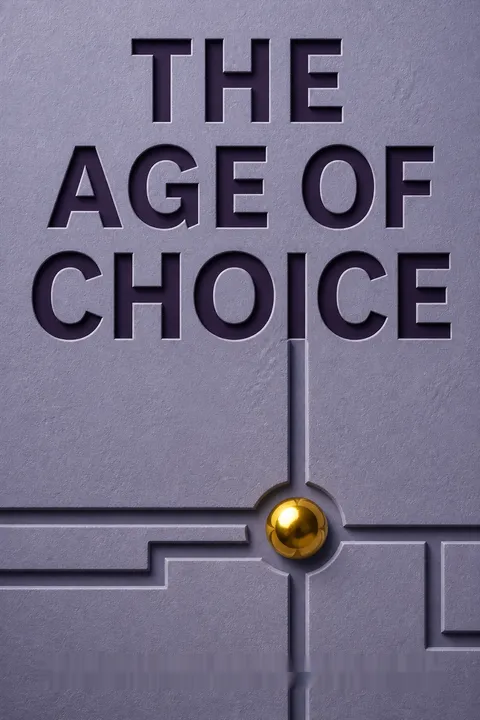

Key Takeaways
1. The Evolution of Freedom: From Status to Choice
Both having choices and making choices are largely what count these days as being, indeed feeling, free.
A modern construct. The contemporary understanding of freedom as the ability to choose is not a timeless human condition but a specific historical development, primarily in the West. Historically, freedom was often defined by one's status, meaning independence from domination, rather than the capacity for unconstrained decision-making. For instance, an early modern nobleman's liberty stemmed from his predetermined social role and lack of dependence, not a menu of life paths.
A long, uneven journey. This shift towards freedom-as-choice has been a "long-term, staccato, and in no way inevitable or even unidirectional historical process." It didn't emerge suddenly with democratic revolutions but has roots stretching back to early commercial and religious contexts. The idea that individuals are the sum of their choices, expressing personal preferences for self-realization, is a relatively recent "doxa" – a taken-for-granted assumption that underpins modern life.
Bounded by design. Crucially, this expansion of choice has always been accompanied by new forms of exclusion and constraint, making it "navigable" and "safe for mass participation." Whether through formal laws, social conventions, or economic limitations, choices are inherently "bounded." This paradox means that freedom of choice has always required rules and restrictions to prevent chaos, highlighting that one cannot exist without the other.
2. Shopping: The Genesis of Modern Consumer Choice
The business of selecting and the logic of the menu of options have become both a way of life and, it is widely assumed, a means to build a life—or what we now call a “lifestyle.”
The marketplace's role. The modern concept of choice began to take shape in the 18th-century marketplace, particularly with the rise of "shopping" as a distinct activity. Entrepreneurs like London auctioneer Christopher Cock pioneered new sales techniques, using printed catalogs to present goods as "choice sets" and engaging customers in a choreographed selection process. This transformed buying from mere provisioning into a preference-driven experience.
Calico craze and choice architects. The influx of printed cottons (calicoes) from India fueled this consumer revolution, offering non-essential goods that appealed to aesthetic preferences rather than basic needs. Shopkeepers evolved into "choice architects," meticulously displaying options and employing norms like "politeness" and "taste" to guide customers. This created a new infrastructure for consumer choice, where:
- Goods were "expos'd to view" in enticing displays.
- Fixed prices and cash sales allowed for informed comparisons.
- Trade cards and catalogs served as early marketing tools.
Women as consumers and critics. Women played a pivotal role, becoming the stereotypical "shopper." While this offered a new, albeit limited, form of autonomy and entertainment, it also drew criticism. Women were often portrayed as fickle, prone to overindulgence, or easily overwhelmed by too many options, leading to social and moral decay. This feminization of consumer choice, often depicted in novels, tainted the act of preference-driven selection as unserious or even dangerous, a tension that persists today.
3. The Conscience's Mandate: Choosing Beliefs and Ideas
Liberty, taking the word in its concrete sense, consists in the ability to choose.
Reformation's unintended legacy. The Protestant Reformation, despite its theological debates on free will, inadvertently laid the groundwork for intellectual choice. The concept of "liberty of conscience" emerged, asserting that faith, to be legitimate, must be a matter of individual, private judgment, not coercion. This led to:
- The rejection of forced belief.
- The idea that individuals should be free to follow their conscience, even if mistaken.
- The acceptance of religious diversity as something to be "tolerated."
Philadelphia's "holy experiment." William Penn's Pennsylvania, particularly Philadelphia, became a notable example of this principle in practice. By guaranteeing "full freedom of conscience," the colony fostered a diverse religious landscape where individuals could "church shop" and even change affiliations. This expanded the menu of spiritual options and encouraged personal responsibility for one's faith, though it was often accompanied by strict moral codes and exclusions.
Readers as choosers. This ethos extended to intellectual life. The proliferation of printed materials and the rise of lending libraries transformed reading into an act of personal selection. Commonplace books, once tools for scholarly conformity, became repositories for individuals to "cut and paste" ideas, forging unique intellectual identities. Figures like John Milton envisioned readers as active "choosers" of truth, while later commonplacers like Deborah Logan used these practices to construct and express their distinctive selves, albeit within societal constraints.
4. Romantic Choices: Navigating Affection and Social Order
You will allow, that in both, man has the advantage of choice, woman only the power of refusal.
Marriage as "The Choice." In the 18th and 19th centuries, marriage was "The Choice" – the singular, defining decision for young adults, especially women. The rise of "companionate marriage" emphasized affection and compatibility, shifting some authority from patriarchs to individuals. The French Revolution briefly codified this with civil contracts and divorce, aiming to strengthen marriage by rooting it in voluntary consent, though these radical changes were largely reversed by Napoleon.
The ballroom's choreography. Social balls became crucial arenas for navigating these new romantic expectations. Dance cards, seemingly innocuous accessories, served as micro-technologies for managing "interdependent choice." They formalized the process of selecting partners, ensuring:
- Men initiated the "ask" for a dance.
- Women had the power of refusal, often by showing a full card.
- Strict etiquette governed interactions to prevent social chaos or impropriety.
Cotillons and gendered agency. The cotillon, a series of dance games popular in the mid-19th century, offered a temporary, playful subversion of these norms. These games often involved women choosing men, or using chance to determine partners, providing a brief respite from traditional constraints. However, even these "games of choice" were highly ritualized, demonstrating how elaborate rules were needed to contain the emotional and sexual energies unleashed by expanded choice, especially for women, without threatening the social order.
5. The Secret Ballot: Privatizing Political Choice
The heart of it not in the chosen—the act itself the main, the quadrennial choosing.
A late arrival to politics. Individualized, preference-based political choice, as embodied by the secret ballot, was surprisingly late to become a norm, especially in Britain. Traditional English elections were public, communal rituals of affirmation, not private expressions of individual preference. Voters publicly declared their choices, often under the influence of landlords or employers, and the process was more about community solidarity than individual selection.
Cartwright's call for independence. Radical reformers like Major John Cartwright, in 1776, argued for the secret ballot as a means to protect the "independence" of the individual voter from coercion. He linked political choice to freedom from dependence, asserting that "freedom implies choice." This vision, though initially marginal, laid the groundwork for a new understanding of suffrage as a private act of conscience, not a public duty.
Pontefract and the new norm. The 1872 Pontefract by-election, the first parliamentary election conducted by secret ballot in Britain, marked a pivotal shift. The process, meticulously observed by reporters, was deliberately dull and orderly:
- Voters entered private booths to mark their choices on state-issued paper ballots.
- The act was shielded from public scrutiny, ensuring "pure" choice.
- This proceduralism aimed to eliminate corruption and intimidation, making voting a free, uncoerced act.
The secret ballot, despite initial resistance and concerns about its "unmanly" nature, gradually spread globally, cementing the idea of individual, private choice as fundamental to democratic freedom.
6. The Scientific Pursuit of Human Choice
The human faculties of perception, judgment, discriminative feeling, mental activity, and even moral preference, are exercised only in making a choice.
Freud's challenge to free will. As choice became central to modern life, its underlying mechanisms became a subject of scientific inquiry. Sigmund Freud, at the turn of the 20th century, challenged the notion of conscious free will, arguing that "object-choice" (the selection of desired persons) was largely determined by unconscious, repressed childhood experiences. Yet, psychoanalysis also offered a path to recovering choice through self-knowledge, enabling individuals to overcome inner bondage.
Marketing's psychological insights. American advertisers and marketers, like Walter Dill Scott, simultaneously sought to understand and manipulate consumer choices. They applied psychology to identify "buying motives," segment markets by gender and class, and use surveys to uncover "buying habits." This led to:
- The rise of "choice architects" in advertising agencies.
- The development of "self-serve" supermarkets, promising autonomy to "Mrs. Consumer."
- The use of questionnaires to gather data on preferences, reinforcing the idea of consumers as active choosers.
Multiple choice and rational man. World War I accelerated the development of "multiple-choice" testing, initially for army intelligence and later for academic and political polling. This standardized format, with its fixed options, aimed for objective measurement and efficient data collection. Economists, meanwhile, developed "homo economicus" – a model of a rational, utility-maximizing individual whose choices, driven by "revealed preferences," could be mathematically predicted, stripping away psychology and ethics. This model, despite its simplifications, profoundly shaped the understanding of human behavior across various fields.
7. The Paradox of Choice: Freedom, Feminism, and Its Discontents
In the end, a woman, as a man, has the power to choose, and to make her own heaven or hell.
Choice as a postwar ideal. After World War II, choice became a cornerstone of Western liberal democracy and human rights. The Universal Declaration of Human Rights, championed by Eleanor Roosevelt, framed freedom as the opportunity for individuals to pursue their needs and craft their lives through choice, abstracting individuals from collective contexts. Betty Friedan's "The Feminine Mystique" extended this to women, arguing that middle-class American women were trapped by a "feminine mystique" that limited their choices to trivial domesticity.
The "right to choose" and its backlash. The legalization of abortion in Roe v. Wade (1973) cemented "the right to choose" as a central tenet of feminist liberation. This strategic framing aimed to align abortion access with widely accepted notions of individual autonomy and freedom from interference. However, it also sparked a powerful conservative backlash, arguing that some things, like life, are too sacred for personal choice. This led to:
- The "right to life" counter-slogan.
- Critiques of "abortion on demand" as selfish or capricious.
- The use of "freedom of conscience" arguments (e.g., Hyde Amendment) to restrict abortion access.
Critiques from within. Even within feminism, the "right to choose" faced criticism. Radical feminists and feminists of color argued that choice rhetoric was insufficient, masking structural inequalities and disproportionately benefiting privileged women. They contended that "real choice" requires broader social and economic justice, not just legal non-interference. The co-option of "my body, my choice" by anti-masking movements further highlighted the idiom's limitations and its potential to justify indifference to collective well-being.
8. Rethinking Choice: Beyond a Default Solution
Rather than continually asking how we might choose more or better, let’s start wondering, without prejudgment, if choice as we know it is really what freedom should be all about.
The exhaustion of endless options. The relentless expansion of choice in modern life, exacerbated by technology and algorithmic curation, has led to a "tyranny of choice," causing exhaustion, anxiety, and alienation. This constant pressure to optimize every decision, from consumer goods to life paths, often leaves individuals feeling overwhelmed or regretful, undermining the very freedom it promises. The historical narrative reveals that this predicament is a modern invention, not an inherent human state.
Choice as a double-edged sword. While choice remains an aspiration for those denied it, its current form often serves as a "fig leaf" for inequality, blaming individuals for "bad choices" rather than addressing systemic barriers. The historical journey of choice shows how it has been:
- A tool for emancipation, particularly for women and marginalized groups.
- A mechanism for social control and the perpetuation of new hierarchies.
- A concept that has been both celebrated and weaponized across the political spectrum.
Towards a new paradigm. The book challenges us to move beyond the default assumption that "more choice is always better." It suggests that a critical historical perspective can illuminate alternative ways of conceiving freedom and human agency. This could involve:
- Remaking existing choice practices to be more equitable and accessible.
- Fostering imaginative alternatives beyond pre-defined menus.
- Re-evaluating the role of collective decision-making and compromise.
- Reconnecting choice with moral considerations and shared well-being, rather than viewing it as value-neutral.
People Also Read




Download PDF
Download EPUB
.epub digital book format is ideal for reading ebooks on phones, tablets, and e-readers.








































