
Plot Summary
Orphaned and Unwelcome
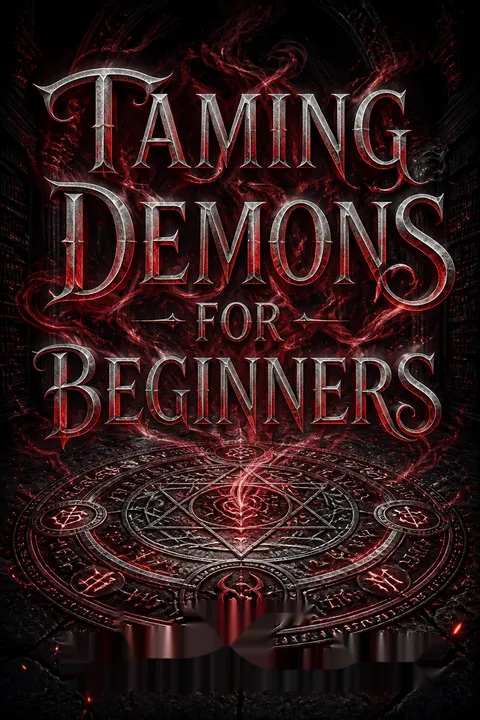
Robin Page, a shy, bookish college student, is orphaned after her parents' sudden death. She's sent to live with her uncle Jack, a cold, domineering man, and his family, who treat her as an outsider. Robin's grief is compounded by her uncle's refusal to release her inheritance, including a precious family grimoire. The mansion is filled with secrets, and Robin's attempts to find comfort or connection are met with indifference or hostility. Her only solace is the house's grand library, but even that is tainted by the presence of something dark and forbidden lurking in the basement—a demon, bound in a summoning circle, and the source of her uncle's illicit magical dealings.
The Demon in the Library
Exploring the forbidden library, Robin stumbles upon a summoning circle containing a demon shrouded in darkness. Her uncle warns her of the deadly danger, forbidding her from entering the room or interacting with the creature. Yet, Robin's curiosity and love of books draw her back. She finds herself both terrified and fascinated by the demon's presence, sensing a strange intelligence behind the inky barrier. The demon is silent, but Robin feels its attention, and the chilling knowledge that it is both prisoner and predator. The library becomes a place of both comfort and dread, as Robin's world of academic magic collides with the raw, dangerous reality of Demonica.
Cookies Across the Circle
Seeking solace, Robin bakes cookies, a ritual that reminds her of her lost family. In a moment of impulsive curiosity, she tosses a cookie into the demon's circle. To her shock, the demon throws it back, hitting her between the eyes. This bizarre exchange breaks the ice, and Robin realizes the demon is not just a mindless monster, but a being capable of humor and interaction. The cookies become a form of communication, a tentative bridge between captor and captive. Robin's fear is tempered by fascination, and she begins to question everything she's been taught about demons, morality, and the boundaries between human and other.
Forbidden Conversations
The demon, eventually revealing his name as Zylas, initiates conversation, asking Robin about the cookies and her life. Their exchanges are cautious, laced with mutual suspicion and curiosity. Robin learns that demons cannot lie, and that Zylas can sense truth and falsehood in her words. She's forced to confront her own grief and loneliness, as well as the demon's alien perspective on morality and survival. The forbidden conversations become a lifeline for both, as Robin's isolation deepens and Zylas's imprisonment grows more desperate. Each question and answer chips away at the walls between them, forging a fragile, dangerous connection.
The Family Grimoire
Robin's search for her mother's grimoire intensifies as she realizes it may be the source of her uncle's power—and the reason for Zylas's summoning. The grimoire, a centuries-old book passed down through generations, contains rare demon names and summoning secrets. Robin's uncle and his partner Claude are desperate to unlock its mysteries, hoping to profit from new, powerful demon contracts. Robin, meanwhile, is determined to reclaim her legacy, not just for herself, but to honor her parents' memory. The grimoire becomes a symbol of identity, loss, and the dangerous inheritance of magic.
Bargains and Boundaries
As Zylas weakens in the circle, Robin's empathy grows. She brings him food, warmth, and light, learning that demons need these to survive. Their exchanges become more personal, and Robin dares to ask about his world, his age, and his nature. Zylas, in turn, tests Robin's boundaries, challenging her assumptions and pushing her to confront her own fears. The two negotiate a series of small bargains—cookies for answers, glimpses of his true form for acts of trust. The boundaries between jailer and prisoner, human and demon, begin to blur, setting the stage for a more profound and perilous pact.
The Demon's Name
Robin learns the importance of demon names—each representing a lineage, a source of power, and a commodity in the world of summoners. Zylas's name is rare, making him a valuable prize. Uncle Jack and his clients are desperate to force Zylas into a contract, but he refuses to submit, valuing his autonomy above all. Robin, in a moment of reckless honesty, asks for his personal name, and Zylas gives it in exchange for a cake. This act of naming is intimate, a gesture of trust and vulnerability. It also marks a turning point, as Robin becomes the only human to truly see Zylas as an individual, not just a weapon or a monster.
Breaking Points
As weeks pass, Zylas grows weaker, nearing the breaking point where most demons surrender to contracts or die. Robin's compassion drives her to help him, sneaking food and warmth to prolong his life. But her actions are discovered, and she's caught between her uncle's schemes and the demon's impending death. When Uncle Jack's clients attempt to force a contract by using Robin as bait—cutting her and offering her blood to the demon—she's faced with an impossible choice: trust the humans who would kill her, or the demon who might. In a moment of clarity, she chooses Zylas, thrusting her hand into the circle and sealing her fate.
The Contract's Price
Inside the circle, Zylas demands Robin's soul in exchange for protection. She refuses, offering instead the only thing she can—cookies, a symbol of their shared humanity. Zylas, on the brink of death, accepts. Their contract is sealed with pain and magic, binding them together in a pact that is both absurd and profound. Robin becomes an illegal contractor, and Zylas is freed from the circle, but not from the consequences. Their bond is unique—he must protect her, but is not compelled to obey. The price of autonomy is uncertainty, and both are now fugitives in a world that would destroy them.
Blood on the Silver Line
Zylas's escape is violent and bloody. He kills those who would enslave him, and Robin is forced to confront the reality of what it means to be bound to a demon. The mansion is destroyed, the family scattered, and Robin's old life is gone forever. She and Zylas flee into the city, pursued by enemies both human and supernatural. The world outside is no safer—rogue summoners, bounty hunters, and the ever-present threat of the MagiPol (MPD) make every step dangerous. Robin's only hope is to hide in plain sight, forging a new identity and seeking allies in the unlikeliest of places.
Escape and Aftermath
Robin and Zylas, joined by her cousin Amalia, navigate the city's underbelly, evading both the law and criminal guilds. They witness the devastation caused by another unbound demon—Tahēsh, a demon king freed by Zylas in a moment of cunning. The city is thrown into chaos, and Robin is wracked with guilt for her role in unleashing the monster. As they seek refuge, Robin is forced to confront the limits of her contract with Zylas, the dangers of trust, and the meaning of responsibility. The aftermath of violence leaves scars—physical, emotional, and magical.
The Unbound King
The city's guilds mobilize to hunt Tahēsh, the unbound demon king. Robin, realizing her unique position, decides to help stop him, despite the risks. Zylas, though weaker and smaller, is also a demon king—Dīnen of the Twelfth House. In a climactic battle, Zylas uses cunning and patience to defeat Tahēsh, proving that survival is not about brute strength, but about knowing when to strike. The victory is hollow—no one can know of Zylas's triumph, and the cost in lives is high. Robin's understanding of power, agency, and the nature of monsters is forever changed.
Allies and Enemies
Robin's attempts to find sanctuary lead her to the Grand Grimoire guild, but betrayal awaits. Her contract with Zylas is discovered, and she is sold out to the criminal Red Rum guild. Captured, tortured, and forced to the brink of surrender, Robin refuses to give up Zylas, even as her fingers are broken and her life threatened. Zylas, bound by their contract, unleashes his full fury to save her, killing without remorse. The line between ally and enemy blurs, as Robin realizes that survival depends on trust, cunning, and the willingness to do what is necessary—even if it means becoming a monster in the eyes of others.
The Crow and Hammer
Rescued by the Crow and Hammer guild, Robin finds unexpected allies in Darius, the guild master, and his team. Her secret is discovered, but instead of condemnation, she is offered a chance at redemption and belonging. Zylas, too, is given a place—on the condition that he will not harm Robin's allies. The guild is not without its own secrets, and Robin senses that she is not the only one hiding dangerous truths. The promise of sanctuary is fragile, dependent on trust, discretion, and the willingness to fight for a place in a world that fears and misunderstands her.
A New Kind of Pact
In the aftermath, Robin and Zylas settle into a new life, bound by a contract that is as much about choice as it is about magic. Robin bakes cookies, honoring her promise and forging a new ritual of connection. Zylas, for all his violence and alien morality, chooses to protect her—not because he must, but because he wants to. Their partnership is tested by the knowledge that the contract's boundaries are uncertain, and that true trust cannot be compelled. As they look to the future—seeking the lost grimoire, navigating guild politics, and uncovering the mysteries of Demonica—they do so as allies, not master and servant. The story ends with the promise of more challenges, more secrets, and the hope that even monsters can be tamed—not by force, but by understanding.
Analysis
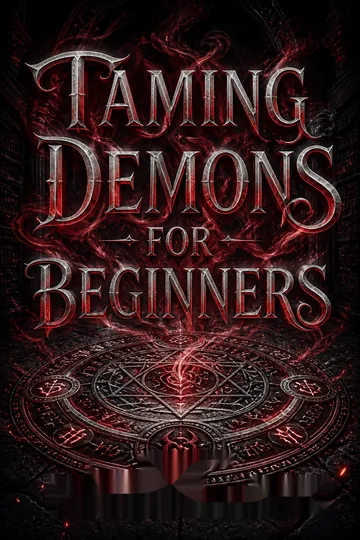
Annette Marie's Taming Demons for Beginners is a subversive urban fantasy that interrogates the boundaries between monster and human, power and vulnerability, autonomy and coercion. At its heart is the unlikely partnership between Robin, a grieving, bookish orphan, and Zylas, a demon king who refuses to be tamed. The novel uses the tropes of magical contracts, forbidden knowledge, and found family to explore deeper questions of trust, consent, and the ethics of power. Robin's journey is one of self-discovery, as she learns to claim agency in a world that seeks to define her by fear and tradition. Zylas, for his part, is both a mirror and a foil—his alien morality challenges Robin (and the reader) to reconsider what it means to be monstrous. The story's emotional arc is driven by small acts of kindness—cookies, conversations, moments of vulnerability—that gradually erode the walls between captor and captive, human and demon. The novel's greatest strength lies in its refusal to offer easy answers; contracts are unreliable, power is always negotiated, and the line between good and evil is blurred by circumstance and choice. In a world obsessed with control, Taming Demons for Beginners suggests that true strength lies in understanding, empathy, and the courage to forge one's own path—even if it means breaking the rules of magic, society, and fate itself.
Review Summary
Taming Demons for Beginners receives overwhelmingly positive reviews (4.3/5) for its engaging urban fantasy premise. Readers praise protagonist Robin, a shy bookworm who accidentally contracts with demon Zylas in exchange for baked goods. Reviewers appreciate Robin's relatability and realistic character growth, contrasting with typical "insta-badass" heroines. Zylas captivates readers with his stoic, alien nature and unexpected fondness for cookies. The book's fast pacing, humor, and action keep readers hooked. Many note its successful integration with the Spellbound series, though it stands alone. Some criticize Robin's initial passivity, but most find the demon-human dynamic compelling and eagerly await sequels.
People Also Read
Characters
Robin Page
Robin is a shy, intelligent young woman whose life is upended by the loss of her parents and the discovery of her family's magical legacy. Her defining traits are curiosity, empathy, and a stubborn sense of justice, even when it puts her in danger. Robin's relationship with Zylas evolves from fear to fascination to genuine partnership, as she learns to see beyond the labels of "monster" and "human." Her psychological journey is one of grief, self-doubt, and the gradual reclamation of agency. Robin's greatest strength is her willingness to question assumptions and forge her own path, even when it means breaking the rules of both magic and society.
Zylas
Zylas is a demon of the Twelfth House, a Dīnen (king) who values autonomy above all. He is cunning, ruthless, and unapologetically alien in his morality. Zylas's initial interactions with Robin are marked by suspicion and manipulation, but he is gradually drawn to her honesty, curiosity, and refusal to treat him as a mere tool. His inability to lie, his hunger for warmth and light, and his appreciation for cookies reveal a complexity beneath the surface. Zylas's development is shaped by his struggle to maintain agency in a world that seeks to enslave him, and by his growing, if begrudging, respect for Robin. Their bond is unique—neither master nor servant, but uneasy equals.
Uncle Jack Harper
Jack is Robin's uncle and the executor of her parents' estate. He is cold, controlling, and driven by ambition. His involvement in illegal demon summoning is motivated by greed and a desire for power, and he is willing to exploit anyone—including Robin—to achieve his goals. Jack's relationship with Robin is adversarial, marked by gaslighting, emotional abuse, and betrayal. He represents the dangers of unchecked ambition and the corrupting influence of power.
Claude Mercier
Claude is Jack's business partner and a skilled summoner in his own right. He is calm, calculating, and ultimately revealed to be a far more dangerous player than Jack. Claude's true motives are shrouded in mystery, but his interest in the grimoire and the demon names suggests a long game. He is the architect behind many of the story's twists, and his actions set the stage for future conflicts.
Amalia Harper
Amalia is Jack's daughter, initially hostile to Robin but gradually revealed to be more complex. She is ambitious, talented, and frustrated by her father's favoritism and the burdens of family legacy. Amalia's relationship with Robin evolves from rivalry to uneasy alliance, as they are forced to rely on each other for survival. Her psychological arc is one of disillusionment, self-discovery, and the search for belonging outside her father's shadow.
Travis
Travis is Jack's stepson, caught between loyalty to family and the lure of power. He is easily manipulated, making choices that endanger Robin and Amalia, but ultimately regrets his actions. Travis's journey is one of guilt, redemption, and the struggle to define his own values in a world of shifting allegiances.
Karlson
Karlson is a client of Jack and Claude, seeking to profit from demon contracts. He is cold, violent, and willing to sacrifice anyone for his goals. Karlson's actions—using Robin as bait, orchestrating torture—highlight the story's theme that humans can be as monstrous as demons.
Darius King
Darius is the leader of the Crow and Hammer guild, a figure of authority, wisdom, and unexpected compassion. He recognizes the complexity of Robin's situation and offers her sanctuary, balancing the demands of law, morality, and pragmatism. Darius represents the possibility of community, redemption, and the nuanced application of power.
Tahēsh
Tahēsh is the Dīnen of the First House, a powerful, ancient demon unleashed upon the city. He is a force of destruction, embodying the dangers of unchecked power and the consequences of human hubris. His battle with Zylas is both literal and symbolic—a clash of kings, a test of cunning versus strength, and a meditation on what it means to survive.
The Grimoire
Though not a character in the traditional sense, the family grimoire is central to the plot and the psychological landscape of the story. It represents Robin's inheritance, her parents' secrets, and the perilous allure of forbidden knowledge. The grimoire is the key to both Zylas's summoning and the possibility of his return home, making it a nexus of hope, fear, and ambition.
Plot Devices
The Summoning Circle and the Contract
The summoning circle is both a literal prison and a symbol of the boundaries between worlds, species, and moralities. The contract, usually a tool of enslavement, is subverted in Robin and Zylas's case—its terms are vague, its power uncertain, and its enforcement dependent on choice as much as magic. These devices explore themes of autonomy, consent, and the dangers of absolute power.
Food as Connection
Robin's baking is more than a coping mechanism; it becomes a means of communication, trust-building, and subversion. The exchange of cookies is a recurring motif, symbolizing the possibility of understanding and the breaking down of barriers. Food, in this context, is both comfort and currency, a way to humanize the inhuman and to assert agency in a world of coercion.
The Grimoire and Demon Names
The grimoire is a classic MacGuffin, driving the plot and motivating characters. Demon names are both lineage and commodity, representing the intersection of personal identity and market value. The pursuit of names and the secrets of the grimoire fuel the story's conflicts, while also raising questions about legacy, ownership, and the ethics of knowledge.
Foreshadowing and Parallelism
The story uses foreshadowing—Robin's early warnings about magic, the repeated motif of boundaries crossed, the gradual revelation of Zylas's true nature—to build tension and thematic resonance. Human characters often mirror the demons in their capacity for violence, manipulation, and self-interest, challenging the reader to question easy distinctions between good and evil.
Unreliable Contracts and Shifting Power
The vagueness of Robin and Zylas's contract is both a plot device and a thematic statement. It creates uncertainty, forces negotiation, and allows for genuine choice. The shifting power dynamics—between Robin and Zylas, between humans and demons, between individuals and institutions—drive character development and plot twists, emphasizing the importance of agency and the dangers of rigid hierarchies.
Guild Codex Universe Series
About the Author
Download PDF
Download EPUB
.epub digital book format is ideal for reading ebooks on phones, tablets, and e-readers.








































