
Plot Summary
Tumult in Outland
In the kingdom of Outland, chaos reigns as the people clamor for "Less Bread! More Taxes!" The Warden, a just and gentle ruler, is surrounded by a cast of eccentric characters: his wise daughter Sylvie, her mischievous brother Bruno, the scheming Sub-Warden and his wife, and the bumbling Lord Chancellor. The Sub-Warden, hungry for power, manipulates the crowd and plots with his wife to seize control. Amidst the political farce, the innocence of Sylvie and Bruno stands in stark contrast to the adults' self-serving machinations. The children's playful banter and the Warden's loving guidance offer a glimpse of hope and goodness in a world teetering on the edge of absurdity and corruption.
The Magic Locket's Choice
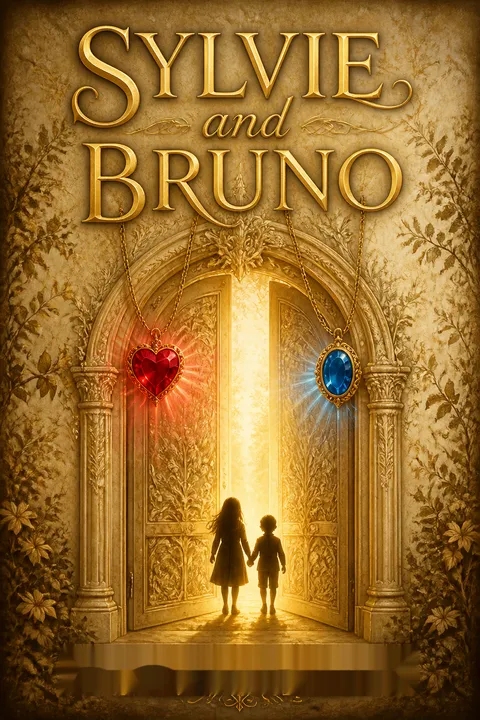
On Sylvie's birthday, the Fairy King—her father—presents her with two magical lockets: one blue, inscribed "All will love Sylvie," and one red, "Sylvie will love all." Sylvie, after thoughtful reflection, chooses the red locket, valuing the act of loving others over being loved herself. This moment crystallizes the book's central moral: true happiness lies in selfless love. Bruno, ever the comic foil, tries to grasp the lesson in his own way. The locket becomes a symbol of Sylvie's pure heart and the transformative power of choosing to love, even in a world rife with selfishness and intrigue.
A Conspiracy Unfolds
With the Warden's authority undermined, the Sub-Warden and his wife, aided by the Lord Chancellor, conspire to seize power. They trick the Warden into signing a false agreement, granting the Sub-Warden absolute control and access to the treasury. Their laughter and glee at the deception reveal their moral bankruptcy. Meanwhile, Sylvie and Bruno, heartbroken at their father's departure, are comforted only by their love for each other. The contrast between the children's innocence and the adults' duplicity is stark, setting the stage for the struggle between good and evil that will play out across both the real and fairy worlds.
The Warden's Departure
The Warden, forced to leave Outland, entrusts his children to the care of the palace. The Sub-Warden and his wife waste no time in abusing their newfound power, closing bakeries, raising taxes, and spreading rumors of the Warden's death. The children, now orphans in spirit, are left to navigate a world that has grown suddenly cold and hostile. Their only solace is in each other and the small acts of kindness they can offer, such as sharing cake with a beggar. The kingdom's descent into tyranny is mirrored by the children's growing sense of loss and longing for justice.
Sylvie and Bruno's Kindness
Despite their own suffering, Sylvie and Bruno remain steadfastly kind. When a beggar is cruelly turned away from the palace, the children chase after him to share their meager food. Their compassion stands in sharp relief against the cruelty of the Vice-Warden and his family, who mock and abuse the poor. This episode highlights the book's recurring theme: the redemptive power of innocence and empathy. The children's actions, though small, ripple outward, offering hope that goodness can survive even in the darkest times.
Fairyland and Elfland
Guided by their father, now revealed as the Fairy King, Sylvie and Bruno travel to Elfland via the Royal Road. There, they encounter magical fruits that promise pleasure but deliver only emptiness—a metaphor for the hollowness of selfish pursuits. The King's lesson is clear: true joy comes not from seeking pleasure, but from loving others. The children's adventures in Elfland blend whimsy with wisdom, as they learn that the heart's desires are best fulfilled through selfless acts and moral courage.
The Vice-Warden's Schemes
Back in Outland, the Vice-Warden and his wife revel in their ill-gotten power, plotting further schemes to secure their rule. They stage elaborate charades, donning disguises as a jester and a bear, and manipulate the visiting Baron Doppelgeist into believing their son Uggug is a prodigy. Their antics, though comical, underscore the dangers of unchecked ambition and the ease with which truth can be subverted by those in power. The children, increasingly marginalized, seek solace in their dreams and in the hope that justice will one day prevail.
The Baron's Visit
The Baron's embassy to Outland is a comic set piece, with the Vice-Warden and his wife orchestrating a series of deceptions to impress their guest. Uggug is presented as a genius, his failures covered up by sleight of hand and distraction. The Baron, though skeptical, is eventually driven away by a room full of frogs—Uggug's idea of natural history. The episode satirizes the pretensions of court life and the absurd lengths to which the powerful will go to maintain their illusions. Meanwhile, the children's plight grows ever more desperate.
The Magic of Transformation
The boundaries between reality and fantasy blur as Sylvie and Bruno, aided by the Professor's inventions, move between Outland, Fairyland, and the "real" world of Elveston. The Magic Locket, the Outlandish Watch, and the Ivory Door become devices for transformation—not just of place, but of perspective and moral understanding. The children's ability to shift between worlds symbolizes the permeability of innocence and experience, and the possibility of redemption through imagination and love.
The Frogs' Birthday Feast
In one of the book's most delightful episodes, Sylvie and Bruno host a birthday feast for the frogs, complete with "Bits of Shakespeare" and a story told by Bruno. The scene is pure Carrollian nonsense, yet it is suffused with gentle satire and moral insight. The frogs' inability to open their mouths for the feast, Bruno's mangled recitations, and the story's circular logic all poke fun at human foibles while celebrating the joy of play and the wisdom of children. The feast is a moment of respite, a reminder that laughter and kindness are themselves forms of resistance against cruelty.
The Outlandish Watch
The Professor's Outlandish Watch, which can move time backward and forward, becomes a symbol of the human desire to undo mistakes and relive moments of happiness. The narrator experiments with the watch, reversing accidents and replaying conversations, only to discover that the past cannot truly be changed—pain and loss are as much a part of life as joy. The watch's magic is ultimately limited, a metaphor for the limits of human agency and the necessity of accepting both sorrow and happiness as integral to the moral journey.
The Crossing of Worlds
The narrative shifts between the fairy world and the English countryside, blurring the line between dream and reality. The narrator, Arthur, Lady Muriel, and the children move in and out of each other's worlds, their encounters charged with longing, loss, and the hope of redemption. The crossing of worlds becomes a metaphor for the passage from childhood to adulthood, from innocence to experience, and from despair to faith. The story's structure itself enacts the moral lesson that life is a series of crossings—each offering the chance for renewal and transformation.
Love and Loss in Elveston
In the "real" world, Arthur's love for Lady Muriel is thwarted by her engagement to Eric Lindon. The pain of unrequited love is rendered with deep psychological insight, as Arthur struggles to reconcile his feelings with his sense of duty and faith. The narrator, too, is caught between worlds—longing for the innocence of childhood, yet unable to escape the realities of loss and disappointment. The emotional arc of the story reaches its nadir here, as the characters confront the limits of their desires and the inevitability of change.
The Power of Prayer
Lady Muriel, troubled by questions of faith and the efficacy of prayer, turns to Arthur for guidance. Their conversation explores the tension between free will and determinism, the role of suffering in spiritual growth, and the possibility of divine intervention in a world governed by natural laws. Arthur's gentle wisdom and unwavering faith offer comfort, but the questions remain unresolved—a testament to Carroll's refusal to offer easy answers to life's deepest mysteries. The chapter is a meditation on the necessity of hope and the power of love to transcend even the greatest sorrow.
The Ivory Door Opens
As the story draws to a close, the Ivory Door—symbol of the threshold between worlds—opens once more. Sylvie and Bruno, now fully fairy children again, prepare to leave the narrator and return to their own realm. The parting is bittersweet, marked by gratitude for the joys shared and sorrow for the losses endured. The narrator, changed by his encounters with the children, is left to ponder the meaning of their journey and the lessons they have taught him about love, forgiveness, and the enduring power of innocence.
The End of Childhood
The final chapters are suffused with nostalgia and longing, as the narrator bids farewell to the world of childhood and accepts the responsibilities of adult life. The magic of Sylvie and Bruno lingers, a reminder that the capacity for wonder and compassion is never truly lost. The story ends with a vision of hope: the dawn of a new day, the promise of renewal, and the conviction that love—however imperfect—remains the greatest force for good in a world shadowed by suffering.
The Triumph of Innocence
In the end, it is the innocence of Sylvie and Bruno—their unwavering kindness, their capacity for forgiveness, and their refusal to be corrupted by the world—that triumphs. Their journey through Outland, Fairyland, and the real world is a testament to the enduring power of love and the possibility of redemption. The story closes with a call to "look Eastward"—to seek the light, to cherish hope, and to believe in the transformative power of innocence, even in the face of loss and despair.
Analysis
Lewis Carroll's Sylvie and Bruno is a work of profound moral and psychological complexity, blending fantasy, satire, and philosophical reflection into a narrative that is both whimsical and deeply serious. At its heart, the novel is a meditation on the nature of innocence, the necessity of selfless love, and the inevitability of loss. Carroll's dual narrative structure allows him to explore the contrasts and connections between childhood and adulthood, dream and reality, and to suggest that the wisdom of children—embodied in Sylvie and Bruno—offers a corrective to the follies and corruptions of the adult world. The magical devices that facilitate the crossing of worlds are metaphors for the transformative power of imagination, empathy, and moral choice. The novel's satire is gentle but incisive, exposing the absurdities of politics, education, and social convention while affirming the enduring value of kindness and compassion. Ultimately, Sylvie and Bruno is a story about the triumph of innocence—not as naïveté, but as a conscious choice to love, forgive, and hope in the face of suffering. Its lessons are as relevant today as they were in Carroll's time: that true happiness lies in selfless love, that the past cannot be undone but can be redeemed, and that the light of hope is always found by "looking Eastward"—toward renewal, faith, and the promise of a new day.
Review Summary
Sylvie and Bruno receives mixed reviews, with ratings ranging from 1-5 stars and an overall 3.38 rating. Readers praise Carroll's wordplay, absurdism, and philosophical depth but criticize the fragmented plot and confusing transitions between reality and fantasy. The story alternates between Victorian society and Fairyland, featuring an unnamed narrator who observes the titular fairy children. Many find Bruno's baby talk insufferable and the pacing uneven. Some appreciate the religious and social commentary, while others feel it disrupts the narrative. Compared to Alice, it's considered less accessible, lacking a cohesive plot and clear resolution, though devoted fans admire its unique experimental structure.
People Also Read

Characters
Sylvie
Sylvie is the moral and emotional center of the story—a child of both Outland and Fairyland, whose compassion and wisdom far exceed her years. She is gentle, nurturing, and unfailingly kind, always putting the needs of others before her own. Her choice of the red locket, "Sylvie will love all," encapsulates her character: she finds joy in loving, not in being loved. Sylvie's relationship with her brother Bruno is both maternal and playful; she guides him with patience, even as she delights in his mischief. Psychologically, Sylvie represents the ideal of Christian charity and the redemptive power of innocence. Her journey is one of quiet heroism—she endures loss, resists corruption, and remains steadfast in her faith that goodness will ultimately prevail.
Bruno
Bruno is Sylvie's younger brother, a source of both chaos and delight. His speech is childlike and often nonsensical, providing much of the book's humor. Yet beneath his antics lies a heart as pure as Sylvie's—he is quick to forgive, eager to help, and deeply loyal to those he loves. Bruno's misunderstandings and malapropisms serve as a satirical mirror to the adult world's pretensions and hypocrisies. Psychologically, he embodies the unfiltered honesty and curiosity of childhood, untainted by cynicism or ambition. His development is subtle: through his adventures, he learns the value of kindness, the pain of loss, and the joy of giving, ultimately emerging as a symbol of the enduring power of innocence.
The Warden / Fairy King
The Warden is both the benevolent ruler of Outland and the Fairy King of Elfland. He is wise, compassionate, and self-sacrificing, embodying the ideals of good governance and paternal love. His forced departure from Outland sets the story's central conflict in motion, and his guidance shapes Sylvie and Bruno's moral education. Psychologically, the Warden represents the voice of conscience and the possibility of redemption through selfless action. His transformation into the Fairy King underscores the story's blending of reality and fantasy, and his ultimate vindication affirms the triumph of justice over tyranny.
The Sub-Warden / Vice-Warden
The Sub-Warden is the primary antagonist—a petty, self-serving bureaucrat whose lust for power drives much of the plot's intrigue. He is manipulative, cowardly, and easily swayed by his domineering wife. His schemes are often farcical, revealing the absurdity of unchecked ambition and the ease with which truth can be subverted. Psychologically, he represents the dangers of moral weakness and the corrupting influence of power. His eventual downfall is both comic and cathartic, serving as a cautionary tale about the perils of self-interest.
The Wardeness / My Lady
The Sub-Warden's wife is a figure of ridicule—vain, greedy, and utterly lacking in self-awareness. She is obsessed with status and material wealth, and her attempts at conspiracy are both laughable and pathetic. Her relationship with her husband is one of mutual manipulation, each enabling the other's worst impulses. Psychologically, she embodies the dangers of unchecked ego and the emptiness of a life devoted to appearances. Her interactions with Sylvie and Bruno highlight the contrast between innocence and corruption.
Uggug
Uggug, the Sub-Warden's son, is a grotesque parody of childhood—selfish, gluttonous, and mean-spirited. He is presented as the antithesis of Sylvie and Bruno, a product of bad parenting and moral neglect. Psychologically, Uggug represents the consequences of a world without love or discipline. His failures and humiliations serve as comic relief, but they also underscore the story's central moral: innocence must be nurtured, or it will be lost.
The Professor
The Professor is a figure of comic wisdom—a scatterbrained inventor whose creations (the Outlandish Watch, the Magic Locket) drive much of the plot's fantasy. He is absent-minded but kind, always ready to help the children and offer sage advice. Psychologically, he represents the value of curiosity, imagination, and the pursuit of knowledge. His inventions are both literal and metaphorical devices for transformation, enabling the characters (and the reader) to see the world anew.
The Other Professor
The Other Professor is even more abstracted than his counterpart, often lost in thought or sleep. He serves as a foil to the Professor, embodying the contemplative side of wisdom. His pronouncements are often nonsensical, yet they contain kernels of truth about the nature of reality, time, and morality. Psychologically, he represents the limits of reason and the necessity of embracing mystery and wonder.
Arthur
Arthur is the narrator's friend in the "real" world—a doctor whose love for Lady Muriel is central to the story's emotional arc. He is intelligent, compassionate, and deeply moral, struggling to reconcile his feelings with his sense of duty and faith. His unrequited love and eventual decision to seek a new life in India reflect the pain of adulthood and the necessity of accepting loss. Psychologically, Arthur embodies the virtues of patience, humility, and resilience.
Lady Muriel
Lady Muriel is the object of Arthur's affection—a woman of beauty, wit, and moral seriousness. She is torn between her duty to her family and her own desires, and her engagement to Eric Lindon is a source of both joy and sorrow. Her conversations with Arthur explore questions of faith, prayer, and the meaning of life. Psychologically, she represents the complexities of adult love and the struggle to reconcile reason with emotion.
Plot Devices
Dual Narrative Structure
The novel alternates between the fairy world of Outland/Elfland and the English countryside of Elveston, blurring the boundaries between dream and reality. This structure allows Carroll to juxtapose innocence and experience, childhood and adulthood, and to explore the moral lessons that emerge from their interplay. The crossings between worlds are facilitated by magical devices (the Ivory Door, the Outlandish Watch, the Magic Locket), each symbolizing a different aspect of transformation and self-discovery.
Satire and Nonsense
Carroll employs satire and nonsense to expose the absurdities of politics, education, and social convention. The farcical court of Outland, the Vice-Warden's schemes, and the frogs' birthday feast all serve as vehicles for gentle but pointed criticism of adult pretensions and the loss of innocence. Nonsense becomes a means of revealing deeper truths, inviting the reader to question received wisdom and embrace the wisdom of children.
Magical Objects
The Magic Locket, the Outlandish Watch, and the Ivory Door are central plot devices, each enabling the characters to move between worlds, alter time, or change their perspective. These objects are not merely fantastical; they are metaphors for the moral choices and psychological transformations that define the characters' journeys. The limitations of their magic underscore the necessity of accepting both joy and sorrow as integral to the human experience.
Foreshadowing and Recurrence
The novel is rich in foreshadowing and recurring motifs: the choice between loving and being loved, the desire to undo the past, the crossing of thresholds, and the tension between innocence and corruption. These devices create a sense of unity and coherence, guiding the reader through the story's complex structure and reinforcing its central moral lessons.
About the Author
Download PDF
Download EPUB
.epub digital book format is ideal for reading ebooks on phones, tablets, and e-readers.








































