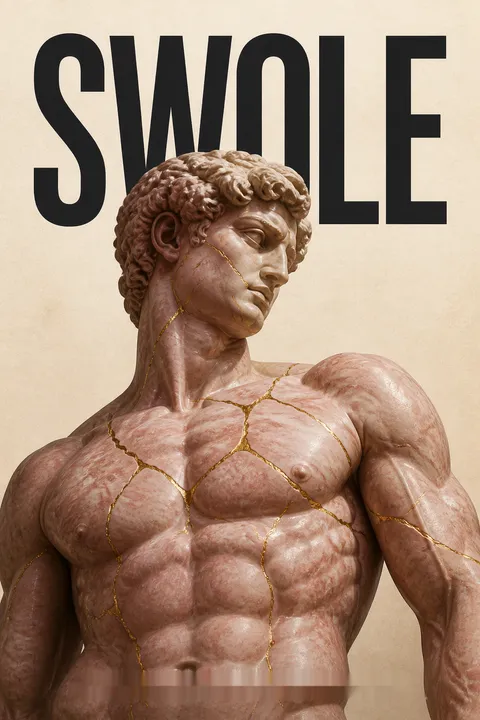

Key Takeaways
1. The Pursuit of "Big" is a Journey of Self-Discovery and Identity
After many years of denial, I came out (for a second time) about ten years ago, admitting to myself and confirming what family and friends alike had long suspected: I am trying to get Big, and doing it very much on purpose.
Personal transformation. The author's journey into bodybuilding, or "getting Big," is deeply intertwined with his quest for self-identity as a gay man. What began as a subconscious desire to embody a powerful male form evolved into a conscious, deliberate effort to become "more myself," challenging preconceived notions of masculinity. This physical pursuit serves as a literal and metaphorical means of self-expression, allowing him to navigate his own unsteady relationship with manhood.
Beyond denial. For the author, the gym became a space to shed years of denial about his desire for a larger physique, a desire present since childhood. This pursuit of "Big" is not merely about vanity or strength, but a complex interplay of physical, emotional, and philosophical trajectories. It's a way to feel seen, to create armor, and to engage in a meditative, almost spiritual, practice that grounds him in the present moment.
Multifaceted motivations. While practical reasons like health, better sleep, and reduced anxiety play a role, the core motivation is a profound longing to embody a specific masculine ideal. This journey, however, is acknowledged as a "cruel, existential form of cardio" – an endless chase toward a constantly changing and impossible standard, blending Herculean labor with Icarian folly and Sisyphean pointlessness.
2. Historical Ideals of Male Bodies Shape Modern Masculinity
The forms of strength and power that the men of the Western world abide by today were forged thousands of years ago in the golden age of Greek sculpture (around 450–400 BCE), when ancient artists were moving toward a convergence of extreme realism and exquisite fantasy.
Ancient foundations. Modern ideals of male physical perfection are deeply rooted in ancient Greek sculpture, particularly the works of Polykleitos and Lysippos. Polykleitos's Doryphoros, with its contrapposto pose and precisely calculated symmetria, established a standard of balanced, virtuous male beauty (arete). Lysippos's "Weary Hercules" further amplified this, depicting a superhumanly muscled demigod whose body told the story of his trials.
Cultural inheritance. This classical aesthetic was rediscovered during the Renaissance, influencing artists like Goltzius, and later shaped 19th-century "physical culture" movements. Figures like Eugen Sandow, "The Father of Bodybuilding," explicitly drew inspiration from these ancient statues, aspiring to embody their "finely developed forms." This lineage demonstrates how the idealized male body has consistently been a cultural construct, a blend of realism and fantasy, passed down through centuries.
Beyond aesthetics. These historical movements, from German Turners to American Muscular Christianity, linked physical fitness to national identity, moral virtue, and civic duty. Walt Whitman, writing as "Mose Velsor," even championed "manly beauty" as a "true ambition" for the good of humanity. This historical context reveals that the male body has long been a canvas for projecting societal values, often conflating physical prowess with moral and spiritual rectitude.
3. Pop Culture Amplifies and Distorts Masculine Ideals
Even in action figure form, He-Man was broad and stout, thicc before thick was a thing.
Childhood archetypes. From He-Man to the Incredible Hulk, pop culture has consistently presented boys with hyper-muscular, often impossible, male figures. He-Man, with his "outlandishly jacked" physique and transformative alter ego Prince Adam, offered a "blank to be filled in," a playable metaphor for containing something bigger within. The Hulk, conversely, became an object lesson in repressed anger, a monstrous transformation that excused violent acts and modeled toxic racial stereotypes.
The Age of Arnold. The 1980s and early 90s, dubbed the "Beefcake Belle Époque," saw an explosion of oversized men in media, from Arnold Schwarzenegger's action heroes to WWF wrestlers and American Gladiators. These figures, often "likable guys who could also very easily maul you," became glossy ambassadors of American values, embodying excess and a reassertion of global dominance. This era cemented the "monster under control" archetype as relatable and aspirational for young men.
Virtual bodies. Video games like Altered Beast and Pit-Fighter further immersed the author in virtual, hyper-muscular bodies, offering a "playable metaphor" for his own inner demons and longing for transformation. This early exposure to digitally enhanced physiques foreshadowed the tech-enhanced images that would later dominate the internet, blurring the lines between reality and fantasy in the pursuit of an idealized self.
4. The "Manosphere" Exploits Male Insecurity and Fear of Modernity
Ironically, if there’s one thing men secretly crave, it’s other men telling them how to be men—from Walt Whitman posing as Mose to Charles Atlas counseling his fellow former beanpoles, from Robert Bly and his mythopoetic ilk helping men unearth their inner beasts to today’s “Western chauvinists,” “men’s rights activists,” “pick-up artists,” and the exhausting bumper crop of contemporary manfluencers on social media.
Digital gurus. The "manosphere" is a vast online ecosystem where self-appointed "alphas" and "manfluencers" capitalize on male insecurity and a perceived "war on masculinity." They offer rigid rules and "unlockable secrets" to manhood, often rooted in anti-feminist rhetoric and a fraudulent nostalgia for a bygone patriarchal order. This phenomenon is fueled by men's deep-seated need to belong and their anxiety over perceived losses of cultural dominance.
Broken masculinity. These gurus, from Joe Rogan to Jordan Peterson and Andrew Tate, peddle a "red pill" ideology that reasserts traditional gender roles and blames "modernity" (inclusive language, multiculturalism, feminism) for men's problems. They promote hyper-individualism while simultaneously fostering a sense of collective grievance, convincing millions of young men that "no one is coming to save you" while offering expensive "Alpha Reset" retreats and "Warrior Week" programs.
Consequences of isolation. This online culture exacerbates male isolation, leading to a "pandemic" of unaddressed mental health issues, including depression, anxiety, and alarmingly high suicide rates. The "manosphere" provides a false sense of belonging, transforming dejection into a mark of membership and loneliness into brotherhood, often serving as a gateway to more toxic ideologies like white supremacy and violent extremism.
5. The Gym Offers a Unique Space for Men to Confront Failure and Find Community
Success in the gym is merely a measure of one’s dedication to finding failure, not one’s ability to feign freedom from it.
Embracing failure. Unlike most aspects of male life where failure is shunned, the gym actively requires it for progress. The principle of "progressive resistance" demands continually pushing "to failure"—the point where another repetition is impossible. This process, initially terrifying for the author, transforms failure into a "workout buddy," essential for growth and assigning meaning to accomplishments.
A sacred space. The gym, particularly hardcore facilities like "Olympus," becomes a unique social space where men can shed the rigid codes of masculinity. Here, men help, praise, and fail freely in front of each other, fostering a sense of camaraderie and mutual respect. This environment allows for "small violations of the cold codes of masculinity," creating a benevolent ease that contrasts sharply with the aggression often found outside its walls.
Beyond dominance. While men may initially be drawn to the gym by the "fleeting high of dominance," true meatheads learn that lifting is an act of submission to the iron and a "precisely managed pursuit of failure." Muscles, rather than being trophies of triumph, become "receipts of defeats," embodying a dedication to difficulty. This shared struggle transforms workouts into a ritual, a collective performance of burdens that ultimately makes the world feel lighter.
6. "The Pump" is the Addictive, Fleeting Reward of Physical Transformation
It’s as satisfying to me as having sex with a woman and coming.
Biological high. The "pump"—the temporary engorgement and swelling of muscles with blood and fluid during a workout—is described as the "high" that makes iron an addictive substance for men. This immediate biological response provides an "uncanny source of motivation" and an "unmatchable physical buzz," serving as the most intoxicating and immediate payoff of lifting weights.
Arnold's endorsement. Arnold Schwarzenegger famously articulated the pump's allure, calling it "the most satisfying feeling you can get in the gym" and comparing it to sexual climax. He emphasized its psychological impact, noting that feeling "pumped" makes one feel "better and stronger," motivating harder training and a higher level of intensity, sometimes making one feel like "King Kong."
Proof of purchase. For men striving to transform their bodies, the pump is "proof of purchase," a tangible, albeit fleeting, validation of their effort. It dictates gymwear choices, fuels gym selfies, and serves as a "long-delayed realization" of childhood superhero fantasies. This temporary, mythic inflation of the body amplifies presence, fluffs plumage, and reinforces the idea of the body as a "machine made of blood and breath and electricity."
7. Masculinity is a Performance, Often a Form of "Drag"
After all, what are big muscles but drag?
Theatricality of manhood. The author provocatively suggests that men's efforts to embody traditional masculinity, particularly through building big muscles, can be seen as a form of "drag." This perspective highlights the performative, constructed nature of gender, where men "puff ourselves up before entering a room and push ourselves out if that room is full of men," turning their bodies into "armored vehicles" or "heavily decaled shells."
Breaking uniform. Drag, with its "brazen violation of cross-dressing," draws its transgressive force from men "breaking uniform," challenging the "gravity of masculinity." The author's own experience of consciously building muscles to "overcompensate" for his perceived "waify arms" and "weak back" was an attempt to "present anew," to "project beauty and power and confidence just by showing up differently."
Deflating binaries. The intense aversion to drag among some men stems from its ability to "dismantle binaries of gender," puncturing masculinity's seriousness with camp and subverting its authority. This discomfort reveals how deeply men are invested in rigid gender roles, which provide "lines, blocking, costumes, and direction." Drag, by blurring these lines, threatens the "fortress" of identity constructed on such binaries.
8. The Digital Age Intensifies Body Dysmorphia and Unrealistic Standards
More and more, our avatars are becoming reflections of the identities our bodies keep to themselves.
Virtual inflation. The digital age, particularly through social media and AI tools, has created an "endless procession of men" whose bodies are often "deceptively edited and strategically altered." "Morphs"—digitally inflated images of bodybuilders and strongmen—set "unattainable goals," pushing men towards extreme, often unhealthy, physical alterations and fostering unrealistic body standards.
The "realness" paradox. This virtual landscape fuels body dysmorphia, with men increasingly seeking cosmetic procedures like silicone implants, liposuction, and even painful leg-lengthening surgeries to conform to these impossible ideals. The pressure to appear "real" or "natty" (natural) online is ironically met with a surge in synthetic enhancements like Synthol injections and steroid use, blurring the line between fantasy and reality in dangerous ways.
Algorithmic distortion. Social media algorithms, designed to feed users "more and more of what you like," create a "distorted outlook" that extends beyond the body. This constant influx of hyper-muscular images, coupled with the ease of digital alteration, makes it harder for young men to discern reality, leading to increased disordered eating, muscle dysmorphia, and steroid experimentation, as their avatars become the "identities our bodies keep to themselves."
9. True Strength Lies in Vulnerability, Empathy, and Connection
One who bears the burden of his body and the weight of his world with kindness, compassion, empathy, and courage? One who knows that strength is not the pursuit of power—it’s the path to lightness.
Beyond physical might. The author's journey culminates in a redefinition of "real strength," moving beyond mere physical power or dominance. Through the tragic story of "Big Little"—a man consumed by body dysmorphia and steroid abuse—and the quiet resilience of his own father, the author learns that true strength lies in kindness, compassion, empathy, and courage, rather than the relentless pursuit of an impossible physical ideal.
The burden of the body. The father's aging body, an "atlas of scars" and a "living archive of his trials," becomes a powerful symbol of Herculean endurance and survival, despite its physical frailties. His ability to face illness with humor and grace, and his unwavering devotion to caring for his ailing wife, exemplify a deeper, more profound form of strength that transcends physical appearance.
Connection over isolation. The "manosphere's" mantra of "no one is coming to save you" promotes a destructive hyper-individualism that leads to male isolation and mental health crises. In contrast, the author finds genuine connection and support in the gym's community and in his relationship with his father. Ultimately, the book argues that men need to "reconnect with our true selves" by embracing vulnerability and fostering authentic relationships, understanding that strength is found not in power, but in the "path to lightness" that comes from shared humanity.
Review Summary
Reviews of Swole are generally positive, averaging 3.76/5. Readers praise Brodeur's beautiful prose, cultural-historical scope, and personal memoir elements exploring masculinity, bodybuilding, and LGBTQ+ perspectives. Many appreciate its survey of influences shaping the ideal male body, from Greek mythology to Reagan-era pop culture. Common criticisms include the book feeling repetitive or meandering, lacking a strong thesis, and not going deep enough analytically. Some found it more memoir than cultural critique, while others wished for more academic rigor and stronger conclusions about masculinity's complex intersections with race and identity.
People Also Read







Download PDF
Download EPUB
.epub digital book format is ideal for reading ebooks on phones, tablets, and e-readers.








































