
Key Takeaways
1. Suffering is a divine calling, not a random event.
My purpose in writing this book is that you would not be surprised when suffering comes into your life.
Embrace suffering's purpose. Many in Western nations are lulled into a false sense of invulnerability, making suffering a surprise. However, suffering—whether disease, grief, loss, or persecution—is not random; it is sent by a sovereign and loving heavenly Father for our ultimate good. It is a vocation, a calling from God, meant to prepare us for life's inevitable valleys.
Paul's example of perseverance. The Apostle Paul openly admitted being "hard pressed on every side, yet not crushed; perplexed, but not in despair." He didn't mask his pain with false piety, acknowledging the immense pressure but affirming that God never puts more on us than we can bear. This perspective transforms suffering from a meaningless burden into a purposeful trial that strengthens faith.
Suffering refines faith. Perplexity often accompanies suffering, leading us to ask "Why?" Peter admonishes us not to think it strange to suffer, but to rejoice as we partake in Christ's sufferings. This process, likened to gold refined by fire, purges impurities and tests the genuineness of our faith, ultimately leading to the salvation of our souls.
2. God's sovereignty underpins all suffering, even when perplexing.
Consider the work of God; for who can make straight what He has made crooked?
God's hand in all things. The book of Ecclesiastes repeatedly affirms God's absolute sovereignty, stating that "whatever God does, it shall be forever" and "who can make straight what He has made crooked?" This means God ordains everything according to His purposes, including the suffering that enters our lives. To deny this is to question either His power or His goodness.
Adversity reveals God's providence. Solomon advises us to "consider" God's work in both prosperity and adversity, recognizing that God has appointed both. This challenges the notion of "senseless tragedy," as a Christian worldview asserts that nothing happens without purpose in the mind of an almighty God.
- We tend to see God's hand in "yes" answers to prayer.
- We often doubt God's presence in "no" answers or suffering.
- Wisdom lies in recognizing God's sovereign hand in both.
Sovereignty brings joy. Earlier generations, more familiar with pain and persecution, often had a higher view of God, forcing them to consider His hand in their difficulties. Understanding God's sovereignty changes our countenance, allowing joy even in suffering, because we see that our pain is not without purpose.
3. Jesus' suffering on the Via Dolorosa is the ultimate example and our model.
No one was ever called by God to greater suffering than God's only begotten Son.
Christ's suffering was His vocation. Jesus' journey to the cross, the Via Dolorosa, was His divine calling, a "mustness" rooted in His mission to bear the cumulative pain of every evil, sickness, and sin. This suffering was not accidental but God's chosen way to bring redemption to a fallen world, making Jesus the ultimate Suffering Servant.
Peter's rebuke and Jesus' acceptance. The idea of a suffering Messiah was scandalous to many, including Peter, who tried to dissuade Jesus from His path to suffering and death. Jesus sharply rebuked Peter, recognizing the seductive suggestion of Satan. In Gethsemane, Jesus prayed for the cup of suffering to pass, but ultimately submitted, "Nevertheless, not My will, but Yours, be done."
- Jesus' prayer in Gethsemane was earnest, even to sweat like blood.
- God's "no" to removing the cup was part of His plan.
- True faith involves subordination and trust in God's will.
God's plan through suffering. Jesus' acceptance of the Father's will in Gethsemane demonstrates that God sometimes calls us to suffer and die. This profound act of obedience underscores that suffering is not a deviation from God's plan but often the very pathway through which His redemptive purposes are accomplished.
4. We are called to participate in Christ's suffering as witnesses.
I now rejoice in my sufferings for you, and fill up in my flesh what is lacking in the afflictions of Christ, for the sake of His body, which is the church.
Suffering as a privilege. Paul's astonishing statement about "filling up what is lacking in the afflictions of Christ" does not imply any deficiency in Jesus' atoning sacrifice. Rather, it signifies the believer's call to participate in Christ's humiliation, imitating Him as the church, the mystical body of Christ on earth. This participation is a duty and a privilege.
Witness through affliction. Our suffering, though never atoning, serves as a powerful witness to the perfect Suffering Servant of God. Just as Paul's suffering benefited the church, our afflictions can impact others redemptively. For example, the author's father's suffering and death, though seemingly useless, ultimately drove the author to Christ.
Solidarity with Christ. Jesus identified so closely with His church that He asked Paul, "Saul, Saul, why do you persecute Me?" when Paul was persecuting Christians. This solidarity means that when we suffer, Christ feels it as a personal attack. Because we suffer with Him, we are promised to be raised and exalted with Him, making our suffering purposeful within God's plan.
5. Dying in faith is the ultimate vocation, leading to immediate presence with Christ.
Assuredly, I say to you, today you will be with Me in Paradise.
Death as a divine appointment. Just as there is "a time to be born, and a time to die," death is a divine appointment, a vocation from God for every person. Jesus, not Satan, holds the "keys of Hades and of Death," asserting His ultimate authority over life's final experience. This means death is not a victory for Satan but a passage orchestrated by Christ.
Two ways of dying. Scripture emphasizes not if or when we die, but how: either "in faith" or "in our sins." Dying in our sins is the worst possible outcome, leading to eternal separation from God. This underscores the urgent biblical warning to repent and believe in Christ before death, as there is no second chance or purgatory after this life.
Immediate presence with Christ. The New Testament consistently portrays the intermediate state—the period between death and final resurrection—as one of conscious bliss in Christ's presence. Paul viewed death as "gain" and "far better" than earthly life, desiring "to depart and be with Christ." Jesus' promise to the thief on the cross, "today you will be with Me in Paradise," confirms this immediate transition for believers.
6. The resurrection of Christ guarantees our future bodily resurrection and eternal life.
If Christ is not risen, then our preaching is empty and your faith is also empty.
The cornerstone of Christianity. The resurrection of Christ is the central affirmation of the Christian faith. Paul argued that without it, Christian preaching is empty, faith is futile, apostles are false witnesses, and those who died in Christ have perished. Denying the resurrection renders Christianity meaningless, reducing it to mere ethics without hope.
Eyewitness testimony. Paul's confidence in the resurrection was not based on speculation but on historical eyewitness accounts. He listed numerous witnesses, including Cephas, the twelve, over five hundred brethren at once (most still alive at the time of his writing), James, all the apostles, and finally, himself. This direct testimony provides tangible evidence beyond philosophical arguments.
Our labor is not in vain. The certainty of Christ's resurrection provides the anchor for the soul, making believers steadfast and immovable. It assures us that our labor, pain, and suffering in the Lord are never in vain. Christ's resurrection is the "firstfruits" of our own, promising that we too will be raised with glorified bodies, free from corruption, dishonor, and weakness.
7. Heaven is a glorious, permanent reality, far better than earthly life, free from all sorrow and curse.
And God will wipe away every tear from their eyes; there shall be no more death, nor sorrow, nor crying. There shall be no more pain, for the former things have passed away.
A new heaven and new earth. John's vision in Revelation culminates in a "new heaven and a new earth," a renovated creation where the old order passes away. This new order will be purified, free from the chaotic "sea" (a symbol of ominous threats in Jewish thought), and marked by the immediate, permanent presence of God.
The New Jerusalem. The "holy city, New Jerusalem," descends from heaven, adorned like a bride. Its chief feature is God dwelling directly with His people, fulfilling Ezekiel's prophecy: "THE LORD IS THERE." This city will have no temple, for God the Father and the Lamb will be its temple, and no sun or moon, for their glory will be its everlasting light.
End of all suffering. In this new reality, God will "wipe away every tear," signifying the permanent end of all crying, death, sorrow, and pain. These "former things" will have passed away. The city's gates, made of single pearls, will always be open, welcoming people from all nations, but nothing that defiles or causes abomination will enter—only those written in the Lamb's Book of Life.
8. Our hope in Christ makes all suffering purposeful and our labor not in vain.
Our divine vocation is not ultimately to suffering, but to a hope that triumphs over suffering.
Hope rooted in God's power. Paul prayed that believers would have "the Spirit of wisdom and revelation in the knowledge of Him," so they might fully appreciate "the hope of His calling, what are the riches of the glory of His inheritance in the saints, and what is the exceeding greatness of His power toward us who believe." This hope is not a mere wish but is rooted in God's omnipotent power, ensuring it will never fail or disappoint.
Beyond earthly suffering. The Bible consistently contrasts our "light affliction, which is but for a moment," with a "far more exceeding and eternal weight of glory." This perspective allows us to endure present suffering, knowing that it is temporary and working towards an incomparable future blessedness. The ultimate goal is not merely relief from pain, but eternal joy in Christ's presence.
A legacy of steadfastness. The promise of eternal joy and the certainty of resurrection provide the ultimate comfort and motivation for Christians. It empowers us to be "steadfast, immovable, always abounding in the work of the Lord, knowing that your labor is not in vain in the Lord." This legacy of hope and perseverance, exemplified by those who "died in faith," is the inheritance of all who trust in Christ.
Review Summary
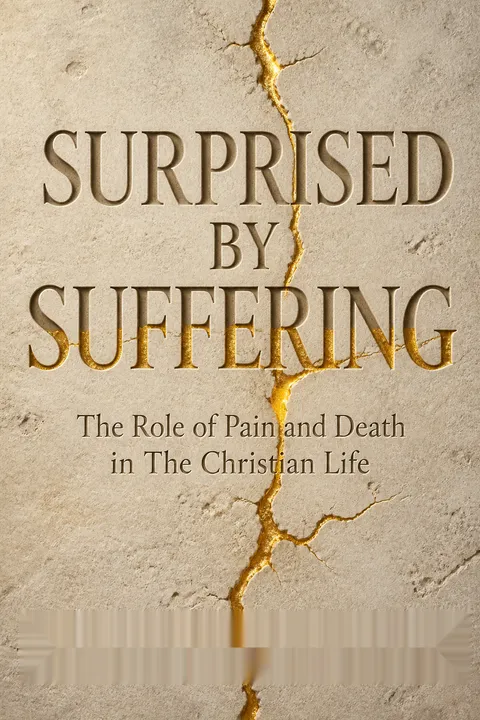
Surprised by Suffering by R.C. Sproul receives a 4.2/5 rating. Readers appreciate Sproul's biblically grounded approach to suffering and death, particularly his emphasis on God's sovereignty and the promise of eternal life. Some reviewers note the book focuses more on death, resurrection, and heaven than expected from the title. Many find it pastorally sensitive and encouraging, especially those experiencing suffering personally. Critics mention it lacks depth or emotional engagement with suffering's practical aspects. The Q&A section and chapter on heaven receive consistent praise. Overall, readers value Sproul's rejection of prosperity gospel theology.
People Also Read










Download PDF
Download EPUB
.epub digital book format is ideal for reading ebooks on phones, tablets, and e-readers.








































