
Plot Summary
Saffron Park's Fiery Debate
In the eccentric suburb of Saffron Park, two poets—Lucian Gregory, a passionate anarchist, and Gabriel Syme, a self-proclaimed poet of order—engage in a spirited debate about the nature of art, law, and rebellion. Their argument, set against a surreal sunset, is more than philosophical banter; it is a battle of worldviews. Syme's calm rationality and Gregory's fiery rhetoric draw a crowd, including Gregory's sister Rosamond, who is both amused and concerned. The debate ends with Syme challenging Gregory's seriousness about anarchy, setting the stage for a night that will blur the lines between performance and reality.
Oaths and Double Lives
Gregory, stung by Syme's skepticism, swears to prove his commitment to anarchy. He leads Syme to a hidden underground lair, where he reveals the existence of a secret anarchist cell. Before entering, Syme is made to swear an oath of secrecy. Inside, Gregory confides that he is about to be elected "Thursday" on the Central Anarchist Council, a group of seven men named after the days of the week. But Syme has a secret of his own: he is an undercover detective, sent to infiltrate the anarchists. The two men are now bound by mutual blackmail, each unable to betray the other without risking himself.
The Council of Days
At the anarchist meeting, Syme's quick wit and boldness turn the tables on Gregory, and he is unexpectedly elected as Thursday, the new member of the Supreme Anarchist Council. The council is presided over by the enigmatic and colossal Sunday, whose presence is both magnetic and terrifying. The other members—Monday, Tuesday, Wednesday, Friday, and Saturday—are a gallery of grotesques, each with their own peculiarities. Syme is thrust into a world where nothing is as it seems, and where the line between performance and sincerity is razor-thin.
The Poet-Detective's Vow
Syme's backstory unfolds: he is not just a detective, but a poet at heart, driven to defend order in a chaotic world. Haunted by a past encounter with anarchist violence, he has joined a secret corps of "philosophical policemen" tasked with combating intellectual and moral anarchy. His mission is not just to stop bombs, but to fight the nihilism that threatens civilization itself. Syme's sense of isolation deepens as he realizes he must face the Council alone, bound by his promise to Gregory and unable to call for help.
Breakfast with Anarchists
Syme attends his first Council breakfast, a public spectacle where the anarchists flaunt their respectability. Sunday dominates the gathering, his massive presence both jovial and menacing. The council discusses a plot to assassinate world leaders, and Syme is horrified by the casualness with which they plan murder. Yet beneath the surface, each member seems subtly wrong, as if wearing a mask. Syme feels the weight of Sunday's gaze, suspecting that his cover may already be blown. The breakfast is a carnival of paradox, where laughter and terror intermingle.
The President's Gaze
The Council moves to a private room, where Sunday announces that there is a traitor among them. Tension mounts as suspicion falls on Gogol, the man known as Tuesday, who is revealed to be a police spy. The revelation is both a relief and a new source of anxiety for Syme, who realizes that Sunday's power is greater than he imagined. The Council is a hall of mirrors, where every identity is suspect and every alliance provisional. Syme's fear of Sunday grows, as does his determination to confront the President's mysterious authority.
Pursued by Paranoia
After the meeting, Syme is pursued through the city by Professor de Worms, the decrepit Friday. Despite the Professor's apparent frailty, he seems to appear everywhere Syme goes, defying logic and physical possibility. The chase becomes a nightmare, with Syme questioning his own sanity. The city itself turns hostile, its familiar streets transformed into a labyrinth of suspicion. When Syme finally confronts the Professor, he discovers that de Worms is not an old man at all, but another undercover detective. The revelation is both comic and unsettling, deepening the sense that reality is a stage and everyone is in disguise.
Revelations in Disguise
Syme and the false Professor join forces, only to discover that Dr. Bull, the cheerful Saturday, is also a detective in disguise. The three realize that the Council is riddled with spies, each believing himself alone. Their camaraderie is tinged with absurdity and relief, as they set out to stop the Council's plot. The unmasking continues when the Marquis de St. Eustache, Wednesday, is revealed during a duel to be Inspector Ratcliffe, yet another detective. The Council of Anarchists is exposed as a council of policemen, all working at cross-purposes, manipulated by Sunday.
The Duel and the Unmasking
Syme challenges the Marquis to a duel in France, hoping to delay his journey and prevent the assassination plot. The duel is a farce, with both men repeatedly wounding each other to no effect. The Marquis finally reveals himself as a detective, and the remaining Council members are unmasked one by one. The realization dawns that Sunday has orchestrated the entire charade, pitting the forces of order against each other in a cosmic joke. The detectives are left bewildered, questioning the nature of their enemy and the meaning of their struggle.
The Chase Across Europe
The detectives pursue Sunday across London and into the countryside, through a series of increasingly surreal and comic chases—by cab, fire engine, elephant, and even a runaway balloon. Sunday eludes them at every turn, leaving behind cryptic notes and riddles. The world itself seems to turn against the detectives, as ordinary people and even the police join the pursuit. The chase becomes a metaphor for the search for meaning in a world governed by paradox and uncertainty.
The World Turns Hostile
As the detectives flee through France, they find themselves pursued by mobs, betrayed by allies, and attacked by the very institutions they once trusted. The world appears to have turned anarchist, with every authority figure revealed as an enemy. The detectives are driven to the edge of despair, forced to defend themselves against overwhelming odds. The sense of nightmare intensifies, as the boundaries between friend and foe, law and chaos, dissolve. The detectives' only hope is to reach Sunday and demand an explanation.
The Carnival of Law and Chaos
The pursuit ends at a grand masquerade, where each detective is given a costume representing a day of creation. Sunday presides over the festivities, dressed in pure white, embodying both peace and enigma. The detectives are celebrated as heroes, yet remain tormented by questions. The carnival is a vision of the world as a dance of opposites—order and chaos, light and darkness, law and rebellion. The detectives confront Sunday, demanding to know the meaning of their ordeal and the nature of his power.
The Accuser's Challenge
Gregory, the original anarchist, appears as the final accuser, denouncing the detectives as the unbroken rulers of the world, untouched by suffering. Syme responds with a passionate defense of the struggle for order, insisting that those who uphold the law have suffered as much as any rebel. The confrontation becomes a metaphysical trial, with Sunday as the silent judge. The detectives demand to know if Sunday himself has ever suffered, and the question is met with a vision so overwhelming that Syme faints, his mind shattered by the enormity of the answer.
The Final Awakening
Syme awakens from his nightmare in the familiar streets of Saffron Park, walking beside Gregory as if nothing had happened. The world is bathed in the gentle light of dawn, and Syme is filled with a sense of impossible good news. The nightmare has ended, but its lessons linger: the struggle between order and chaos is eternal, and every soul must face it alone. Yet beneath the terror and confusion lies a deeper harmony, a peace that passes understanding. The story closes with the promise of renewal, as Syme glimpses the possibility of grace in a world of paradox.
Analysis
A metaphysical detective story, a cosmic comedyThe Man Who Was Thursday is a dazzling fusion of thriller, satire, and philosophical allegory. Chesterton uses the conventions of the spy novel to explore the deepest anxieties of the modern age: the fear of chaos, the longing for order, and the terror that the universe may be ultimately unknowable. The novel's relentless reversals and unmaskings force both characters and readers to confront the instability of identity and the ambiguity of good and evil. Sunday, the enigmatic President, embodies the mystery at the heart of existence—a force that is by turns playful, terrifying, and redemptive. The story's dreamlike structure and carnival imagery suggest that life itself is a masquerade, where every certainty is provisional and every pursuit leads to a deeper paradox. Yet beneath the nightmare lies a vision of hope: the possibility that suffering and struggle are not meaningless, but part of a larger harmony. Chesterton's lesson is that the battle between order and chaos is not only external but internal, and that true courage lies in embracing the mystery with faith, humility, and joy. In an age of skepticism and despair, The Man Who Was Thursday remains a bracing affirmation of the enduring power of wonder.
Review Summary
The Man Who Was Thursday receives mixed but largely positive reviews, with readers praising Chesterton's wit, philosophical depth, and surreal narrative style. Many compare it to Alice in Wonderland for adults, noting its dreamlike quality and Christian allegory. Reviewers appreciate the absurdist humor, brilliant prose, and unexpected plot twists involving undercover detectives infiltrating an anarchist council. Some find the ending confusing or heavy-handed with religious symbolism. The book's exploration of good versus evil, reality versus appearance, and its prescient themes about terrorism resonate with modern readers. While some struggle with its dated elements and philosophical density, most agree it's an entertaining, thought-provoking classic that influenced later surrealist and magical realist writers.
People Also Read


Characters
Gabriel Syme
Syme is the protagonist, a poet who becomes a detective out of a passionate commitment to order in a chaotic world. His sensitivity and imagination make him both vulnerable and courageous, as he navigates the surreal dangers of the anarchist underworld. Syme's journey is one of self-discovery, as he confronts his own fears and doubts, ultimately finding meaning in the struggle itself. His relationships with the other detectives are marked by camaraderie and mutual bewilderment, and his final confrontation with Sunday forces him to grapple with the deepest questions of suffering, faith, and identity.
Lucian Gregory
Gregory is Syme's philosophical opposite, a poet who champions chaos and rebellion. His flamboyant rhetoric masks a deep insecurity, and his commitment to anarchy is as much performance as conviction. Gregory's rivalry with Syme drives the plot, but he is ultimately revealed as a tragic figure, consumed by resentment and alienation. His final appearance as the accuser crystallizes the novel's central conflict between order and revolt, authority and freedom.
Sunday
Sunday is the President of the Central Anarchist Council, a figure of immense physical and psychological presence. He is at once jovial and terrifying, embodying both the absurdity and the majesty of creation. Sunday manipulates the detectives and anarchists alike, orchestrating the entire drama as a kind of metaphysical jest. His true nature is never fully revealed; he is by turns God, devil, and man, a symbol of the unknowable forces that govern the universe. Sunday's laughter and silence haunt the story, challenging every attempt at understanding.
The Secretary (Monday)
The Secretary is a man of intense seriousness, marked by a twisted smile and a tortured conscience. He is both a fanatic and a victim, driven by a need for meaning in a world that offers only ambiguity. His role as Monday, the first day of creation, aligns him with the principle of light, yet he is perpetually shadowed by doubt. The Secretary's final outburst against Sunday expresses the existential anguish at the heart of the novel.
Gogol (Tuesday)
Gogol is a Polish anarchist whose tragic demeanor and wild appearance conceal his true identity as a detective. His inability to play the part of a conspirator reflects his inner conflict, and his eventual unmasking is both comic and poignant. Gogol represents the longing for simplicity and sincerity in a world of deception, and his fate underscores the novel's theme of mistaken identity.
Marquis de St. Eustache (Wednesday) / Inspector Ratcliffe
The Marquis is a suave and sinister figure, embodying the allure of decadence and the threat of violence. His duel with Syme is a turning point, revealing him as Inspector Ratcliffe, yet another detective. Ratcliffe's cynicism and practicality provide a counterpoint to Syme's idealism, and his presence highlights the absurdity of the Council's machinations.
Professor de Worms (Friday) / Wilks
The Professor appears as a decrepit old man, but is in fact a young actor named Wilks, another undercover detective. His elaborate performance is a commentary on the nature of identity and the masks we wear. Wilks's friendship with Syme is a source of comic relief and philosophical reflection, as they navigate the shifting realities of the Council.
Dr. Bull (Saturday)
Dr. Bull is the most cheerful and unassuming member of the Council, his innocence concealed behind dark spectacles. When unmasked as a detective, he becomes a symbol of the ordinary virtues—good humor, loyalty, and resilience—that persist in the face of chaos. Bull's optimism is both a comfort and a challenge to the more tormented characters.
Rosamond Gregory
Rosamond is Gregory's sister, a minor character whose presence haunts Syme throughout his ordeal. She represents the possibility of love, beauty, and normalcy in a world gone mad. Though she disappears early in the story, her memory recurs as a motif of redemption and grace.
The Accuser (Gregory, transformed)
In the final chapters, Gregory reappears as the accuser, articulating the grievances of those who feel excluded from power and happiness. His challenge to the detectives and to Sunday crystallizes the novel's exploration of suffering, justice, and the limits of human understanding. Gregory's transformation from rival to accuser underscores the cyclical nature of the struggle between order and chaos.
Plot Devices
Masks and Disguises
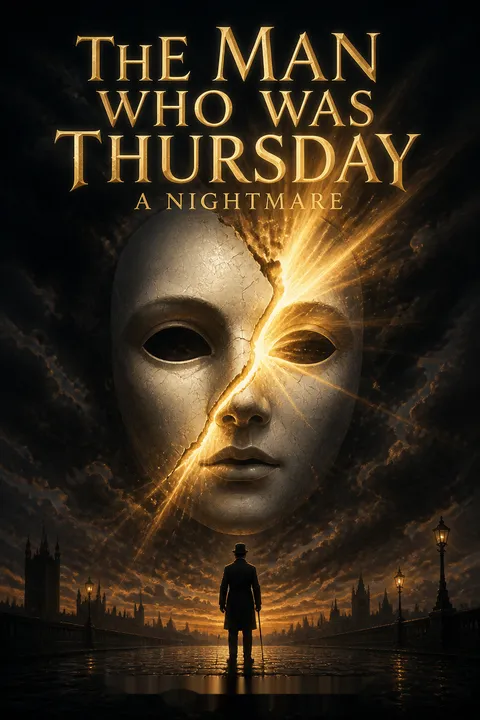
The novel's central device is the use of masks and disguises, both literal and metaphorical. Every character is in disguise, and the Council of Anarchists is revealed to be a council of detectives, each believing himself alone. This device creates a hall-of-mirrors effect, blurring the boundaries between friend and foe, law and chaos. The unmasking of each character is both a comic reversal and a philosophical revelation, forcing the reader to question the nature of identity and the possibility of truth.
Paradox and Irony
Chesterton structures the narrative around paradoxes—order masquerading as chaos, law as rebellion, suffering as joy. The story is a nightmare in which every certainty is overturned, and every pursuit leads to a deeper mystery. Irony pervades the dialogue and the plot, culminating in the revelation that the supposed anarchists are all agents of order, manipulated by a President who is both God and devil. The use of paradox is not merely stylistic; it is the engine of the novel's philosophical inquiry.
The Nightmare Structure
The subtitle "A Nightmare" signals the novel's dreamlike structure, where events unfold with the logic of a fevered imagination. Time and space are fluid, and the boundaries between reality and illusion are constantly shifting. The narrative moves from the familiar streets of London to surreal chases across Europe, culminating in a carnival that is both a celebration and a trial. The nightmare structure allows Chesterton to explore the psychological and metaphysical dimensions of his themes.
Foreshadowing and Reversal
The novel is rich in foreshadowing, with early debates and encounters hinting at later revelations. Each apparent victory is reversed, and every solution gives way to a deeper problem. The repeated motif of pursuit—Syme chasing and being chased—mirrors the reader's own search for meaning. The final reversal, in which the detectives discover that they have been manipulated by Sunday all along, is both a comic twist and a profound commentary on the limits of human understanding.
Allegory and Symbolism
The seven days of the Council correspond to the days of creation, and each character's costume at the carnival reflects his symbolic role. Sunday, in his white robe, is both the Sabbath and the peace of God, a figure of ultimate reconciliation. The novel's allegorical dimension invites multiple interpretations—religious, philosophical, existential—without ever settling on a single meaning. The use of allegory allows Chesterton to address universal questions through the particulars of his absurd plot.
About the Author
Other books by G.K. Chesterton
Download PDF
Download EPUB
.epub digital book format is ideal for reading ebooks on phones, tablets, and e-readers.








































