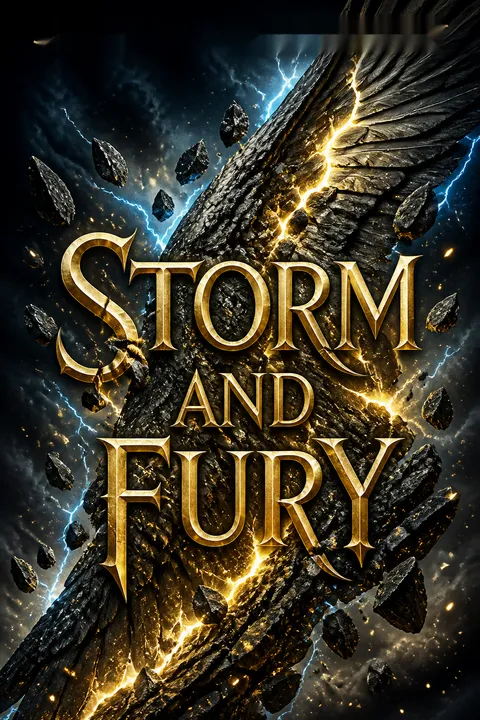

Plot Summary
Hidden Among Gargoyles
Trinity Marrow, an eighteen-year-old girl with failing eyesight, lives under the protection of Wardens—gargoyle shape-shifters sworn to keep humanity safe from demons. Trinity's unique ability to see and communicate with ghosts is a secret that could get her killed if discovered by demons, who would consume her to gain her power. Her world is tightly controlled, her hidden identity hidden, and her only close companions are her bonded Protector, Misha, and a handful of trusted friends. The compound is both sanctuary and prison, and Trinity's yearning for more is matched only by the ever-present threat lurking beyond the walls.
Demons at the Gate
When Trinity senses demons near the compound, she defies orders and sneaks out to confront them, determined not to let others die for her safety. Joined by Misha, she faces a horde of Raver demons, revealing her extraordinary strength and skill. The attack is a warning: the outside world is growing more dangerous, and the fragile peace within the compound is under siege. Trinity's actions draw the attention of her guardians, and the cost of her defiance becomes clear—her secret is at risk, and the walls may not be enough to keep the darkness out.
Unwelcome Visitors Arrive
The arrival of Wardens from the DC clan, led by Nicolai and the enigmatic Zayne, upends Trinity's world. They bring news of something killing both demons and Wardens, a threat that defies explanation. The visitors' presence stirs tension and curiosity, especially as Zayne's attention lingers on Trinity. As the clans prepare for the Accolade, a ceremony for new warriors, Trinity's place among them feels more precarious than ever. The visitors' request for reinforcements is met with reluctance, and the sense of impending crisis grows.
Secrets Behind the Curtain
Trinity's curiosity leads her to eavesdrop on the DC clan's meeting, where she learns of the mysterious deaths plaguing both sides. Her clandestine presence is discovered by Zayne, sparking a charged confrontation that hints at a deeper connection between them. Their banter is laced with suspicion and attraction, and Trinity's impulsiveness puts her at odds with both her protectors and the newcomers. The boundaries between safety and danger, trust and secrecy, begin to blur.
Training, Tension, and Trust
As Trinity trains with Misha, the complexities of their bond come to the surface. Misha's protectiveness is both comfort and constraint, and his warnings about Zayne sow seeds of doubt. Trinity's friendships with Jada and others are tested by the arrival of outsiders and the ever-present threat of exposure. The longing for connection—romantic, familial, and personal—runs beneath every interaction, and the tension between duty and desire grows sharper.
The Blade and the Bond
Trinity's skills with daggers impress Zayne, and their interactions shift from antagonistic to tentative trust. They share personal histories, revealing wounds and vulnerabilities—Trinity's mother's death at a Warden's hands, Zayne's own losses. The bond between them deepens, complicated by attraction and the secrets they both keep. As they train and patrol together, the lines between ally and something more begin to blur, setting the stage for choices that will test them both.
Ghosts and Growing Yearning
Trinity's ability to see ghosts brings her into contact with restless spirits, each encounter a reminder of her unique heritage and the weight of her destiny. Peanut, her ghostly companion, provides comic relief and unexpected wisdom. Meanwhile, Trinity's feelings for Zayne intensify, fueled by shared danger and moments of vulnerability. The yearning for something beyond survival—love, freedom, purpose—becomes impossible to ignore, even as threats gather on all sides.
The Limits of Safety
The compound's defenses are tested as attacks grow bolder and more frequent. Trinity's sense of safety is shattered when she is attacked by a masked Warden, forcing her to use her hidden power—her grace—to survive. The incident exposes the fragility of her sanctuary and the lengths her enemies will go to reach her. The aftermath leaves her wounded, both physically and emotionally, and the realization that nowhere is truly safe begins to take hold.
A Warden's Betrayal
The revelation that her attacker was Clay, a fellow Warden, shakes Trinity's faith in her community. The betrayal is compounded by the knowledge that others may have been complicit or manipulated. The investigation into the attack uncovers deeper currents of resentment and fear, and Trinity is forced to confront the reality that the greatest threats may come from those closest to her. The sense of isolation grows, and the need for allies becomes more urgent.
Blood and Revelation
As Trinity's blood is spilled in battle, its scent draws demons and reveals her true nature to those around her. The DC clan learns that she is a Trueborn—half human, half angel—a being thought extinct and coveted by demons for the power her flesh and blood contain. The revelation changes everything: alliances shift, motives are questioned, and Trinity's role in the coming conflict becomes central. The price of her power is steep, and the danger has never been greater.
The Truth About Trinity
With her secret exposed, Trinity must navigate a new reality where she is both weapon and target. The DC clan agrees to help her find Misha, her missing Protector, in exchange for her aid against the unknown force killing Wardens and demons. The journey takes them to DC, where the boundaries between friend and foe, human and supernatural, blur. Trinity's identity as a Trueborn is both a blessing and a curse, and the weight of destiny presses down on her shoulders.
The DC Connection
In DC, Trinity and Zayne grow closer as they patrol the city, seeking answers and fighting off demonic threats. Their partnership is tested by the presence of Roth, a demon prince, and Layla, Zayne's complicated past love. The tangled web of relationships, loyalties, and secrets threatens to unravel as they uncover a plot involving a powerful senator, witches, and the demon Bael. The search for Misha becomes a race against time, and the cost of power becomes painfully clear.
The Price of Power
Trinity and Roth's investigation leads them to a coven of witches, where they learn that a senator has bartered for a spell to control humans and offered a Trueborn in exchange. The revelation that Misha is being used as bait—and that Trinity's very existence is a commodity—raises the stakes. The witches' warning of a greater threat, the Harbinger, casts a shadow over everything. The lines between good and evil, choice and manipulation, blur as the true cost of power is revealed.
Kisses and Complications
The growing attraction between Trinity and Zayne culminates in a night of passion, but the aftermath is fraught with confusion and pain. Roth's revelation that Zayne still loves Layla shatters Trinity's hopes, and the bond between them is tested by jealousy, regret, and the weight of the past. As they struggle to define what they mean to each other, the dangers outside mirror the turmoil within. The heart's desires are as perilous as any demon.
The Harbinger's Shadow
The search for Misha leads to a confrontation with Bael's forces, and the true nature of the Harbinger—a being prophesied to bring about the end—emerges. Trinity's role as a Trueborn is central to the unfolding apocalypse, and the choices she makes will determine the fate of all. Betrayals are revealed, alliances are tested, and the shadow of destiny looms large. The battle lines are drawn, and the cost of survival becomes ever more personal.
The Night of Fire
In a climactic confrontation, Trinity, Zayne, Roth, and Layla face an army of demons led by Aym, Bael's lieutenant. The fight is brutal and costly, with Zayne gravely wounded and Layla nearly killed. Trinity's grace is unleashed in a storm of righteous fury, but the victory is hollow as Misha reappears—not as a friend, but as an enemy. The night is marked by fire, blood, and the shattering of bonds once thought unbreakable.
Misha's Fall
Misha, once Trinity's closest friend and Protector, reveals his allegiance to the Harbinger and his role in orchestrating the tragedies that have befallen her. His betrayal is both personal and cosmic, a wound that cuts deeper than any physical blow. The fight between them is savage, and Trinity is forced to make an impossible choice: kill the boy she loved or let him destroy everything. The cost of victory is grief beyond measure.
The Protector's Choice
As Misha falls, the bond between Protector and Trueborn is broken, leaving Trinity hollow and lost. Zayne, on the brink of death, is chosen by the archangel Michael to become her new Protector, a role he accepts despite the risks. The new bond is deeper, more intimate, and fraught with both promise and peril. The past cannot be undone, but the future is now bound to their choices—and to each other.
The Archangel's Decree
Michael's arrival brings both healing and revelation. The truth of Trinity's destiny, the mistake of her original bond, and the coming of the Harbinger are laid bare. The world stands on the brink of apocalypse, and Trinity and Zayne are at the center of the storm. The weight of prophecy, love, and loss converge, and the final battle is only beginning.
Grief, Guilt, and Grace
In the wake of betrayal and loss, Trinity is left to pick up the pieces of her shattered world. Grief for Misha, guilt over her choices, and the burden of destiny threaten to overwhelm her. Yet, in the arms of Zayne, she finds a fragile hope—a chance to heal, to fight, and to love again. The bond between them is both a gift and a challenge, and as the Harbinger's shadow lengthens, Trinity must find the strength to face what comes next.
Analysis
Storm and Fury is a masterful blend of urban fantasy, supernatural romance, and coming-of-age drama, set against the backdrop of an impending apocalypse. At its core, the novel is about identity—how we define ourselves, how others see us, and the cost of being different in a world that fears and covets the extraordinary. Trinity's journey from hidden weapon to self-accepting hero is mirrored by the transformations of those around her: Zayne's struggle with duty and desire, Misha's tragic fall, and the shifting alliances between Wardens, demons, and humans. The book interrogates the nature of good and evil, the limits of loyalty, and the possibility of redemption. It challenges the reader to question assumptions about monsters and heroes, to see the gray areas between light and darkness. The emotional arc—marked by longing, betrayal, grief, and hope—is as compelling as the supernatural battles, grounding the epic stakes in deeply personal terms. Ultimately, Storm and Fury is a story about the power of choice: to love, to fight, to forgive, and to shape one's own destiny, even when the stars seem to have already written the end.
Review Summary
Storm and Fury received mostly positive reviews, with readers praising the engaging plot, well-developed characters, and disability representation. Many found the romance between Trinity and Zayne compelling, and appreciated the return of characters from the Dark Elements series. Some criticized the slow pacing and predictable elements, but overall, readers enjoyed the world-building and action scenes. The book's exploration of Trinity's eye condition, which mirrors the author's own experience, was particularly well-received.
People Also Read




Characters
Trinity Marrow
Trinity is the last known Trueborn, a being of immense power and vulnerability. Her failing eyesight, caused by retinitis pigmentosa, is both a literal and symbolic limitation—she is powerful yet fragile, chosen yet isolated. Trinity's ability to see ghosts and wield angelic grace makes her a target for demons and a weapon for Wardens. Her relationships are marked by longing and loss: her mother's death, Misha's betrayal, and her complicated bond with Zayne. Trinity's journey is one of self-discovery, as she learns to balance duty and desire, strength and vulnerability, and the cost of being both savior and sacrifice.
Zayne
Zayne is a gargoyle shifter from the DC clan, marked by loss and haunted by the past. His complicated history with Layla, his struggle with leadership, and his questioning of Warden dogma set him apart. Zayne's bond with Trinity is both predestined and hard-won, forged in battle and deepened by shared pain. He is fiercely protective, loyal, and capable of great tenderness, but also burdened by guilt and uncertainty. Zayne's journey is one of learning to trust himself, to love again, and to accept a destiny he never chose.
Misha
Misha is Trinity's childhood friend and original bonded Protector, their lives intertwined by duty and affection. His growing resentment, feelings of invisibility, and susceptibility to manipulation by the Harbinger lead him down a path of betrayal. Misha's fall is both personal and tragic—a mirror of Trinity's own fears about being a weapon rather than a person. His actions force Trinity to confront the limits of loyalty, the pain of loss, and the necessity of hard choices.
Thierry
Thierry is the Duke of the compound, responsible for Trinity's safety and the training of new warriors. He is both protector and jailer, loving yet distant, and his decisions are shaped by the weight of prophecy and the need for secrecy. Thierry's relationship with Trinity is paternal but complicated by the knowledge of her true nature and the mistakes of the past. He represents the old guard—tradition, caution, and the limits of even the best intentions.
Matthew
Matthew is Thierry's husband and a father figure to Trinity. He is compassionate, wise, and deeply affected by the losses that have marked their community. Matthew's role is often to mediate, to comfort, and to bear witness to the costs of war and secrecy. His presence is a reminder of what is at stake—not just survival, but the possibility of love and family in a world at war.
Jada
Jada is Trinity's closest female friend, a Warden-in-training who chafes against the restrictions placed on women in her society. She is logical, loyal, and unafraid to challenge authority. Jada's relationship with Trinity is a source of strength and grounding, and her own struggles with freedom and agency mirror Trinity's larger journey.
Peanut
Peanut is the spirit of a teenager from the 1980s, attached to Trinity and her home. He provides levity, pop culture references, and moments of insight. Peanut's presence is a reminder of the thin line between life and death, the persistence of memory, and the importance of laughter even in darkness.
Nicolai
Nicolai is the new leader of the DC Wardens, tasked with navigating the crisis of mysterious deaths and the arrival of Trinity. He is diplomatic, measured, and willing to make hard choices. Nicolai's willingness to help Trinity is both a political calculation and a recognition of the larger threat they all face.
Roth
Roth is a Crown Prince of Hell, powerful, irreverent, and surprisingly loyal. His relationship with Layla and his willingness to help Trinity and Zayne blur the lines between good and evil. Roth's presence challenges assumptions, forces uncomfortable truths into the open, and provides both danger and salvation.
Layla
Layla is Zayne's childhood friend and former love, now bonded to Roth. Her unique abilities and history with Zayne complicate every alliance and every battle. Layla's journey is one of self-acceptance, learning to embrace all parts of herself, and finding love in unexpected places.
Plot Devices
Hidden Identity and Revelation
Trinity's true nature as a Trueborn is the central secret that drives the plot. Her hidden power, the danger of exposure, and the consequences of revelation create tension and propel the story forward. The gradual unveiling of her abilities, her lineage, and the prophecy surrounding her fate are handled through foreshadowing, close calls, and the reactions of those around her. The device of the hidden identity allows for exploration of themes of belonging, otherness, and the cost of being extraordinary.
The Bond and Its Breaking
The Protector-Trueborn bond is a literal and metaphorical link between characters, shaping their choices and destinies. The breaking of the bond with Misha—and the forging of a new one with Zayne—serves as both a plot twist and a catalyst for character growth. The bond is used to explore questions of agency, fate, and the limits of loyalty. Its physical and emotional effects are woven throughout the narrative, heightening both stakes and intimacy.
Betrayal and the Enemy Within
The revelation that Misha, once the most trusted ally, is a traitor manipulated by the Harbinger, is a masterstroke of internal conflict. The device of betrayal from within forces Trinity to confront her own blind spots, the dangers of isolation, and the reality that evil can wear familiar faces. This plot device is foreshadowed through subtle changes in Misha's behavior, the growing sense of unease, and the theme of hidden darkness.
Prophecy and the Harbinger
The looming threat of the Harbinger—a being prophesied to bring about the end—serves as both a plot engine and a source of existential dread. The prophecy is revealed in fragments, through warnings, dreams, and the words of angels and demons alike. The device of the prophecy allows for exploration of free will versus fate, the burden of expectation, and the question of whether the future can be changed.
Forbidden Love and Emotional Arc
The slow-burn romance between Trinity and Zayne is a classic forbidden love, complicated by past attachments, societal rules, and the supernatural bond between them. Their relationship is developed through banter, shared danger, and moments of vulnerability, with setbacks and misunderstandings that mirror the larger conflicts of the story. The emotional arc is one of yearning, heartbreak, and the possibility of healing, providing both tension and catharsis.
Supernatural World-Building and Foreshadowing
The novel's world is rich with supernatural creatures, hidden societies, and cosmic rules. The use of ghosts, demons, witches, and angels creates a tapestry of intersecting threats and alliances. Foreshadowing is employed through dreams, ghostly warnings, and the gradual escalation of attacks, building suspense and preparing the reader for the climactic revelations.
The Harbinger Series Series
About the Author
Other books by Jennifer L. Armentrout




Download PDF
Download EPUB
.epub digital book format is ideal for reading ebooks on phones, tablets, and e-readers.








































