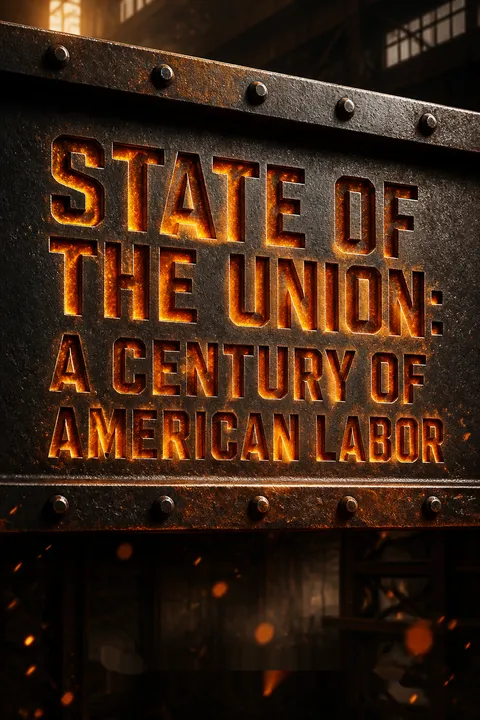

Key Takeaways
1. The "Labor Question" Defined America's Core Contradiction
The problem facing American workers, the issue that puts a question mark on the democratic character of our polity, is summed up by the dichotomy sketched out here.
A fundamental paradox. At the dawn of the 21st century, American democracy grapples with a profound contradiction: while individual rights against discrimination are legally enshrined and widely accepted, collective worker rights, particularly the ability to organize and bargain, have been marginalized. This tension between individual liberty and collective power in the workplace forms the enduring "labor question." The book opens with a stark comparison:
- Burger King's employment application prominently displays an Equal Employment Opportunity statement, reflecting broad societal consensus against discrimination based on race, color, sex, religion, national origin, age, or disability.
- Yet, the same application asserts "at-will" employment, meaning either party can terminate employment for any or no reason, a doctrine that historically undermined collective worker power.
Progressive Era roots. This "labor question" was central to American political culture in the Progressive Era, when reformers sought to reconcile industrial capitalism with democratic ideals. They envisioned a society where workers earned a "living wage" sufficient for dignity and comfort, and where "industrial democracy" extended constitutional rights like free speech and assembly into the factory and office. This was seen as essential for maintaining a genuinely democratic polity against the rising power of giant corporations.
Erosion of collective voice. Over time, the idea that democratic norms should govern the workplace has been ridiculed and marginalized. Managers who cut payrolls and break unions face little public opprobrium, and legal remedies for individual discrimination far outweigh those for collective labor law violations. This shift highlights a significant retreat from the Progressive Era's expansive vision of worker citizenship and collective empowerment.
2. New Deal Unionism Promised Industrial Democracy and a Living Wage
The aim of this whole effort," the president explained, "is to restore our rich domestic market by raising its vast consuming capacity.
Solving underconsumption. The Great Depression revealed a crisis of "underconsumption," where soaring productive capacity met stagnant wages and unequal wealth distribution. New Deal policies, particularly the National Industrial Recovery Act (NIRA) and later the Wagner Act, aimed to boost working-class purchasing power by encouraging unionization and setting wage floors. This proto-Keynesian approach saw strong unions as vital for economic stability and growth.
Security and dignity. Beyond economics, the New Deal politicized the widespread fear and insecurity of the era, offering "security" as a fundamental right of citizenship. This meant not just freedom from material want, but also a social and psychological fortress against arbitrary power in the workplace. Workers, many from immigrant backgrounds, saw unionism as a doorway to the democratic promise of American life, challenging the "industrial slavery" of corporate autocracy.
The Wagner Act's revolution. The 1935 Wagner Act, "Labor's Magna Carta," provided a legal framework for industrial democracy. It guaranteed workers the right to organize, bargain collectively, and strike, while outlawing employer interference and company-dominated unions. This legislation aimed to constitutionalize factory governance, establishing a "two-party system" where unions and managers stood on a more equal footing, ensuring due process and free speech in the workplace.
3. Internal Divisions Shaped Labor's Mid-Century Trajectory
This thing of raising points of order all the time on minor delegates is rather small potatoes." Hutcheson rose to the bait, calling Lewis a "bastard." Lewis jumped to his feet, observed a reporter. "Quick as a cat, he leaped over a row of chairs toward Hutcheson, jabbed out his right fist, and sent the carpenters' president sprawling.
AFL vs. CIO. The explosive growth of unionism in the 1930s was marked by a fierce internal struggle between the craft-oriented American Federation of Labor (AFL) and the industrially organized Congress of Industrial Organizations (CIO). This division, dramatically symbolized by John L. Lewis's physical altercation with William Hutcheson, reflected deep differences in strategy, ideology, and the demographic composition of their target workers.
- AFL: Rooted in skilled trades, often patriarchal, racially exclusive, and suspicious of state intervention, preferring "voluntarism" and "exclusive jurisdiction."
- CIO: Focused on organizing semi-skilled mass production workers, embracing ethnic and racial diversity, and actively seeking state support for union growth.
Craft union strengths and weaknesses. While often condemned for their exclusivity, craft unions like the Teamsters or waitresses' unions effectively monopolized labor markets for specific skills, providing members with employment security through hiring halls and control over work assignments. However, their rigid focus on technological niches and often discriminatory practices made them vulnerable to technological change and social critique.
The CIO's inclusive vision. The CIO's success stemmed from its ability to mobilize diverse workers—African Americans, Mexican Americans, and European immigrants—who saw unionism as a path to both higher living standards and democratic inclusion. This inclusive approach, often spearheaded by radicals (Communists, Socialists), aimed to transcend ethnic and economic divisions, making "class consciousness" a deliberate, political project rather than a given.
4. Race and Rights Challenged Union Solidarity's Limits
Negroes did not "dismantle their racial organizations," because "they believe that their bargaining power within the labor movement will be strengthened if they stick together."
The color line's persistence. Despite the CIO's inclusive rhetoric, white working-class racism deeply permeated American society and its labor movement. White workers often defended residential apartheid and saw union seniority systems as protecting a "property right" to their jobs, sometimes freezing existing discriminatory job structures. This created tension when African Americans sought entry into mainstream blue-collar life.
Black workers' strategic power. The Great Migration transformed African Americans into a crucial, overwhelmingly working-class population in Northern industrial cities. Their strategic importance in industries like meatpacking, steel, and auto meant that union success depended on winning their loyalty. Black workers, often skeptical of white-dominated unions, leveraged their collective power to demand dignity, fair employment, and political enfranchisement, often forming their own internal caucuses and leadership.
FEPC and the "Negro Question." Franklin Roosevelt's 1941 executive order establishing the Fair Employment Practices Commission (FEPC) marked a pivotal moment, placing racial discrimination on the national policy agenda for the first time since Reconstruction. The FEPC, though weak, legitimized black protest and asserted a new social right to fairness on the job. This federal intervention, combined with black-led union activism, began to dismantle Jim Crow in the workplace, demonstrating that "racial militancy in the labor movement had a historically specific quality."
5. The Postwar "Accord" Was a Fragile, Politicized Truce
But the very idea of such a harmonious accord is a suspect reinterpretation of the postwar industrial era.
Myth of harmony. The notion of a harmonious "labor-management accord" governing industrial relations from 1947 to the late 1970s is a retrospective myth. In reality, the postwar era was characterized by high strike levels, corporate ideological warfare, and a limited, unstable truce imposed on a reluctant labor movement. Phrases like "social compact" were absent from contemporary discourse, reflecting ongoing conflict rather than consensus.
Politicized bargaining's defeat. Postwar labor's ambitions extended beyond mere collective bargaining; they sought a broader social-democratic agenda, including:
- Reconstitution of wartime price and wage controls.
- Guaranteed annual wages and industry councils.
- Expansion of the social safety net (e.g., Murray-Wagner-Dingle bill for universal healthcare).
However, these efforts were largely defeated by a powerful anti-union, anti-state coalition of corporate management and Southern oligarchs, who saw such initiatives as "creeping socialism."
American managerial exceptionalism. Unlike their European counterparts, American corporate management exhibited profound hostility to both state regulation and worker representation. This stemmed from a deep ideological commitment to "managerial prerogatives," a decentralized and hyper-competitive market structure, and a strong anti-New Deal sentiment. This exceptional anti-union stance, combined with the "unreconstructed South's" determination to maintain low-wage, segregated labor, ensured that any "accord" would be limited and fragile.
6. Taft-Hartley Legally Constrained Labor's Collective Power
Taft-Hartley thus did much to depoliticize the unions by curbing interunion solidarity and ghettoizing the power of the labor movement.
Codifying labor's retreat. The 1947 Taft-Hartley Act was a landmark defeat for organized labor, codifying its postwar retreat and fundamentally reshaping the legal landscape of industrial relations. Passed over President Truman's veto, it was a product of a conservative coalition determined to contain union power and reprivatize collective bargaining. Its key provisions included:
- Anti-Communist affidavits: Required union leaders to swear they were not Communists, exacerbating internal divisions and weakening the left wing.
- Ban on secondary boycotts: Prevented unions from supporting each other across different firms, crippling organizing tactics.
- Exclusion of supervisors: Denied labor law coverage to foremen and supervisors, effectively conscripting them into management and hindering white-collar unionization.
Erosion of solidarity. Taft-Hartley's "right-to-work" provisions, which allowed states to ban union shops, ideologically equated the "rights" of anti-union workers with those loyal to the union, undermining the very principle of collective solidarity. The law also granted employers "free speech" during organizing campaigns, which often amounted to intimidation, further devaluing the idea of worker self-organization.
Ghettoizing union power. By limiting unions to a static geographic and demographic terrain (primarily blue-collar industries in the Northeast and Midwest) and forcing them into firm-centered bargaining, Taft-Hartley ensured that labor's influence would be confined. This legal straitjacket prevented unions from expanding into growing service and white-collar sectors, setting the stage for long-term decline.
7. Individual Rights Eclipse Collective Action in the Workplace
If a new set of work rights was to be won, the decisive battle would take place, not in the union hall or across the bargaining table, but in the courts and the legislative chambers.
Shift in liberal consciousness. In the post-WWII era, American liberalism underwent a profound transformation, moving away from class-based social solidarity towards an emphasis on individual rights, particularly racial and gender equality. The civil rights movement, with its moral urgency and legal innovations, became the dominant model for achieving workplace justice, often bypassing or even challenging traditional union structures.
Title VII's transformative impact. The 1964 Civil Rights Act, especially Title VII, became a pillar of workplace rights, establishing the Equal Employment Opportunity Commission (EEOC) and championing equitable hiring and promotion practices. This legislation, while a victory for democracy, also:
- Racialized and gendered employment rights: Separated discrimination from broader economic inequality.
- Prioritized individual claims: Encouraged litigation based on race, gender, age, or disability, rather than collective action.
- Challenged union traditions: Brought union work rules and seniority systems under scrutiny for discriminatory impact.
Judicial undermining of union power. Paradoxically, the same liberal judiciary that expanded individual civil liberties often undermined the legal basis of union power. Court rulings increasingly prioritized individual worker rights over union solidarity, restricting strike actions and narrowing the scope of collective bargaining. This created a "legal straitjacket" for unions, making them seem less relevant to the evolving discourse of workplace justice.
8. Economic Upheaval Decimated Union Strength and Bargaining
Nobody," wrote Time magazine, "is apt to look back on the 1970s as the good old days.
Deindustrialization and stagnation. The 1970s and 1980s marked a "time of troubles" for American labor, characterized by severe recessions, deindustrialization (e.g., steel industry collapse), stagnant real wages, and soaring income inequality. This economic upheaval devastated union membership and power, particularly in the traditional manufacturing core.
- Steel industry: Domestic capacity dropped by 25%, and the United Steelworkers lost 80% of its basic steel members.
- Auto industry: Half a million union jobs lost.
- Needle trades: Membership plummeted by two-thirds.
"Post-industrial" and "post-Fordist" theories. Social scientists argued that unions were becoming obsolete due to shifts towards a service economy, information processing, and "flexible specialization." These theories, while offering some insights into technological change, often devalued traditional manufacturing work and the role of unions, suggesting that the "gritty conflicts of the old industrial order" were simply being left behind.
Globalization as an ideological weapon. The growing narrative of a globalized economy, with mobile capital and international competition, was wielded by management as a powerful ideological weapon against unions. The threat of plant closures and job outsourcing, even if not always realized, effectively intimidated workers during organizing campaigns. This narrative undermined the traditional union rationale that high wages and strong labor standards were beneficial for the entire industrial society.
9. Management Co-opted "Participation" as Union Avoidance
There is no doubt that the employee knows more about the job than any member of management can ever know, and so the employee must be enrolled in this battle to try and become more and more competitive.
The "new industrial relations." Faced with declining productivity and international competition in the 1970s, American management began to embrace new strategies like "quality of work life," "jointness," and "team production." These initiatives, often framed as enhancing "industrial democracy" and "employee involvement," aimed to boost flexibility and competitiveness by tapping into worker knowledge and consent.
A double-edged sword. While some unionists, like UAW Vice President Irving Bluestone, initially welcomed these programs as a way to democratize the workplace, many quickly realized their manipulative potential. These schemes often served as sophisticated union-avoidance tactics, designed to foster firm-specific loyalty and undermine collective bargaining by:
- Eliminating supervisory layers: Returning to a "straw boss" model that embedded discipline and speed-up within work teams.
- "Management by stress": Demanding "multiskilling" and rapid job rotation, often without true skill development or increased autonomy.
- Confining participation: Limiting cooperation to the individual firm, preventing broader, industry-wide gains or social provision.
Erosion of collective voice. The "new industrial relations" ultimately proved antithetical to the union idea. Without the protections of a strong welfare state and a broadly engaged labor movement, individual workplace participation schemes could not overcome the fundamental imbalance of power between workers and managers. Management consistently resisted any legislative changes that would grant these participatory committees collective bargaining rights or strengthen union organizing efforts.
10. A New Era Demands Militancy, Democracy, and Political Action
When the union's inspiration through the workers' blood shall run," proclaims the first line of Ralph Chaplin's Solidarity Forever, "[t]here can be no power greater anywhere beneath the sun." The key word in that 1915 labor anthem is "inspiration": its meaning, character, and power.
Reclaiming labor's mission. The profound crisis of American labor in the late 20th century, marked by membership decline and political isolation, necessitated a radical shift in strategy. The old guard's "ineffectual corporatism" and "antique anti-Communism" were discredited, paving the way for a new leadership under John Sweeney in 1995. This new era demanded a return to labor's social-movement heritage, emphasizing:
- Militancy: A willingness to engage in disruptive, insurgent actions and for the broader labor movement to support these struggles.
- Internal Democracy: Essential for recruiting and empowering a new generation of grassroots organizers who are part of their communities and workplaces.
- Political Action: A distinctive, independent political posture, even within the Democratic Party, to advance labor's legislative agenda and defend workplace rights.
New organizing models. The contemporary legal and economic landscape, with its fragmented employment relationships and the limitations of the Wagner Act framework, necessitates creative organizing strategies. Two promising models, reminiscent of the Progressive Era, are emerging:
- Updated craft/occupational unions: Organizing workers based on shared skills or professions, independent of a single firm, and leveraging hiring halls and joint boards (e.g., WashTech for tech workers, Hollywood guilds).
- Metropolitan-wide labor standards: Organizing entire labor markets to raise and stabilize wages and working conditions across multiple employers in a region, often through community mobilization and political action (e.g., SEIU's "Justice for Janitors" in Los Angeles, living wage campaigns).
Ideas in action. The revitalization of the labor movement hinges on re-establishing the ideological and social linkages between a vibrant "rights culture" and the working-class movement. This means making "Workers' Rights Are Civil Rights" a central theme, leveraging multicultural diversity, and transforming immigrant and minority workers into self-confident citizens. The goal is not just to resolve the "labor question" but to revitalize democratic society itself by ensuring that the citizenship rights workers enjoy have real potency through collective organization.
Review Summary
State of the Union receives generally positive reviews (3.75/5) as a comprehensive history of American labor from 1900-2000. Readers praise its thorough research, rigorous analysis, and extensive references, though many note it's dense and better suited for those with existing labor history knowledge than beginners. Critics appreciate Lichtenstein's examination of the movement's evolution through the New Deal, postwar industrial pluralism, and late-century decline. Some fault his liberal perspective and pro-labor advocacy, while others value his interpretive approach connecting labor organizing with civil rights consciousness and proposing paths forward for worker empowerment.
People Also Read



About the Author
Other books by Nelson Lichtenstein
Download PDF
Download EPUB
.epub digital book format is ideal for reading ebooks on phones, tablets, and e-readers.








































