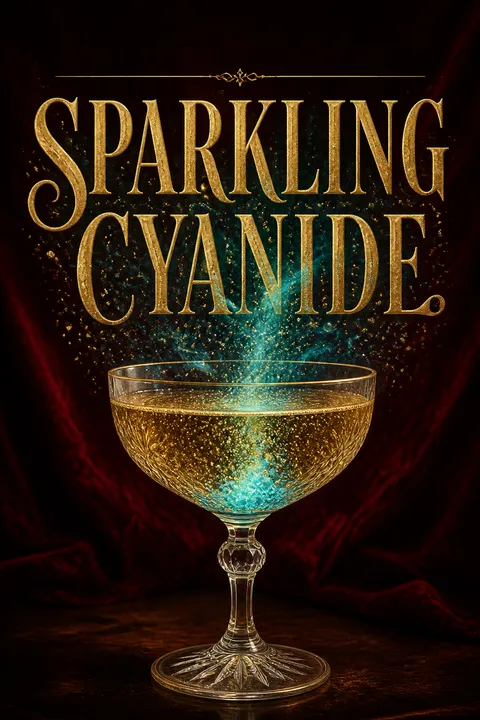

Plot Summary
The Shadow of Rosemary
Nearly a year after beautiful, lively Rosemary Barton's shocking death by cyanide at her own birthday party, her younger sister Iris struggles to reconcile the tragedy. Rosemary's mysterious demise was ruled suicide due to post-illness depression, but memories of her vibrant personality and enigmatic, depressed final days cast doubt. As Iris recalls her privileged sister's whirlwind life—and her own secondary role—it's clear jealousy, grief, and secrecy still permeate the Barton home. Despite evidence of Rosemary's intention to include Iris in her will and signs of depression, Iris cannot shake a sense of unfinished business, and neither can George Barton, Rosemary's widower. When anonymous letters claim Rosemary was murdered, the past is forced open, laying the foundation for dark revelations.
Letters and Lovers Revealed
After George receives cryptic, typewritten letters insisting Rosemary was killed, his world unravels. Forced into remembrance, Iris uncovers a passionate letter from Rosemary to a secret lover, questioning whether her sister's death was truly self-inflicted. As family members—Aunt Lucilla, already burdened by her parasitic son Victor, and Ruth, George's capable secretary—settle into uneasy household harmony, shadows gather. George's growing unease about Rosemary's final weeks, Iris's doubts, and the resurfacing of Anthony Browne (Rosemary's old friend and Iris's new suitor) create a web of uncertainty. Each new detail—the inheritance, love notes, and bitter tears—exposes unanswered questions and hidden relationships within the household.
Ruth's Silent Resentment
Ruth Lessing, Barton's efficient secretary, is more than just a fixture in the home; she's a woman quietly driven by her unrequited devotion to George and her disdain for Rosemary. After handling a financial ransom with charming but unscrupulous Victor Drake, Ruth's insight into the family's dysfunction grows. Her suppressed desire to be George's wife curdles newly into hatred for the oblivious, favored Rosemary. When a casual remark from Rosemary triggers the realization of her own marginal status, Ruth's resentment calcifies into something darker: as she herself thinks, "I wish you were dead." Her subtle power over George, and underestimated position, make her a dangerous wildcard in the tragedy to follow.
Secrets and Suspects
Politics and ambition thread through Stephen Farraday's life and marriage to Sandra—a partnership that promised status and mutual support. Yet his impassioned affair with Rosemary introduces risk and obsession, threatening both his career and his marriage. The fall from love to dread leads to a desperate need for self-preservation. Unbeknownst to Stephen, Sandra is quietly aware of the affair, nursing private pain but maintaining her composure. Meanwhile, Anthony Browne, charismatic and enigmatic, hides his criminal past while charming Iris. With these crisscrossing affairs, ambitions, and fears, suspicion thickens, and the dinner that claimed Rosemary's life grows ever more sinister in recollection.
The Country House Intrigue
The purchase of Little Priors, George's new country house, aims to foster escape and healing but only incubates more tension. Ruth's organizational skills, Lucilla's outdated values, and Iris's restlessness create fissures in the domestic order, while proximity to the Farradays—whose own relationship is under strain—keeps all suspects within arm's reach. George fixates on his wife's last days and the possibility of murder, probing both Iris and Ruth for clues. Anthony's persistent avoidance of the Barton household, despite his growing closeness with Iris, hints at secrets yet to be confessed. As autumn arrives and the family returns to London, the sense of looming crisis only grows.
Jealousy and Complications
Sandra Farraday's silent endurance of Stephen's affair with Rosemary, her refusal to show pain, and her faith that time will restore her marriage, deepen the psychodrama. George, deeply wounded by Rosemary's betrayal but still obsessed with her memory, becomes increasingly erratic and withdrawn. The relationships between the Barton house and their neighbors are fraught with rivalries, jealousies, and unspoken regrets. With Anthony's mystery deepening and Iris becoming more entwined with him, the chessboard is set—each character isolated, yet intimately connected by threads of love, ambition, or resentment that may have become fatal.
The Ghost Dinner Arranged
On November 2nd—All Souls' Day—George Barton decides to recreate the original birthday dinner at the luxurious Luxembourg restaurant, inviting the same guests and leaving one empty chair. He claims his aim is to help Iris face painful memories, but his true intention is to lay a trap for Rosemary's killer. Each guest—Stephen, Sandra, Ruth, Anthony, and Iris—arrives tense and uncertain, haunted by past tragedy and present danger. Ominous anticipation hovers as George's mood swings between kindness and obsession. Even Iris senses that George's invitation, especially to the Farradays, may be about more than healing old wounds; it may be an elaborate bait for a murderer.
A Trap Is Set
As the guests gather at the Luxembourg, the unseen Colonel Race observes from afar. Conversation is forced, each guest self-conscious and wary—especially as the cabaret, identical to that of Rosemary's doomed birthday, begins. George toasts Iris's birthday, then, with grim gravity, proposes a toast to Rosemary's memory. Moments after drinking, George collapses, choking and blue, dead from cyanide—poisoned in plain sight. The original crime seems to have repeated itself. The shock and confusion among the survivors are magnified by the realization that, once again, the murderer must be among their own number, acting under cover of memory, guilt, and fear.
The Fatal Toast
Chaos erupts in the wake of George's dramatic death, echoing Rosemary's, as guests and restaurant patrons reel from the spectacle. Emotions spiral—guilt, fear, grief, anger—while investigators scramble for clues. The mechanics of the poison's delivery baffle even the sharpest minds. Suspicion falls anew on each guest: the spurned lover, the jealous wife, the ambitious secretary, the secretive Anthony, and even innocent-looking Iris. The murder is an exact, taunting replica, shifting the investigation from the old tragedy to the new, and reinforcing that the solution lies entwined with the events of the past.
Mourners and Motivations
Colonel Race and Inspector Kemp launch a formal inquiry, methodically interviewing each survivor and witness. Guests' statements reveal a thicket of motives: money (Iris benefits most from the Barton inheritance), romantic jealousy (Sandra, Ruth), and exposure of secrets (Anthony, the Farradays). The deceased George's elaborate plan for the party, including the unoccupied chair and hired actress, comes to light, as does the possibility of a cleverly orchestrated frame-up. The recurring motif—sudden death by cyanide, public humiliation, and intersecting relationships—presents a puzzle with both old and new pieces.
Invisible Threads
Testimonies from waiters Pierre and Giuseppe, fellow diners, and the actress hired to impersonate Rosemary provide insight into the dinner's choreography. The narrative pivots on small but telling details: the position of personal belongings (particularly Iris's bag), glasses switched in the confusion, and the precise actions of bystanders. Anthony's background, previously considered suspicious, emerges instead as the cover for government service. Intricate sleight-of-hand involving the poisoned glass is suggested, but elusive proof remains out of reach. The growing complexity and ingenuity of the crime signal a murderer with both meticulous planning and intimate access.
The Waiter's Tale
The involvement of the restaurant staff is carefully examined. A fateful mix-up—an "accidentally" moved handbag, the wrong person drinking from the poisoned glass—suggests that the true target may not have been George after all. Christine Shannon, witness at an adjacent table, painstakingly reconstructs the crucial switch: with everyone dancing, a careless waiter, or an opportunist disguised as one, places Iris's bag at the wrong setting. The original plan, it seems, was for Iris—not George—to die, mimicking Rosemary's "suicide"; only a small error saved her life.
Two Sisters, Two Suspects
Investigation focuses on motives for killing both Rosemary and Iris. Both women, as wealthy heiresses, stand in the path of another's fortune. The prior deaths and the twisted family tree point toward Lucilla and her wayward son Victor, who, if Iris dies, inherit the entire estate. Meanwhile, Ruth's proximity, her subtle manipulations, and her ambiguous relationship with Victor gain new significance. The anonymous letters to George reveal insider knowledge; someone close to the investigation, with a strong emotional stake, is orchestrating events from the shadows.
The Actress Named Rosemary
George's plan to expose the murderer emerges: he had hired an actress doppelgänger to step into the empty seat during the party, shocking the culprit into confession. However, a last-minute call—supposedly canceling the job—torpedoed the scheme. This intervention hints at a murderer anticipating George's every move, possibly someone with easy access to the household and its plans. The confusion around the empty chair underscores a central theme: the impossibility of truly knowing another's identity, motives, or actions beneath the surface.
Identities Unmasked
Colonel Race confronts Anthony Browne about his shadowy past, only to discover that "Browne" is not a criminal, but a courageous undercover agent. Anthony's honesty and sacrifice invert the web of suspicion, and the myriad alibis and relationships snap into focus. Themes of mistaken identity, hidden allegiance, and the high price of secrecy converge. With Anthony's exoneration, the focus shifts back to the other principal players; layers of deception and love, notably Ruth and Victor's conspiracy, begin to unspool towards the final act.
A Deadly Bag Switch
Anthony retraces the sequence: only one guest did not drink immediately after the cabaret—Iris. When her handbag was returned to the wrong seat, George unwittingly drank from her glass, which was laced with cyanide—meant for her. The concealed motive for Iris's murder was inheritance, with Lucilla and Victor the ultimate beneficiaries. The technical brilliance of the crime lay in timing and a sleight-of-hand with the glass, executed by someone with experience both as an actor and waiter—Victor, disguised as Pedro Morales and aided by Ruth.
Secrets in the Study
Realizing that Ruth and Victor are the likely conspirators, Anthony and Colonel Race race to stop a desperate final effort to silence Iris. Iris's near-fatal "accident" at home proves the murderer's ruthlessness, and all remaining doubts evaporate: Ruth, driven by love for Victor and hatred for Rosemary, orchestrated both deaths, with Victor disguised and complicit. Ruth's calculated efficiency, love-twisted motivation, and betrayal of George Barton's trust render her not only a cold planner, but a woman undone by passion.
The Final Twist
Evidence and testimonies converge. The original and duplicate murders are reconstructed in light of the glass-switch trick, the involvement of a disguised accomplice, and Ruth's near-perfect manipulations. The anonymous letters, intended to provoke George's investigation and subsequent party, are traced back to Ruth, and Victor's false alibi collapses. The final pieces fall into place: a love affair turned lethal, a criminal posing as a friend, and the unwitting intervention that saves Iris's life at the last moment. Ruth and Victor are apprehended before another tragedy can unfold.
Love and Resolution
As the dust settles, Iris and Anthony—each changed and matured by the trauma—turn toward the future, united in love and hard-won trust. The tangled relationships, betrayals, and old wounds begin to heal as justice is done and the specters of Rosemary and George are finally laid to rest. Themes of jealousy, ambition, greed, and the dangers of latent resentment give way to reflection: the survivors must learn from the price of unchecked emotion and the subtle ways in which love and hatred can intertwine. The story closes not only with the restoration of order but with the affirmation of trust, resilience, and compassion.
Analysis
A modern lens on Christie's psychological maze"Sparkling Cyanide" isn't just a whodunit; it's a nuanced study of how jealousy, suppressed resentment, and mistaken identity ferment tragic consequences. In reconstructing two near-identical murders and leading readers through a hall of mirrors—where every outward act has an unseen double—Christie probes the dangers of emotional suppression and the hidden rivalries within families and intimate circles. Her deft use of sleight-of-hand (the switched glass), the motif of "ghostly" returns (the hired actress), and her unflinching depiction of both male and female rage elevate the story above mere puzzle-solving. For contemporary readers, the novel's warning is evergreen: trust and love, if corroded by secrecy or self-delusion, breed the conditions for violence. The complex, flawed characters—especially the underappreciated Ruth—remain even more relevant today, exemplifying how ordinary emotions can spawn extraordinary crimes if left unchecked. At its heart, "Sparkling Cyanide" is a chilling reminder that murder is as much a matter of motive as method—what we let grow in darkness will one day demand the light.
Review Summary
Readers largely praise Sparkling Cyanide as a clever, well-constructed mystery that showcases Christie's signature misdirection. Many appreciated the multiple perspectives, complex characters, and the ingenious second murder plot. Colonel Race, though considered less charismatic than Poirot or Miss Marple, earns respect as a capable detective. The novel's structure—revealing each character's backstory before the dramatic reenactment—kept readers engaged. Common criticisms include an abrupt ending and occasional unbelievable plot mechanics. Most readers confessed to being fooled by the killer's identity.
Characters
Iris Marle
Iris is Rosemary's much younger sister, cast in her sibling's shadow, keenly aware of both her own envy and love. Initially passive, her journey is a psychological coming-of-age—moving from guilt and uncertainty into determined inquiry after George's murder. Subdued by the trauma of witnessing her sister's death and living under the weight of her inheritance, Iris is acutely sensitive to others' manipulations. Her relationship with Anthony brings both risk and hope, while the threat to her own life ultimately exposes both her courage and her fundamental innocence. Iris's maturation is the emotional core of the novel.
George Barton
George, Rosemary's widower, is an earnest but emotionally limited man whose love for his wife blinded him to her flaws and betrayals. His grief becomes obsession as he receives anonymous letters claiming Rosemary was murdered. George's efforts to trap the killer inadvertently seal his own fate; his inability to accept reality or protect those he loves directly precipitates the second crime. Noble in intent but naïve in execution, George is tragic for his lack of insight and his devotion to a woman he never truly understood.
Rosemary Barton
Though already dead as the novel opens, Rosemary's magnetism, carelessness, and emotional fragility reverberate through every relationship. Her charm draws love and resentment—from her husband, lover, secretary, and sister alike—while her self-absorbed actions and reckless affair lay the groundwork for her murder. Rosemary's inability to comprehend the depth of others' feelings, especially Ruth's and Sandra's, makes her the indirect creator of her own fate. As a victim, a symbol, and a catalyst, she is the gravitational center of the story's psychological conflict.
Ruth Lessing
The perfect secretary outwardly, Ruth is a study in concealed longing and quiet malevolence. Devoted to George, secretly contemptuous of Rosemary, and ultimately manipulated by her love for the unscrupulous Victor, Ruth orchestrates both murders. Her emotional abyss, hidden beneath layers of control and competence, manifests in her willingness to kill for love, money, and revenge. Ruth's transformation—from marginally envious staff member to calculating killer—is chilling, revealing how overlooked resentments can curdle into lethal action.
Stephen Farraday
Stephen is a rising politician whose affair with Rosemary disrupts his carefully managed life and career. His pursuit of Rosemary is driven less by love than by infatuation and ego, while his marriage to Sandra is meant to be a partnership built on ambition. Pressured by guilt and dread of scandal, Stephen becomes both potential murderer and victim of suspicion, embodying themes of duplicity and the destructive potential of suppressed passion.
Sandra Farraday
Sandra embodies the ideal political wife: supportive, intelligent, and poised. Though inwardly devastated by Stephen's betrayal, she marshals her pain into silent endurance. Her emotional intelligence allows her to see through others' facades, and her self-restraint saves her marriage. Often overlooked, Sandra is nonetheless pivotal as a moral touchstone within the narrative—a reminder of the costs of pride, loyalty, and emotional suppression.
Anthony Browne (Tony Morelli)
Anthony projects the air of a carefree cosmopolitan, but his secret past as Tony Morelli hides a history of crime—or, as it turns out, undercover sacrifice. His pursuit of Iris is sincere, yet complicated by risk and deception. Though at first a key suspect, Anthony's confession clarifies the mess of incrimination, transforming him from outcast to trusted partner. His emotional journey—marked by love, guilt, and resolve—drives much of the story's momentum toward justice and reconciliation.
Victor Drake
Lucilla's beloved son, Victor is an expert manipulator—a lifelong "bad penny" who exploits family and circumstance for personal gain. His opportunism and chameleon-like ability to adopt new identities make him the perfect accomplice in Ruth's deadly plans. Ruth's infatuation with Victor provides the final motivation for the double murder, making him both instigator and instrument of the crime.
Lucilla Drake
Aunt Lucilla presides over the Barton household with an outdated sense of propriety and fierce loyalty to Victor. Her blinkered maternal love, refusal to see Victor's flaws, and vocal dislike for Ruth paint a picture of a woman shaped by loss and delusion. Lucilla's old-fashioned morality provides ironic contrast to the novel's moral ambiguities and serves as a gentle warning of the dangers of self-delusion and denial.
Colonel Race
A former British intelligence officer, Race is called upon to observe and decipher the tangled web of Barton family dynamics. Though not infallible, his presence adds rationality and professionalism to the investigation. Race's probing questions, calm authority, and capacity to cut through emotional smokescreens accelerate the final unraveling of the plot, and his partnership with Anthony ultimately pushes the solution to light.
Plot Devices
Echoing Death and Doubling
The primary device is the repetition of the method and setting—in both Rosemary's and George's murders, the victim dies by cyanide at an orchestrated dinner party. This "echoing" not only creates tension and parallels but also obscures the true target and method; the second crime appears to be a warning or a direct link to the past, forcing investigators to reexamine both events as a single puzzle. The parallel structure, including the planned reappearance of Rosemary through an actress, heightens the theme of haunting guilt and unresolved secrets.
Sleight-of-Hand and Displacement
Christie's classic use of "impossible crime"—with the poisoned glass apparently untouched—is achieved through a slight but crucial displacement: the switch of Iris's handbag and the corresponding seat, resulting in George drinking from the wrong, lethal glass. The murder hinges on timing, spatial confusion, and the calculated use of surrounding action (cabaret, dancing, darkness) to distract and misdirect, a quintessentially Christiean device.
Multiple Motives and Red Herrings
The novel employs a dense mesh of plausible motives—jealousy, inheritance, political ambition, romantic betrayal—ensuring that no character is beyond suspicion. Ruth's icy capability, Anthony's questionable past, Victor's criminality, and even Iris's inheritance all furnish convincing means and motives, providing the narrative with a steady stream of red herrings. The psychological complexity of the suspects deepens the mystery, keeping the reader guessing until the final revelation.
Psychological Reversals and Character Growth
The plot's mechanics are mirrored by the internal evolution of its characters, particularly Iris and Ruth. The parallel unraveling of the crime and emotional development accentuates Christie's theme: the greatest crimes often originate within the human heart's unseen resentments and desires.
Colonel Race Series


About the Author
Other books by Agatha Christie



Download PDF
Download EPUB
.epub digital book format is ideal for reading ebooks on phones, tablets, and e-readers.








































