
Plot Summary
Chains, Cages, and Accusations
Thanos regains consciousness in a gibbet, battered and accused of regicide. Haunted by his father's dying words and the need to prove his lineage, he faces Queen Athena, who coldly orchestrates his execution. Despite his pleas of innocence, the machinery of imperial justice grinds on, fueled by political ambition and personal vendettas. Thanos's isolation is palpable, his only hope a cryptic clue pointing to Felldust. The weight of betrayal, both real and perceived, presses on him as he contemplates his fate and the darkness that has overtaken his family. The chapter sets the tone of desperation, injustice, and the flickering hope that truth might yet be uncovered, if he can survive long enough.
Victory's Price in Delos
Ceres emerges from the chaos of battle, celebrated as a hero but burdened by the cost of victory. The city is scarred, bodies of friend and foe alike littering the streets. The people look to her for guidance, thrusting her into reluctant leadership. She is torn between the joy of reunion with her family and the sorrow for those lost, including her brothers. The crowd's energy is volatile, and Ceres must channel it toward constructive action, rallying them to seize the castle and end imperial tyranny. Her internal struggle—between self-doubt and the necessity of command—mirrors the city's own uncertain future, as hope and grief intermingle in the aftermath of revolution.
Vengeance Across the Sea
On a cramped, uncomfortable boat, Stephania endures pregnancy and seasickness, her mind fixed on revenge. She manipulates her companions—Felene, the loyal sailor, and Elethe, her handmaiden—while hiding her true intentions and the evidence of her pregnancy. The journey to Felldust is fraught with tension, as Stephania weighs when and how to eliminate Felene, whose loyalty to Thanos is a threat. The dynamic between the three women is a web of suspicion, attraction, and shifting power. Stephania's resolve is steely: she will do whatever it takes to find the sorcerer who can help her destroy her enemies, even if it means sacrificing those closest to her.
Madness and Exile
Lucious, fleeing the Empire, is tormented by the voice of his murdered father and the contempt of those around him. On a ship to Felldust, he is treated with disdain, his royal status meaningless. His paranoia and rage boil over, leading to a violent confrontation with the captain and crew. Lucious's internal dialogue reveals a fractured psyche, oscillating between grandiosity and self-loathing. His sense of entitlement clashes with the harsh realities of exile, and his inability to command respect or loyalty underscores his isolation. The chapter paints a portrait of a fallen prince, spiraling into madness and consumed by the consequences of his own actions.
Letters and Gallows
Imprisoned and awaiting execution, Thanos is denied food, water, and dignity. He reflects on his failures and lost love, penning a final letter to Stephania, expressing regret and longing. The city prepares for his public execution, treating it as spectacle rather than justice. Thanos's attempts to reach out for help are met with indifference or hostility. The gallows loom, and as he is led to his fate, he is consumed by thoughts of Ceres, Stephania, and the child he will never know. The chapter is suffused with resignation, sorrow, and the faint hope that truth might outlive him.
Storming the Castle
Refusing to be daunted by the castle's defenses, Ceres leads a diverse coalition—rebels, combatlords, and citizens—in a direct assault. The battle is brutal and chaotic, with Ceres at the forefront, scaling walls and breaking through gates. She insists on restraint, urging her followers to avoid unnecessary bloodshed, but the momentum of violence is hard to control. Inside, she confronts Queen Athena, who taunts her with news of Thanos's impending execution. Ceres's leadership is tested as she must balance justice, mercy, and the raw anger of the people. The chapter captures the adrenaline and horror of revolution, as well as the personal stakes for Ceres.
Betrayal on Open Waters
As land nears, Stephania makes her move, attempting to poison and kill Felene. A violent struggle ensues, with Elethe's loyalties tested. Felene is stabbed and thrown overboard, presumed dead. Stephania's ruthlessness is on full display, as she manipulates Elethe and secures her path to Felldust. The aftermath is cold and calculated—Felene's fate is dismissed, and the focus shifts to the next phase of Stephania's plan. The chapter is a study in betrayal, survival, and the cost of ambition, as Stephania sacrifices anyone who stands in her way, even those who once aided her.
Felldust's Dust and Shadows
Cast ashore in Port Leeward, Lucious navigates a city of dust, danger, and shifting allegiances. The city's lawlessness and complexity mirror his own unraveling mind. He is robbed, threatened, and dismissed, his royal claims meaningless. Lucious's attempts to assert authority are met with ridicule or violence, and he is forced to confront the reality of his powerlessness. The city's vibrant chaos is both a threat and a potential resource, as Lucious seeks an audience with the First Stone, hoping to regain his lost throne. The chapter is a descent into the underbelly of a world where only cunning and strength matter.
Race Against Execution
Learning of Thanos's imminent execution, Ceres races through the castle, cutting down guards and leaping from windows to reach him. She arrives just in time, severing the noose and fighting off executioners. Thanos, barely alive, joins her in battle, and together they fend off their attackers until reinforcements arrive. The reunion is charged with relief, love, and the trauma of near-death. The city's fate hangs in the balance, but for a moment, personal salvation eclipses political struggle. The chapter is a breathless rescue, blending action with emotional catharsis.
Harbor of Hope and Loss
Akila, the rebel leader, orchestrates a complex defense of Delos's harbor, anticipating imperial escape attempts and counterattacks. His strategic acumen is tested as the enemy feints and flees, but his forces ultimately prevail. The victory is bittersweet, as Akila witnesses the death of a young soldier who had delivered a crucial message. The cost of leadership is isolation and grief, even in triumph. The harbor is secured, but the emotional toll of war is ever-present, reminding Akila—and the reader—of the human price of freedom.
Lovers' Reunion, Lovers' Rift
In the aftermath of battle, Thanos and Ceres find solace in each other's arms, sharing stories of survival and loss. Their intimacy is shadowed by unspoken truths—Thanos's marriage to Stephania and the child he fathered. The joy of reunion is tempered by guilt and the looming threat of Lucious's return. As they plan for the future, the weight of past choices and hidden betrayals threatens to unravel their fragile happiness. The chapter explores the complexity of love, forgiveness, and the scars left by war.
The Weight of Leadership
Thrust into the role of leader, Ceres must navigate the competing interests of rebels, merchants, and former nobles. She struggles to balance justice with mercy, resisting calls for vengeance against former imperial collaborators. The city's wounds are deep, and the challenges of rebuilding are immense. Ceres's authority is questioned, and she must assert her vision for a new Delos—one founded on fairness, not retribution. The chapter delves into the burdens of power, the difficulty of unity, and the necessity of moral clarity in times of upheaval.
The Sorcerer's Bargain
In Felldust, Stephania braves a perilous journey to the lair of the sorcerer Daskalos, seeking a means to kill Ceres. The sorcerer's domain is a place of illusions and tests, and his price is steep: Stephania's unborn child. Torn between maternal instinct and her consuming hatred, Stephania ultimately agrees, sacrificing her child for the power to destroy her rival. The transaction is chilling, highlighting the depths of Stephania's ambition and the moral cost of vengeance. The chapter is a dark fable of desire, sacrifice, and the corrupting allure of forbidden magic.
Sibling Rivalries and Regrets
As Thanos journeys to Felldust, he is haunted by memories of his brother and the unresolved conflict between them. Lucious, meanwhile, seeks the aid of the First Stone, only to be outmaneuvered and betrayed. The brothers' paths converge in a city where alliances are fleeting and trust is scarce. Both are shaped by their father's legacy, their choices, and the wounds of the past. The chapter is a meditation on family, rivalry, and the tragic consequences of pride and ambition.
Survival and Vows of Vengeance
Left for dead, Felene endures the perils of the sea and the wilds of Felldust. Her survival is a testament to resilience and resourcefulness, as she battles wounds, predators, and despair. Driven by a sense of betrayal and a desire for justice, she vows vengeance against Stephania and Elethe. Felene's journey is one of transformation, as she sheds her former allegiances and embraces a new, solitary purpose. The chapter is a gritty tale of endurance, loss, and the forging of a new identity in the crucible of adversity.
The Five Stones' Game
Lucious, seeking support, is brought before the First Stone and the ruling council of Felldust. His pleas for aid are met with scorn and cunning; the council sees an opportunity to seize the weakened Empire for themselves. Lucious is outmaneuvered, his ambitions co-opted by those more ruthless and pragmatic. The machinery of war is set in motion, and the fate of Delos hangs in the balance. The chapter exposes the realpolitik of power, where alliances are transactional and mercy is a liability.
The Price of Justice
In the labyrinthine streets of Felldust, Thanos searches for his brother, navigating a world of assassins, gamblers, and moral ambiguity. He is forced to confront the limits of his own principles, risking his life to save a child in a deadly game. The quest for justice becomes a test of character, as Thanos must decide how far he is willing to go to stop Lucious and prevent further bloodshed. The chapter is a tense exploration of ethics, courage, and the cost of doing what is right in a world gone wrong.
The Burden of Command
As Delos empties in fear of invasion, Ceres grapples with the loneliness and responsibility of command. She seeks counsel, but ultimately must rely on her own judgment to hold the city together. Sartes, her brother, travels the countryside, spreading news of the rebellion and confronting the darker side of revolution—mob violence and the temptation of vengeance. Both siblings are tested by the demands of leadership, forced to make hard choices and live with the consequences. The chapter is a study in the personal cost of power and the challenge of building a just society.
The Poisoned Chalice
Disguised as a servant, Stephania infiltrates the castle and confronts Ceres. Armed with the sorcerer's poison, she incapacitates her rival, relishing the moment of triumph. The act is both personal and symbolic—a culmination of jealousy, betrayal, and the relentless pursuit of power. Ceres's vulnerability is laid bare, and the future of Delos is thrown into uncertainty. The chapter is a chilling reminder of the dangers that lurk within, as well as without, and the fragility of hard-won victories.
The Invasion Begins
As Akila and his fleet patrol the waters, a message arrives: Felldust's vast armada is on the horizon, declaring all in the Empire slaves. The scale of the threat is overwhelming, and the defenders of Delos brace for annihilation. The chapter ends on a note of impending doom, as the forces of freedom and tyranny prepare for a final, cataclysmic confrontation. The stakes are existential, and the survival of everything the characters have fought for hangs by a thread.
Analysis
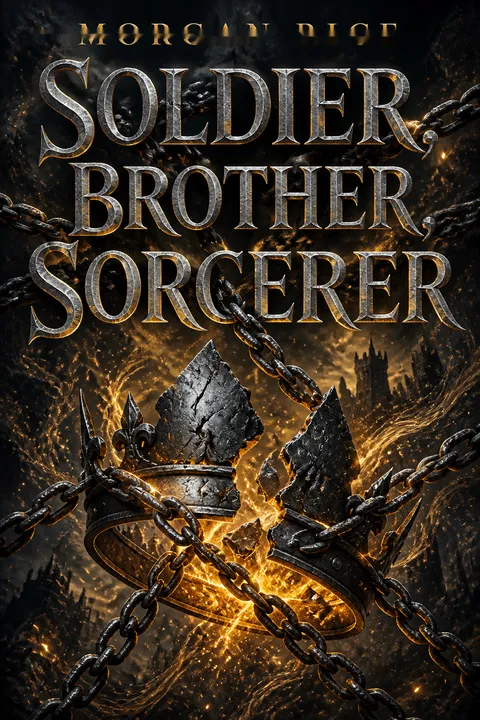
Morgan Rice's "Soldier, Brother, Sorcerer" is a sweeping epic that interrogates the nature of power, the cost of leadership, and the complexity of human relationships in times of upheaval. At its core, the novel is about the struggle to build a just society from the ruins of tyranny, and the personal sacrifices required to do so. The characters are defined by their choices—often between equally unpalatable options—and the consequences of those choices ripple outward, shaping the fate of nations and individuals alike. The narrative's refusal to offer easy answers or unalloyed victories reflects a mature understanding of history and human nature: revolutions are messy, justice is imperfect, and even the noblest leaders are haunted by doubt and regret. The story's emotional power lies in its willingness to confront loss, betrayal, and the limits of forgiveness, while still holding out hope for redemption and renewal. In a world where the line between hero and villain is often blurred, "Soldier, Brother, Sorcerer" challenges readers to consider what it truly means to lead, to love, and to fight for a better future.
Review Summary
Soldier, Brother, Sorcerer receives mixed reviews averaging 3.92 stars. Critics praise the character development, particularly Ceres, Stephania, and Felene, and appreciate the political fantasy elements and unpredictable plot twists. However, many readers complain about increasingly shorter books, repetitive storylines, poor editing, inconsistencies, and dragging narratives. Some find the writing switches between perspectives confusing. Fans of Game of Thrones may enjoy the series' backstabbing and violence. While some readers remained invested despite flaws, others felt the quality declined with each installment. The cliffhanger ending compels continued reading.
Characters
Ceres
Ceres is the emotional and moral center of the story, a young woman thrust into leadership by circumstance and necessity. Her Ancient One blood gives her power, but it is her compassion, courage, and sense of justice that inspire loyalty. Ceres is haunted by loss—of family, friends, and innocence—and struggles with the burden of command. Her relationship with Thanos is passionate but fraught, complicated by secrets and betrayals. Ceres's journey is one of self-discovery, as she learns to balance mercy with strength, and personal desire with the needs of her people. Her greatest fear is becoming the very tyrant she seeks to overthrow.
Thanos
Thanos is a man caught between worlds—noble by birth, rebel by choice, and forever marked by the sins of his family. His love for Ceres is deep but complicated by his marriage to Stephania and the child he fathered. Thanos is driven by a need to prove his worth, both to himself and to others, and is tormented by guilt over past failures. His journey is one of atonement, as he seeks to right wrongs, protect the innocent, and confront his brother Lucious. Thanos's internal conflict—between duty and desire, justice and vengeance—defines his arc and shapes the fate of those around him.
Stephania
Stephania is a study in ambition, manipulation, and the corrosive effects of envy. Once a noblewoman, she is driven by a desire for power and revenge, particularly against Ceres and Thanos. Her intelligence and ruthlessness make her a formidable adversary, but her actions are increasingly shaped by desperation and loss. The sacrifice of her unborn child for magical power is the ultimate expression of her willingness to pay any price. Stephania's relationships—with Thanos, Felene, and Elethe—are transactional, marked by betrayal and shifting loyalties. She is both villain and victim, undone by her own choices.
Lucious
Lucious is the dark mirror to Thanos—a prince consumed by entitlement, rage, and a need for validation. Haunted by the ghost of his father, he spirals into madness, alienating allies and sowing chaos wherever he goes. Lucious's actions are driven by a toxic mix of insecurity and grandiosity, leading to patricide, betrayal, and ultimately, self-destruction. His inability to adapt or inspire loyalty leaves him isolated and vulnerable, a tragic figure undone by his own flaws. Lucious's death is both a personal and political turning point, signaling the end of one era and the beginning of another.
Akila
Akila is the pragmatic and resourceful leader of the Haylon rebels. His strength lies in his ability to inspire and organize, but he is deeply aware of the cost of leadership. Akila's victories are always tinged with loss, as he mourns the fallen and questions the morality of his actions. He respects Ceres and Thanos, recognizing in them the qualities necessary for true leadership. Akila's arc is one of endurance and resilience, as he navigates the shifting tides of war and the demands of conscience.
Felene
Felene is a sailor, thief, and reluctant hero, whose loyalty to Thanos and attraction to Elethe complicate her journey. Betrayed by Stephania and left for dead, she endures unimaginable hardship, emerging hardened and driven by a desire for vengeance. Felene's wit, resourcefulness, and refusal to give up make her a compelling figure, embodying the theme of survival against the odds. Her arc is one of transformation, as she moves from loyal companion to avenger, her trust forever scarred.
Elethe
Elethe is Stephania's handmaiden, skilled with knives and adept at navigating the treacherous world of court and caravan. Her loyalties are tested by her attraction to Felene and her devotion to Stephania. Elethe's actions are often ambiguous, shaped by survival instinct and the shifting power dynamics around her. She is both accomplice and potential betrayer, her fate intertwined with those she serves and loves.
Queen Athena
Athena is the embodiment of imperial ruthlessness and political cunning. Her love for her son Lucious is twisted by ambition, and her interactions with Thanos and Ceres are marked by manipulation and contempt. Even in captivity, Athena plots her return to power, viewing mercy as weakness and violence as necessity. She is a formidable antagonist, her worldview shaped by a lifetime of intrigue and betrayal.
Sartes
Sartes is Ceres's brother, a young man forced to grow up quickly in the crucible of war. His journey from conscript to leader is marked by moral dilemmas, as he confronts the darker side of revolution and the temptation of vengeance. Sartes's compassion and sense of justice set him apart, and his budding romance with Leyana offers a glimmer of hope amid the darkness. He is a symbol of the new generation, striving to build a better world from the ashes of the old.
The First Stone (Irrien)
Irrien is the charismatic and ruthless leader of Felldust, a man who has clawed his way to power through cunning and violence. He is unimpressed by Lucious's claims and sees the Empire as ripe for conquest. Irrien's pragmatism and lack of sentiment make him a dangerous adversary, willing to exploit any weakness for personal gain. His decision to invade the Empire sets the stage for the final conflict, and his presence looms over the fate of all the main characters.
Plot Devices
Dual Narratives and Shifting Perspectives
The novel employs a rotating cast of point-of-view characters—Ceres, Thanos, Stephania, Lucious, Akila, Felene, and others—allowing the reader to experience events from diverse angles. This structure enriches the narrative, providing insight into motivations, internal conflicts, and the ripple effects of each character's choices. The shifting perspectives also create dramatic irony, as the reader is privy to secrets and plans unknown to other characters, heightening tension and anticipation.
Foreshadowing and Prophecy
The story is laced with prophecies, cryptic clues, and ominous warnings—Thanos's father's dying words, the sorcerer's bargain, rumors of invasion—that foreshadow future events. These elements create a sense of inevitability, as characters struggle against fate and the consequences of past actions. The use of prophecy also raises questions about free will, responsibility, and the possibility of redemption.
Moral Ambiguity and Ethical Dilemmas
Characters are repeatedly confronted with situations where the right course of action is unclear or fraught with unintended consequences. Ceres must balance justice with mercy; Thanos must choose between love and duty; Sartes must confront the violence of revolution. The narrative refuses to offer simple solutions, instead exploring the complexity of human motivation and the cost of leadership.
Betrayal and Shifting Alliances
Betrayal is a recurring motif—Stephania's treachery, Elethe's divided loyalties, Lucious's patricide, the council's betrayal of Lucious. Alliances are constantly in flux, shaped by necessity, ambition, and personal vendetta. This instability drives the plot forward, keeping characters and readers alike off-balance and uncertain of who can be trusted.
Symbolism of Chains, Dust, and Blood
Chains and cages symbolize the literal and figurative imprisonment of characters—Thanos's gibbet, Felene's captivity, the bonds of duty and expectation. The omnipresent dust of Felldust represents moral decay, the erosion of old certainties, and the harshness of survival. Blood—spilled in battle, in sacrifice, in betrayal—marks the cost of ambition and the ties that bind and divide.
Of Crowns and Glory Series



About the Author

Download PDF
Download EPUB
.epub digital book format is ideal for reading ebooks on phones, tablets, and e-readers.








































