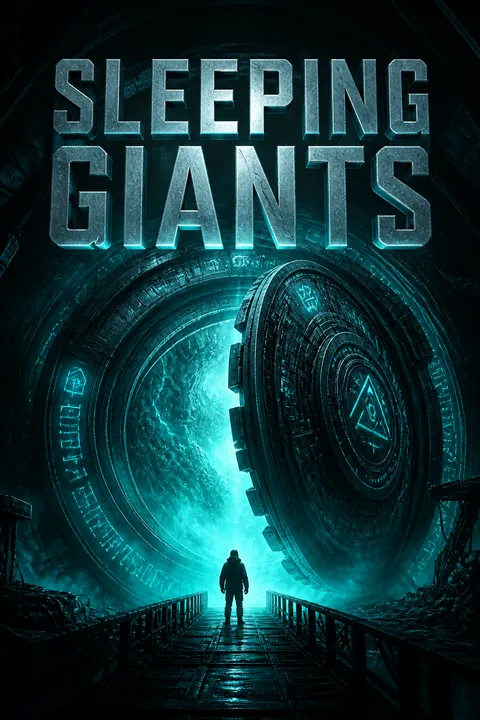

Plot Summary
Discovery in the Woods
On her eleventh birthday, Rose Franklin sneaks out to ride her new bike and tumbles into a glowing, square pit in the woods. She awakens in the palm of a giant metal hand, surrounded by firemen and her worried father. The artifact's size and strange turquoise glow hint at something ancient and otherworldly. The military quickly seizes the site, and the hand is locked away, its origins and purpose a mystery. This moment marks the beginning of a lifelong obsession for Rose, setting her on a path that will intertwine her fate with the artifact's and change the course of human history.
The Hand and the Scientist
Years later, Rose becomes a physicist, eventually leading the research on the very hand she once discovered. The artifact's impossible age and composition—an iridium alloy far beyond Earth's capabilities—baffle scientists and suggest extraterrestrial origins. Rose's investigation reveals the hand is only one piece of a much larger puzzle. The glowing symbols and panels defy translation, and the hand's light never dims. Rose's scientific rigor and personal connection to the artifact drive her to challenge accepted truths, setting the stage for a quest that will test the limits of human knowledge and resilience.
Awakening the Giants
A military helicopter crash in Turkey uncovers another giant artifact—a forearm—after its proximity to argon-37, a byproduct of nuclear activity, triggers a reaction. Rose deduces that the artifacts are designed to awaken only when a civilization reaches a certain technological threshold, specifically the ability to harness nuclear energy. This clever alien safeguard ensures the giants remain hidden until humanity is ready. The discovery of the forearm, and the method to find more pieces, launches a global search for the rest of the body, transforming the project from academic curiosity to a race against time and secrecy.
Assembling the Team
Rose's team expands to include military pilots Kara Resnik and Ryan Mitchell, and later, linguist Vincent Couture. Each brings unique skills and personal baggage: Kara's rebellious streak and flying prowess, Ryan's steadiness and loyalty, Vincent's brilliance and social awkwardness. Their interactions are shaped by psychological tests, personal histories, and the high-stress environment of secret research. As they search for and recover more body parts, the team's cohesion is tested by tragedy, rivalry, and the ethical dilemmas of wielding alien technology. Their relationships become as crucial to the project's success as their technical expertise.
Operation Tinker Bell
Using Rose's ARCANA compound, which mimics the nuclear byproducts that awaken the artifacts, Kara and Ryan fly covert missions across North America, "dusting" the land and watching for turquoise glows. The operation is dangerous—each activation risks catastrophic accidents as the massive parts erupt from the earth. The team recovers arms, legs, and other components, assembling them in a secret underground facility. The search is a blend of scientific ingenuity and military precision, but the stakes rise as the artifacts' power and potential for destruction become clear, and the world's governments begin to take notice.
Tragedy in Flagstaff
The recovery of an upper arm in Flagstaff, Arizona, results in disaster when the artifact's emergence destroys homes and kills eight civilians, including a child. The team is shaken by guilt and grief, especially Kara, who struggles with the moral weight of their actions. The incident is covered up as a terrorist bombing, but the emotional scars linger. The tragedy forces the team to confront the human cost of their quest and the ethical implications of awakening forces they barely understand. It also draws the attention of national and international authorities, escalating the project's secrecy and urgency.
The World Takes Notice
As more artifacts are found, the U.S. government, led by shadowy operatives, wrestles with the implications of possessing a potential superweapon. International incidents—such as a botched recovery in Siberia—bring Russia, China, and other powers into the fray. The project's secrecy is threatened, and the risk of global conflict grows. Political maneuvering, cover stories, and moral compromises become routine. The team is caught between scientific discovery and the machinations of those who see the giant as a tool for power, deterrence, or even world domination.
Building the Colossus
In a vast, repurposed Cold War bunker, the team assembles the giant—revealed to be a female humanoid, dubbed Themis. The interior is a marvel of alien engineering, with control spheres, gyroscopes, and interfaces designed for non-human anatomy. Kara and Ryan train as pilots, struggling to adapt to the alien controls, especially the reversed knees and complex console. Themis's power source is revealed to be nuclear energy, and her armor absorbs and releases radiation in devastating bursts. The process of assembly and training is fraught with technical setbacks, personal injuries, and the growing realization that Themis is a weapon of unimaginable power.
Human Limits, Alien Design
The helmets and control suits are not made for humans, causing pain and injury—yet they also heal, as when Kara's damaged eye is miraculously repaired. Only certain people can activate the controls, leading to genetic and psychological investigations. Vincent eventually replaces Ryan as leg pilot after a tragic accident, but suffers a crippling injury himself. The team's physical and emotional limits are tested as they push themselves to master Themis, all while grappling with the knowledge that they are wielding a weapon designed for beings not quite like themselves.
Love, Loss, and Rivalry
The intense environment breeds complex relationships: Kara and Ryan's romance falters, while Kara and Vincent's chemistry grows, culminating in a love triangle that ends in violence and heartbreak. The team's cohesion is shattered by jealousy, guilt, and the consequences of their actions. Rose, the project's moral anchor, struggles to keep the group together and focused. The personal dramas mirror the larger ethical dilemmas of the project, as the team must decide what they are willing to sacrifice for knowledge, power, and each other.
The Weapon Revealed
With the final pieces in place, Themis is activated. She is armed with a sword and shield of focused energy, capable of vaporizing matter and withstanding immense force. The team discovers her abilities through trial and error, realizing that Themis was built for close combat and planetary defense. The revelation that she is only one of many such giants, and that her presence on Earth is part of a larger alien plan, raises existential questions about humanity's place in the universe and the responsibilities that come with such power.
Catastrophe at Denver
During a training session, a misstep triggers Themis's energy burst, obliterating part of Denver International Airport and killing over three hundred people, including Rose. The event is witnessed worldwide, shattering secrecy and forcing the U.S. government to reveal the existence of the giant. The team is devastated by loss and guilt, and the world is thrown into chaos as nations scramble to control or destroy Themis. The catastrophe marks a turning point, transforming the project from a secret experiment to a global crisis.
Global Fallout
The Denver disaster ignites international tensions. The U.S. attempts to hide Themis by sinking her in the Puerto Rico Trench, but a multinational consortium forms to recover and control the robot. Political alliances shift, and the project becomes a symbol of both hope and fear. The team is fractured, with some members exiled, imprisoned, or co-opted by new powers. The struggle for Themis becomes a microcosm of humanity's inability to share power and the dangers of technological escalation.
The Race for Control
The Gaia Consortium, a coalition of nations and corporations, takes over Themis. Alyssa Papantoniou, a brilliant but ruthless geneticist, becomes the new leader, determined to unlock the robot's secrets and replace the original pilots. Kara and Vincent are subjected to invasive tests and betrayals, while Ryan is brought back as a potential replacement. The consortium's motives are murky, blending profit, defense, and ambition. The team must navigate shifting loyalties, surveillance, and the threat of being rendered obsolete—or worse.
Betrayal and Escape
Alyssa's obsession with control leads to the imprisonment and experimentation on Kara and Vincent. With Ryan's help, they stage a daring escape, exposing the consortium's abuses and triggering a military intervention. The rescue is fraught with danger, and the team is left traumatized but free. Alyssa vanishes, her fate uncertain, while the survivors must reckon with the scars of captivity and the knowledge that their unique abilities make them both valuable and vulnerable.
The Consortium's Rise
The Gaia Consortium consolidates power, but internal divisions and external pressures threaten its stability. Themis becomes the centerpiece of a new planetary defense initiative, with Kara and Vincent as reluctant heroes. The U.S. and other nations maneuver to ensure the robot is never used as an offensive weapon, eventually placing her under United Nations control. The project's original ideals are subsumed by politics, profit, and the ever-present fear of alien intervention.
The Final Stand
As the world adjusts to the reality of alien technology, a mysterious figure—possibly a descendant of the original alien soldiers—warns that humanity is being watched and judged. Themis's true purpose is revealed: she is both a weapon and a test, left to see if humanity can wield power responsibly. The threat of alien retribution looms, and the team must decide whether to use Themis in defense or risk everything by misusing her. The fate of the world hangs in the balance, determined not by technology, but by the choices of a few flawed, courageous individuals.
Resurrection and Reckoning
In a final twist, Rose Franklin is found alive—restored to her younger self, with no memory of the intervening years. Her return is as mysterious as the giants themselves, suggesting that the alien architects are not finished with humanity. The story ends with the promise of new beginnings, unresolved questions, and the enduring challenge of living up to the legacy—and the warning—of the sleeping giants.
Analysis
Sleeping Giants is a meditation on power, responsibility, and the limits of human understandingThrough its fragmented, interview-driven narrative, the novel explores what happens when humanity stumbles upon technology far beyond its grasp—technology that is both a gift and a test from an ancient, unseen civilization. The story's emotional core lies in the relationships among the team: their love, rivalry, guilt, and resilience mirror the larger ethical dilemmas of wielding such power. Themis, the giant, is both a weapon and a mirror, forcing humanity to confront its own nature and readiness for the next stage of evolution. The novel warns that technological advancement without moral maturity leads to tragedy, as seen in the disasters at Flagstaff and Denver. Yet it also offers hope: through cooperation, sacrifice, and the willingness to question authority, the characters inch toward a more just and unified world. The final chapters, with their focus on global governance and the resurrection of Rose, suggest that the journey is ongoing—that the true test is not whether we can build giants, but whether we can become worthy of them.
Review Summary
Sleeping Giants has an overall Goodreads rating of 3.82/5. Reviews frequently praise its unique documentary-style format of interviews and journal entries, its compelling sci-fi premise involving ancient alien robot parts discovered worldwide, and its mysterious unnamed interviewer character. Many readers finished it in a single sitting. Common criticisms include difficulty emotionally connecting with characters due to the format, heavy info-dumping of scientific detail, and the story feeling more plot-driven than character-driven. Most reviewers eagerly continued with the series despite any reservations.
People Also Read



Characters
Dr. Rose Franklin
Rose is the heart of the story—a brilliant physicist whose childhood discovery of the giant hand shapes her destiny. Driven by curiosity and a sense of responsibility, she leads the project with empathy and rigor, balancing scientific ambition with ethical caution. Rose's journey is marked by personal loss, guilt, and the burden of leadership. Her relationships with her team are maternal and protective, yet she is haunted by the consequences of their actions. Her death is a devastating blow, but her mysterious resurrection hints at a larger cosmic plan and the enduring power of hope and renewal.
Kara Resnik
Kara is a skilled helicopter pilot with a rebellious streak and a sharp tongue. Her toughness masks deep vulnerabilities—trauma, self-doubt, and a longing for connection. Kara's journey is one of growth and resilience: she becomes the primary pilot of Themis, endures physical and emotional injuries, and navigates complex relationships with Ryan and Vincent. Her sense of responsibility and refusal to blindly follow orders make her both a hero and a target. Kara's struggle to reconcile her role as a soldier with the moral weight of wielding a weapon of mass destruction is central to the novel's exploration of agency and conscience.
Ryan Mitchell
Ryan is Kara's co-pilot and, for a time, her lover. He is steady, dependable, and deeply affected by the events that unfold. Ryan's unrequited love for Kara and his displacement by Vincent as leg pilot lead to jealousy, heartbreak, and ultimately violence. His actions—both heroic and destructive—reflect the psychological toll of the project and the dangers of obsession. Ryan's quest for redemption drives him to risk everything to save his former teammates, highlighting the novel's themes of forgiveness, loyalty, and the complexity of human motivation.
Vincent Couture
Vincent is a young, gifted linguist from Montreal, recruited for his unconventional thinking and ability to decipher the alien symbols. Socially awkward and self-critical, he finds belonging and purpose within the team. Vincent's journey is marked by physical transformation—he becomes the leg pilot after a tragic accident, enduring excruciating pain and invasive surgery. His relationship with Kara is passionate but fraught, and his rivalry with Ryan adds tension. Vincent's resilience, intellect, and willingness to sacrifice make him a key figure in humanity's struggle to master Themis and confront its own limitations.
Alyssa Papantoniou
Alyssa is a brilliant but cold geneticist whose obsession with unlocking Themis's secrets leads her to unethical experimentation and betrayal. She is driven by ambition and a belief in the ends justifying the means, willing to sacrifice others for scientific progress. Alyssa's rise to power within the Gaia Consortium marks a shift from idealism to pragmatism, and her actions force the team to confront the dangers of unchecked authority. Her eventual downfall is a cautionary tale about the perils of hubris and the dehumanizing effects of power.
The Nameless Interrogator
The unnamed interviewer is the project's behind-the-scenes mastermind, coordinating operations, manipulating politics, and guiding the team with a mix of cold logic and occasional empathy. His true motives are ambiguous—he claims to act for the greater good, but his methods are often ruthless. He serves as a mirror for the other characters, challenging their assumptions and forcing them to confront uncomfortable truths. His presence embodies the tension between individual agency and systemic power, and his ultimate goal is to ensure humanity's survival, whatever the cost.
Mr. Burns
Mr. Burns appears as an enigmatic figure who shares allegorical stories about the origins of the giants and the fate of civilizations. He hints at being a descendant of the original alien soldiers left on Earth, and his knowledge suggests a deeper connection to the events unfolding. Mr. Burns's role is to provide perspective, warning, and a sense of the larger cosmic stakes. He challenges the characters—and the reader—to consider the meaning of power, responsibility, and the legacy of the past.
Ines Tabib
Ines becomes the Assistant to the President for National Security Affairs, representing the shifting political landscape as Themis moves from national secret to global symbol. She is sharp, adaptable, and committed to finding solutions that balance power with principle. Ines's interactions with the team and the consortium reflect the challenges of governance in a world transformed by alien technology, and her efforts to place Themis under UN control embody the hope for a more cooperative, less destructive future.
Themis
Themis is both character and object—a giant female robot, ancient and inscrutable, designed for planetary defense and left as a test for humanity. Her presence forces the characters to confront their own nature, as she can only be activated by those who meet specific genetic and psychological criteria. Themis's power is both a gift and a curse, offering the promise of protection but also the threat of annihilation. She embodies the novel's central questions: Are we ready for the power we seek? Can we use it wisely, or will it destroy us?
The Gaia Consortium
The Gaia Consortium is less a character than a force—a coalition of nations and corporations that seizes control of Themis after the Denver catastrophe. It represents the intersection of profit, politics, and technological ambition, and its actions drive much of the novel's latter half. The consortium's internal divisions, ethical compromises, and ultimate submission to global governance reflect the complexities of collective action in the face of existential threats.
Plot Devices
Epistolary Structure and Interviews
The novel is told through interviews, journal entries, mission logs, and news reports, creating a mosaic of perspectives. This structure allows for deep psychological insight, unreliable narration, and the gradual revelation of secrets. The shifting viewpoints build suspense, humanize the characters, and highlight the subjective nature of truth. The format also mirrors the investigative process at the heart of the story, as the team—and the reader—piece together the meaning of the giants from scattered clues.
Alien Technology as Evolutionary Test
The central plot device is the idea that the giants are designed to remain hidden until humanity reaches a certain level of technological and social maturity. The use of argon-37 as a trigger ensures that only a nuclear-capable civilization can find and activate the artifacts. The controls' selective activation based on genetics and psychology further narrows the field, making the project as much about human evolution as alien engineering. This device raises questions about destiny, readiness, and the criteria for power.
Moral Dilemmas and Consequences
The story is driven by the ethical challenges faced by the characters: the deaths in Flagstaff and Denver, the use of Themis as a weapon, the betrayal and experimentation within the team. The consequences of their choices ripple outward, affecting not only their own lives but the fate of nations and the world. The plot repeatedly forces the characters to weigh personal loyalty against the greater good, and to confront the limits of their own understanding and control.
Foreshadowing and Mythic Resonance
The novel is rich with references to mythology, history, and prophecy. Themis's name and design evoke Greek myth, while Mr. Burns's stories hint at a larger cosmic cycle of rise, fall, and judgment. The recurring motif of "sleeping giants" serves as both literal and metaphorical foreshadowing, suggesting that humanity's awakening to power is both an opportunity and a danger. The final resurrection of Rose hints at further cycles to come.
Global Politics and Power Struggles
The search for and assembly of Themis is shaped by international intrigue, espionage, and shifting alliances. The project's secrecy is constantly threatened by accidents, betrayals, and the ambitions of nations and corporations. The eventual move to place Themis under UN control reflects the recognition that some powers are too great for any one group to wield alone, and that cooperation—however imperfect—is the only path forward.
Download PDF
Download EPUB
.epub digital book format is ideal for reading ebooks on phones, tablets, and e-readers.








































