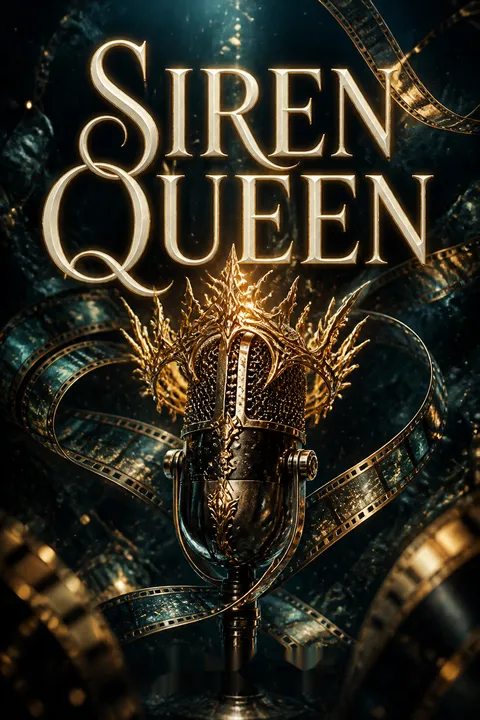

Plot Summary
Hungers and Magic Begin
In the shadows of 1930s Los Angeles, a nameless Chinese-American girl hungers desperately—for apples, for magic, for more than factory work or the racial slurs hurled on the streets. Early on, she trades an inch of her hair to a surreal ticket taker for entry to the nickelodeon—her "first magic," and realizes how dreams exact a price. She is stung but spellbound by Hollywood glamour and determined to escape boundaries of race, poverty, and gender. Inside the cinema's silver light, the ordinary cracks open, unleashing impossible desires in a world where fairytales and cruelty unfold side by side. Her sister Luli fears the darkness in all of it; but for her, ambition beats harder.
Bargain at the Border
Her fate unspools on a day she wanders across a film set by accident—Hollywood magic meets actual sorcery. In the midst of chaos, she helps Maya Vos Santé, soon finds herself recruited for an impromptu scene. The set shudders with layered glamours—directors, not-quite-humans, whispered deals, and wages paid with unknowable costs. The girl is kissed on the brow by Maya (a sign and shield), and earns money that her mother collects with wary pride and worry. That night, the silvery mark of the kiss lingers, and she understands in her bones that Hollywood is both a fairyland and a dangerous trap, blending hunger, luck, and fate.
Nickelodeon, Hair, and Ambition
She returns repeatedly to the ticket taker, trading more bits of herself for entry—hair, the darkness from her eyes—each act an offering for a future free from drudgery. She witnesses on screen the deathless glamour and the violence beneath it, hungering to be seen and remembered. Yet, even in the nickelodeon magic, she notes what it costs, not just for women like Su Tong Lin—destined only to die for white heroes—but for herself, weaving a blueprint: "If you can't be ordinary, you can be better." Her ambition runs alongside the growing distance from family and self, and she senses the mortal peril, but cannot stop.
First Taste of Hollywood
Her fleeting taste of fame grows; she's drawn into recurring minor roles and the backstage world of crews and actors. A brutal, loving negotiation with her parents marks her complicity—ten dollar bills patch holes in the laundry, even as her father's pride orients toward traditional power over his daughter, culminating in blows and separation. The fracture at home is answered with increasing alienation on the set: actors are quickly forgotten, and girls are sacrificed to men's appetites, or to magics older than film. She witnesses the ghost-queen Maya Vos Santé disappear without trace, learns rumors of lost immortality, and realizes how the game swallows its own.
Family Magic and Costs
She recognizes that her family is bound up in its own American-Chinese magic—her father a failed alchemist, her mother a woman whose magic is endurance. After violence, her mother weaves protection in the form of button-eyed dolls, decoys holding their father's attention while the real girls drift further from his orbit. The lesson—immortality for men, dolls and margins for women—is sharpened in her awareness; she inherits both the curse and the resource. When her father finally dies, the dolls linger on, haunting empty hallways, a warning of survival's cost and the dangers in being replaced or erased.
Names, Labor, and Dollgirls
On film lots, no one uses real names—protection against being claimed by the studio. She is "Chinese Kid" or "CK," a legal ghost, a slip between contracts. Crew and actors barter names for magic and protection, keeping the studio from owning souls. Only after striking further bargains—lessons from Mrs. Wiley, a former queen who paid with her feet for freedom—does she understand the system's hunger for the real self behind names and for unique offerings. Sometimes women disappear; sometimes they pay twenty years at the end of life to survive. She learns, with hard-earned dread and cunning, what refusing the wrong price may cost.
A Star Without a Patron
She grows, no longer a child actor or background girl, but blocked by the studios' monstrous contracts and groomers, especially Jacko, who would co-opt her for his own rise. She realizes the dream demands complex deals and protection—never charity. The stars with patrons become queens; those without risk vanishing. Her sister Luli rejects the game entirely, choosing art and anonymity. She seeks sponsors and knowledge, finding instead ghosts (literally—actresses turned to stands of trees), and finally a bargain broker in Mrs. Wiley. For twenty years at her life's end, Mrs. Wiley will get her through the Hollywood maze—at endless personal risk, but with her eyes open.
Studio Games and Survival
Now of age, her passage to Oberlin Wolfe's inner sanctum becomes a test of will, hunger, and refusal to be anyone's consort or pawn. She manipulates Jacko by uncovering his crimes against young starlets, leveraging blackmail for access independent of him. The meeting with Wolfe is a mythic confrontation: beautiful and monstrous, he offers her a contract and tries to take her name, but is checked by another's protective mark (Maya's kiss). She escapes without being consumed, given the right to remake herself as "Luli Wei," the star she names with her sister's name, sealing forever the breach—and loss—between original self and "Luli."
Queens, Consorts, and Debt
Stepping into the star machine, Luli finds herself a resident in the studio's labyrinthine dorms—where real women, changelings, and monsters are shaped. She bonds with Greta Nilsson, a Swedish beauty with a literal tail, weighed down by bargains of her own. Among aspiring queens, Luli realizes success is a network of magic and mutual aid offset by envy and danger. Women barter, betray, or protect one another. Friday-night fires (ritual parties and literal faery-magic) mark the boundary of the possible and mortal. Luli's ambitions intertwine with love, rivalry, and chosen family—each decision building a debt to the system, the world, and herself.
The Path to Oberlin Wolfe
Luli's rise is punctuated by increasingly dangerous tasks and displays of cunning—stealing forbidden flowers from another's garden for her beloved Emmaline, braving hunts and rituals that could buy her immortality or annihilation. Threatened by studio kings, saved by queer alliances, she faces the awful truth: to be queen, you must survive the systems designed to eat you, resist being replaced, and accept never quite belonging. Greta's rescue of her lover from a faery "Wild Hunt" calls in all her debts and bargains as well; escape is possible but only with pain and sacrifice.
Dangerous Deals for Glory
In parallel, Luli navigates love—an affair with Emmaline, and later Tara, a woman who helps her see the flesh-and-blood joy of existence outside the studio's boundaries. Greta forges her own way, using bargains to escape with her family despite losing her face in doing so, forever marked. Every woman who fights for herself risks being devoured, or turned into an empty-eyed "nodder." Luli steps up as a new kind of queen: one who survives by allying with monsters, reshaping deals, and rewriting the story of what it means to win.
The Price of Immortality
Ascending at last, Luli becomes "Siren Queen," starring as a monster rather than victim, and gaining control—but not immunity. Older stars vanish in fire or madness, allies are lost to systems and men's appetites, love with Emmaline is ruptured by ambition and self-preservation. Friendship with Tara, passion and authenticity, illuminate a narrower but more real joy outside the studios' imposed fates. Chasing immortality, Luli discovers the price: the world changes, friends and selves are left behind, and the bargains once struck call for payment, ever higher.
Monsters in Velvet Light
On the set of her biggest film, Luli (as the Siren) discovers the power and peril in letting her full self be seen. Magic erupts: love, rage, desire burn down the orchestrated illusions and replace them with something raw and uncontrollable. The monster becomes sacred and beloved—a star and a caution, dazzling and dangerous in equal measure. In love, rivalry, and alliance, she chooses her own path, knowing now how easily even legends can fall, and that immortality is only for the craft and the brave.
Fire and Friday Nights
After success and exposure, Luli contends with new studio machinations, rivals, and the haunting loss of her major protector, Harry Long, lost to fire. Within the Friday fires, new loves and alliances are forged and lost: she drifts from Emmaline to Tara, then to others, while making her own space for women like herself. She learns she can never fully leave the system, just negotiate new terms—and, in the process, redefine what's immortal: the stories, the beloved, the possibility of new monsters and new dreams.
Love, Rivalry, and Fires
Work and love continually intertwine—ambition never separate from intimacy or cruelty. Luli and her new partner Tara run from the studios to San Francisco, seeking her sister and a real connection to roots. Healing is imperfect, but the bond with Luli's sister is tentatively restored. Back in Hollywood, the final showdown with Jacko belongs as much to survival as artistry. Luli learns the power of her own story; her light at last uncontainable by studios, contracts, or rivals.
Siren Queen Ascends
In the final act, Luli's star power ignites for all to see. She performs not just for a camera but with a supernatural ferocity that cracks the boundary between magic and myth—far more than a studio queen, she is now the Siren Queen, burning, unkillable, a living legend. Even as the studio tries to destroy or replace her, she barters anew, never gives up power, and secures a legacy for the next generation of monsters, flames, and stars.
Loss, Memory, and Light
Luli's stardom stretches across decades, generations; she survives the deaths (literal and figurative) of rivals, lovers, and many queens. Ultimately, her fires become a refuge for the new outsiders, those who need her legacy most. The cycles of love, stardom, and loss endure: family, lovers, and monsters rise and fall. In old age, Luli and others watch younger flames walk into new dreams—immortality found not in unending life, but in legend, courage, and the gatherings at the edge of the fire.
Analysis
Siren Queen is an incandescent reimagining of Old Hollywood's golden age as a literal faery court: to become a star is to outwit monsters, outlast exploitation, and live (sometimes only in legend) when the system is designed to devour you. Nghi Vo transmutes Hollywood's history of erasure, racism, and gendered violence into a lush mythos where every advance is paid in blood, years, or love. The novel's greatest triumph is its centering of a queer Chinese American heroine who survives by embracing what makes her monstrous and unassimilable, not by assimilating. Fame and immortality emerge not as unqualified goods, but as hard-won, compromised victories—bargains that buy space for the next outsider. The book's heart is in the power of solidarity: love among refugees, found family, and the promise that by carving out fires at the edge, we can ensure no monster stands alone. Siren Queen warns that the cost of legend is dear, but dares us to pay it—and then demands, what stories will you set aflame next?
Review Summary
Reviews for Siren Queen are largely positive, praising Nghi Vo's lyrical prose, dark magical reimagining of Old Hollywood, and nuanced exploration of race, queerness, and identity through protagonist Luli Wei. Many compare it favorably to The Seven Husbands of Evelyn Hugo, appreciating its metaphorical use of fantasy elements. Critics note the deliberately vague magic system and sometimes slow pacing as drawbacks, with some readers preferring clearer world-building. The book resonates strongly with readers who enjoy character-driven, atmospheric storytelling over structured plot and explicit fantasy rules.
People Also Read
Characters
Luli Wei
Luli begins as a hungry, nameless Chinese American girl, determined to outgrow the narrow survival prescribed for girls like her. Ambitious to the core, she trades pieces of herself—literally and metaphorically—for glimpses of magic and a chance at immortality in the film industry. Pushed by poverty, racism, and a fire in her that won't allow her to accept smallness, she becomes both a target and maker of bargains, allying with powerful monsters and paying deeply for each advance. Luli's relationships are a shifting terrain: yearning for recognition, sometimes in rivalry, sometimes in love, as with Emmaline and later Tara. Over time, she grows from desperate background player, to monster-queen of Hollywood, constantly negotiating the cost of being seen. Her journey is at once mythic and deeply personal—a hybrid of fire, hard-won solidarity, and haunted self-reflection—centering the struggle of self-invention and survival in a predatory world.
Emmaline Sauvignon
Emmaline is the irresistible rising queen of the studio's fires—blonde, beautiful, hailing from the cold landscapes of Minnesota, yet forging her claim amid dangerous magic as much as ambition. She and Luli are drawn together in a tangled web of desire, rivalry, and shared outsiderhood. Emmaline is adept at wielding her mythic glamour, but the underlying vulnerability is her need for belonging and safety—a need that is both her power and undoing. The choice to serve her stardom above all else shapes her arc, and ultimately, she remains a figure both beloved and isolated, tragic and triumphant, always at a distance that Luli both covets and fears.
Greta Nilsson
Swedish, cow-tailed, and other-than-human, Greta is Luli's first real friend in the dorms. Her strangeness becomes both burden and power. In love with Brandt, she bargains for escape from the studio's tithe, ultimately cutting off her own face to secure her family's future—an act of both horror and defiance. Greta's arc is about the cost of survival for those the system chews up fastest: her motivations are rooted in love and a desire for a home beyond Hollywood's fires.
Tara Lubowski
Tara, a Jewish Communist from Chicago, becomes crucial to Luli's adulthood. A studio scriptwriter under a male pseudonym, she is worldly, tough, and dryly humorous, offering Luli a path to authenticity and flesh-and-blood intimacy outside the studios' magic-drunk hunger. Tara is unfazed by glamour or terror, valuing honesty and mutual care over calculated deals—her presence brings a rare sense of home and hope to Luli's hectic world.
Jacko Dewalt
Jacko is the hard-nosed director who first introduces and then attempts to control Luli's path, exploiting her and other rising stars for his own shot at immortality. His plans run afoul of Luli's cunning and unwillingness to be owned. He embodies the toxic masculinity and destructive appetites of the studio system: powerful, but ultimately, small in the face of true magic and rebellion.
Oberlin Wolfe
Wolfe is not only the studio head but the faery king presiding over Hollywood's mythic power structure. He trades in stars and souls: bestowing names, demanding sacrifices, and determining who lives and who is consigned to obscurity or living death. Both creator of legends and devourer of identities, he is beautiful, pitiless, and ultimately undone—at least in part—by the monsters and queens he would control.
Mrs. Wiley / Hezibah Wiley
A former queen who traded her feet and years for freedom, Mrs. Wiley is Luli's key source of survival lore and hard-nosed wisdom. She demonstrates that all who wish to resist the tithe (or to last beyond their time) must pay—often with the best parts of themselves. Her guidance is both lifesaving and a stark warning of the limits (and possibilities) of defiance.
Luli's Sister (Original Luli)
Luli's younger sister remains in the background but is the repository of the original name and much of the family's emotional wisdom. She chooses art and authenticity over Hollywood illusions, ultimately shaping her own path in San Francisco. Her presence functions as Luli's conscience, providing an alternative to ambition at any cost.
Harry Long
One of the few men in the narrative to offer genuine protection and paternal kindness, Harry is a star who knows both the magic and the dangers of Hollywood. Worldly, he is always aware of the bargains; he mentors Luli and provides an anchor. However, his own fate is sealed by the consuming system, and he vanishes in the Santa Ana fires—a grief and warning to all survivors.
Brandt Hiller / Lawrence
Brandt is Greta's lover and the chosen tithe for the studio's annual Wild Hunt—a role that would require his destruction for the system to survive. Greta's refusal to release him rewrites the narrative and costs her dearly, but saves him: a longed-for but rarely achieved escape from predatory power.
Plot Devices
Magic as Hollywood Metaphor
Hollywood is depicted not just as a metaphor for enchantment but as a location where literal faery bargains, sacrifices, and transformations are the fuel for fame, immortality, and power. Every contract, name, and act has a magical cost—hair for tickets, years off your life for information, bodily scars for autonomy. The system's power is sustained by blood, names, and deception, with the studio heads as literal kings and the gates guarded by monstrous wolves.
Names and Identity
No one uses real names on the lot—they are both protection and the means by which the studio claims or erases you. Patrons bestow, withhold, or rename; Mrs. Wiley barters lives in exchange for years; Luli's theft of her sister's name is both a victory and a permanent wound. "Name" is always a bargain—never neutral.
The Tithe / Sacrifice
Every year, the Wild Hunt tithes someone (usually those closest to the studio head) to the darkness. Greta's refusal to surrender Brandt (and her own face) is the one happy exception. The pattern of consuming women—whether for "nodder" labor, doll replacement, disappearance, or literal death—runs through the narrative, literalizing how the machinery of fame eats its stars.
Found Family / Queer Kinship
Luli's key relationships—with Greta, Emmaline, Tara, her sister—are those of chosen connection, mutual rescue, and shared defiance, standing against patriarchal and faery machinations. Friday-night fires, clubs like the Pipeline, and even rare, joyful affairs provide glimmers of hope amid the system's carnivorous demands.
Meta-Narrative and Self-Awareness
Luli and her peers are acutely aware that they are writing and rewriting their own fates—adding and subtracting to legend, myth, and script. The book embeds film scripts, tales, and rumors; characters trade versions of their own stories as strategic armor or weapon. The use of first-person, with occasional "future commentary," foregrounds Luli's self-made myth and the impossibility of any story containing her whole.
Monstrosity as Power
Luli's journey is from outsider to monster to Queen—a reclamation of monstrosity as the only means to survive, flourish, and change the story. The monstrous (meaning those who cannot fit into the system's narrow constraints) are the seeds of future legends, the makers of new fires, and the disruptors who teach the next generation.
Download PDF
Download EPUB
.epub digital book format is ideal for reading ebooks on phones, tablets, and e-readers.








































