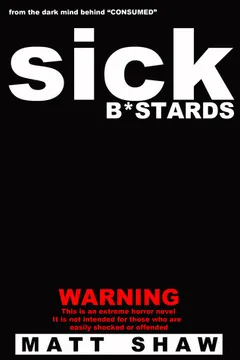

Plot Summary
Fractured Family Meal
The family sits down to dinner, but this is a family ravaged not just by post-apocalyptic famine, but also by an unraveling of all social and moral codes. The scene blends graphic sex and casual violence; the siblings' mutual desire, revealed by their mother's intrusion, is normalized in the dim shadow of a world gone mad. Their dinner is human meat, bound alive on the table, screaming as flesh is carved and distributed, a routine as ordinary now as any Sunday roast. The details—relishing blood, the hunger, the way the food stares in pleading terror—reveal just how far necessity and isolation have dehumanized what used to be called a family.
The World as It Was
Before the bomb, everything was mundane: blue skies, school, bickering over nothing, an entire world hustling through life, sometimes annoyed at rain but never starving. What triggers nostalgia most is the grass's color, the sky's normalcy, the shared routine of names and relationships—things barely noticed when you had them. Now, the earth is yellowed and poisoned, birds are rare, time makes no sense, and names are lost. A photograph is the only anchor the family has to their past identities. The world outside their house is a shell, society fractured, and memory unreliable, the terror of global disaster remembered only in impressions and fragments.
Amnesia in a Ruined Home
The father tells the story: fleeing after an explosion, amnesia descending over them in the safety of someone else's abandoned house. Their only actual proof of connection is an old photo and their accidental survival, not memory. Decency decays quietly; with no real past, the four become "Mother," "Father," "Sister," "Brother"—parodies of their supposed selves. Each eats, sleeps, and dreams under uncertain labels, striving for counterfeit normalcy, while the apocalypse outside makes all questions irrelevant—only survival matters, even at the cost of humanity itself.
Hungers Old and New
Food dwindles fast—soon just scraps and gnawing hunger. When the rations end, the family hunts not animals but people. First, guilt makes them sick. Soon, the body adapts: the taste of blood, the muscle tugging between teeth, becomes normal. Old hungers—comfort, sex, love—are warped under starvation, and the lines between survival, violence, and pleasure blur. The siblings' sexual closeness grows in desperation, first as comfort, then as something else, their appetites shifting ever further from anything resembling normal sexuality or morality.
The Monsters Among Us
One hunting excursion brings brother and father face-to-face with "the others"—yellow-skinned, howling, with red-veined eyes and drooling black tar. The violence is animal, the struggle primal, the outcome bloody. These are humans twisted by chemical or radiological plague, intent on destruction, making the choice to stay inside seem not just smart, but essential. Becoming prey is easy; becoming predator is easier than imagined, and when the world is full of monsters, the line between monster and survivor is one knife's edge thick.
Rules of Survival
Barricades go up, plans are made, and the family dynamic swivels towards authoritarianism as the father asserts himself. "Stay in; trust no one," becomes the only law. Each person outside is a threat, a potential "looter," or—worse—one of the infected. Even when starvation looms, hesitation means death. The kitchen knife is the currency of power; slicing and partitioning food—human or otherwise—is now the central family ritual, and the defining feature of their relationship.
Bound by Blood
No names remain, but relationships grow violent and intimate. The siblings' sexual relationship, the mother's manipulations, and the father's domination all interweave into a knot of transgressive, dependent need. Everyone knows, everyone hides; the secrets are not just dark but necessary to survive. Yet guilt gnaws at "brother," humanity persists as shame, and attempts to break free—either into the outside world or into morality—are met with cunning reminders of why this familial madness is, for now, safer than the world outside.
Sins of Desire
Sex is transactional: the brother and sister trade orgasms for comfort and power, a thing of flesh with no gentleness or love left. The mother, starved of attention, seduces her son. All acts are commodified; sexual boundaries are as broken as the social fabric that once held them. Guilt blooms, dies, is reborn—in the aftermath, both disgust and secret longing remain. With guilt so thoroughly mingled with desire and survival, any hope of return to normality grows remote.
The Stranger's Fate
When the brother finds another survivor, hope hesitates but does not last; hunger and learned fear declare the stranger "meat." The killing is horrifying but justified—to brother, to father, to all. The stranger's corpse becomes their next meal. With each step deeper into violence and cannibalism, the emotional lines blur: murder becomes family business. Even as the brother feels sick with guilt, practical needs overwhelm any remaining empathy for the fellow human now reduced to food.
Fences and Flesh
Attempting to leave, the narrator traverses haunted woods, evades monsters, and stumbles upon a high wall enclosing "Zone B." Climbing over, he finds not freedom, but a compound filled with dead scientists, cages, cabins, and surveillance. The realization emerges: their suffering is not random. They are exhibits—monitored, studied, tormented, and controlled. The monsters may come from outside, but the walls themselves, and the observers behind them, are the true architects of this nightmare.
Truth Beyond the Wall
The protagonist, disoriented, scavenging for food and hope, finds files, videos, and a surviving technician, Michael Bray. Gradually, he learns: the apocalypse is faked. The water was drugged to keep them docile and amnesiac. Brainwashing, staged memories, and engineered crises shaped their descent into taboo. The government—or some other authority—wanted to study whether post-nuclear survivors could "return" to society or would become irretrievably damaged. Their cannibalism, incest, and violence were, in a sense, orchestrated: the casualties of state-sponsored sadism.
Remembering Who We Are
Real names, real histories: the man finds his file—he is John Burley. His "sister," "mother," and "father" are strangers, subjects in the same government experiment. Their identities were erased by operation and drugs, replaced with "family" only because a photograph showed them standing near each other. Polaroids, questionnaires, surveillance files, and video recordings fill in the blanks. Consumed by rage, John murders Michael in the way he learned—chewing through his throbbing need for vengeance and the sick fulfillment of what he has become.
Experiments and Revelations
Detailed files explain: the infected outside are not nuclear victims, but recipients of biological weapons testing. The family's psychological breakdown is not tragic chance but calculated cruelty. They were kept amnesiac, isolated, hunger-crazed, and subjected to staged traumas "for science." The pseudo-apocalypse is more damning than the imagined one: proof that the worst monsters wield clipboards and authority, not claws and fangs. To the state, their suffering is data, nothing more.
A Test of Humanity
Revelation brings no comfort, only despair. Alone, John considers suicide. Flashes of real memory—his recruitment, the bait of money, his signature on government forms—overlay the horror of what he's done since. Now, the lines between himself and the experimenters blur; he has become Frankenstein's monster, animated by someone else's design but now responsible for his own hunger and shame. Escape is possible, but nothing can be as it was.
The Only Way Home
Stealing the technician's car, John drives back to the zone, to the false family—now knowing there is no outside worth escaping to. He apologizes to "Father" and re-enters the house, a self-chosen hell, understanding that neither society nor nature will have him. All ties—incest, cannibalism, violence—are lies, but also the only reality he has left. The story closes not with hope, but with dark acceptance: the experiment is over, but its scars are permanent; ignorance is, finally, the only bliss they have left.
Analysis
Sick Bastardstranscends mere shock horror, morphing into an allegory about the violence of desperate survival, the fragility of memory and identity, and the ethical void at the heart of authority's experiments on the powerless. Its brutality—the visceral cannibalism, incest, and denigration of humanity—is not titillation but a grim diagnosis: the boundary between civilization and savagery is paper-thin, maintained not by internal goodness but by social structure and surveillance. But the greater horror is meta: the "apocalypse" is manufactured, the behavioral decline engineered for research, and the true monsters are those who stand outside, clinical and unscathed, mining human misery for data. The final choice—the protagonist's return to the house, resignation to monstrousness, and yearning for oblivion over truth—condemns a world where victims are blamed for damage inflicted upon them. In Shaw's dystopia, the only escape is forgetting, and the greatest sin is not violence or incest, but the systematic, institutionalized stripping of dignity and hope. The novel's lesson is clear: when power treats people as means, "family values" die, and the cost is a world where horror is not the exception but the rule.
Review Summary
People Also Read
Characters
Brother / John Burley
"Brother," later revealed as John Burley, is both protagonist and unreliable narrator, defined by shame, hunger, and longing. He awakens in the ruined house without memory or identity, clutching only the familial roles forced onto him. Racked with guilt over incestuous sex, reluctant violence, and forced cannibalism, he battles for vestiges of humanity even as his desires and moral lines decay. His psychological arc is one of profound confusion: he helplessly cycles between self-loathing, dependency, and moments of tenderness—especially towards "Sister." The climactic revelation that he, too, was engineered for this experiment leaves him irreparably damaged: he is both perpetrator and victim, desperate for connection in a world where all ties prove illusory.
Sister / Carmen Reyes
The "Sister" figure serves as both object of desire and emotional anchor for John, their relationship devolving from protective to sexual, then methodically violent as the experiment's effect deepens. She vacillates between childlike vulnerability—seeking comfort and reassurance—and lustful agency, sometimes initiating sex as a distraction from horror or as a bid for power. Her brief flashes of guilt or prayer show a mind desperate to retain some spark of purity, but the unnatural context forces her to adapt, normalizing cannibalism and incest. The eventual shedding of their familial bond—learning they are strangers—does not truly help; she remains psychologically scarred, her humanity preserved only in flickers.
Father / Brian Bigelow
Father, or Brian Bigelow, is the family's stern leader, imposing rigid rules in a house where rulelessness reigns. Early on, he seems merely overbearing, obsessed with order and safety. The truth: he is a subject most thoroughly brainwashed, locked by the experimenters into his authoritarian "provider" role. His cruelty and willingness to kill spring from artificially induced memories—an external will imposed on a hollowed-out man. Brian is the channel through which state violence is filtered into the family, indoctrinated to see threats everywhere and, finally, more machine than man.
Mother / Kelly Dethlefs
Mother is haunted by lost affection, becoming predatory as the family's hunger distorts all love into appetite, sexual and otherwise. Initially protective, she assists or initiates boundary-crossings—seducing both son and daughter for pleasure, survival, or control. Subtly, she is both victim and perpetuator of the experimenters' design: a figure of maternal guidance corrupted into one of manipulation, reflecting the family's broader collapse from care to savagery. Like the others, Kelly's "motherhood" is an artificial performance, but the pain and confusion are real.
Michael Bray / The Technician
A minor but pivotal figure, Michael is the harried survivor hiding among the corpses in the experiment's compound. When John discovers him, he becomes mouthpiece and confessor: the voice that explains the nature of the experiment, the artificiality of the apocalypse, the government's rationale, and even his own small acts of rebellion. He offers keys—literal and figurative—to John, hoping for escape, but is at last killed and consumed by the monster the program created. Michael's complicity and powerlessness evoke the many bureaucrats in history who enabled monstrosity.
The Infected / "Meat"
Once human, now driven mad by chemical or viral weaponry, these creatures prowl the woods, hunting or being hunted. Their appearances jolt the family's survival instincts, and their fate—consumed by others, mindless with hunger—foreshadows the arc of the family themselves. Their presence blurs the boundary between inside and outside, us and them, and ultimately signifies that the capacity for monstrosity is universal, not merely external.
The Stranger
The outsider encountered and ultimately killed by John is a reminder of shared humanity, ruthlessly extinguished by the logic of survival. For John, the stranger is hope, then horror, then food; his fate marks a key turning point from accidental atrocity to willful savagery.
Experiment Observers / Government Scientists
These unseen actors set the stage, engineer memory and morality breakdown, and surveil the family like rats in a maze. Protected from their own game but ultimately destroyed by it, they represent the cold, logical inhumanity of "science" unmoored from ethics, and from them all other horrors flow.
The Previous House Owners
Their stocked cupboards, vanished lives, and empty property are the origin points for the family's "luck." Their absence is a silent warning: the normal, caring lives that ended abruptly are now nothing but fuel for the new world's perversions.
The Real Families
At last, when John realizes he and the others are not a true family but strangers, the presence of "real" lives—families with names, histories, and love—is hinted at but unreachable, emphasizing the pathos of lost connection and irreparable damage.
Plot Devices
Amnesia and Identity Erasure
The experimenters use drugged water, brainwashing sessions, and fabricated evidence (photos, routines) to strip away true memories, forcing participants to act out familial roles. This device is crucial for the reader's immersion in the characters' confusion, their grasping for connection, and the growing horror as their "love" for one another unspools into lust, then hate, then loss. The slow restoration of identity—through clues, files, and recovered footage—drives the story's late revelation.
Post-Apocalypse as False Setting
The house, the zone, the creatures, even the sky: all are presented as unchanged by a supposed nuclear disaster. Flashbacks and foreshadowing gradually hint to the reader that the apocalypse may be staged. This twist reorients the entire narrative, shifting horror from nature to the artificial, and making monsters of the experimenters, not just the "meat."
Survival Cannibalism and Incest
Hunger—both literal and sexual—erodes taboo and softens ethics, both justifying and horrifying the reader. This plot device is used to explore not just extremity but adaptability, and the consequences of stripping away external structures of morality.
Found Footage / Surveillance
The zone's cabins, filled with corpses and banks of monitors, reveal the experimenters' gaze: the family is constantly watched, their every violation recorded. This permeating sense of surveillance adds a layer of shame and paranoia, culminating in the brother's realization of his own performative monstrosity.
Symbolic Walls and Fences
The wall dividing "Zone B" from the world is physical, psychological, and metaphorical: the family's efforts to barricade themselves echo the state's efforts to wall off monstrosity, but both only concentrate violence and despair. The wall offers illusory hope of rescue or escape, finally revealed as a deliberate structure of containment.
Gradual Revelation / Nonlinear Structure
The novel alternates between "Now" and "Before," using fragmentation and repetition to mirror the characters' own mental confusion. Only as the protagonist recovers his memory do the pieces fit together, producing a sense of vertigo as the story's morality and reality shift underfoot.
Government Experimentation as Social Allegory
Ultimately, the horror is not just survival but complicity. Officials and scientists create the environment for atrocity, then judge their subjects unworthy of society, exposing the real monsters: those who test humanity to destruction for "answers."
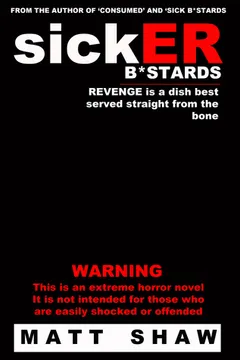
Sick Bastards Series
Download PDF
Download EPUB
.epub digital book format is ideal for reading ebooks on phones, tablets, and e-readers.








































