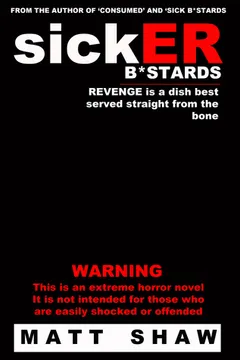

Plot Summary
Blood and Boundaries Broken
A disturbing, visceral account opens with a grotesque dinner of human skin among the main character, his family, and his so-called "Sister"—a harrowing scene where hunger and lust blur into one, and bloodlines become irrelevant in their moral decay. As they indulge, the narrator's desires cross sacred boundaries: he orchestrates sexual games with Sister, reveling in the taboo and the merging of flesh and sexuality. The family, imprisoned together by unknown, sinister overlords, has lost all sense of what constitutes right and wrong—their circumstances alien, yet their impulses all too achingly human. The main character drifts between pride and revulsion, excited by the violation yet haunted by memories of his "real" life and the certainty that this perversion is not true kinship. He is trapped in a nightmare of appetite and arousal with no escape but further transgression.
Hunger Beneath The Skin
Hunger dominates both body and mind, fusing sexual drive and desperation for sustenance. The narrator finds himself both revolted and aroused by his new normal, seeking comfort in flesh—both familial and forbidden. The lines between survival, pleasure, and guilt are blurred beyond recognition. Although the family obeys their new rituals, an undercurrent of betrayal lurks: the narrator's memories return despite efforts to dull them with drugged water. Each bite and each embrace is tinged with shame and resignation, as if satiating the body's needs is the only way to survive the crushing reality of captivity. The narrator's inner monologue reveals a psyche fracturing under pressure, torn between a yearning for oblivion and an insatiable thirst for sensation, desperate to belong but always an outsider—even in hellish communion.
The Experiment Unveiled
The truth, long suppressed, breaks through: their world is an elaborate experiment, not a post-apocalyptic nightmare but a government test. The narrator recalls his recruitment—a desperate act driven by money and hopelessness. The real horror comes not from monsters in the woods, but from human indifference: scientists, voyeurs, and soldiers manipulating them for the sake of data. The memory of life "before" is disjointed and bleak, marked by family estrangement, unemployment, and self-loathing. The revelations sour every remaining comfort. Knowledge is neither redemptive nor liberating; it becomes another form of imprisonment, underscoring the futility of their suffering. The family—never truly his—becomes a symbol of stolen identity and the obliteration of self for someone else's entertainment or research.
Animal, Family, Monster
Survival's cost becomes unmistakable when Father brings home a cat, not as a companion but as food. The act shatters whatever was left of their humanity—exampled by the deep grief Sister shows over the cat's death, a sorrow missing from human losses. Flashbacks to the narrator's own pet dying and his father's cruelty echo the senseless violence now routine. The act of skinning, eating, and the associated guilt are crosscut with brutal childhood lessons about disposability and paternal indifference. The thin membrane separating human from animal, family from monster, is torn apart—the house is a cage, and inside are not a family but a pack of scavengers trained to devour each other in the name of necessity.
The Vote for Survival
Food dwindles, fear mounts. A "family meeting" is called to determine their fate: stay and starve, or risk the dangers outside the house. The narrator's resistance is immediate—he knows leaving means losing any remaining illusion of safety for them and causing untold harm to the outside world. Father's authority is absolute; a mock vote is held, but his will prevails. The lines between victim and villain are blurred as the narrator contemplates killing his so-called family to protect the world from the monsters they've become. The election—like everything else—is rigged; notions of freedom and democracy crumble under the perversion of roles and the dictates of whoever claims "head" of the family. The narrator's hopelessness deepens.
Fractures Inside and Out
As preparations to leave accelerate, the household crumbles from within. The narrator grapples with how much to tell Sister, haunted by her shifting loyalty and his own cravings. The family is consumed by unease—no one trusts anyone, and alliances move like sand. Tortured by the truth, the narrator finally confides in Sister, but she betrays him to Father. Violence erupts, culminating in Father's attack and the emergence of inhuman threats. The narrator's attempts at connection and redemption only bring more pain. Love, hate, and fear intermingle, and every effort to assert control brings unforeseen consequences. The true horror is not the external experiment, but the psychological rot that has set in—trust is poison, the self dissolves.
Running on Empty
The family flees, Father now maniacally in charge. The outside world offers no solace—only the threat of starvation, attack, and the ever-present possibility of exposure to the truth. The journey is a grotesque parody of a family outing: nostalgia, memories, and arguments swirl as they drive through landscapes that offer nothing but reminders of what's lost. Each character is isolated within their own trauma, their thoughts echoing with betrayals old and new. The narrator drives, plotting, trapped by responsibility and his own failures. There is no destination—only the desperate motion away from suffering, with oblivion as the unspoken goal. The world is uncaring, the road endless, hope a cruel joke.
Escaping the Compound
As the narrator escapes, he realizes the only chance for real freedom lies in chaos. He unleashes infection within the compound, hoping an epidemic will provide enough distraction to slip away. The escape is both cathartic and damning: violence is unleashed not just on the soldiers and lab staff, but on the prisoners—himself included—who have become unwitting weapons. This act is the apotheosis of his learned behavior; every lesson of survival and betrayal now projected outward, inflicting as much harm as has been inflicted upon him. Escape is achieved by propagating violence, not by overcoming it. The cycle of suffering is ensured to continue as he stumbles back toward what he once called home.
Homecoming and Devouring
The narrator finally returns home, the scene of so many wounds, seeking comfort in the ghostly embrace of his real mother. The reunion is anything but redemptive—emptiness and hunger have transformed him too deeply. Confession and accusation erupt; he confronts his father's abuse, infidelity, and absence of love. A moment that could redeem instead leads to horror: the narrator loses control, violently murdering and cannibalizing his father before collapsing into shame, confusion, and a desperate hunger for connection and love. The past cannot be reclaimed—family is no longer a source of healing but a wound that cannot close. The horror comes home; what was done to him is now visited upon those he once cherished.
Unraveling Past and Present
Haunted by what he's done, the narrator moves through fragmented recollections of childhood, violence, and loss. Mother's love is both a balm and a source of agony, her presence arousing guilt as much as comfort. The narrator's mind loops through cycles of confession and denial; the past is as labyrinthine and treacherous as the compound he just escaped. Attempts at intimacy shimmer with the dread of incest and loss—he is trapped in trauma's binding knot, forever attempting to make sense of actions that cannot be explained. Memories that should heal now only deepen the wound, complicating every gesture, every word, every desire.
The Last Embrace
Though the narrator claims to want nothing but healing and comfort, the forces set loose cannot be so easily controlled. His search for solace with his mother degenerates into a desperate act of sexual violence and, ultimately, murder—a mercy or a possession, the distinction lost to him. As he kills, his guilt is interlaced with arousal, echoing his warped learning from captivity. He devours her flesh, torn between hunger for food and craving for unconditional acceptance. In death and desecration, he mistakes violation for union, consuming the last remaining tie he has to his former humanity.
True Love and Rotting Fucks
After consuming and violating all possibility of family, the narrator attempts a mockery of domestic bliss—watching the news, reminiscing, speaking to a lifeless mother as if she might answer. He imagines a future—one where their trauma binds them in love, where nothing is left to hinder their incest or cannibal hungers. But the fantasy collapses; even in this private oblivion, the horror cannot be denied. The story closes in ambiguity: the mother, traumatized beyond reach, threatens him with a knife—the cycle unbroken, the hunger unsated, the experiment left to rot in every survivor. The narrator is at once victim and perpetrator, forever consumed by the experiment's legacy.
Analysis
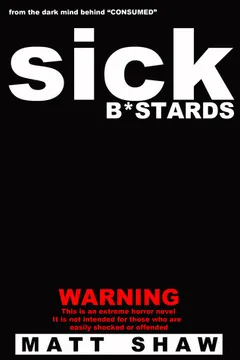
"SickER B*stards" is an uncompromising exploration of trauma, exploitation, and the fragility of humanity under duress. At its core is the annihilation of boundaries—between love and violence, family and enemy, victim and perpetrator. The experiment is both literal and allegorical: it stands in for any system or circumstance (war, abuse, poverty, government manipulation) that reduces people to animals, destroys trust, and upends all sense of self. Shaw's relentless depiction of incest, cannibalism, and psychological collapse is not for shock alone—it questions the durability of morality, the nature of identity, and the perversity of institutions that claim to care while exploiting suffering for curiosity or gain. The use of unreliable narration, shifting timelines, and direct address amplifies this horror: readers are forced to confront their appetite for atrocity and their own complicity as consumers of spectacle. Ultimately, the novel denies catharsis or comfort. Its lesson is a bleak one: once boundaries are broken and bonds destroyed, restoration may be impossible. Yet it raises uncomfortable, essential questions of how much damage is inflicted by those in power—and how much more by those simply looking on.
Review Summary
People Also Read
Characters
John Burley
John is a deeply fractured protagonist, shaped by trauma both before and during the government experiment. He seeks belonging and love, but finds only distorted echoes—first with a family built on lies and violence, and then with his real, yet irreparably broken, parents. John's psychological wounds—dismissal from his real father, codependence with his mother, failed romantic relationships—prime him for the moral rot of the experiment. His hunger is both literal and symbolic: he devours flesh, seeking reunion and comfort, but is left emptier with each act. His psychological arc is one of increasing dissociation, erupting into cannibalism, incest, and murder—his desperate attempts at connection warped by circumstance into monstrosity.
Sister
Sister embodies desire both for comfort and for transgression, working as the narrator's confidante, lover, and inadvertent betrayer. She, like John, is forged by the experiment's boundary-destroying conditions, escalating her appetites (sexual and otherwise) in proportion to her shrinking sense of self. She knows something is wrong, and her occasional desire for ignorance is both self-preservation and surrender. Her death at the hands of infection is both a release and a symbol—what little innocence remained is destroyed as her body becomes a vessel for the experiment's consequences.
Father
Father fills the classic authoritarian role: anger, control, entitlement, and unpredictable violence. In both real and artificial families, his need for dominance drives decisions that escalate tragedy—voting to leave, enforcing survival at the cost of others, and finally dying violently, either sacrificed or as collateral damage in the larger scheme. His lack of genuine connection or remorse is chilling, and his ultimate fate—gunned down as a threat by the experiment's overlords—mirrors the fate he imposed on others, suggesting cycles of power and brutality can never be broken by those who embody them.
Mother
Mother shifts between comfort, sexual competition, and victimhood. She attempts to stabilize the bleeding household: holding family together through small acts of kindness, even as she participates in taboo. Her desires are as warped as the rest, often channeling grief through sexuality. Her final rejection—killed by John to "spare" her or free himself—reveals the utter breakdown of nurture into violence. She is violated by every structure: experiment, family, even her own love. Her death is both mercy and annihilation of any remaining maternal protection.
The Real Father
John's real father is emotionally abusive, self-absorbed, and quick to discard and betray his son. His indifference and violence drive John's longing for parental love and seed many of the psychological fractures exploited in the experiment. He is the terminus for John's rage and hunger, dying in a grotesque act of cannibalistic patricide. With no capacity for empathy, his legacy is only pain—a figure whose very presence pushes the family toward its destruction.
The Real Mother
John's biological mother is his last bastion of warmth. Her efforts to comfort him are genuine, but ultimately powerless—her love cannot prevent his unraveling. She is the one he always returns to, seeking comfort, redemption, and absolution. Tragically, he destroys what he most needs to save, confusing her endurance for love everlasting. Her final act—turning a knife on him—signals the irrevocable shattering of their bond and the cycle of violence left by trauma.
The Scientists/Experimenters
The real antagonists are mostly unseen, their motivations hidden behind bland bureaucratic evil. Their clinical manipulation of the "family" amplifies and twists every personal flaw, forcing participants into ever more perverse acts. Their inhumanity is all the more terrifying for its banality—they watch, record, and discard survivors as mere data points, immune to suffering.
Infected
These are human experiments gone wrong—contagious, mindless forces of violence and death. Both threat and symptom, the Infected externalize the rot inside the compound: once human, now animal, they become weapons turned against the puppet-masters, as John engineers their escape.
Michael Bray (Technician)
A victim of John's unraveling, Bray represents the collateral damage of the experiment—killed in a fugue of violence, quickly forgotten, a mirror to John's own erasure of empathy and connection.
Natalie (Nurse)
A minor but significant figure in memory, Natalie represents the possibility of simple, honest kindness—a counterpoint to the experiment. She shows care after John's hospital accident, reminding readers of what could have been. Her brief presence underlines everything the experiment (and John's trauma) obliterates.
Plot Devices
Nonlinear Narrative and Fragmented Memory
The story is told through a deliberately fractured timeline: moving between "NOW" and "BEFORE," flashbacks, dreams, and hallucinations. This structure mirrors John's splintering psyche and the artificial disruption of memory imposed by the experiment. The reader experiences confusion and revelation alongside the protagonist, compelled to question the reliability of memory, the nature of identity, and the reality of events—are these traumas recovered, invented, or planted? The result is maximal immersion in John's damage, with emotional cause and effect rippling backward and forward in time.
Unreliable Narration
John's narration is colored by his trauma, guilt, and chemical manipulation. The superimposition of flashbacks, intrusive thoughts, and dissociation makes every account suspect. The experiment exploits this: the characters never know who they are or what their true relationships might be, and neither does the reader. This interpretive instability is both a source of horror and profound commentary on how abuse and captivity destroy perception.
Metafictional Experiment
The setting—a controlled environment for sadistic experimentation—is commented upon, with the characters aware, at moments, of their audience. Surveillance, the manipulation of information, and the staging of events mimic the act of reading itself, forcing the audience to confront its complicity in consuming stories of violence. The plot blurs agency: are the characters monsters, or are they made so by those who watch, design, and do nothing?
Cannibalism and Incest as Symptomatic Motifs
Taboo desire and consumption are not mere shocks—they externalize the collapse of boundaries, the hunger for connection, and the violence of institutional power. The family is the smallest, most intimate site of depravity, made monstrous by deprivation, surveillance, and manipulation. Each taboo act is both literal and symbolic: a desperate attempt to reclaim wholeness in a world that atomizes, isolates, and cultivates cruelty for its own sake.
Infection and Contagion
The infected are the physical manifestation of the moral and psychic disease at the heart of the experiment. Their violence is a mirror to the characters' own—propagated through systems they didn't design but cannot escape. The use of infection as a means for escape is a final, desperate twist: all escape comes at the price of passing on harm.
Power, Authority, and the Vote
Throughout, formal authority is a sham—Father's role, government control, the "votes" for survival, even parent/child bonds—all are stripped of legitimacy and revealed as costumes for control and aftermaths of violence. Consent, choice, and self-determination break down into manipulation and brute assertion.
Sick Bastards Series
Download PDF
Download EPUB
.epub digital book format is ideal for reading ebooks on phones, tablets, and e-readers.








































