

Key Takeaways
Your consciousness literally builds the physical world
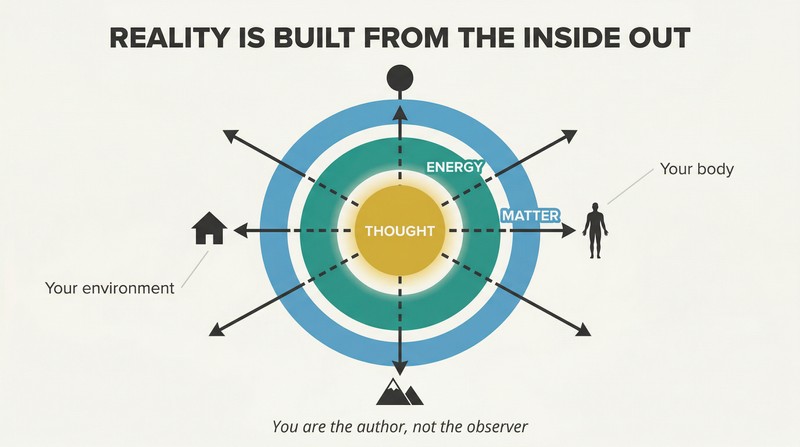
Seth's core thesis is radical. This book is dictated by "Seth," a nonphysical "energy personality essence" speaking through writer Jane Roberts while she is in trance, with her husband Robert Butts transcribing. Seth's foundational claim: consciousness creates form, not the other way around. Physical objects are not independent things — they are projections of inner psychological states, constructed as naturally and unconsciously as you form words when you speak.
The mechanism is electromagnetic. Every thought and emotion exists as an electromagnetic energy unit that, under certain conditions, coalesces into physical matter. Your body, your room, your entire environment are the materialized expressions of your inner life. You build your body from the inside out, forming it from atoms and molecules that perfectly mirror your subjective state. You are not a passive observer of reality — you are its author.
Your soul isn't a static treasure — it's a living process of becoming
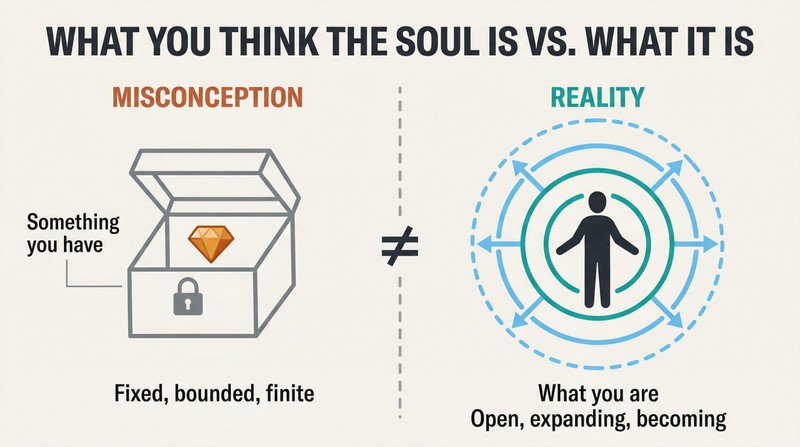
Most people misunderstand the soul. Seth says the soul (he prefers the term "entity") is not a finished product you carry around like a precious gem, waiting to be weighed at death. It is alive, curious, ever-changing — and it is you. It forms the flesh, the world you know, and is in a constant state of creative expansion. It contains potentials beyond comprehension and is never diminished.
The soul is an open system. It is not bounded or enclosed. Seth compares it to a concentrated energy field — a powerhouse of probabilities seeking expression. Your present personality is one manifestation of this entity, not the entirety of it. You continually create your soul as it continually creates you, in a reciprocal, dynamic relationship. Understanding this frees you from limited self-concepts and opens access to abilities you already possess but have ignored.
All your lifetimes happen simultaneously, not sequentially
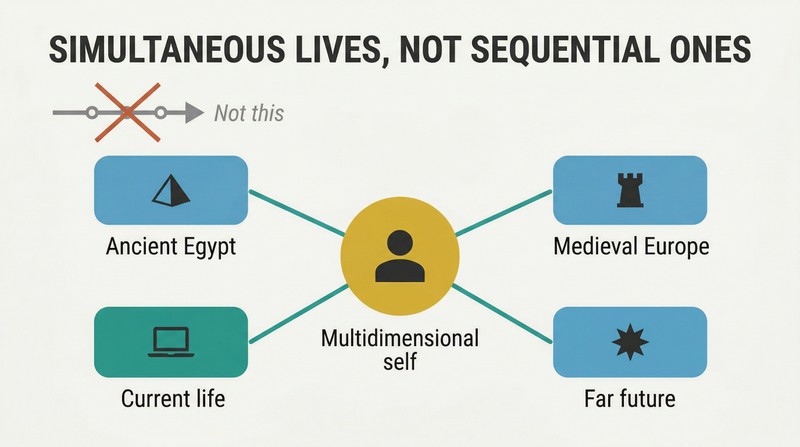
Seth's reincarnation model shatters linearity. Imagine your current life as one play running on a stage. Other "plays" — your lives in medieval Europe, ancient Egypt, the far future — run on adjacent stages at the same time. You are so absorbed in your current role that you forget you co-wrote all the scripts. These are not sequential progressions from caveman to enlightenment; they are simultaneous explorations by your multidimensional self.
This reframes karma entirely. It is incorrect to say that events in a "past" life caused your present suffering. Each life is a chosen set of challenges, not a sentence imposed for prior mistakes. Your multidimensional personality learns through all these experiences at once, using what Seth calls instant communication and feedback between incarnations. The plays influence each other, but none is more advanced than another.
The emotional intensity of a thought determines how fast it materializes
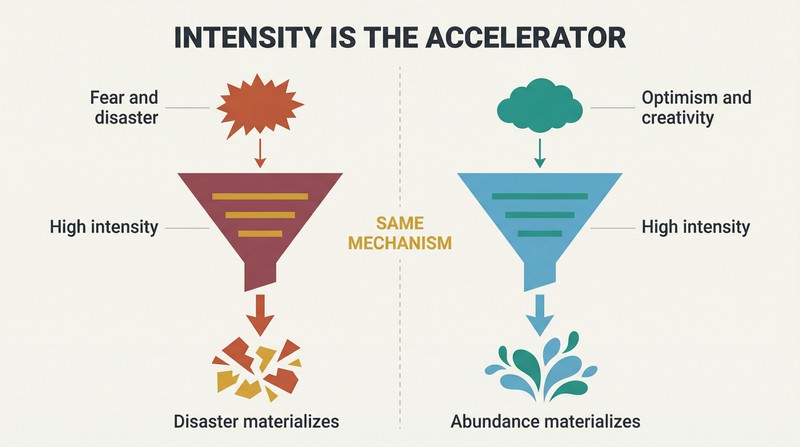
Thought becomes matter through a specific mechanism. Seth describes coordinate points — invisible concentrations of pure energy scattered through space — that act like psychic generators. When a thought or emotion reaches sufficient intensity, it activates these points and is accelerated into physical form. There are subordinate points (very common), main points, and four absolute coordinate points that intersect all realities.
This is a double-edged gift. If your habitual thoughts are optimistic and creative, your environment will reflect abundance. But if you dwell on fear and disaster with equal intensity, those visions materialize just as faithfully. Seth warns that living near strong coordinate areas — he names the West Coast, Great Lakes, and parts of Utah — amplifies both constructive and destructive materializations. The lesson: monitor the intensity and quality of your inner life as carefully as your outer one.
Believe in hell at death and you'll temporarily hallucinate one
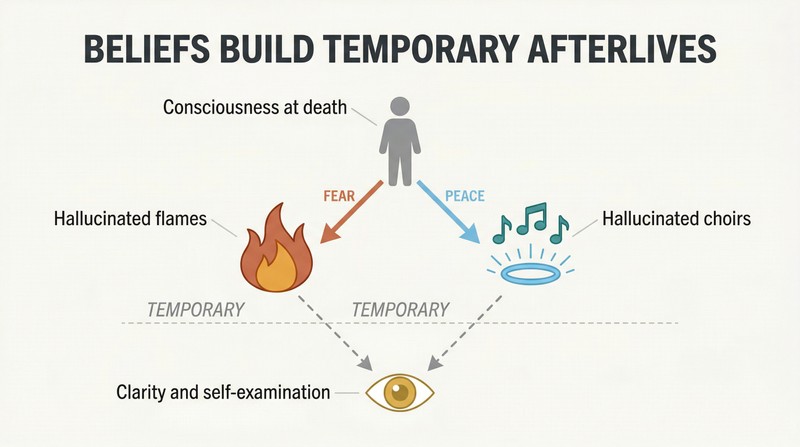
Death is a transition, not an extinction. Seth describes consciousness leaving the body gradually, not at a single point. You immediately find yourself in another form — one you already use in dreams and out-of-body states — moved directly by thought. Your beliefs then construct your initial after-death experience. Expect heavenly choirs, you'll get them. Fear hellfire, you'll hallucinate flames. Both are temporary.
Guides intervene through your own symbolism. Seth recounts acting as a guide, once appearing as Moses to a dying Arab who secretly feared Moses was more powerful than Allah. The man's beliefs required a cosmic battle before he could accept peace. Teachers stage these dramas using whatever imagery the newly dead personality trusts. Eventually, all hallucinations dissolve. A period of self-examination follows, where you review your full life and understand how your thoughts created your experiences.
What you habitually hate, you'll reincarnate with
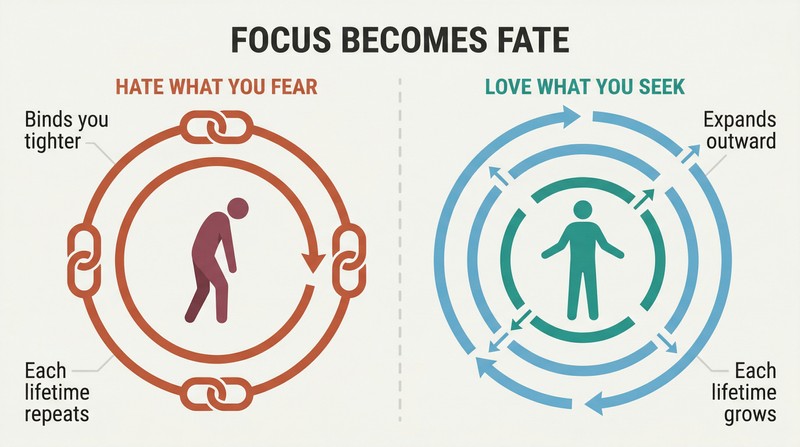
Hatred is a binding force across lifetimes. If you hate another person, that hatred may chain you to them through as many lives as you allow it to consume you. You draw to yourself the qualities upon which you concentrate. If you obsess over injustice done to you, you attract more of it — and this pattern carries into your next existence. Seth reinterprets "turn the other cheek" not as passive submission but as the recognition that the attacker ultimately only attacks himself.
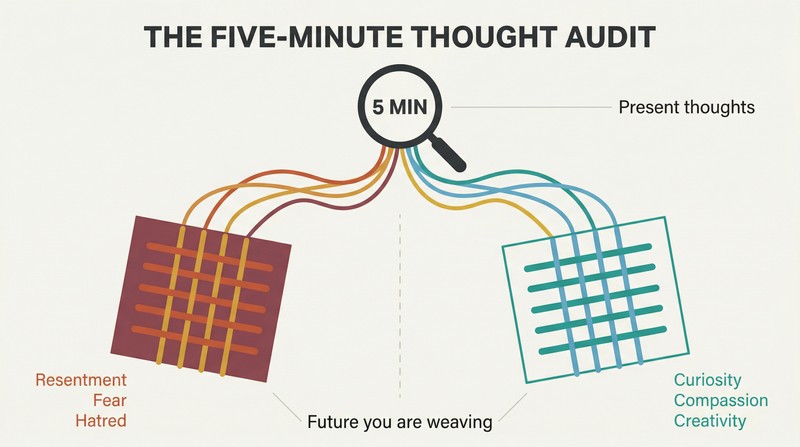
Love and understanding are the only solvents. There is no karmic punishment imposed from outside. You set the stage for your next life through today's emotional habits. If you hate evil, you create more evil. If you expand your sense of love and health, you are drawn toward those qualities. Examining five minutes of your thoughts several times daily reveals the emotional landscape you are currently constructing for your future.
Your sleeping self is more creative than your waking self
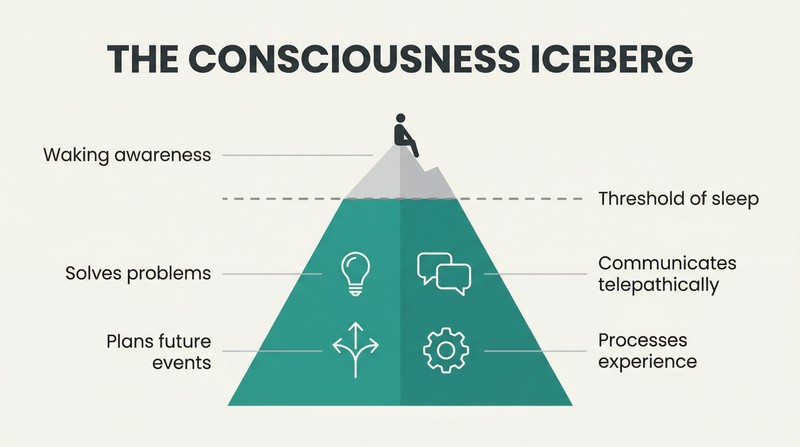
Sleep is not unconsciousness — it's a change of address. During deep sleep, your consciousness actually leaves your body and operates in other dimensions. You solve problems, plan future events, communicate telepathically with people you know and people you have known in past lives, and process experience at levels far beyond waking capacity. Your dreaming self has its own continuous memory and its own rich personality — you simply don't recall most of it upon waking.
Dreams rehearse after-death conditions. The environments you encounter in sleep are structurally identical to after-death realities. Seth recommends exploring dreams as the best preparation for death. You already visit training centers, communicate with guides, and make decisions about probable futures every night. The "dreaming self" is the psychological meeting point that unites all portions of your identity — the vitality behind your physical existence is generated there, not here.
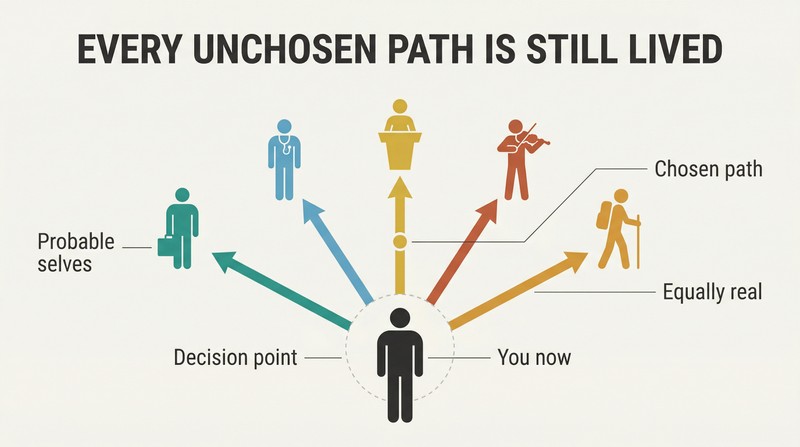
Every unchosen decision plays out in a probable reality
Probabilities are not hypothetical — they are real. When you face a choice and select one option, the rejected alternatives do not vanish. They are carried out with full validity in other systems of reality by probable selves — equally real versions of you. If you wanted to be a doctor but became a teacher, a probable you is practicing medicine right now. No ability goes unfulfilled, no idea dies.
You can access probable selves. Seth describes "benign intrusive impulses" — sudden urges that seem disconnected from your current interests — as possible signals from probable selves. A sudden desire to learn violin might indicate a probable self who is gifted with that instrument. In dreams, you often experience probable realities without recognizing them. You can even consciously explore alternate decisions using what Seth calls A-1-a consciousness, testing probable outcomes before committing to a choice.
Split sleep into shorter blocks to unlock expanded awareness
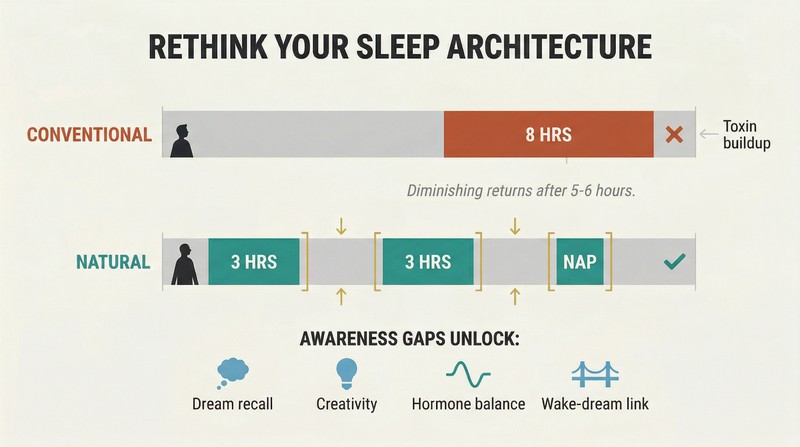
Eight hours of unbroken sleep works against you. Seth argues that the long single sleep block is culturally imposed, not biologically optimal. After about five to six hours, the returns diminish sharply. Consciousness has been away from the body too long, muscles lose flexibility, and toxins build up. He recommends two sleep periods of roughly three hours each, supplemented by naps — more closely resembling how cavemen and animals naturally rest.
The benefits compound across body and mind. Shorter, distributed sleep would:
1. Improve dream recall and creative problem-solving
2. Reduce the artificial wall between waking and dreaming consciousness
3. Optimize hormonal and chemical cycles, including adrenal function
4. Reduce insomnia, depression, and senility risks
5. Strengthen telepathic and clairvoyant abilities that currently go unnoticed
Audit five minutes of your thoughts to preview your next life
Seth offers a startlingly practical exercise. Examine your thoughts for five minutes at various times throughout the day, several times a month. The emotional patterns you discover are a direct preview of the conditions you are building for your next incarnation. If you find persistent resentment, fear, or hatred, you are weaving those into your future existence. If you find curiosity, compassion, and creative engagement, those qualities will carry forward.
You can change the pattern now. Seth insists that no past life, no childhood trauma, and no original sin has power over you that you do not give it. Present thoughts reshape not only your future but your past — by vividly reimagining a painful event with a more beneficial outcome, you are selecting from actual probable pasts that genuinely occurred. The exercise is not self-deception but dimensional navigation, choosing which version of reality you inhabit.
Analysis
Seth Speaks occupies a peculiar position in intellectual history: dismissed by mainstream academia yet profoundly influential on popular consciousness. The book's central claim — that consciousness is fundamental, not emergent from matter — anticipates by decades the 'hard problem of consciousness' articulated by philosopher David Chalmers in 1995. Seth's probable realities map neatly onto Hugh Everett's many-worlds interpretation of quantum mechanics, proposed in 1957 but not widely discussed until the 1970s. Whether Jane Roberts absorbed these ideas unconsciously or arrived at them independently through trance states remains an open question that is itself philosophically interesting.
The book's greatest strength is its internal coherence. Seth constructs a complete metaphysical system — consciousness creates matter through electromagnetic mechanisms, time is simultaneous, the soul is an open creative system, death is a transition — where each piece supports every other. This gives the framework genuine explanatory power, even if it remains unfalsifiable by empirical standards. The practical exercises (split sleep, thought auditing, inner-sense meditation) are testable in personal experience, which may explain the book's enduring appeal.
Its most dangerous idea is also its most liberating: 'you create your own reality.' Applied with compassion, this is a radical call to creative responsibility. Applied carelessly, it becomes a weapon of victim-blaming — telling the suffering that they chose their misfortune. Seth addresses this tension imperfectly, insisting that understanding removes negative influences while cautioning against dismissing others' pain. The framework works best as a personal practice of radical self-examination, not as a social philosophy imposed on others.
What remains genuinely valuable fifty years later is the book's psychological architecture — the mapped levels of consciousness, the relationship between dreaming and waking creativity, the mechanism by which beliefs become experience. These ideas have filtered into cognitive behavioral therapy, visualization practices, and mindfulness traditions without attribution, suggesting that Seth's framework, whatever its metaphysical status, captures something real about how human minds construct their experienced worlds.
Review Summary
Seth Speaks is highly regarded as a transformative and mind-expanding book that challenges conventional beliefs about reality, consciousness, and the nature of the soul. Readers praise its profound insights into multidimensional existence, reincarnation, and personal empowerment. Many describe it as life-changing, offering a new perspective on spirituality and the human experience. While some find the content difficult to grasp or believe, most reviewers appreciate its thought-provoking ideas and potential for personal growth. The book is considered a cornerstone of New Age philosophy and continues to resonate with spiritual seekers decades after its publication.
People Also Read



Glossary
Inner ego
Directs non-physical inner activitiesSeth's term for the unconscious directing portion of the self that correlates information received through inner (non-physical) channels. It carries memories of past existences, perceives subjective dimensions, and maintains the physical body's functioning. It works in partnership with the outer ego, which handles physical-world navigation.
Camouflage
Physical reality as disguised consciousnessSeth's term for the physical world and its forms. Physical matter is a 'camouflage' that consciousness adopts — real in its own terms but masking a deeper vitality underneath. Your physical senses are specifically attuned to perceive this camouflage layer, which is why you mistake it for the totality of reality. Other systems of reality have entirely different camouflage structures.
Root assumptions
Built-in rules of a realityThe foundational agreements upon which any system of reality is based. In your physical system, root assumptions include the belief that time is sequential, space exists independently, objects are solid, and perception comes only through physical senses. These assumptions structure all experience within that system. Other reality systems operate on entirely different root assumptions.
Coordinate points
Energy concentrations accelerating thought-to-matterInvisible accumulations of pure energy — smaller than any known particle — that act as psychic generators in physical space. When a thought or emotion reaches sufficient intensity, it activates a nearby coordinate point and is accelerated into physical materialization. There are three types: subordinate (very common, affecting daily life), main (rarer, more powerful), and absolute (four total, intersecting all realities).
Electromagnetic energy units
Thought-emotion units beneath matterNatural emanations from all consciousness — invisible formations resulting from any thought, emotion, or stimulus. These units exist beneath the range of physical matter as incipient particles that have not yet emerged into form. They change form and pulsation based on the original intensity behind them. Under certain conditions, particularly when activated by coordinate points, they coagulate into physical matter.
Speakers
Ancient teachers of inner knowledgeIndividuals throughout history who possess an extraordinary ability to move between inner and outer reality, translating non-physical knowledge into terms the physically oriented can understand. They predate all known religions, originally spreading their teachings orally across Africa, Australia, and Europe. They operate in both waking and dream states, creating psychic frameworks that serve as teaching environments. Many artists, poets, and musicians are Speakers.
All That Is
The multidimensional creative sourceSeth's term for the ultimate creative force — what many call God, but far exceeding any human-like personality concept. All That Is is within every consciousness and every system of reality simultaneously, while also transcending them all. It is not male or female, not a judge, and not separate from creation. It includes all probable gods, all probable realities, and all manifestations of consciousness. It can only be experienced directly, not captured in concepts.
Probable selves
Parallel versions living unchosen decisionsEqually real versions of you that exist in other systems of probability, living out the decisions you did not make in this reality. If you chose career A over career B, a probable self chose B. These selves are not hypothetical — they have full consciousness, independence, and experience. Communication between probable selves occurs through dreams, sudden impulses, and what Seth calls 'bleed-throughs' between systems.
Moment point
Framework for simultaneous non-physical experienceThe psychological framework within which Seth and similar non-physical consciousnesses have their experience. Unlike physical time, the moment point allows simultaneous perception of what humans would call past, present, and future. Within it, the smallest thought is brought to fruition, all possibilities explored, and associative patterns followed freely without sequential constraints.
FAQ
What's Seth Speaks: The Eternal Validity of the Soul about?
- Exploration of Consciousness: The book explores the nature of consciousness, suggesting it creates form rather than being a product of it. Seth, the entity communicating through Jane Roberts, emphasizes that consciousness exists beyond physical limitations.
- Multidimensional Identity: It introduces the concept of the soul as a multidimensional personality that has lived many lives, encouraging readers to understand their identity beyond the physical self.
- Reality Creation: The book posits that individuals create their own physical reality through thoughts and emotions, highlighting the relationship between consciousness and the material world.
Why should I read Seth Speaks: The Eternal Validity of the Soul?
- Unique Perspective: The book offers a unique perspective on life, death, and reality, challenging conventional beliefs and encouraging exploration of one's consciousness.
- Empowerment Through Understanding: Understanding that "you create the world that you know" empowers readers to take responsibility for their lives, leading to personal growth.
- Timeless Wisdom: Seth's teachings provide insights relevant across time and cultures, valuable for those interested in spirituality, psychology, or metaphysics.
What are the key takeaways of Seth Speaks: The Eternal Validity of the Soul?
- Consciousness is Primary: The book emphasizes that consciousness is the foundation of reality, with the principle "Consciousness creates form" underscoring the importance of thoughts and emotions.
- Eternal Nature of the Soul: It asserts that the soul is eternal and evolving, with each life serving as a learning experience, encouraging readers to view existence as part of a larger journey.
- Personal Responsibility: Readers are reminded they create their own reality, fostering a sense of responsibility for their experiences and empowering personal growth.
What are the best quotes from Seth Speaks: The Eternal Validity of the Soul and what do they mean?
- "You create the world that you know.": This quote emphasizes the power of perception and belief in shaping reality, encouraging ownership of experiences and recognition of creative potential.
- "Consciousness is not some fiery product, formed merely accidentally through the interworkings of chemical components.": It highlights consciousness as a fundamental aspect of existence, inviting exploration of one's deeper nature.
- "You are not a cosmic bag of bones and flesh.": This challenges the notion of a purely physical identity, urging recognition of one's multidimensional nature and spiritual essence.
How does Seth Speaks: The Eternal Validity of the Soul explain the concept of reincarnation?
- Simultaneous Lives: Reincarnation is presented as a non-linear process, with multiple lives occurring simultaneously, challenging traditional views of time.
- Learning and Growth: Each reincarnation offers opportunities for learning and growth, with individuals choosing experiences to develop certain personality aspects.
- Choice and Agency: Readers are reminded of their agency in reincarnational choices, influenced by desires and lessons, empowering responsibility for their spiritual journey.
What is the significance of the "inner self" in Seth Speaks: The Eternal Validity of the Soul?
- Connection to the Soul: The inner self is a deeper aspect of identity connecting to the soul, knowing one's true potential and accessing past experiences.
- Guidance and Intuition: It provides guidance and intuitive knowledge, helping navigate life's challenges, suggesting wisdom and creativity are heightened in dreams.
- Integration of Experiences: Understanding the inner self allows integration of experiences from past lives and dimensions, crucial for personal growth and purpose.
How does Seth Speaks: The Eternal Validity of the Soul address the fear of death?
- Death as a Transition: The book reframes death as a natural transition, not an end, encouraging viewing it as a continuation of the soul's journey.
- Eternal Validity of the Soul: It reassures readers of the soul's eternal nature, alleviating fears associated with mortality by emphasizing consciousness beyond physical existence.
- Personal Responsibility: Recognizing individuals create their own reality, including death experiences, empowers approaching death with agency and understanding.
What is the concept of multidimensional reality in Seth Speaks: The Eternal Validity of the Soul?
- Existence Beyond Physicality: Multidimensional reality suggests existence is not limited to the physical realm but includes various dimensions of consciousness.
- Simultaneous Lives: Multiple aspects of the self exist simultaneously across different dimensions and lifetimes, challenging linear perceptions of time.
- Creative Potential: This concept encourages tapping into various aspects of being, enhancing creative potential and understanding of reality.
How does Seth Speaks: The Eternal Validity of the Soul define the relationship between thoughts and physical reality?
- Thoughts Create Reality: Thoughts and emotions are primary forces shaping physical reality, emphasizing the power of individual perception.
- Electromagnetic Energy Units: Thoughts are described as electromagnetic energy units that can materialize into physical forms, with intensity determining manifestation.
- Responsibility for Creation: Readers are encouraged to take responsibility for thoughts and emotions, directly influencing experiences, fostering empowerment and agency.
What practical advice does Seth Speaks: The Eternal Validity of the Soul offer for personal growth?
- Self-Reflection: Engage in self-reflection to understand thoughts and feelings better, leading to greater awareness and responsibility for experiences.
- Tapping into Intuition: Emphasizes the importance of intuition and inner knowledge as guidance, encouraging trust in instincts and exploration of the inner self.
- Changing Thought Patterns: By altering negative thought patterns, individuals can change realities and experiences, empowering control over life and fostering positive change.
What role do dreams play in Seth Speaks: The Eternal Validity of the Soul?
- Access to Other Realities: Dreams are a means of accessing other dimensions and the inner self, with experiences as valid as waking life.
- Creative Problem Solving: The dreaming self engages in creative problem-solving and exploration of potential futures, important for personal development.
- Preparation for Afterlife: Understanding dreams prepares individuals for the afterlife, emphasizing familiarity with conditions met after death.
How does Seth Speaks: The Eternal Validity of the Soul relate to the concept of God?
- God as All That Is: God is presented as a multidimensional entity encompassing all existence, encouraging an intimate understanding of the divine as part of oneself.
- Creative Force: Described as the ultimate creative force behind all realities, with each individual a manifestation of this divine energy, emphasizing interconnectedness.
- Personal Relationship: Encourages cultivating a personal relationship with the divine, recognizing God within and as part of each individual, fostering unity and connection.
About the Author

Download PDF
Download EPUB
.epub digital book format is ideal for reading ebooks on phones, tablets, and e-readers.








































