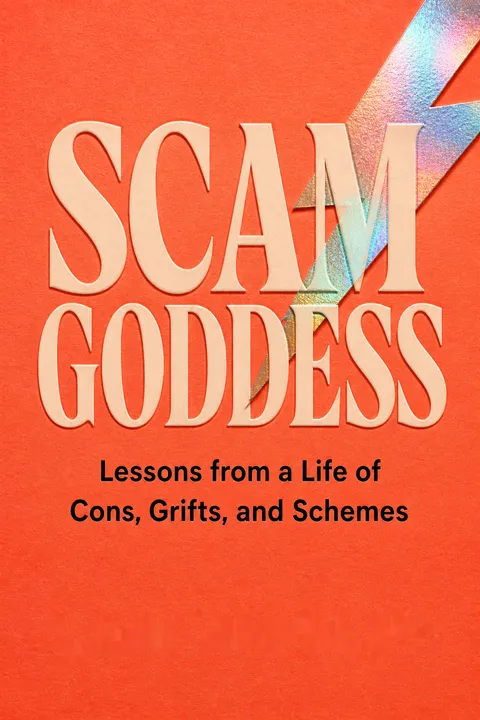

Key Takeaways
1. Embrace Your Inner Scammer: The World is a Con
Everyone’s a scammer and everything’s a scam.
Life's inherent scam. From the moment we're born without consent, life itself presents as a grand scam, forcing us to navigate complex systems and rules we didn't create. This realization, born from a childhood experience of being lost at five and learning to rely on her own wits, became the author's foundational philosophy. She understood that if the system wasn't built for her, she had to learn to operate in a way most advantageous to herself.
Building a toolkit. This early lesson in self-reliance and strategic thinking laid the groundwork for her "scammer tool kit." It taught her to observe, adapt, and confidently manipulate situations, not for harm, but for survival and advancement. This perspective transformed her view of challenges into opportunities, enabling her to navigate a messy and unfair world while looking out for her own interests.
Redefining "scamming." The author argues that "scamming" gets a bad rap, often associated with negative connotations like fraud and con artistry. However, she redefines it as a necessary skill for navigating a world where rules are often arbitrary and designed by a select few. For her, it's about making her own rules and finding creative ways to achieve her dreams, even if it means bending societal norms.
2. Beware of Shiny Promises: Listen to the Lyrics, Not Just the Beat
Beware of the beat, listen to the lyrics.
Beyond surface appeal. The author's childhood church, Won't He Do It Missionary Baptist, initially captivated her with Reverend Johnson's electrifying performances. However, a family tragedy and subsequent donation revealed a shift in the Reverend's focus, from spiritual guidance to material gain, culminating in him stealing from the church. This experience taught her to look beyond the captivating "beat" or outward presentation and scrutinize the underlying "lyrics" or true intentions.
The lure of the superficial. This lesson extends to various "shiny, pretty things" in life, from flashy religious leaders like the "Bling Bishop" Lamor Whitehead, who preached a "Prosperity Gospel" while defrauding his congregation, to any institution that promises quick fixes or extravagant returns. The author emphasizes that anything appearing "too rich, too shiny, too powerful" often masks deceit.
Questioning motives. Whether it's a charismatic preacher or a seemingly benevolent opportunity, the core message is to question the motives behind the allure. True integrity, like that of her grandfather who uncovered the Reverend's theft, lies in honesty and humility, not in ostentatious displays or self-serving rhetoric. This critical lens helps discern genuine value from manipulative schemes.
3. Value Who You Are, Not Just What You Do: Navigate the Job Market Wisely
Put value on who you are, not what you do.
Beyond the job title. The American job market often ties self-worth to professional roles and financial success, making individuals vulnerable during economic downturns or when seeking new opportunities. The author learned that true security comes from an internal sense of self-worth, independent of external achievements or job titles. This mindset protects against exploitation by those who prey on people's desire for stability and identity through work.
The job market's inherent scams. From Scholastic Book Fairs that shamed poor children to the "Silicon Valley Theft Bro" Kyle Sandler, who faked his Google executive past to scam investors, the author illustrates how capitalism often exploits the vulnerable. She recounts her own experiences, from being a "sushi hoochie" to working at a drug front, highlighting the unpredictable and often exploitative nature of employment.
Strategic self-advocacy. Recognizing the job market as a "roll of the dice," the author advocates for strategic self-advocacy, including knowing "when to pivot" and even "always lie on your résumé" (with the skills to back it up). Her journey from a promo girl in a club shooting to a successful actor, funded by an unemployment check after a strategic firing, underscores the importance of prioritizing personal well-being and long-term goals over immediate job demands.
4. Trust Your Gut: Your Instincts Are Your Best Defense Against Deception
Get to know your instincts. Listen to them. Trust them.
Ignoring red flags. The author's early experiences in Los Angeles, from a deceptive subletter to a childhood friend (Angel) with questionable financial practices and a "wobbly weave" (a cultural red flag), taught her the critical importance of listening to her inner voice. Despite numerous subtle warnings, her people-pleasing tendencies often led her to ignore these instincts, resulting in frustrating and exploitative situations.
The cost of misplaced trust. Her housing saga, culminating in a confrontation with her roommate Monica and her family who were essentially squatting, vividly illustrates the consequences of overlooking gut feelings. Even when presented with clear evidence of deceit, such as photoshohopped bank statements or a friend's evasiveness about rent, the desire for connection or convenience can override rational judgment.
Empowerment through intuition. Learning to trust her instincts became a powerful tool for self-preservation. This lesson is reinforced by the story of the Bailey family, who successfully defrauded the government and a dead man's estate, highlighting how easily people can be duped when they fail to question what seems "off." Ultimately, the author emphasizes that cultivating and heeding one's intuition is paramount for navigating a world full of potential cons.
5. Success is a Feeling, Not a Destination: Define Your Own "It"
There’s no “it” to make.
The elusive "it." The entertainment industry, like many others, sells a nebulous concept of "success" that constantly shifts, leaving individuals perpetually chasing an unattainable "it." The author's early career was marked by a relentless pursuit of this "it," spending thousands on headshots that didn't work, enduring demeaning casting consultations, and toiling in background roles, all in the hopes of being "plucked" from obscurity.
Redefining achievement. Her journey revealed that the traditional paths to success are often scams themselves, designed to extract money and effort from ambitious hopefuls. She learned that true success is a feeling, not a fixed destination or a set of external accolades. This realization allowed her to shift her focus from external validation to internal fulfillment, finding her "people" and her breakthrough role through unconventional means like a UCB diversity scholarship.
The internal "Scam Likely." The author's experience with Florida Girls, where her own fear, not her coach's words, created a narrative of impending failure, highlights how internal anxieties can be the biggest "scam likely" calls. This internal pressure to achieve "success" can lead to self-sabotage or, as seen with Elisabeth Finch's elaborate lies about cancer to advance her writing career, unethical behavior. The lesson is to define success on your own terms and quiet the self-doubt that preys on ambition.
6. Guard Your Boundaries: Not All Friendships Are Created Equal
Boundaries are crucial to our progress as functional human beings.
The people-pleaser's dilemma. The author, a self-proclaimed people-pleaser, openly discusses her struggle with setting and enforcing boundaries, a trait often rooted in a childhood of conditional love. This tendency led her to compromise her own well-being, from stealing money for a friend's lunch to enduring uncomfortable situations to maintain perceived harmony.
Learning from exploitation. Her childhood friendship with Jasmine, who subtly exploited Laci's generosity for lunch money, served as an early, painful lesson. Jasmine never explicitly asked for help, but Laci's desire to please led her to overextend herself, only to realize her efforts were unneeded and unappreciated. This experience underscored the importance of discerning genuine need from casual opportunism.
The "I'm good for it" con. The story of Marianne "Mair" Smyth, the "Queen of Con," who systematically defrauded her friend Johnathan Walton out of thousands by preying on his empathy and desire to help, exemplifies the dangers of unchecked generosity. Mair's repeated use of the "I'm good for it" promise, initially fulfilled, gradually eroded Johnathan's finances. The author advises vigilance against those who constantly ask for favors, especially financial ones, and to protect oneself by setting clear limits.
7. Challenge Body Scams: Reclaim Your Narrative and Self-Worth
Don’t let anyone trick you into thinking you’re not hot enough.
The beauty industry's deception. The author critiques the beauty industry as a massive scam, constantly creating insecurities to sell products, diets, and procedures. As an actor, she's acutely aware of Hollywood's relentless pressure to conform to narrow beauty standards, often at the expense of health and self-acceptance. This industry-wide obsession with appearance makes it challenging to foster genuine body positivity.
Personal battles with body image. Laci shares her own struggles, from the "Beyoncé Diet" in college that left her dizzy and weak, to considering Ozempic shots despite her ethical objections to the drug's misuse. She recounts the microaggressions in wardrobe fittings and the sting of a joke about a "stripper with a C-section scar," illustrating the pervasive scrutiny actors face.
Authenticity as resistance. Despite the constant pressure, the author advocates for reclaiming one's narrative and embracing authenticity. She highlights the internet's demand for realness, citing Khloé Kardashian's "zigzaggy walls" as an example of filters being exposed. Ultimately, she encourages readers to ignore external pressures—from Hollywood, friends, or even their own minds—and prioritize what makes them feel good, asserting that self-acceptance is the ultimate way to outscam body shamers.
8. Family Loyalty Can Blind: Don't Fund Others' Fantasies
The true mark of a skilled Scam Goddess is knowing when to keep your damn mouth shut.
The double-edged sword of family. While the author cherishes her own supportive family, she acknowledges that familial loyalty can create blind spots, leading to "familial scams." These cons often arise from a deep-seated desire to protect and uplift loved ones, even if it means bending rules or exploiting others. The author's personal rule is to keep her family's "hustles" private, recognizing the delicate balance between loyalty and discretion.
The "Scamily" phenomenon. The story of John and JonAtina Barksdale, a brother-sister duo who defrauded 20,000 investors through a crypto MLM, exemplifies how family ties can facilitate large-scale scams. Their lavish lifestyle, funded by investor money, showcased a blatant disregard for ethical conduct, all while presenting a united family front. This highlights the danger of assuming integrity simply because a business is family-run.
When fantasy meets reality. The author's experience filming a horror-comedy on a remote island, directed by Chelsea and bankrolled by her eccentric father, Phil, further illustrates this point. What started as a supportive family venture quickly devolved into an unprofessional, borderline unsafe production. The family's unwavering belief in Chelsea's vision, despite her inexperience and their questionable financial practices, led to a "fractured reality" that ultimately jeopardized the cast and crew. This saga underscores the importance of grounding creative endeavors in reality, even when fueled by familial love.
9. Love Smart, Not Just Hard: Protect Your Heart from Romance Cons
Preying on the need for love is the most disgusting thing you can do as a person.
Vulnerability in pursuit of love. The universal human desire for love makes individuals incredibly vulnerable to romance scams, which the author deems "vile" due to their emotional harm. She shares her own dating experiences, acknowledging the difficulty of opening up in a world where rejection is common and self-preservation is key. This vulnerability can lead even smart, successful people to overlook glaring red flags.
The "Dr. Dupe" phenomenon. The story of Dr. Paolo Macchiarini, a celebrated surgeon who conned NBC producer Benita Alexander with a fabricated life—including a fake divorce, a pope-officiated wedding, and celebrity guests—illustrates the extreme lengths romance scammers will go to. Paolo preyed on Benita's emotional state, using trauma bonding and grand illusions to manipulate her, while simultaneously endangering his patients with controversial surgeries.
Recognizing the practice of abuse. The author's personal account of dating "Michael," a C-list celebrity, reveals the insidious nature of emotional and physical abuse. What began as subtle control over her appearance and energy escalated to a physical assault, dismissed as "just a joke." It was a pure act of kindness from her friend Mary, a simple bouquet of flowers, that finally shattered the illusion and allowed Laci to recognize the toxicity and end the relationship, emphasizing the importance of external validation when one's own instincts are clouded by love.
10. Master the Scammer's Toolkit: Manipulate Situations for Good
The best con artists out there know the baseline of scamming is all about projecting confidence—even when it’s a lie.
Operating from the best outcome. True scammers, and successful individuals, approach every situation assuming the best possible outcome, even if they don't know how it will materialize. This mindset, exemplified by the author's ability to talk her way into Beyoncé's VIP section, projects an aura of inevitability that can open doors and create opportunities. It's about convincing others, and yourself, that success is already a given.
Strategic influence and kindness. The author shares practical "hoodwinks" for navigating the world:
- Ask a White Man: Leverage existing power structures by asking those with ingrained privilege for information (e.g., salary details) to advocate for your worth.
- Make Loyalty Your Priority: Treat employees and collaborators with kindness and respect, fostering loyalty that pays dividends and prevents the downfall seen in many fraudulent enterprises.
- Criticize with "We" Statements: Frame feedback collaboratively ("Can we fix this?") to maintain positive relationships and achieve better outcomes, rather than alienating others with direct criticism.
- Use Fewer Words: Avoid over-explaining, as it can undermine confidence and clarity.
- Become a Confidence Artist: Project confidence, even when faking it, because perception often trumps reality. There's no "it" to make; continuous self-belief is the key.
- Take Your Shit & Turn It Into Fertilizer: Reframe negative situations or personal shortcomings into positive narratives (e.g., "Thank you for your patience" instead of "Sorry I'm late").
- Wait Two Weeks: Practice patience; most urgent problems or opportunities can wait, allowing anxiety to pass and solutions to emerge naturally.
- Don’t Be Ashamed About Losing Your Shit: Channel your inner "human fire alarm" when threatened, reacting loudly and unusually to deter wrongdoers, just like her five-year-old self.
- Don’t Care Too Much: While passion is vital, over-investing in one thing makes you vulnerable to scams. Spread out your emotional energy to maintain perspective and resilience.
Empowerment through manipulation. Ultimately, the author encourages readers to embrace these "scam hacks" to manipulate situations in their favor, not for malicious intent, but to bring balance to an imbalanced world. It's about recognizing that everyone operates with ulterior motives, and by understanding these dynamics, one can confidently achieve greatness and use that power for good.
People Also Read





Download PDF
Download EPUB
.epub digital book format is ideal for reading ebooks on phones, tablets, and e-readers.








































