
Key Takeaways
1. Rosemary's Lifelong Quest for Reinvention and Escape
At almost every pivotal point in her biography, Rosemary ran—from home, from reality, from her husbands, from the law, from her past—and at each step she made herself anew.
Early escapes. Born Rose Marie Woodruff in St. Louis, Rosemary's childhood was marked by a mystical experience at age eight, making reality feel less real. By sixteen, bored with conventional life, she dropped out of high school and married an Air Force pilot, John Bradley, only to flee his abuse within a year, suffering a miscarriage. This early pattern of escape and reinvention became a defining characteristic of her life.
New York transformation. As a teenage divorcée, Rosemary persuaded a train porter to take her to Manhattan, seeking to be "the star of my own movie." She embraced bohemian life, working odd jobs, modeling, and becoming an airline stewardess for El Al, known for its beautiful staff. She cultivated sophisticated tastes and immersed herself in literature and jazz, finding freedom and a new identity in the burgeoning Beat culture.
Seeking transcendence. Her journey into mind-altering substances began with jazz musicians, using cannabis and hash fudge for pleasure and belonging. A pivotal peyote experience, taken with her second husband, Mat Mathews, and later lover, Charles Mills, revealed the need for profound change. This early exposure to psychedelics, coupled with her innate desire for other realms, set the stage for her eventual immersion in the counterculture.
2. The "Genius and Goddess" Dynamic Defined Her Early Relationships
“I subscribed to ‘the genius and the goddess paradigm,’ ” Rosemary said. “I wanted genius men, and it was part of my heritage to be submerged, like the Jungian view of woman as reflective.”
Supporting magic men. From her father, Verl, an amateur magician she assisted as a child, Rosemary developed a pattern of supporting charismatic, talented men. Her second marriage to jazz accordionist Mat Mathews introduced her to a vibrant artistic milieu, where she excelled as a hostess, but also endured his infidelity and meanness.
The allure of genius. After leaving Mat, she fell for Charles Mills, a brilliant but addicted composer. She saw "genius in him" and a reason to leave her abusive marriage. Her relationships were often defined by her attraction to male talent, even when it came with significant personal cost.
Sublimating her greatness. Rosemary's self-identified "genius and goddess paradigm" meant she often submerged her own ambitions and identity into the men she chose. She found her worth in reflecting their greatness, a dynamic that would intensify with Timothy Leary, who she believed was her "Great Man."
3. Millbrook: A Crucible of Psychedelic Exploration and Personal Transformation
“It was part of my journey back home,” she later said, “and it was only the beginning.”
A fated meeting. Rosemary's first encounter with Timothy Leary at Millbrook in 1965, where she brought a Wittgenstein book and wore high-top tennis shoes, sparked an instant connection. Timothy, recently fired from Harvard and seeking a new "goddess" after his wife's suicide and subsequent divorce, was captivated by her wit and beauty.
The perfect apprentice. Rosemary embraced Millbrook's communal life, finding purpose in chores, gardening, and communing with nature. Under Timothy's tutelage, she became a dedicated psychonaut, learning to prepare her body and mind for weekly acid sessions. She absorbed his teachings on set and setting, yoga, and Eastern philosophies, finding a container for her ecstatic experiences.
Queen of set and setting. Rosemary's intuitive understanding of creating a supportive environment for psychedelic journeys made her invaluable. She meticulously prepared trip locations, cooked nourishing meals, and provided a grounding presence for those undergoing challenging experiences. Her ability to blend domesticity with spiritual exploration solidified her role as Timothy's "bookworm" and "Wittgenstein schoolteacher," contributing significantly to his intellectual and philosophical work.
4. Unwavering Loyalty Amidst Legal Peril and Public Scrutiny
“I will free you, my love.”
Laredo arrest and public disgrace. In December 1965, Rosemary, Timothy, and his children were arrested at the Mexico border for marijuana possession. The media dubbed her "the Woodruff woman," and the incident, particularly the discovery of drugs in Susan Leary's underwear, ignited a national frenzy. Despite the humiliation, Rosemary remained steadfast, agreeing to be named as Timothy's marijuana supplier.
Contempt of court. Facing a grand jury inquiry into Millbrook, Rosemary refused to testify, citing her religious beliefs and Timothy as her guru. She was sentenced to thirty days in jail, enduring confinement and public scrutiny. This act of defiance, though largely unacknowledged, protected Timothy and the Millbrook community from further prosecution.
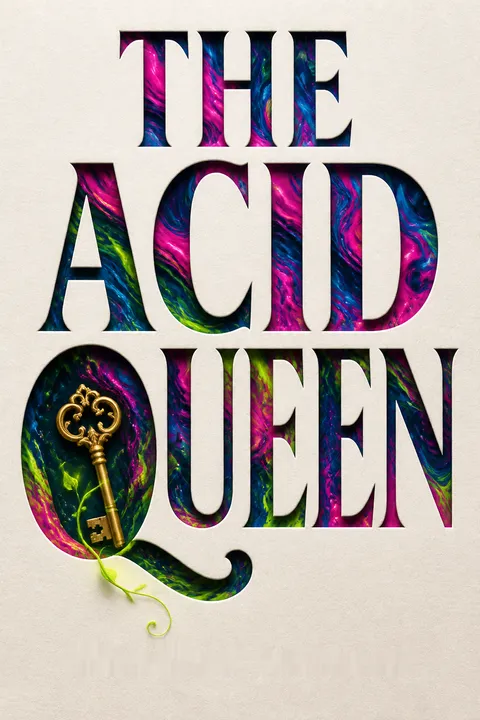
The "Acid Queen" emerges. While Timothy's legal battles continued, Rosemary became his public advocate, tirelessly raising funds and galvanizing support. She honed her media savvy, delivering strong messages with a "sweetly seductive" voice, earning her the title "the surrogate monarch of psychedelia." Her unwavering loyalty and strategic communication were crucial in reframing Timothy from a disgraced professor to a political prisoner.
5. The Burden of the "Acid Queen" Persona and Unfulfilled Desires
“Every night he loved me with the hurried obligatory before-I-go-to-sleep bucking fuck of an elderly careless man who in his mind is young and innocent and fucking the bejesus out of me…no thousand orgasms, no body electric,” she wrote.
Fading magic. As Timothy's fame grew, Rosemary's personal struggles intensified. The communal chaos at Millbrook, Timothy's frequent absences, and his public embellishments about sex and psychedelics eroded her faith. She resented his "hyperbole" and "paraphrasing," feeling his attention and intimacy were increasingly withheld.
Infertility and identity crisis. Her inability to conceive a child, despite desperate attempts and an eventual diagnosis of a bicornuate uterus, deeply affected her. Timothy's insensitive comments about her "not being real" without children exacerbated her pain, leading her to question her identity as a "fertility goddess."
Psychotic depersonalization. The emotional toll of her unfulfilled desires, coupled with the hostile environment and Timothy's neglect, led Rosemary to take higher doses of acid, culminating in a period of "acid overdose" and psychotic depersonalization. Convinced she was a "man-made robot," she retreated to a pump house in the woods, seeking to "be a person again."
6. A Daring Prison Escape Forged a New Identity and a Life Underground
“I am Sylvia McGaffin.”
The escape plan. With Timothy facing decades in prison, Rosemary committed to his audacious escape plan. She became "the computer," a secure vault for sensitive information, navigating his fantasies of helicopters and submarines with practical realities. She connected with the Weather Underground and the Brotherhood of Eternal Love, who agreed to orchestrate the breakout for $25,000.
Becoming Sylvia McGaffin. To prepare for life as a fugitive, Rosemary adopted the identity of Sylvia E. McGaffin, a "good little Catholic girl" with a blond bouffant wig and orange-pink lipstick. The moment she claimed this new name at the Chicago passport office, she felt the profound finality of giving up her past self.
The prison break. On September 12, 1970, Timothy scaled the prison fence and was whisked away by the Weather Underground. Rosemary, waiting in a Seattle safe house, had meticulously prepared a "soft landing" for him, feathering their nest with his favorite foods and comforts. She seriously considered staying with the Weather Underground, drawn by their vision of community and justice.
7. Exile Revealed the True Cost of Transcendence and Betrayal
“I had no one to be angry at, but myself and the laws of my country.”
Algerian disillusionment. In Algeria, under the "protection" of Eldridge Cleaver and the Black Panthers, Rosemary's initial hope for sanctuary quickly turned to disillusionment. Cleaver's misogyny, the Panthers' strict rules, and Timothy's continued pandering and "racial jokes" exposed the hypocrisy and dangers of their new revolutionary allies.
Kidnapping and public humiliation. The Learys were kidnapped by the Panthers, a "revolutionary bust" orchestrated by Cleaver to assert control. Timothy was forced to publicly denounce drugs, and Cleaver declared his mind "blown by acid." This episode, widely reported, further tarnished their image and left Rosemary feeling utterly alienated and betrayed.
Timothy's betrayal. In Switzerland, Timothy's "spiteful act" of removing Rosemary's name from his asylum appeal papers, coupled with his new relationship with Joanna Harcourt-Smith, signaled the end of their marriage. His memoir, Confessions of a Hope Fiend, plagiarized her writings and blamed her for his Swiss arrest, solidifying her decision to sever ties and go deeper underground.
8. Re-emergence as "Sarah Woodruff": A Quest for Anonymity and Self-Redemption
“Being underground is very schizophrenic. As a fugitive, you are so self-important to yourself, yet must appear anonymous to everyone else.”
Years in hiding. After leaving Timothy, Rosemary spent three years underground with John Schewel in Colombia and the Caribbean, living a precarious, stateless existence. The constant threat of arrest, the lack of medical care, and the mundane indignities of life in hiding took a heavy toll on her health and mental state.
Return as Sarah Woodruff. In 1976, Rosemary and John returned to the U.S., settling in Provincetown, Cape Cod, under the assumed name Sarah Woodruff. She sought anonymity, working at the Provincetown Inn and cultivating a quiet life, but the fear of exposure and the lingering warrant for her arrest remained a constant shadow.
Grappling with the past. The release of books like The Search for the "Manchurian Candidate" and Acid Dreams revealed the CIA's involvement in psychedelic research, making Rosemary question her own history and Timothy's role. She grappled with the dissonance between her idealized past and the harsh realities of government manipulation and personal betrayal.
9. Forgiveness and Legacy: Reconciling with Timothy and Shaping Her Own Narrative
“Finally, I forgave him,” she wrote.
Susan's tragic death. The suicide of Timothy's daughter, Susan Leary, in 1990, deeply affected Rosemary, prompting her to reflect on her own past and the complex web of relationships. This tragedy, coupled with Timothy's own health crisis, opened a path for reconciliation.
A cautious reunion. In 1992, after nearly two decades of estrangement, Rosemary cautiously reconnected with Timothy. Despite his physical decline and continued self-absorption, she found herself drawn back to his charisma and the "excitement of possibility" he represented. She refused his marriage proposals but agreed to help him reconcile with his estranged son, Jack.
Clearing her name. With Timothy's and David Phillips's support, Rosemary pursued clemency for her outstanding legal charges. In 1994, after 24 years as a fugitive, her case was dismissed, acknowledging she was "led astray by Mr. Leary." This legal freedom allowed her to reclaim her true identity and begin to process her suppressed memories.
10. The Enduring Wisdom of a Psychedelic Life: Respecting Both Light and Shadow
“If you have to ask, you shouldn’t do it.”
A new perspective on psychedelics. After two hundred acid trips and years of living with their consequences, Rosemary's perspective on psychedelics evolved. She no longer saw them as a panacea but as powerful tools that demanded respect, preparation, and caution, especially for the vulnerable.
Warning against evangelism. Rosemary consistently warned against the dangers of "psychedelic evangelism" and the "responsibility" of guiding others. She emphasized the trade-offs of altered states, acknowledging that while they could reveal beauty and connection, they also exposed individuals to profound vulnerability and potential harm.
A nuanced legacy. In her later years, Rosemary became a reluctant icon in the re-emerging psychedelic movement, sharing her story with students and documentarians. Her wisdom, rooted in personal experience and hard-won humility, offered a crucial counter-narrative to the prevailing hype, advocating for a balanced understanding of psychedelics' potentials and pitfalls.
11. The Magician's Assistant: A Master of Self-Mythologizing and Hidden Influence
“The eyes of the audience must be on the assistant when the magician’s hands are distorting reality.”
Shaping her own myth. From her childhood, Rosemary saw herself in mythic terms, a "magician's daughter." She actively shaped her narrative, even altering details in her memoir, Psychedelic Refugee, to fit her desired image. This self-mythologizing was a tool for survival and a means to assert her agency in a life often defined by others.
The power of the hidden. Rosemary's life as the "magician's assistant" was one of profound, often unacknowledged, influence. She protected Timothy's archives, refused to betray her co-conspirators, and provided the grounding force that enabled his public persona. Her hidden actions had far-reaching impacts on the counterculture and the legal landscape of psychedelic research.
An enduring voice. Despite years of anonymity and publishers' rejection of her story, Rosemary's voice endures through her archives and the posthumous publication of her memoir. Her life, a testament to resilience and the complex pursuit of freedom, offers a unique perspective on the counterculture, reminding us that "the history of a life does not always end with the final passing of that life."
Review Summary
People Also Read



Download PDF
Download EPUB
.epub digital book format is ideal for reading ebooks on phones, tablets, and e-readers.








































