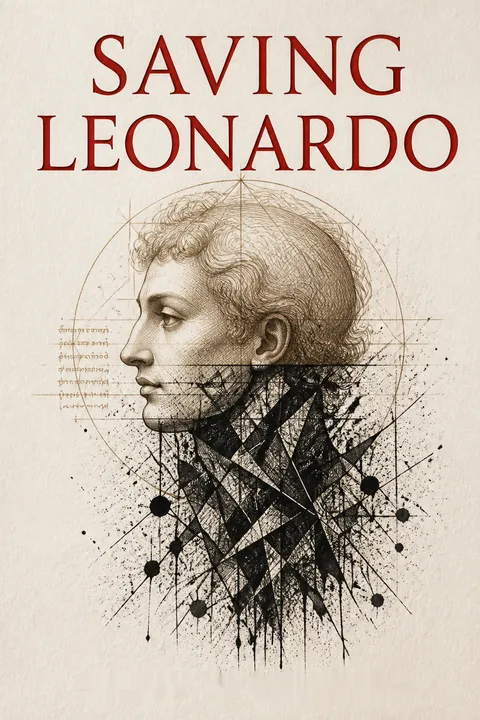

Key Takeaways
1. Global Secularism's Stealthy Influence and the Fact/Value Split
“Nancy Pearcey’s books have been an enormous help to me as I’ve tried to figure out what it means to be a Christian writer in a culture that sometimes appears to have gone insane.”
Unseen battle. Global secularism is a pervasive, often unnoticed worldview that shapes our culture, from children's cartoons to university curricula. Many Christians, like author John Erickson, are "easy marks" because they don't recognize they are in a worldview battle, leading to their work and values being subtly co-opted. This secular mindset, radiating from urban elites, defines reality for society, influencing law, education, media, and advertising.
Eroding foundations. At its core, modern secularism operates on a "fact/value split," asserting that objective knowledge is only possible in empirical science (facts), while morality and religion are mere subjective preferences (values). This dichotomy, rooted in empiricist philosophy, reduces deeply held convictions to arbitrary tastes, making rational debate impossible and paving the way for emotional manipulation in public discourse.
Widespread impact. This fragmented view of truth has infiltrated even religious communities, leading many, including young evangelicals, to believe that moral convictions are simply "personal preference." This absorption of secular epistemology, often unconsciously, strips Christianity of its cultural power and leaves individuals vulnerable to ideologies that undermine their moral courage and commitment.
2. The Fact/Value Split: Undermining Truth and Enabling Tyranny
“False ideas are the greatest obstacle to the reception of the gospel.”
Truth fractured. The fact/value split, a core tenet of modern secularism, divides truth into two irreconcilable realms: objective, universal facts (science) and subjective, relative values (morality, religion). This framework, popularized by philosophers like David Hume and Immanuel Kant, relegates religious claims to the "upper story" of personal feelings, effectively removing them from serious public discourse.
Secular power play. This division is not neutral; it's a strategy for gaining and maintaining power. By labeling religious views as private biases, secular elites can dismiss opposing perspectives without engaging in rational argument, claiming a monopoly on objective truth. This allows them to impose their own secular ideologies in public spheres like education and law, while simultaneously accusing religious adherents of "intolerance" for attempting to do the same.
Corrosive consequences. The fact/value split leads to a politics of manipulation and coercion, as moral convictions, stripped of objective grounding, become mere preferences to be enforced. This ultimately undermines genuine tolerance and freedom, as those who claim to be open-minded often impose their own narrow, secular views, leading to new forms of oppression and a society where no one can consistently live by such a fragmented view of reality.
3. The Dualistic View of Humanity: A Deadly Impact on Bioethics and Sexuality
“What is critical is personal status, not merely human status.”
Fragmented humanity. The fact/value split extends to a dualistic view of human nature, separating the human body (a biochemical machine, lower story) from the human person (an autonomous self, upper story). This "personhood theory" argues that while life may begin at conception, personhood—and thus moral worth—emerges later, based on capacities like self-awareness or the desire to live.
Bioethical implications. This radical dualism has devastating consequences for bioethics, justifying practices like abortion, euthanasia, and genetic engineering. If the body is merely raw material without intrinsic dignity, it can be manipulated or destroyed for utilitarian purposes. This dehumanizing perspective risks reducing human life to a marketable commodity, where individuals who don't meet arbitrary "personhood" criteria can be deemed "non-persons" and denied the right to live.
Sexual alienation. The same dualism drives contemporary sexual issues, treating the body as morally neutral and separate from the self. The "hook-up" culture, for instance, attempts to surgically separate physical intimacy from emotional connection, leading to pain and heartache because it denies the integrated nature of human beings. Similarly, transgenderism and "pomosexual" views detach gender identity from biological sex, reflecting a profound disrespect for the physical body and its God-given design.
4. Enlightenment's Legacy: Reducing Reality to a Mechanistic, Materialistic "Lower Story"
“Art is the Tree of Life. Science is the Tree of Death.”
Science's rise. The Enlightenment, fueled by the scientific revolution, elevated empirical science as the sole source of truth, leading to a mechanistic view of nature. While early scientists, often Christians, saw natural laws as God's design, later Enlightenment thinkers secularized this, reducing nature to a value-neutral machine to be controlled and exploited.
Reductionist philosophies. This era spawned philosophies like empiricism (knowledge from senses), rationalism (knowledge from reason), naturalism (reality is nature), and materialism (reality is matter). These "lower story" worldviews attempted to fit all of reality into a single, limited "box," dismissing anything that didn't fit—like qualities, purpose, and spiritual meaning—as unreal or subjective.
Dehumanizing consequences. The mechanistic worldview stripped nature of its moral and spiritual significance, creating a sense of alienation. Humans were reduced to complex machines or "just another primate," devoid of genuine freedom or higher purpose. This reductionism, as seen in literary naturalism, portrayed individuals as helpless victims of genetic and environmental forces, leading to a "dreary kind of philosophy done under a low and leaden sky."
5. Art as a Mirror of Enlightenment: From Empiricism to Formalism
“The art of painting should consist only in the representation of objects which the artists can see and touch.”
Art's new role. As science claimed a monopoly on truth, art's traditional role of expressing universal truths was challenged. Artists adopting the "join 'em" strategy sought to regain cognitive status by imitating science, focusing on objective, value-free depictions of reality. This led to movements like realism, which aimed to simply "report on the material facts of this world."
Impressionism's focus. Influenced by positivism, Impressionists like Monet reduced art to a record of optical sensations, painting "color patches" rather than objects. They sought to capture fleeting moments, like a camera snapshot, abandoning traditional composition and narrative to reflect a fragmented, uninterpreted reality, where life lacked a coherent story line.
Formalism's extreme. This scientific imitation culminated in formalism, where art was reduced to its basic elements: line, color, shape, and volume. Cubism, with its geometric forms, aimed to reveal nature's underlying mathematical structure, while minimalism, or "ABC Art," stripped art down to bare, often mass-produced, industrial forms. This approach, mirroring analytic philosophy's focus on logical structure, prioritized rational schema over aesthetic beauty, often leading to art that was "more cerebral than sensual."
6. Romanticism's Quest: Elevating Mind and Spirit in the "Upper Story"
“Art became the gateway to the realm of spirit for all those over whom the old religions have lost their hold.”
Revolt against mechanism. Romanticism emerged as a powerful counter-movement to the Enlightenment's mechanistic worldview, which had stripped nature of its spiritual meaning and left humans feeling alienated. Romantics sought to re-enchant the world, viewing nature as alive, growing, and imbued with a spiritual force or "Life Force."
Kantian dualism's haven. Embracing Kant's "upper story" of freedom, Romantics carved out an independent domain for humane and spiritual values, protecting them from scientific reductionism. They adopted a "two-universe" strategy, distinguishing between "rational truth" (science) and "imaginative truth" (art), believing that the human mind actively imposed order and meaning on a chaotic world.
Art as savior. Idealism, which posited that the world as we know it is constituted by the human mind, elevated the artist to a godlike creator. Art became a substitute religion, tasked with restoring spiritual meaning and purpose to a world disenchanted by science. Poets like Coleridge and Wordsworth believed the artist's imagination could "re-enchant" the world, healing the alienation between humans and nature.
7. Art as a Lamp of Romanticism: From Expressionism to Abstract Mysticism
“The artist expresses only what he has within himself, not what he sees with his eyes.”
Inner experience. Building on Romantic ideals, Expressionism rejected the Impressionist focus on external sensation, instead prioritizing the artist's inner experience and emotions. Painters like Van Gogh and Gauguin distorted reality to convey spiritual visions or intense feelings, believing art should be true to the inner world rather than the outer.
Spiritual quest. As the horrors of World War I exposed the bankruptcy of Enlightenment rationality, Expressionism grew darker, reflecting a fragmented and alienating world. Yet, it remained open to the spiritual, with artists like Nolde and Rouault exploring Christian themes of suffering and redemption, striving to create genuinely modern yet biblical art that honestly confronted human depravity.
Abstract mysticism. Some Romantics turned to abstract art, particularly biomorphic abstraction, to connect with spiritual realities. Influenced by Theosophy and Eastern thought, artists like Kandinsky believed abstract forms could liberate the mind from materialism and lead to a mystical union with an undifferentiated "Absolute." This often led to "mysticism with nobody there," where art became a path to silence and emptiness, ultimately revealing the tragic despair of a spiritual quest without a personal God.
8. Postmodernism's Paradox: Deconstructing Truth While Imposing Ideology
“The death of God was the disappearance of the Author who had inscribed absolute truth and univocal meaning in world history.”
Eroding the self. Postmodernism, a successor to Romanticism, rejected the modernist autonomous self, dissolving it into a product of social forces like race, class, and gender. This "anti-humanism" denied individual creativity, viewing authors as mere transmitters of cultural messages, leading to concepts like "the death of the author" and deconstructionism.
Metanarratives of oppression. Postmodern thinkers, having witnessed totalitarian regimes, viewed "metanarratives"—grand, unifying explanations of history—as inherently oppressive. They argued that any attempt to impose a single, overarching truth leads to coercion and violence, advocating instead for diversity and multiplicity, often expressed through fragmented, incoherent art forms like pastiche and collage.
Self-refuting claims. Despite its critique of totalizing truths, postmodernism itself became a totalizing ideology. Its assertion that no universally valid truth exists is a performative contradiction, as it implicitly claims its own view as true. This internal inconsistency, coupled with its tendency to politicize discourse and silence dissenting views, ultimately leads to complicity with injustice, as without transcendent truth, there's no basis to condemn evil.
9. Pop Culture as a Worldview Battleground
“I am absolutely convinced that the gas chambers of Auschwitz, Treblinka, and Maidanek were ultimately prepared not in some Ministry or other in Berlin, but rather at the desks and in the lecture halls of nihilistic scientists and philosophers.”
Ideas have consequences. Abstract philosophical ideas, once confined to academic halls, profoundly shape popular culture and the lives of ordinary people. The nihilism fostered by materialist worldviews, as exemplified by Nazi Germany, demonstrates how intellectual speculation can pave the way for horrific real-world atrocities.
Youth on the front lines. Young people are particularly susceptible to philosophical temptations, often expressed through pop culture idioms like New Atheism's "Zombie Jesus" or emo's despair. Movies, music, and social media become battlegrounds where worldviews are subtly or overtly communicated, making worldview literacy crucial for spiritual survival.
Movies as sermons. Films often serve as powerful vehicles for worldview, whether intentionally or not. Movies like The Cider House Rules subtly promote liberal ethics, while I Love Huckabees humorously explores existentialism and nihilism. Even seemingly innocuous entertainment can embed non-biblical assumptions, underscoring the need for critical discernment to avoid unconsciously absorbing destructive ideologies.
10. The Biblical Worldview: Unifying Truth and Affirming Human Dignity
“The Christian and the Materialist hold different beliefs about the universe. They can’t both be right. The one who is wrong will act in a way which simply doesn’t fit the real universe.”
Holistic truth. The biblical worldview offers a unified, coherent understanding of truth, rejecting the fact/value split and affirming that all truth forms a single, consistent system rooted in a single divine Mind. It insists that moral and theological statements are not mere preferences but either "fit the real universe" or they do not, providing an objective basis for right and wrong.
Dignity of the person. Unlike secular reductionisms that diminish human worth, the biblical worldview affirms the intrinsic dignity of every human being, created in the image of a personal God. It rejects the dualistic separation of body and person, insisting on the integrated unity of human nature and providing the intellectual resources to explain human freedom, creativity, and moral agency.
Transcendent foundation. By starting with a transcendent Creator, the biblical worldview avoids the pitfalls of idolatry and reductionism, which absolutize parts of creation. It is a "big" enough map to account for all aspects of reality—mind and matter, facts and values, reason and emotion—affirming what is good in all creation without denying other parts, thus offering a genuinely humane and life-affirming alternative to secular fragmentation.
11. The Church's Call: Cultivating Culture and Living the Gospel
“One of the greatest injustices we do to our young people is to ask them to be conservative. Christianity is not conservative, but revolutionary.”
Salt and light. Christians are called to be salt and light, actively engaging and transforming culture rather than retreating from it. This means not just criticizing "bad culture" but actively producing "sound and healthy culture" that expresses biblical truths eloquently and beautifully, inviting people to seek God, much like Bach's music did in Japan.
Nurturing creativity. The church must become a seedbed for artists, recognizing that art is a vital language for conveying profound truths, just as Jesus used parables and stories. It must foster an environment where creativity is valued, supported, and given proper credit, rejecting exploitative practices that stifle artistic genius and diminish the humanity of creators.
Living apologetic. The most powerful apologetic for the gospel is the church itself, living as a "plausibility structure" where God's grace, love, and justice are made visible and tangible. This requires personal transformation and sanctification in every area of life, ensuring that Christians embody the biblical worldview they proclaim, thereby demonstrating its breathtaking beauty and revolutionary power to a watching world.
Review Summary
Reviews of Saving Leonardo are largely positive, averaging 4.32/5. Many readers praise Pearcey's thorough exploration of how secular worldviews manifest in art, music, literature, and film, drawing comparisons to Francis Schaeffer's work. Enthusiasts appreciate her accessible writing, full-color artwork, and nuanced treatment of opposing philosophies. Critics note the book can feel overwhelming, historically oversimplified, or insufficiently practical in applying worldview analysis to contemporary media. One reviewer controversially compared its cultural critique to Nazi ideology. Most recommend it as essential reading for Christians seeking deeper cultural engagement.
People Also Read




About the Author
Other books by Nancy R. Pearcey

Download PDF
Download EPUB
.epub digital book format is ideal for reading ebooks on phones, tablets, and e-readers.








































