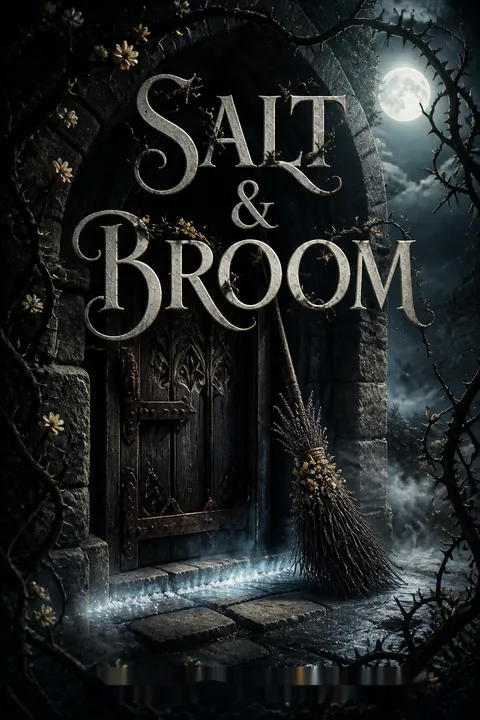

Plot Summary
Witch's Letter Summoned
Jane Aire, orphaned and raised at Lowood School, is summoned by a mysterious letter from Edward Rochester, master of Thornfield Hall, seeking a "Lowood witch" to address strange disturbances. Jane, a skilled herbalist and secret witch, is torn from her only home and thrust into uncertainty. Her departure is bittersweet, as she leaves behind her mentor Maria and the girls she teaches. The letter's urgency and the promise of a generous donation to Lowood force Jane to accept, despite her fears and the ambiguous nature of the task. The stage is set for a journey that will test her courage, skills, and heart, as she steps into a world where magic and danger intertwine.
Tea Leaves and Warnings
Before leaving, Jane seeks guidance from Maria, who reads her tea leaves. The reading is a tangle of omens: a journey, a horse's head (possibly a lover), the letters R and E, a forked path, and a dagger—danger. Maria's Sight, though often cryptic, warns Jane that her path will be fraught with both peril and possibility. Jane's own dream of a fairy woman and a hare diving into a dark pool further foreshadow her crossing into the unknown. These portents, both comforting and alarming, reinforce the sense that Jane's journey is not merely physical but spiritual, and that she must trust her instincts to survive what lies ahead.
Journey Into the Unknown
Jane's journey from Lowood to Thornfield is both literal and symbolic. The landscape shifts from familiar moors to the misty, isolated beauty of Thornfield's valley. Jane's discomfort with travel and her decision to walk the final miles alone mark her as independent and willful, traits that will both aid and complicate her mission. Her first encounter with Rochester—startling his horse and causing him injury—sets the tone for their relationship: fraught, charged, and marked by misunderstanding. The journey is a rite of passage, stripping Jane of her old certainties and preparing her for the mysteries and trials of Thornfield.
Thornfield's Shadowed Welcome
Thornfield Hall is introduced as a place of beauty and gloom, its grandeur shadowed by recent tragedy and supernatural unease. Jane meets Mrs. Fairfax, the housekeeper and secret country witch, who becomes her ally. The staff is anxious, the grounds are wild, and the house is plagued by unexplained accidents and illness. Jane learns of the recent death of Mrs. Rochester, a young bride lost to a wasting illness, and senses a heavy, magical shroud over the estate. Her first night in the cottage, protected by salt and broom, is both a comfort and a warning: she is not alone, and the house's secrets are waiting.
The Skeptical Master
Edward Rochester, brooding and skeptical, is both drawn to and dismissive of Jane's craft. Their early interactions are marked by tension, wit, and a mutual testing of boundaries. Rochester's grief over his wife's death is palpable, and his skepticism about magic is challenged by the mounting evidence of a curse. Jane's role is complicated by her growing attraction to him and her need to prove herself. The dynamic between them is electric, with Jane's independence and Rochester's vulnerability creating a space for both conflict and connection.
Curses and Charms
The disturbances at Thornfield intensify: a protective blackthorn tree is burned, a dryad is slain, and servants are injured or frightened by unseen forces. Jane's investigations reveal layers of magical protection and offense—herbs, salt, and charms left by Mrs. Fairfax, and the presence of powerful, angry spirits. Jane's own magical abilities are tested as she performs blessings and confronts the estate's otherworldly inhabitants. The destruction of the blackthorn signals a breach in Thornfield's defenses and a deepening of the curse, raising the stakes for Jane and all who dwell there.
The Burned Blackthorn
The burning of the ancient blackthorn tree is a pivotal moment, marking the escalation of supernatural danger. Jane's blessing ceremony reveals the presence of a vengeful dryad, whose transformation from peaceful to menacing foreshadows the true nature of Thornfield's haunting. The dryad's death is both a loss and a warning, signaling that the estate's troubles are not mere fairy pranks but the work of a powerful, malevolent force. Jane's courage and magical skill are put to the test, and her connection to the spirit world deepens.
Spirits in the Garden
Jane's exploration of Thornfield's gardens uncovers a hidden apothecary garden filled with baneful herbs and poisonous plants. Her encounter with Dr. Poole, the family physician, raises suspicions about his role in Mrs. Rochester's death. The garden is a liminal space, a place where healing and harm are intertwined, and where the boundaries between life and death blur. Jane's interviews with the staff, especially Agnes, Mrs. Rochester's maid, reveal grief, jealousy, and hints of forbidden love. The sense of a restless, wronged spirit grows, and Jane begins to suspect that the haunting is rooted in both personal and ancestral guilt.
The Poisoner's Secret
Dr. Poole's attachment to Mrs. Rochester and his use of the apothecary garden's poisons come under scrutiny. Jane uncovers evidence of a love triangle, with Poole's unrequited feelings and Agnes's devotion complicating the narrative of Mrs. Rochester's death. The possibility of accidental or intentional poisoning, and the use of magic to ease suffering or hasten death, add layers of moral ambiguity. Jane's investigation is both forensic and emotional, as she seeks to untangle the web of love, loss, and guilt that binds the living and the dead at Thornfield.
The Lady's Maid's Grief
Agnes, traumatized by her mistress's death and haunted by a terrifying encounter in the hawthorn wood, becomes a key source of information. Her account of seeing Mrs. Rochester's ghost, transformed from sweet to cruel, confirms Jane's suspicions of a corrupted spirit. Agnes's grief and fear are mirrored by Jane's own growing sense of responsibility and vulnerability. The emotional toll of the haunting is felt not just by the master but by all who serve and love Thornfield, making the curse a communal wound.
Graveyard Revelations
Jane's clandestine visit to the family graveyard reveals a pattern of early deaths among the women of the Rochester line. The mausoleum of Antoinette Mason Rochester stands as a monument to loss and unfulfilled love. The discovery of a bloodied penknife and the oppressive atmosphere of the yew tree suggest that the estate's curse is both personal and generational. Jane's sense of isolation and her empathy for Rochester deepen, as she realizes that the shadow over Thornfield is as much about history as it is about magic.
The Hawthorn Dryad
In the ancient hawthorn wood, Jane encounters a living dryad who claims to be her mother. The revelation that Jane is half-fairy, conceived on Beltane and abandoned at Lowood by her mother's sisters, upends her sense of self. The dryad's cryptic words and the connection to Mr. Brocklehurst as her possible father add layers of complexity to Jane's identity. This encounter is both a personal awakening and a key to understanding her unique magical abilities. Jane's lineage ties her fate to Thornfield and its spirits in ways she never imagined.
Ghostly Accusations
The ghost of Antoinette Rochester confronts Jane and Edward, hurling accusations of betrayal, greed, and indifference. The encounter is harrowing, with the spirit's power manifesting in physical danger—a falling branch nearly kills Edward. The haunting is revealed to be not just a matter of unfinished business but of a spirit corrupted by injustice and pain. Rochester's guilt and Jane's compassion are both tested, as they struggle to understand the true nature of the curse and their roles in breaking it.
Baneful Magic Unleashed
The truth emerges: Dr. Poole, driven by love and grief, has used a forbidden grimoire to raise Antoinette from the dead. The spell, rooted in the estate's poison garden and the blood of the living, has unleashed a force far darker than a mere ghost—a body inhabited by a malevolent spirit, possibly the witch Eleanor Montagu, who cursed the Rochester line. The boundaries between life and death, love and obsession, are shattered. Jane's magical skills and moral resolve are pushed to their limits as she confronts the consequences of baneful magic.
The Grimoire's Curse
The grimoire, a legacy of Eleanor Montagu's rage and betrayal, is revealed as the source of Thornfield's curse. Its spells, protections, and hidden messages tie the estate's tragedies to a centuries-old act of treachery. Jane, Edward, and Poole must work together to destroy the book and banish the spirit. The battle is both magical and psychological, requiring Jane to draw on her deepest reserves of light, love, and self-belief. The confrontation with Eleanor is a test of wits, will, and the power of redemption.
Love and Sacrifice
In the aftermath of the magical battle, Jane's healing skills save Edward's life, and their love is finally confessed and consummated. The curse is broken not just by magic but by the willingness to forgive, to sacrifice, and to embrace one's true self. Jane's journey from orphaned outsider to beloved partner and powerful witch is complete. The estate, once shadowed by death and sorrow, is transformed by the promise of new life and hope.
Breaking the Shadow
With the curse lifted, Thornfield's servants return, and the estate begins to heal. Jane reconciles with her past, receiving a token of her mother from Mr. Brocklehurst and finding peace with her origins. The school at Lowood is secured, and Jane's vision of a place where witches can learn openly is realized. The bonds of love, family, and community are restored, and the wounds of the past are acknowledged but no longer define the future.
A New Dawn at Thornfield
Jane and Edward marry in a restored chapel, surrounded by friends, family, and the spirits of those who have gone before. Jane's mother, the dryad, is seen in her true form, and the birth of their daughter signals a new era for Thornfield. The estate, once cursed, becomes a place of learning, healing, and joy. Jane's journey—from orphaned witch to mistress of Thornfield, from outsider to beloved—ends with the promise of a life where magic and love are not only possible but celebrated.
Analysis
Salt & Broom reimagines the classic gothic romance of Jane Eyre through the lens of historical fantasy, centering women's magic, agency, and emotional truth. Sharon Lynn Fisher's adaptation uses the supernatural not merely as ornament but as a metaphor for the traumas, secrets, and injustices that haunt individuals and families across generations. The novel interrogates the legacy of patriarchal control, the dangers of repressed power, and the redemptive potential of love and self-acceptance. By making Jane a witch—an outsider whose difference is both feared and needed—the story explores the costs and rewards of embracing one's true nature. The breaking of Thornfield's curse is not just a magical victory but a psychological and communal healing, achieved through honesty, forgiveness, and the forging of new bonds. The narrative's blend of lush atmosphere, sharp dialogue, and emotional depth invites readers to consider the ways in which the past shapes the present, and how courage, compassion, and connection can transform even the darkest of legacies. Ultimately, Salt & Broom is a celebration of resilience, the power of women's wisdom, and the enduring magic of love.
Review Summary
Salt & Broom receives mixed reviews, with an overall rating of 4.1 out of 5. Many readers praise it as an enchanting witchy retelling of Jane Eyre, appreciating the magical elements and cozy atmosphere. Some find the romance well-developed, while others feel it's rushed. Critics argue it deviates too far from the original story and lacks depth. Positive reviews highlight the author's writing style, character development, and atmospheric setting. Negative reviews cite issues with pacing, historical accuracy, and plot coherence. Overall, it's a divisive but mostly enjoyable read for fans of gothic fantasy.
People Also Read




Characters
Jane Aire
Jane is a fiercely intelligent, independent, and compassionate woman, raised at Lowood School and trained in both herbal healing and secret witchcraft. Her longing for acceptance and her struggle with self-worth are central to her journey. Jane's magical abilities are both a gift and a burden, setting her apart but also empowering her to confront the supernatural forces at Thornfield. Her relationships—with her mentor Maria, with the staff and students of Lowood, and especially with Edward Rochester—reveal her capacity for love, loyalty, and growth. Jane's discovery of her fairy heritage and her ultimate embrace of her power and desires mark her transformation from outsider to heroine.
Edward Rochester
Rochester is a brooding, complex man, scarred by loss and guilt. His skepticism about magic is challenged by the escalating disturbances at Thornfield and by Jane's undeniable abilities. Rochester's grief over his wife's death and his sense of responsibility for the estate's curse drive his actions. His relationship with Jane is marked by tension, vulnerability, and eventual deep love. Rochester's journey is one of opening—learning to trust, to hope, and to accept both the darkness and the light within himself. His willingness to sacrifice and his ultimate embrace of Jane's magic are key to breaking Thornfield's shadow.
Mrs. Fairfax
Mrs. Fairfax is the heart of Thornfield's domestic life, a practical and kind woman who quietly practices protective magic. Her wisdom, warmth, and loyalty make her a crucial support for Jane. She bridges the gap between the old ways and the new, embodying the resilience and adaptability of women who have survived in a world that fears their power. Her relationship with Jane is maternal, and her steady presence helps anchor the household through crisis.
Dr. George Poole
Poole is a man torn between reason and obsession, his love for Antoinette Rochester leading him to desperate, forbidden acts. His use of the poison garden and the grimoire's necromancy unleashes the central horror of the story. Poole's guilt, grief, and eventual confession are pivotal to resolving the curse. He is both a victim and a perpetrator, his actions driven by love but resulting in tragedy. His arc is one of recognition, remorse, and a search for redemption.
Agnes
Agnes, Mrs. Rochester's devoted maid, is traumatized by her mistress's death and haunted by supernatural encounters. Her fear, loyalty, and eventual courage in confiding in Jane provide key insights into the haunting. Agnes represents the ordinary people caught in the crossfire of magical and emotional forces beyond their control. Her journey is one of moving from silence and shame to agency and healing.
Maria Temple
Maria is Jane's teacher and surrogate mother, a retired Mistress of Cures with the Sight. Her guidance, both practical and mystical, shapes Jane's approach to magic and life. Maria's calm, humor, and deep understanding of the world's mysteries provide a counterbalance to Jane's anxieties. She is a model of feminine power, resilience, and compassion.
Antoinette Mason Rochester / Eleanor Montagu
Antoinette, the young wife whose death triggers the haunting, is both victim and symbol. Her body becomes the vessel for Eleanor Montagu, the ancestral witch whose curse haunts Thornfield. As a spirit, she is corrupted by injustice, rage, and the dark magic that binds her. Her accusations, suffering, and eventual release are central to the story's emotional and supernatural resolution.
Sybil / The Hawthorn Dryad
Sybil, Jane's cat and secret dryad mother, embodies the connection between the mortal and fairy realms. Her guidance, protection, and eventual revelation of Jane's origins are crucial to Jane's self-understanding and magical growth. Sybil's dual nature—animal and spirit, nurturing and wild—reflects the story's themes of transformation and belonging.
Mr. Brocklehurst
Mr. Brocklehurst is both Jane's antagonist and, ultimately, her hidden kin. His sternness, hypocrisy, and fear of scandal mask a deeper vulnerability and a secret connection to Jane's origins. His journey from adversary to reluctant confessor mirrors Jane's own path toward self-acceptance and reconciliation with the past.
Eleanor Montagu (as herself)
Eleanor is the original source of Thornfield's shadow, her rage at betrayal and execution for witchcraft fueling the grimoire's power. As a spirit, she is cunning, patient, and vengeful, manipulating events across generations. Her defeat requires not just magical skill but the breaking of cycles of injustice and the embrace of forgiveness.
Plot Devices
Dual Worlds and Liminal Spaces
The narrative is structured around the interplay between the mundane and the magical, the living and the dead, the human and the fairy. Thornfield itself is a liminal space, its gardens, woods, and hidden rooms serving as portals to other realms. The use of tea leaves, dreams, and spirit-lights foreshadows events and blurs the line between prophecy and action. The story's structure mirrors Jane's journey from outsider to integral part of Thornfield's fate, with each chapter moving her deeper into the estate's mysteries and her own identity.
Foreshadowing and Symbolism
The narrative is rich with symbols—blackthorn and hawthorn trees, poppets, salt and broom, the grimoire, and the hagstone talisman. These objects serve both as magical tools and as markers of character development and thematic resonance. Dreams and divinations foreshadow key events, while the repeated destruction and restoration of protective boundaries signal shifts in the balance of power. The motif of the "outsider" is transformed as Jane claims her place at Thornfield.
Ancestral Curses and Generational Trauma
The curse on Thornfield is both literal and metaphorical, rooted in historical injustice, betrayal, and the silencing of women's power. The grimoire, the family graves, and the portrait of Eleanor Montagu all serve as reminders that the present cannot be healed without confronting the wounds of the past. The resolution requires not just magical intervention but the breaking of cycles of guilt, secrecy, and repression.
Love as Redemptive Magic
The central plot device is the idea that love—honest, self-sacrificing, and transformative—is the most powerful magic. Jane's healing of Edward, their mutual confessions, and their willingness to risk everything for each other are what ultimately break the curse. The story subverts the trope of the "dangerous woman" by showing that the true danger lies in denying love, agency, and truth.
Narrative Perspective and Interludes
The story is primarily told from Jane's perspective, but interludes from Rochester's point of view provide insight into his emotional state and the impact of Jane's presence. This duality allows for a richer exploration of psychological themes and the gradual dismantling of barriers between the characters.
Download PDF
Download EPUB
.epub digital book format is ideal for reading ebooks on phones, tablets, and e-readers.








































