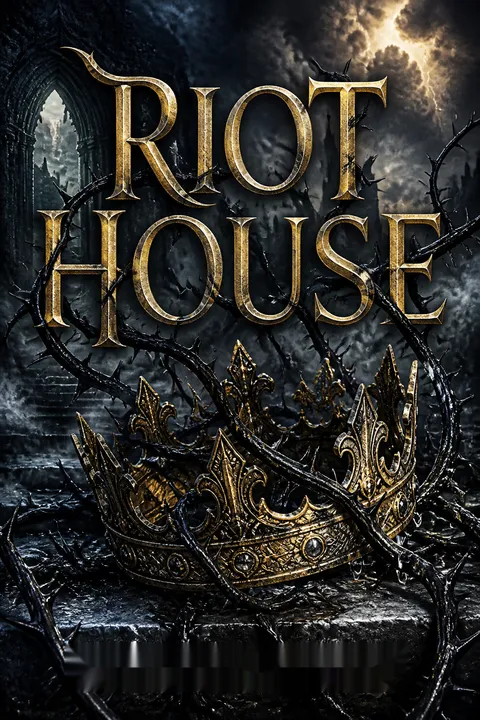

Plot Summary
Arrival at Wolf Hall
Elodie Stillwater, daughter of a cold military father, is dropped at Wolf Hall, an elite, isolated boarding school. She's anxious, defensive, and deeply scarred by her past, especially her father's violence. The school's gothic, prison-like atmosphere amplifies her sense of exile. She meets Wren Jacobi, a brooding, magnetic student with a reputation for cruelty, and immediately senses danger. Elodie's first night is cold and lonely, her room unwelcoming, and she's determined to keep her guard up. The stage is set for a collision between her need for safety and the predatory social order of Wolf Hall, where secrets and power games rule. Elodie's vulnerability and resilience are palpable as she braces for the unknown.
The Riot House Boys
Elodie quickly learns about the infamous Riot House boys: Wren, Pax, and Dashiell. They live off-campus in a house of their own, wielding unchecked power and privilege. Their presence is both alluring and menacing, and they set the tone for the school's social hierarchy. Wren, in particular, is a force—intelligent, cruel, and unpredictable. Carina, a friendly student, warns Elodie to steer clear of them, recounting stories of their manipulations and the consequences for those who cross them. The boys' games, bets, and disregard for rules create an atmosphere of constant tension. Elodie senses that beneath their bravado lies something darker, and she's both repelled and fascinated.
Secrets and First Impressions
As Elodie settles in, she's drawn into the complex web of Wolf Hall's social life. She meets Carina and other girls, each with their own scars and loyalties. The school's traditions are laced with cruelty—hazing, secrets, and a culture of silence. Elodie's first classes are unconventional, especially English with the charismatic Dr. Fitzpatrick, who encourages debate and chaos. Wren's attention is unsettling; he oscillates between hostility and a strange, possessive interest. Elodie's past trauma makes her hyper-vigilant, but she's also determined not to be cowed. The school's rituals, the ever-present maze, and the undercurrent of danger set the tone for her new life.
Wren's Obsession Begins
Wren's fixation on Elodie intensifies. He's fascinated by her innocence and pain, and his interest is both sexual and psychological. He manipulates situations to test her reactions, orchestrating small cruelties and watching her closely. Wren's internal monologue reveals a fractured psyche—he's both drawn to and repulsed by Elodie's vulnerability. He negotiates with his friends for the right to "claim" her, treating her as a prize. Elodie, meanwhile, senses she's being watched and toyed with, but refuses to show weakness. The dynamic between them is charged, dangerous, and laced with mutual recognition of each other's damage.
Elodie's New Reality
Elodie struggles to adapt to Wolf Hall's routines and the cold, competitive environment. She finds small moments of comfort with Carina and a few other girls, but the threat of the Riot House boys looms. Her father's absence is both a relief and a source of anxiety, as she's haunted by memories of his abuse. The school's administration is distant and more concerned with appearances than student welfare. Elodie's room is vandalized, her belongings destroyed, and a knife is left in her bed—a clear message. She's shaken but refuses to be intimidated, determined to survive on her own terms.
Games and Hazing
The Riot House boys escalate their games, targeting Elodie with pranks and intimidation. Wren orchestrates a series of humiliations, testing her limits and resolve. The school's culture of silence means no one intervenes. Elodie's resilience is tested, but she refuses to break. The boys' internal dynamics are revealed—alliances, rivalries, and a code of conduct that keeps them from turning on each other, but not from tormenting outsiders. The line between cruelty and attraction blurs, especially as Wren's interest in Elodie becomes more personal and conflicted.
The Maze and the Storm
During a violent storm, Elodie is lured into the school's ancient maze by a series of coded messages from Wren. The maze, a symbol of Wolf Hall's secrets, becomes the setting for a pivotal confrontation. Wren and Elodie face off in the gazebo at the maze's center, their attraction and antagonism reaching a fever pitch. Wren confesses his obsession, and Elodie, despite her fear, is drawn to him. The storm outside mirrors the chaos within, and the boundaries between predator and prey, victim and survivor, begin to blur.
Dangerous Attractions
The aftermath of the storm leaves Elodie and Wren changed. Their encounter in the gazebo is electric—charged with both threat and longing. Wren's cruelty gives way to vulnerability, and Elodie's defenses falter. They share a kiss that is both a surrender and a challenge. The power dynamic between them shifts, and both are left reeling. Wren's friends notice the change and warn him about the dangers of attachment. Elodie, meanwhile, is conflicted—she knows Wren is dangerous, but she can't deny the pull between them.
The Room Is Trashed
Elodie returns to her room to find it destroyed, her most precious possession—a bird figurine from her mother—shattered. The administration is indifferent, more concerned with appearances than her safety. Elodie suspects Wren but can't prove it. The attack is both a warning and a search for something hidden. The sense of danger intensifies, and Elodie's isolation deepens. She's forced to confront the reality that Wolf Hall is not just a school, but a battleground where only the ruthless survive.
The Knife in the Mattress
The knife left in Elodie's bed is a turning point. She's forced to question everyone around her, including Wren. The school's indifference is chilling, and Elodie realizes she can trust no one. Her military training kicks in—she analyzes the scene, looking for clues, and refuses to be cowed. The attack is both a message and a mystery, and Elodie is determined to find out who is behind it. The psychological warfare escalates, and the line between paranoia and justified fear becomes razor-thin.
The Maze at Midnight
Elodie receives a coded message—Morse code flashed from the maze—daring her to prove she's not a coward. Despite her better judgment, she ventures into the maze at night, determined to confront her tormentor. The maze becomes a crucible, testing her resolve and resourcefulness. Wren is waiting at the center, and their confrontation is both a battle and a seduction. They circle each other, trading barbs and confessions, and the tension between them explodes into a charged, dangerous intimacy.
The Gazebo Confession
In the aftermath of their midnight encounter, Wren and Elodie share truths in the gazebo. Wren admits his obsession and his struggle to control his darker impulses. Elodie, in turn, reveals her own trauma and the scars left by her father. The power dynamic between them shifts—Wren is no longer just a predator, and Elodie is no longer just prey. They make a pact to be honest, to test whether trust is possible in a world built on secrets and betrayal. The emotional stakes are raised, and both are left exposed.
Bargains and Boundaries
Wren and Elodie agree to a three-night experiment: to spend time together, share truths, and see if trust can grow. Their encounters are fraught with tension—desire, fear, and the ever-present threat of violence. Wren's friends are wary, sensing that his attachment to Elodie could destabilize their carefully constructed world. Elodie, meanwhile, is torn between her attraction to Wren and her fear of what he's capable of. The boundaries between them are constantly tested, and the risk of betrayal looms.
The Attic Pact
In the attic, Wren and Elodie share their pasts, their fears, and their desires. The space becomes a sanctuary, removed from the chaos of Wolf Hall. They negotiate the terms of their relationship, each revealing more than they intended. Wren's vulnerability is startling, and Elodie's strength is undeniable. Their connection deepens, but so does the danger—both from within and without. The attic becomes a crucible, forging a bond that is both passionate and precarious.
Three Nights of Truth
Over three nights, Wren and Elodie's relationship intensifies. They confess their love, share their darkest secrets, and confront the ghosts that haunt them. Wren reveals the extent of his obsession, and Elodie admits her longing for safety and belonging. Their intimacy is both healing and fraught with risk. The past, however, refuses to stay buried. The mystery of Mara's disappearance resurfaces, and the threat of violence returns with a vengeance.
The Past Unveiled
Elodie's past is revealed in full: her father's abuse, her mother's murder, and her own survival after being locked in a box for days. The trauma is raw and unflinching, and Wren is shaken by the depth of her pain. He confesses his own darkness, and together they confront the reality that love alone may not be enough to save them. The school's secrets, the Riot House boys' games, and the unresolved mystery of Mara's fate all converge, threatening to destroy what they've built.
Mara's Disappearance
The mystery of Mara Bancroft, the girl who vanished from Wolf Hall, comes to the forefront. Elodie discovers Mara's hidden journal, filled with confessions of fear, obsession, and a secret relationship with someone known only as "Poe." The evidence points to Wren, and Elodie is forced to question everything she believes about him. The school's culture of silence and complicity is exposed, and the danger becomes very real. The past and present collide, and the truth threatens to tear everything apart.
The Riot House Party
The annual Riot House party is a bacchanal of excess, cruelty, and ritualized humiliation. Wren, Pax, and Dashiell orchestrate a "hunt" in the woods, with students competing for power and survival. Elodie, determined to uncover the truth, enters the game, risking everything. The party becomes a crucible, exposing the school's darkest secrets and the true nature of the Riot House boys. Alliances shift, betrayals are revealed, and the line between game and reality vanishes.
Wolves in the Woods
In the chaos of the hunt, Elodie and Carina are captured by Dr. Fitzpatrick, the English teacher, who is revealed as the true predator. His obsession with Wren and his jealousy of the girls who come between them have driven him to murder before. The woods become a battleground, with Wren racing to save Elodie and Carina. The truth about Mara's fate is finally revealed, and the cost of survival is paid in blood. The violence is raw, the stakes are life and death, and the bonds of love and loyalty are tested to the breaking point.
The Cave and the Truth
In a final, harrowing confrontation in a hidden cave, Wren and Elodie face Dr. Fitzpatrick. Carina is gravely wounded, and Wren is forced to fight for their lives. The truth about Mara's murder is exposed, and Fitzpatrick is brought down. The aftermath is both relief and devastation—Carina survives, but the scars remain. The school is forever changed, and the era of the Riot House boys comes to an end. Justice is served, but at a terrible cost.
Aftermath and Healing
In the wake of violence, Wolf Hall is transformed. Wren and Elodie, scarred but alive, begin to build a future together. The Riot House boys are forced to confront the consequences of their actions, and the school's culture of silence is shattered. Carina recovers, and the bonds of friendship are reforged. Wren and Elodie's love, forged in trauma and tested by fire, endures. The past is not forgotten, but hope returns, and the possibility of healing emerges from the wreckage.
Analysis
Riot House is a dark, psychological exploration of trauma, power, and the desperate search for connection in a world built on secrets and cruelty. At its core, the novel interrogates the ways in which violence—both physical and emotional—reverberates through generations, institutions, and intimate relationships. Wolf Hall is less a school than a microcosm of a broken society, where privilege masks pain and ritualized cruelty is the price of survival. The Riot House boys are both products and perpetuators of this system, their games a means of asserting control in a world that has denied them safety and love. Elodie's journey is one of reclamation—of her body, her voice, and her right to define her own story. Her relationship with Wren is fraught, dangerous, and at times deeply problematic, but it is also a site of mutual recognition and healing. The novel refuses easy answers, instead forcing readers to confront the messy, often contradictory realities of desire, trauma, and the longing for redemption. In the end, Riot House is a story about the possibility of breaking the cycle—of choosing honesty, vulnerability, and love, even when the world insists that only violence and silence can keep us safe.
People Also Read



Characters
Elodie Stillwater
Elodie is the daughter of a brutal military father, shaped by years of violence and trauma. Her mother's murder and her own survival after being locked in a box have left her hyper-vigilant, distrustful, and fiercely independent. At Wolf Hall, she's an outsider, determined not to be broken by the school's cruelty. Elodie's intelligence, resilience, and vulnerability make her both a target and a force to be reckoned with. Her relationship with Wren is fraught with danger and desire, as she's drawn to his darkness but refuses to be his victim. Over the course of the story, Elodie confronts her past, claims her agency, and finds the courage to love and be loved, even as she faces the school's—and her own—demons.
Wren Jacobi
Wren is the enigmatic, dangerous leader of the Riot House boys. Born into privilege but scarred by neglect and emotional abuse, he's both a master manipulator and a deeply wounded soul. Wren's obsession with Elodie is both predatory and redemptive—he's drawn to her innocence and pain, and his desire to possess her is matched only by his fear of being vulnerable. Wren's internal conflict drives much of the narrative; he oscillates between cruelty and tenderness, struggling to reconcile his need for control with his longing for connection. His past with Mara, his complicated sexuality, and his loyalty to his friends all shape his journey. Ultimately, Wren is forced to confront the consequences of his actions and choose between destruction and healing.
Carina Mendoza
Carina is Elodie's first real ally at Wolf Hall—a warm, funny, and fiercely loyal friend. She acts as a guide and protector, warning Elodie about the dangers of the Riot House boys and the school's toxic culture. Carina's own history is marked by betrayal and heartbreak, especially her relationship with Dashiell. Her selflessness and courage are revealed in the story's climax, where she risks her life to save Elodie. Carina's struggle to balance honesty, loyalty, and self-preservation is central to her character, and her journey is one of survival, forgiveness, and the reclamation of agency.
Pax Davis
Pax is one of the Riot House boys—a model, a fighter, and a chaos agent. He thrives on disruption, cruelty, and the thrill of the game. Pax's loyalty to Wren and Dashiell is absolute, but his own insecurities and need for control often lead him to push boundaries and escalate conflicts. He's both a tormentor and a protector, and his relationship with Wren is marked by rivalry and brotherhood. Pax's actions are often driven by a need to prove himself, and his inability to change is both his strength and his downfall.
Dashiell Lovett
Dashiell is the third member of the Riot House triumvirate—a British aristocrat with a dark past and a talent for seduction. He's both a confidant and a saboteur, using his intelligence and charm to manipulate those around him. Dashiell's relationship with Carina is central to his arc; his betrayal and subsequent regret drive much of the emotional tension. He's a master of appearances, but beneath the surface lies a deep well of pain and longing. Dashiell's journey is one of reckoning, as he's forced to confront the consequences of his actions and seek redemption.
Mercy Jacobi
Mercy is Wren's twin sister—a beautiful, manipulative, and deeply conflicted presence at Wolf Hall. Her actions, often motivated by jealousy and a desire for control, set in motion many of the story's tragedies. Mercy's relationship with Wren is fraught with rivalry and resentment, and her need to be needed leads her to make choices with devastating consequences. She's both a victim and a perpetrator, and her arc is one of guilt, denial, and the search for forgiveness.
Dr. Fitzpatrick
Dr. Fitzpatrick is the school's beloved English teacher—witty, engaging, and seemingly supportive. Beneath the surface, however, he's a predator, obsessed with Wren and willing to kill to eliminate rivals. His manipulation of Mara, his violence, and his ultimate unmasking as the story's true villain are central to the plot's climax. Fitzpatrick's charm is a mask for his madness, and his downfall is both shocking and inevitable.
Mara Bancroft
Mara is the girl whose disappearance haunts Wolf Hall. Her journal, discovered by Elodie, reveals a story of obsession, fear, and betrayal. Mara's secret relationship with Fitzpatrick, her longing for love, and her ultimate fate are the key to the school's darkest secrets. She's both a victim and a warning—a reminder of what happens to those who get too close to the fire.
Damiana
Damiana is the school's resident mean girl—a beautiful, ruthless presence who sees Elodie as a threat. Her relationship with Wren is complicated by jealousy and desire, and her actions often escalate conflicts. Damiana is both a product and a perpetuator of Wolf Hall's toxic culture, and her arc is one of rivalry, humiliation, and survival.
Colonel Stillwater
Elodie's father is a shadowy, menacing presence throughout the story—a military man whose violence and neglect have shaped Elodie's life. His actions, both past and present, are the source of her deepest wounds. The revelation of his crimes and his ultimate downfall are both cathartic and tragic, forcing Elodie to confront the legacy of abuse and reclaim her agency.
Plot Devices
Dual Narration and Shifting Perspectives
The novel employs a dual (and sometimes multiple) first-person narration, alternating primarily between Elodie and Wren. This structure allows readers to experience the same events from different psychological vantage points, exposing the gaps between perception and reality. The shifting perspectives create dramatic irony, deepen character development, and heighten suspense, especially as secrets are revealed and motivations are questioned. The use of journal entries, flashbacks, and confessions further blurs the line between truth and deception, forcing readers to piece together the real story from fractured accounts.
The Maze and the Gazebo
The school's maze and the hidden gazebo at its center are recurring symbols—representing the labyrinthine nature of trauma, secrets, and desire. The maze is both a literal and figurative battleground, where characters are tested, confronted, and transformed. The gazebo serves as a confessional, a place where masks are dropped and truths are exchanged. These spaces are used for foreshadowing, confrontation, and the blurring of boundaries between predator and prey.
Power Games and Ritualized Cruelty
The Riot House boys' games—bets, dares, and ritualized humiliation—are central to the school's culture. These power plays serve as both plot engines and psychological tests, forcing characters to reveal their true selves under pressure. The annual party, the "hunt," and the ever-present threat of violence create a climate of fear and complicity. The games are both a means of control and a way to mask vulnerability, and their escalation drives the story toward its violent climax.
The Hidden Journal and the Unreliable Witness
Mara's hidden journal is a classic plot device—a record of secrets, fears, and forbidden love that becomes the key to unraveling the school's mysteries. The journal's partial destruction, ambiguous entries, and shifting blame force characters (and readers) to question what is real and who can be trusted. The unreliable witness motif is reinforced by the characters' trauma, denial, and self-deception, making the search for truth both urgent and fraught with danger.
Trauma, Survival, and the Cycle of Violence
The novel's structure is built around the revelation of past trauma—Elodie's abuse, Wren's neglect, Mara's fate—and the ways in which these wounds shape the present. Flashbacks, confessions, and the gradual unspooling of secrets create a sense of inevitability, as characters are forced to confront the cycle of violence that binds them. The story's resolution hinges on the possibility of breaking free—of choosing love, honesty, and healing over destruction and silence.
Crooked Sinners Series







Download PDF
Download EPUB
.epub digital book format is ideal for reading ebooks on phones, tablets, and e-readers.








































