
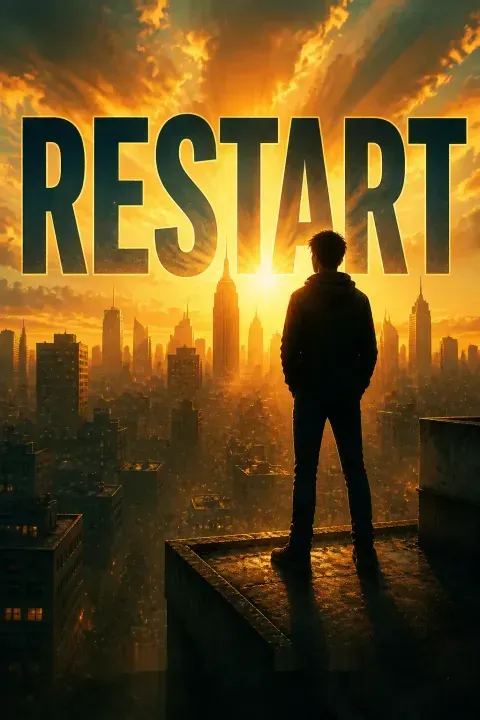


Plot Summary
Waking Up a Stranger
Chase Ambrose1 opens his eyes to fluorescent hospital lights and a crying woman who calls herself his mother.10 He cannot recognize her, his older brother Johnny, or his own face in a compact mirror. Dr. Cooperman diagnoses acute retrograde amnesia: the fall from his dormer window has wiped every autobiographical memory clean.
He can walk, talk, and use a bathroom, but his personal history is a blank hard drive. His father Frank,8 a former town football legend, barges in with crushing bear hugs and boasts about his son's gridiron exploits.
The only fragment to survive is a blurry image of a little blond girl in a blue dress trimmed with white lace, standing in a garden. Discharged to a house full of trophies he does not remember earning and a phone wallpaper showing him smashing pumpkins with two strangers, Chase1 realizes he is a ghost haunting his own life.
Amnesia functions here as existential clemency. The erasure of autobiographical memory strips away not just knowledge but moral accountability, creating a philosophical vacuum where identity must be reconstructed from scratch. Chase's sole surviving memory, the girl in the blue dress, suggests that even in total cognitive erasure, something pre-conscious endures: a seed of the self that predates and outlasts the personality constructed on top of it. The medical trauma is also narrative mercy, granting a thirteen-year-old bully the one thing no court ever could: true innocence by ignorance.
Frozen Yogurt Fury
Shoshanna Weber2 has hated Chase Ambrose1 for as long as he tormented her twin brother Joel:4 the tripping in hallways, the cherry bombs in the school piano, the relentless campaign that forced Joel4 into exile at a Connecticut boarding school.
When she spots Chase1 at Heaven on Ice frozen yogurt shop, timid and indecisive before the flavor dispensers, something inside her detonates. He smiles at her, a shy, uncomprehending smile. She stalks across the shop, dumps her vanilla yogurt with chocolate sprinkles over his head, and storms out.
Her father hustles her away, embarrassed but perhaps a little proud. The act is cathartic but hollow: Chase1 looked at her like he had never seen her before. Because he had not. The bully who destroyed her family no longer exists, and she has just punished a stranger.
Shoshanna's frozen yogurt assault is a grief ritual performed on the wrong body. Her anger is authentic and earned, but its target has been erased. This moment crystallizes the book's central ethical dilemma: can punishment be just when the punished has no memory of the crime? Shoshanna's fury, shaped by months of helplessly watching her brother suffer, cannot simply evaporate because the perpetrator fell on his head. Her rage needs somewhere to go, but its original target has vanished, leaving her swinging at a ghost.
Lunchroom Crossing
Brendan Espinoza,3 video club president and self-styled documentarian, is narrating a mock wildlife film about cafeteria social hierarchies when the apex predator changes course. Instead of joining his football teammates at the lions' den, Chase Ambrose1 carries his tray to Brendan3's table and asks if the seat is taken.
Brendan,3 who still bears a scar above his eyebrow from the time Chase1 shoved his face into a water fountain, freezes in terror. But this Chase1 struggles to cut his chicken one-handed and accepts Brendan3's help.
The moment is shattered when Aaron5 and Bear7 descend, yank Chase1 away, and trap Brendan3 under his own chair. What lingers is not the humiliation but the footage: Brendan3's flip-cam recorded the entire encounter, including Chase1's hesitant apology. The video is evidence that something inside the bully has shifted, possibly broken.
The cafeteria scene performs a social inversion: the school's apex predator voluntarily descends to eat with his prey. Brendan's scar, a literal inscription of past violence on his body, makes the encounter physically dangerous for him. Yet he helps Chase cut his chicken, an act of astonishing courage disguised as politeness. The flip-cam, running forgotten, captures something no one is ready to believe: the bully confused, grateful, almost gentle. The recording becomes the first artifact of a new identity struggling to emerge from the wreckage of the old one.
Secrets of the Graybeard Motel
Aaron,5 Bear,7 and Chase1 report to Portland Street Assisted Living for court-ordered community service stemming from the cherry bomb incident, though Chase1's injury technically excuses him. He goes anyway, curious. The facility, which Aaron5 calls the Graybeard Motel, houses elderly residents his friends treat with open contempt.
In room 121, Chase1 notices a black-and-white photograph of a young soldier receiving a decoration from President Truman. The resident, Julius Solway,6 is a Medal of Honor recipient from the Korean War. Meanwhile, Bear7 pockets a twenty-dollar tip from a confused woman who mistakes them for room service.
Chase,1 appalled, returns later with his own money and slips it under her door. He also begins visiting Mr. Solway6 regularly, drawn to the old soldier's gruff honesty and war stories. But the medal itself, Mr. Solway6 confesses, has gone missing.
Portland Street becomes the story's moral laboratory. Against the backdrop of frail elders, three kinds of character reveal themselves: Aaron and Bear's predatory opportunism, Chase's nascent conscience (returning the stolen twenty on his own dime), and Mr. Solway's hardened decency. The Medal of Honor serves as a symbolic counterpoint to Chase's sports trophies: one represents genuine sacrifice and courage, the other adolescent glory built on intimidation. Chase's gravitation toward Solway suggests the new self is hungry for a model of masculinity that does not require cruelty.
The Tricycle Car Wash
Desperate for a wingman after every video club member refuses his most dangerous idea yet, Brendan3 approaches Chase.1 To his shock, Chase1 agrees. They haul a tricycle to The Shiny Bumper car wash, where Chase1 distracts the attendants while Brendan3 mounts a GoPro to his head, climbs onto the trike, and rides the conveyor into the washing tunnel.
Icy water, pelting soap, and spinning brushes assault him while Chase,1 weeping with laughter, holds camera two steady from the observation window. When the manager threatens to call the police, Brendan3's reputation as an honor-roll good kid defuses the situation.
Back home, they edit the footage together to 'Ride of the Valkyries' and upload How to Clean Your Tricycle to YouTube. Impressed by Chase1's natural camera skills and easy collaboration, Brendan3 invites him to join the video club. Chase1 accepts, stepping fully into a world his old self terrorized.
The car wash stunt is more than slapstick. It is the first collaboration where Chase contributes something positive to a community he previously victimized. His steady camera hand, his willingness to follow Brendan's direction, and his genuine delight in the final product reveal a creative, cooperative side utterly absent from the old Chase. Brendan's invitation to join video club is an act of radical forgiveness disguised as recruitment. For Chase, it offers an alternative identity to football glory, one built on making things rather than breaking people.
Enemies Forced Together
For the National Video Journalism Contest, Shoshanna2 needs a senior citizen with an interesting story. Chase1 suggests Mr. Solway,6 the Medal of Honor recipient. Shoshanna2 visits Portland Street and finds Mr. Solway6 hostile and dismissive until Chase1 arrives with a prune Danish.
The old man's demeanor transforms: if Chase1 vouches for her, he will cooperate, but only if they work as partners. Shoshanna2 seethes. She cannot stand being yoked to her brother's tormentor.1 Yet the footage they capture is extraordinary. Mr. Solway6 tells stories of Korean War heroism and absurdity: pastrami sandwiches flown from San Francisco, General MacArthur's silk boxers worn as New Year's party hats.
Shoshanna2 finds herself, against every instinct, laughing alongside Chase.1 Their project, titled Warrior, becomes the best work either has ever done, and the partnership begins to dissolve something hard and armored inside her.
Forced collaboration is the crucible that transforms Shoshanna's hatred. She cannot reconcile the boy who made her brother's life unlivable with the patient, respectful young man who reads to Mr. Solway and brings him pastries. Cognitive dissonance becomes a kind of emotional erosion. The video project also gives Shoshanna something she lacked during her brother's ordeal: agency. She is not helplessly watching a victim suffer; she is actively creating something meaningful with the former aggressor, and that creative act rewires her moral circuitry.
The Empty Medal Case
While filming B-roll for Warrior, Shoshanna2 rummages through the chaos of Mr. Solway6's closet and pulls out a navy-blue velvet jewelry box embossed with the Great Seal of the United States. She flips it open. Empty. Mr. Solway6 speculates that his late wife, confused near the end, may have misplaced it.
But Chase1's mind spirals elsewhere. He remembers Bear7 snatching twenty dollars from a disoriented resident, the dismissive way his friends treat everyone at Portland Street. The medal was not lost. It was stolen. And the thieves, he suspects with sick certainty, are his two best friends.
Or worse: he was one of them. The hollow case becomes a question he is not ready to answer, its emptiness mirroring the void where his own past should be. The discovery plants a seed of dread that will grow into the story's darkest revelation.
The empty medal case literalizes absence as accusation. It is a negative space that demands to be filled with a story, and the only available stories are theft and negligence. Chase's instant suspicion of Aaron and Bear reveals how thoroughly his moral intuition has been rewired: the old Chase would have been their accomplice, but the new Chase instinctively recognizes their capacity for exploitation. The case also prefigures the deeper emptiness in Chase himself, the missing thirteen years that, when recovered, will prove far more damning than he imagined.
Joel Comes Home
Shoshanna2 convinces her parents that the Chase1 who tormented Joel4 no longer exists. If the bully is gone, the exile is pointless. Joel Weber4 returns from Melton Conservatory, nervous and braced for renewed attacks. On his first day back, Chase1 approaches him in the video club room.
His voice is unrecognizable from the arrogant Alpha Rat Joel4 remembers: halting, ashamed. He confesses he has no memory of what he did but knows it was unforgivable, and he is deeply sorry. Joel4 believes the amnesia is real. He believes Chase1 has changed and genuinely regrets the past.
Yet none of that matters. The hatred is still there, hot and implacable, because the pain Chase1 caused exists independently of Chase1's memory of causing it. Joel4 accepts the apology intellectually but rejects it viscerally. The emotional debt cannot be discharged by amnesia.
Joel's return and his response to Chase's apology articulate the book's most painful truth: forgiveness is not an obligation, and remorse without memory is an incomplete transaction. Chase offers an apology for acts he cannot recall committing, which makes it both sincere and insufficient. Joel's inability to forgive despite his intellectual acceptance of Chase's transformation reveals the gap between cognitive justice and emotional justice. The victim's suffering has a half-life that outlasts the bully's reformation, and no amount of contrition can accelerate its decay.
Ambush in the Music Room
Brendan3 films his One Man Band video in the music room, wearing a shoe-polish-painted suit and tangled in a marching tuba. Aaron5 and Bear7 kick open the doors and unleash twin fire extinguishers, flooding the room with foam. They hurl instruments, topple music stands, and target Joel4 with savage glee.
When Chase1 arrives, summoned by Kimberly,9 Bear7 thrusts a fire extinguisher into his hands and tells him to finish the job. Chase1 freezes, then wrestles with Bear7 for the weapon. During the struggle, the metal cylinder swings free and strikes Joel4 in the face, blackening his eye.
Aaron5 spins a cover story: they saw smoke, were heroes fighting an electrical fire. In Principal Fitzwallace's office, Chase1 corroborates the lie to save himself. The consequence is immediate: Ms. DeLeo expels him from video club. His new friends believe he orchestrated the entire attack and has reverted to the old Chase.1
The music room ambush is the story's crucible, forcing Chase to choose between old loyalties and new. He fails. His instinct to protect himself overrides his hard-won moral awareness, and the lie he tells represents a temporary regression to survival-mode selfishness. The scene also demonstrates how Aaron and Bear weaponize friendship: they engineer a scenario where Chase's only escape requires complicity in their cruelty. The tragedy is not that Chase's new friends abandon him, but that their abandonment is earned. His moment of weakness costs him the community he was just beginning to build.
The Worst Truth
Back on the football team via a conveniently lenient sports medicine doctor, Chase1 finds no joy in his restored status. Aaron5 and Bear7 corner him on the practice field, tackle him without pads, and demand their share. When Chase1 insists he does not have the medal, their accusation lands like a physical blow: Chase1 stole it.
Before the fall. A flashback floods in, unwelcome and undeniable: his own hand reaching into the velvet case on Mr. Solway6's dresser while the old man's back was turned. Later, climbing onto his roof, Chase1 discovers the medal wedged behind a loose cedar shake.
With the recovery comes another memory: why he fell. He had been spying on his overweight neighbor Mr. Tottenham, contorted into a neon-yellow yoga suit, convulsing with laughter when he lost his grip and tumbled. The old Chase1 died laughing at someone else's humiliation. The new Chase1 holds the proof of his own criminality.
The revelation that Chase himself stole the medal collapses the moral distance he had constructed between himself and his former friends. He is not the reformed ringleader betrayed by his cronies; he is the original thief, and his amnesia merely shielded him from this knowledge. The simultaneous recovery of the medal and the memory of his fall creates a symbolic symmetry: the object that proves his worst act and the image of his neighbor's humiliation that caused his transformation are discovered in the same moment. The old Chase fell while mocking someone. The new Chase rises holding evidence of his shame.
Video Proof Emerges
Brendan,3 dispirited by video club's creative paralysis since Chase1's expulsion, discovers a flip-cam with full memory. The footage is his abandoned One Man Band shoot, running the entire time. In slow motion, the truth unfolds: Chase1 did not participate in the attack. He stood frozen in shock when handed the extinguisher.
He wrestled with Bear7 to keep the weapon away. Joel4's injury was a pure accident during the struggle. There was no fire, no heroism, only a frame job. Brendan3 texts Chase,1 Shoshanna,2 Joel,4 and Kimberly9 to gather at his house. While Chase1 never arrives, sent off course toward Portland Street with the medal, the others watch the evidence together.
Shoshanna2's face cycles through shock and shame as she realizes she condemned an innocent person. Joel4 sees what he already suspected confirmed: the new Chase1 tried to protect him. The wrong they all believed is undone by a camera nobody knew was recording.
The flip-cam footage functions as a technological conscience, preserving truth that human memory distorts. Brendan's accidental discovery is a quiet miracle of documentation: the camera, forgotten and running, captured what everyone's fear and anger refused to see. The scene underscores the video club's thematic role in the novel: these kids who document life understand, better than the athletes who live it unreflectively, that truth requires evidence and perspective. The footage does not just exonerate Chase. It indicts the community for its readiness to believe the worst of someone trying to change.
Brawl at the Nursing Home
Chase1 races to Portland Street with the Medal of Honor wrapped in a dish towel. Aaron5 and Bear7 intercept him in the hallway. When the towel is yanked away and the medal clatters to the floor, Chase1 dives on it. The struggle spills into the rec room where elderly residents watch in alarm.
Desperate, Chase1 vacuums the medal into a Hoover, yanks the cord from the wall, and charges through Aaron5 and Bear7 like a battering ram. The collision sends all three sprawling. Brendan,3 Shoshanna,2 and Kimberly9 arrive and join the defense: Brendan3 flails at Bear7 with apple-stem fists, Shoshanna2 hurls herself into the fray, and Mr. Solway6 launches his walker into Aaron5's kidneys.
Joel4 fetches security. When Chase1 dumps the vacuum bag and retrieves the medal, gray with dust, he hands it to Mr. Solway6 and confesses the theft before everyone. Nurse Duncan calls the police.
The nursing home brawl is a redemption enacted through physical sacrifice. Every character Chase once wronged now fights alongside him: Brendan pummeling Bear, Shoshanna throwing herself into danger, Joel summoning help, Mr. Solway weaponizing his walker. The vacuum cleaner becomes an absurd but effective instrument of justice. Chase's public confession, delivered while still dust-covered and panting, has no strategic value; he could have let the blame fall on Aaron and Bear as they had done to him. But the new Chase rejects moral shortcuts. He owns his crime in the very room where he committed it.
The Courtroom Reckoning
At his juvenile court hearing, Chase1 faces the same judge who sentenced him to community service. His lawyer lines up character witnesses: his mother,10 his father8 (who surprises everyone by admitting his own youthful perfection was overrated), Dr. Cooperman, and Shoshanna Weber,2 who testifies with brutal honesty that Chase1 has changed but is not finished changing.
When the judge asks if Chase1 can guarantee he is no longer the person who stole the medal, the courtroom holds its breath. The easy lie would set him free. Chase1 refuses, admitting he cannot promise the old self is gone forever.
The judge begins sentencing when the doors crash open and Mr. Solway6 shuffles in behind his walker, Medal of Honor gleaming around his neck. He declares, with theatrical belligerence, that he loaned Chase1 the medal. The judge sees through the lie but, facing a courtroom full of supporters, dismisses the case. Chase1 walks free.
The courtroom climax pivots on two moments of moral truth: Chase's refusal to lie to save himself, and Mr. Solway's willingess to lie to save Chase. The symmetry is exquisite. Chase proves his transformation by rejecting the easy path the old Chase would have taken. Mr. Solway, who values blunt honesty above all else, perjures himself for a boy who stole from him because he has witnessed, over months of prune Danishes and war stories, that the thief no longer exists. The community's physical presence in the courtroom, a crowd rising to stand as character witnesses, enacts the book's thesis: identity is not a private possession but a collective agreement, and enough people believing in your change can make it real.
A New Life Earned
Chase1 returns to football and scores three touchdowns in his first game, with the entire video club filming from the sidelines. Warrior wins first prize in the National Video Journalism Contest. Mr. Solway6 becomes an unofficial mascot for the video club, though he still refuses the word hero.
Brendan3 and Kimberly9 are dating, a development Brendan3 attributes to his brave, if futile, attack on Bear7 at Portland Street. Shoshanna,2 who once argued Chase1 belonged at the bottom of the Marianas Trench, now stands in the bleachers delivering defensive speeches about not being a football fan while watching his every play. The stolen medal rests where it belongs.
Aaron5 and Bear7 drift to the margins, their power broken. And Chase,1 walking the halls of Hiawassee Middle, occasionally freezes mid-step, white-faced, as another shard of his ugly past surfaces. He remembers. He cringes. He keeps walking. The restart was not a single event but a process, ongoing and incomplete.
The resolution refuses the tidy redemption arc. Chase is not healed; he is healing. The periodic flashbacks that make him flinch in the hallways are not setbacks but evidence of integration: the old self and the new self are not two separate people but one person reckoning with his history. Brendan's viral tuba video, Shoshanna's unconvincing denials about football, Mr. Solway's continued refusal of the word hero: all these details insist that change is incremental, awkward, and perpetually unfinished. The book's final gift is its honesty about the pace of moral growth. Restart is not a button you press once. It is a direction you keep walking.
Analysis
Restart is a philosophical novel disguised as middle-grade realism, using the amnesia trope to conduct a rigorous inquiry into identity, moral responsibility, and the possibility of change. The central question is not whether Chase Ambrose1 becomes a better person after his accident, he demonstrably does, but whether that transformation absolves him of his past. The book's answer is elegantly ambivalent. Chase1 cannot be held morally accountable for crimes he cannot remember, yet the victims' suffering persists independent of his memory. Joel4's inability to forgive, despite believing in Chase1's reformation, is the book's most honest moment: trauma has a half-life that outlasts the perpetrator's conversion. The novel also critiques the social structures that enable bullying. Chase1 was not a lone monster but the product of a football culture that valorized aggression, a father8 who celebrated dominance, and a school too compromised by athletic glory to discipline its star. His transformation requires exiting that ecosystem entirely and entering the video club, a community built on observation and creativity rather than physical power. Mr. Solway6 provides the alternative model of masculinity: courage expressed as sacrifice, not intimidation. The Medal of Honor, earned through an act Solway6 cannot even remember, parallels Chase1's situation, both are men who cannot recall their defining moments, one heroic, one shameful. The novel's title is a verb posing as a noun, change is not a single event but an ongoing practice, and every memory Chase1 recovers threatens to pull him backward into the person he no longer wishes to be. The ending does not promise permanent transformation. It promises continued effort, witnessed and supported by a community willing to believe in the possibility of a restart.
Review Summary
Restart receives overwhelmingly positive reviews, praised for its engaging story, well-developed characters, and thoughtful exploration of bullying and redemption. Readers appreciate the multiple perspectives, humor, and emotional depth. The premise of a bully getting amnesia and changing his ways resonates with both young and adult readers. Many consider it a must-read for middle-grade students, highlighting its valuable lessons on forgiveness, friendship, and personal growth. Some reviewers note minor issues with pacing or convenience, but overall, the book is highly recommended for its entertainment value and meaningful themes.
People Also Read









Characters
Chase Ambrose
Former bully with total amnesiaThirteen-year-old football star and state champion who falls from his roof and wakes with complete retrograde amnesia, erasing every memory of his life before the accident. Before the fall, he was the ringleader of a trio of bullies who terrorized classmates, destroyed property, and drove one victim out of town. After the fall, he is gentle, curious, and increasingly horrified by the person he used to be. The core of his journey is the tension between who he was and who he wants to become. His amnesia does not make him innocent, but it grants him the critical distance to judge his former self and the freedom to choose differently. He gravitates toward video club and Mr. Solway6, drawn to creativity and genuine courage over athletic dominance.
Shoshanna Weber
Fierce sister seeking justiceJoel4's twin sister, fourteen minutes older, and his most ferocious defender. She watched helplessly as Chase1, Aaron5, and Bear7 systematically destroyed her brother4's life, culminating in cherry bombs planted in the school piano and Joel4's exile to boarding school. Her hatred of Chase1 is absolute and principled, rooted in love for her brother4. When amnesia transforms Chase1 into someone unrecognizable, her moral certainty destabilizes. Forced to partner with him on the video contest, she discovers cognitive dissonance between the monster she remembers and the quiet, helpful boy beside her. Her arc traces the difficult path from righteous vengeance to uncomfortable forgiveness, a journey that requires her to admit she misjudged someone she had every reason to condemn.
Brendan Espinoza
Video club president and peacemakerHonor roll student, president of the video club, and frequent target of Chase1's pre-amnesia bullying (a water fountain shove left a scar above his eyebrow). Unlike Shoshanna2, he possesses a temperamental optimism that allows him to see the new Chase1 before anyone else does. He recruits Chase1 for the tricycle car wash video, invites him into the club, and remains his most consistent defender even when evidence suggests Chase1 has reverted to his old ways. His YouTube ambitions, including Leaf Man and One Man Band, provide comic relief but also reveal a creative courage that transcends social hierarchies. He represents the possibility of forgiveness without forgetting.
Joel Weber
Bullied pianist returning homeShoshanna2's twin brother, a gifted pianist whose talent made him Chase1's primary target. The sustained bullying campaign against him included tripping, theft, public humiliation, and cherry bombs detonated inside the piano during his performance. The trauma drove him to Melton Conservatory, a boarding school he hated. His return to Hiawassee tests whether his victimhood can coexist with Chase1's reformation. His response to Chase1's apology, belief tainted by enduring hatred, captures the book's most psychologically honest moment: intellectual forgiveness does not equal emotional healing. His gradual willingness to open the window so Chase1 can hear him practice marks his tentative reclamation of safety.
Aaron Hakimian
Chase's manipulative former best friendOne of Chase1's two closest friends before the accident, the more articulate and strategically cruel of the pair. He speaks of loyalty while systematically exploiting it, engineering the music room frame job to destroy Chase1's new reputation when Chase1 begins drifting away. His understanding of friendship is purely transactional: Chase1 owes him allegiance and a share of the stolen medal. He sees Chase1's transformation not as growth but as betrayal, and his campaign to pull Chase1 back into the old patterns reveals how toxic friendships operate as traps rather than supports. His intelligence makes his cruelty more dangerous than Bear7's brute force.
Julius Solway
Medal of Honor veteran and mentorAn eighty-six-year-old Korean War veteran living at Portland Street Assisted Living. He earned the Medal of Honor for leaping onto an enemy tank and disabling it with a grenade, an act he cannot remember due to trauma blocking. His crusty, combative exterior masks deep loneliness after his wife's death. He becomes an unlikely mentor to Chase1, recognizing a fellow memory-loss survivor and appreciating the boy's genuine interest in his stories. His decision to lie in court, claiming he loaned Chase1 the medal, represents the story's ultimate act of grace: a hero dishonoring himself to save a boy who once dishonored him. He embodies the book's argument that courage and decency are quiet, stubborn things.
Bear Bratsky
Chase's brutish former best friendAaron5's partner and Chase1's other former best friend, defined by physical aggression and moral laziness. He steals twenty dollars from a confused elderly woman, pockets cookies meant for residents, and shows no remorse for any of it. His loyalty to Chase1 extends only as far as Chase1 serves his interests; when Chase1 transforms, his confusion curdles into resentment. He represents the purely instinctual cruelty that Chase1 is trying to outgrow.
Frank Ambrose
Pushy father living through his sonChase1's divorced father, a former Hiawassee football legend whose state championship photo hangs beside his son's in the principal's office. He pressures Chase1 relentlessly to return to football, dismisses medical caution as 'coddling,' and takes Chase1 to a conveniently lenient sports doctor. His character arc surprises: at the hearing, he admits his own youthful perfection was overrated and expresses pride in the son Chase1 has become, not just the athlete.
Kimberly Tooley
Cheerleader with a crush on ChaseA football-obsessed student who joins video club solely to be near Chase1. Her camera skills are comically inept, but her presence catalyzes Brendan3's jealousy and eventual romantic success. She provides comic relief while embodying the social magnetism Chase1 once wielded and is now oblivious to.
Tina Ambrose
Chase's protective motherChase1's mother, who tried to shield him from knowledge of his own past misdeeds after the accident. Her protectiveness is loving but misguided: she hopes amnesia will allow her son to become the good person she always believed was inside him, but her secrecy nearly costs him the chance to understand himself.
Corinne Ambrose
Chase's stepmother who bridges the divideFrank8's second wife and Helene's mother. Initially uncomfortable around Chase1, her wariness melts as she witnesses his transformation. She drives Mr. Solway6 to the courthouse for the hearing, a quiet act that proves pivotal to Chase1's deliverance.
Plot Devices
The Medal of Honor
Moral MacGuffin and symbol of true courageMr. Solway6's Medal of Honor, awarded by President Truman for valor in the Korean War, drives the story's central moral crisis. Chase1 stole it before his accident and hid it behind a cedar shake on his roof. The medal's disappearance, discovery, and return structure the third act: Aaron5 and Bear7's pressure to split the profits, Chase1's horrified self-recognition as the thief, and the climactic brawl at Portland Street. The medal contrasts genuine heroism (sacrifice, courage, humility) with the hollow glory Chase1 earned through athletic dominance and social intimidation. Its return, culminating in Mr. Solway6 wearing it to court to save Chase1, completes a symbolic circuit: the medal that proved Chase1's worst self becomes the instrument of his redemption.
Retrograde Amnesia
Identity reset and moral experimentChase1's complete loss of autobiographical memory following his roof fall functions as the story's foundational device. It creates a natural experiment in moral philosophy: if you cannot remember your crimes, are you still the person who committed them? The amnesia allows Chase1 to encounter his own reputation as an outsider, discovering through others' reactions the monster he used to be. His gradual memory recovery is paced to maximize dramatic tension: minor flashbacks build toward the devastating revelation that he stole the Medal of Honor. The device also externalizes an adolescent fantasy of reinvention, the desire to escape a self you no longer wish to be, while acknowledging that the past, forgotten or not, leaves traces.
The Flip-Cam Footage
Technological truth-teller and exonerationBrendan3's habit of documenting everything with a video camera proves decisive when a flip-cam, forgotten after the One Man Band shoot, preserves the full record of the music room attack. The footage reveals what no human testimony could prove: Chase1 was trying to stop Aaron5 and Bear7, not help them. The device functions as a modern deus ex machina with thematic weight, arguing that truth requires documentation because memory and prejudice distort reality. The video club's ethos, to capture life as it happens, is vindicated. The footage also allows Brendan3, whose earlier videos were purely comedic, to use his skills for justice. The camera becomes an instrument of moral clarity.
The Roof
Site of death and rebirthThe sloping roof outside Chase1's dormer window is where he used to sit alone, where he fell and nearly died, and where he hid the stolen Medal of Honor behind a loose cedar shake. It is also the vantage point from which he watched his neighbor Mr. Tottenham's ridiculous yoga, the moment of mocking laughter that caused his fall. The roof thus layers multiple meanings: adolescent solitude, literal downfall, concealed guilt, and the cruel amusement that precipitated transformation. When Chase1 climbs back onto the roof to recover the medal and the memory of his fall, he confronts the physical location where the old Chase1 died and the new one was born.
FAQ
Synopsis & Basic Details
What is Restart about?
- Amnesia offers a second chance: Chase Ambrose, a notorious middle school bully and star athlete, loses his memory after a fall from his roof, giving him a blank slate to discover who he was and decide who he wants to become, free from the weight of his past actions.
- Navigating a known world as a stranger: As Chase returns to school and his community, he encounters people who remember his past cruelty, forcing him to piece together his former identity through their reactions and fragmented memories, while simultaneously building new relationships based on his changed personality.
- Exploring identity, consequences, and forgiveness: The narrative follows Chase's journey of self-discovery, the impact of his past on those he hurt (particularly Joel and Shoshanna Weber), the loyalty of his old friends (Aaron and Bear), and the possibility of redemption and forgiveness within a community grappling with his transformation.
Why should I read Restart?
- Compelling exploration of change: The novel uses amnesia as a unique catalyst to delve into whether a person is defined by their past actions or their present choices, offering a hopeful perspective on the possibility of fundamental change.
- Multiple perspectives reveal complex truth: Told through alternating viewpoints, the story provides a rich, layered understanding of bullying, its impact on victims and perpetrators, and the varied ways a community reacts to perceived transformation.
- Engaging plot with emotional depth: Beyond the central mystery of Chase's past, the book features relatable middle school dynamics, unexpected friendships, moments of humor (like Brendan's videos), and significant emotional turning points, culminating in a powerful story about accountability and forgiveness.
What is the background of Restart?
- Contemporary middle school setting: The story is set in a typical American middle school environment, focusing on the social hierarchies, cliques (athletes vs. video club), and everyday interactions that shape adolescent experiences.
- Focus on social dynamics and reputation: The narrative explores the power of reputation, how quickly it forms, and how difficult it is to change, particularly within the confined social world of a school and small town.
- Exploration of bullying and its lasting impact: A key element is the depiction of severe bullying, its psychological toll on the victim (Joel), and the deep-seated resentment and desire for justice it creates within families and the wider community.
What are the most memorable quotes in Restart?
- "You have the chance to rebuild yourself from the ground up, to make a completely fresh start.": Dr. Fitzwallace offers Chase this powerful perspective early on, framing his amnesia not just as a loss, but as a unique opportunity for reinvention, highlighting the central theme of the book.
- "Amnesia can wipe out the details of your past, but it can't change the kind of person you are.": Shoshanna's initial cynical belief about Chase, reflecting the deep skepticism and pain caused by his past actions, underscores the challenge he faces in proving his change is genuine.
- "Falling on my head was the best thing that ever happened to me.": Chase's final reflection encapsulates his journey, acknowledging that the traumatic event, while erasing his memory, ultimately freed him from being the person he was and allowed him to become someone better.
What writing style, narrative choices, and literary techniques does Gordon Korman use?
- Alternating First-Person Perspectives: Korman employs multiple perspectives (Chase, Shoshanna, Brendan, Aaron, Bear, Joel, Kimberly) to provide diverse viewpoints on the same events and characters, allowing readers to see the complexity of Chase's transformation and the impact of his past from various angles.
- Accessible and Direct Language: The writing style is straightforward and engaging, reflecting the voices of middle school students, making the complex themes of identity and forgiveness relatable to a young adult audience.
- Use of Humor and Pathos: Korman balances moments of genuine emotional struggle and serious themes like bullying and trauma with lighthearted humor, often through Brendan's antics or Mr. Solway's gruff wit, preventing the narrative from becoming overly heavy.
Hidden Details & Subtle Connections
What are some minor details that add significant meaning?
- The cracked phone screen: Chase's phone screen is cracked when he wakes up, hinting at the severity of his fall and mirroring his own "broken" memory, a subtle visual metaphor for his state.
- Mr. Solway's messy closet: The chaotic state of Mr. Solway's closet, packed with a lifetime of seemingly random objects, symbolizes the jumbled nature of memory and the unexpected places where important things (like the medal) can be hidden or forgotten.
- Helene's initial fear: Chase's four-year-old half-sister's immediate fear and shrinking away from him, despite having no complex history with him, subtly indicates that his intimidating presence or past actions might have been instinctively perceived even by a young child, suggesting a deeper, perhaps non-memory-based, reaction to his "old self."
What are some subtle foreshadowing and callbacks?
- The girl in the blue dress: This recurring, unexplained image is the primary piece of foreshadowing related to the cause of Chase's fall, hinting at the specific moment and location of his accident long before it's revealed to be a painting he saw from the roof.
- Aaron and Bear's comments about the medal: Their early, seemingly throwaway remarks about Mr. Solway's medal and their expectation of getting "something out of" community service subtly foreshadow their knowledge of the medal's theft and their belief that Chase was involved, hinting at the crime before Chase remembers it.
- Brendan's scar: The small scar above Brendan's eye, revealed casually, serves as a physical callback to a specific instance of Chase's past bullying, providing concrete evidence of his former cruelty that resonates more deeply when Chase learns he caused it.
What are some unexpected character connections?
- Chase and Mr. Solway's bond: The gruff, reclusive war hero and the former bully form an unlikely but profound friendship, based initially on shared experiences of memory loss and later on mutual respect, demonstrating that meaningful connections can form across generations and past conflicts.
- Chase and Brendan's collaboration: Despite Chase having bullied Brendan in the past, their shared enthusiasm for video creation allows them to connect and work together effectively, highlighting the power of shared interests to bridge divides and foster new relationships.
- Kimberly's unwavering crush on Chase: Kimberly's persistent admiration for Chase, even after witnessing his past reputation and the band room incident, provides a perspective that sees potential for good despite the evidence, contrasting with the skepticism of others and adding a layer of romantic subplot.
Who are the most significant supporting characters?
- Mr. Julius Solway: Beyond being the victim of the medal theft, Mr. Solway serves as a mentor figure for Chase, offering gruff wisdom and a parallel experience with memory and regret, ultimately playing a crucial role in Chase's legal outcome and personal growth.
- Brendan Espinoza: As the president of the video club and a former victim, Brendan is instrumental in introducing Chase to a new social circle and passion, offering him a chance for a fresh start and providing key evidence in the band room incident.
- Shoshanna Weber: Joel's fiercely protective twin, Shoshanna represents the deep pain caused by Chase's past and is his most vocal critic; her journey from intense hatred to reluctant forgiveness is central to the book's theme of redemption and highlights the difficulty of healing old wounds.
Psychological, Emotional, & Relational Analysis
What are some unspoken motivations of the characters?
- Aaron and Bear's desire for the "old Chase": Their insistence that Chase's amnesia is temporary and their attempts to draw him back into their old activities are driven by a fear of losing their social standing and the power dynamic they shared with him as their leader.
- Mrs. Ambrose's protective instincts: Chase's mother's attempts to shield him from the worst details of his past are motivated by a deep love and a desire to protect her son from further pain or judgment, even if it hinders his full understanding of himself.
- Mr. Solway's initial reclusiveness: His gruffness and reluctance to engage are likely a coping mechanism for the loss of his wife and the transition to assisted living, masking a deeper loneliness and a desire for connection that Chase and Shoshanna eventually break through.
What psychological complexities do the characters exhibit?
- Chase's identity fragmentation: His amnesia creates a profound psychological split, forcing him to grapple with the disconnect between the person everyone tells him he was and the person he feels himself to be in the present, leading to significant internal conflict and guilt.
- Joel's trauma response: Joel exhibits classic signs of trauma from bullying, including hypervigilance, anxiety, and difficulty trusting, even struggling to accept genuine attempts at kindness from Chase due to the deep scars left by past abuse.
- Shoshanna's struggle with cognitive dissonance: Shoshanna experiences psychological conflict as she witnesses the "new" Chase's positive actions, which contradict her deeply held belief that he is inherently bad, forcing her to reconcile her anger with the evidence of his change.
What are the major emotional turning points?
- Chase catching Helene: This moment marks Chase's first genuinely empathetic and protective action in his new life, contrasting sharply with his past behavior towards his half-sister and signaling a shift in his character.
- Shoshanna dumping yogurt on Chase: This act of raw, visceral anger is a major emotional release for Shoshanna, representing the depth of her family's pain and setting the stage for her long, difficult journey toward potential forgiveness.
- Chase finding the Medal of Honor: The physical discovery of the medal triggers the memory of his theft and fall, forcing Chase to confront the undeniable reality of his worst past action and serving as a catalyst for his decision to seek redemption.
How do relationship dynamics evolve?
- Chase and the Weber twins: Their relationship transforms from one of bully and victims to a complex dynamic involving deep-seated resentment, cautious observation, reluctant collaboration (on the video project), and eventually, tentative steps towards understanding and forgiveness.
- Chase, Aaron, and Bear: The bond between the "three musketeers" deteriorates as Chase's values change; their loyalty is tested and ultimately broken by Aaron and Bear's attempts to force Chase back into their old ways and frame him, revealing the toxic foundation of their friendship.
- Chase and the video club: Initially wary of him, the video club members gradually accept Chase based on his present actions and contributions, forming a supportive community that contrasts sharply with his old social circle, though this bond is severely tested by the band room incident.
Interpretation & Debate
Which parts of the story remain ambiguous or open-ended?
- The permanence of Chase's change: While the book strongly suggests Chase has fundamentally changed, Dr. Cooperman notes that the long-term effects of amnesia and personality shifts are unpredictable, leaving a subtle ambiguity about whether the "old Chase" could ever fully resurface.
- The extent of Aaron and Bear's prior knowledge: While the text confirms Aaron and Bear knew about the medal theft and expected a share, the exact timeline of their knowledge relative to Chase's amnesia and whether they actively sought to exploit his memory loss from the beginning remains somewhat open to interpretation.
- The depth of forgiveness from all characters: While the courtroom scene shows widespread support and the Webers express a willingness to believe in Chase's change, the text acknowledges that healing is ongoing, leaving the full extent and permanence of forgiveness from all past victims and skeptics open to future development.
What are some debatable, controversial scenes or moments in Restart?
- Mr. Solway's lie in court: Mr. Solway's decision to lie under oath and claim he loaned Chase the medal is highly debatable; while it saves Chase from juvenile detention and serves the narrative's theme of redemption, it raises ethical questions about whether the "right" outcome justifies dishonest means.
- The band room incident setup: Aaron and Bear's deliberate act of framing Chase is a controversial moment that highlights their maliciousness and desperation to regain control over him, sparking debate about the nature of their "friendship" and the lengths they would go to.
- Chase's decision to cover for Aaron and Bear: After the band room incident, Chase lies to Dr. Fitzwallace to protect Aaron and Bear, a controversial choice that aligns him with his old friends and costs him the trust of his new ones, sparking debate about whether this act was a relapse into his old self or a misguided attempt at loyalty.
Restart Ending Explained: How It Ends & What It Means
- The Climax: The Court Hearing: Chase is on trial for stealing Mr. Solway's Medal of Honor. Despite overwhelming evidence and his own admission of guilt (based on his recovered memory), Chase refuses to lie and guarantee he's permanently changed, demonstrating his newfound honesty and integrity.
- Mr. Solway's Intervention & Community Support: Just as the judge is about to sentence him, Mr. Solway arrives and lies, claiming he loaned Chase the medal. This, combined with the unexpected turnout of nearly the entire video club, teachers, coaches, and even the Webers testifying to Chase's positive transformation, sways the judge.
- Outcome and Meaning: The judge dismisses the charge, giving Chase a second chance legally. The ending signifies that while past actions have consequences, genuine change, honesty, and the support of a community willing to believe in redemption can lead to forgiveness and a new beginning. It emphasizes that Chase's transformation is real, not just due to amnesia, but because of the choices he makes in the present, even when they are difficult.
About the Author




Download PDF
Download EPUB
.epub digital book format is ideal for reading ebooks on phones, tablets, and e-readers.








































