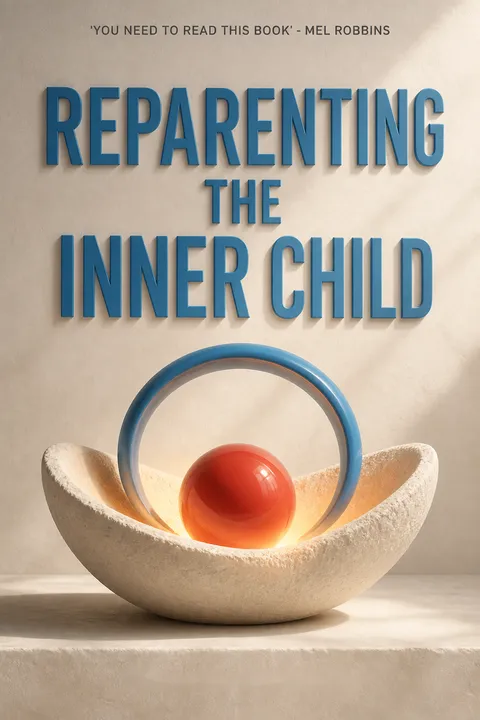

Key Takeaways
1. Your Inner Child: The Unseen Driver of Adult Behavior
At any number of moments throughout the day, we are pulled emotionally and behaviorally back in time as a part of us—our inner child—unexpectedly takes the stage, representing the childhood emotions and unmet needs that linger in our psyche, unaddressed and uncontained.
Early adaptations. From birth, we express ourselves fully, but as we grow, we learn to adapt to our environment, often suppressing natural instincts to fit in or feel safe. These adaptations, formed when our needs weren't met or safety was uncertain, are held by our "inner child"—the unconscious part of our mind that carries both our joyful, expansive self and our earliest wounds. The author's own childhood, marked by constant motion and anxiety due to family stress and a sister's health issues, led to overachievement and self-medication, demonstrating how these early coping mechanisms persist into adulthood.
Survival strategies. The intense energy that once led to playful movement can transform into anxious thoughts or compulsive behaviors when unaddressed. The author's panic when parents were late, or her later overachieving perfectionism, were not inherent traits but survival strategies developed to cope with an unsettled home. These patterns, like equating worth with performance or numbing emotions, become deeply ingrained, making us feel like we're "just getting by" or caught in painful cycles, even when outwardly successful.
Unresolved inner conflict. When our inner child's needs remain unaddressed, it runs the show, leading to behaviors that pull us further from our true selves. We might appear detached while internally screaming for help, or resent others' needs while expecting them to make us feel better. This internal conflict, often hidden beneath a facade of having it all together, is a reflection of an overwhelmed, under-supported inner child doing its best to cope, highlighting the profound impact of early experiences on our adult functioning.
2. Attachment Styles: Blueprints for Love and Connection
These early relational experiences form our unconscious templates for love, trust, and belonging.
Foundational bonds. Attachment theory, pioneered by John Bowlby and Mary Ainsworth, explains how our earliest bonds with caregivers shape our relationships throughout life. Consistent, warm, and responsive care fosters secure attachment, allowing us to trust ourselves and others, form lasting relationships, and regulate emotions effectively. The author's personal quest to understand attachment stemmed from her own early wounds, including being sent to boarding school at age seven, which she later described as something she "wouldn’t send a dog away to."
Insecure patterns. When attunement is inconsistent or absent, insecure attachment styles develop, signaling unmet childhood needs for safety and steadiness. These include:
- Avoidant: Caregivers are distant, leading to self-reliance and discomfort with vulnerability.
- Anxious: Caregivers are inconsistent, leading to hyperawareness of emotional shifts and fear of abandonment.
- Disorganized: Caregivers are frightening or unpredictable, leading to a craving for closeness but distrust of intimacy.
These patterns, like Aisha's tendency to caretake in relationships mirroring her dynamic with her father, become ingrained ways of seeking love and safety.
Healing through presence. Healing attachment wounds requires returning to relational presence, the unspoken language of attunement through gaze, tone, and touch. This process, known as co-regulation, helps reshape our inner world, teaching our nervous system what it feels like to be safe and secure. By recognizing how our attachment patterns play out and choosing new responses, we can shift from old survival strategies to a more secure way of relating to ourselves and others, ultimately becoming more attuned to our own needs.
3. Stress & Ancestral Imprints: How Environment Shapes Your Biology
Even if our parents worked hard to break dysfunctional behavioral cycles, the biological imprint of their stress, suffering, or survival strategies still lives within us.
Beyond emotion. Stress is not just a feeling; it's a physiological experience wired into our biology, influencing our bodies and minds. While beneficial stress (eustress) builds resilience, chronic stress without adequate support keeps our nervous system in survival mode, leading to anxiety, exhaustion, and draining relationships. The author's client, Tanya, whose body remained in constant tension despite outward stability, exemplifies how early instability can hardwire the nervous system for perpetual alert, equating rest with failure.
Inherited burdens. Epigenetics reveals that environmental factors, including a mother's stress during pregnancy or ancestral trauma like famine, can alter gene expression and be passed down through generations. This "transgenerational trauma" means we inherit not just physical traits but also stress responses and survival habits, even without conscious memory. Malik's inherited silence from his war-fleeing grandfather, or Zahava's inexplicable fear of hunger linked to her grandmother's famine experience, illustrate how these imprints manifest in our daily lives.
Body's memory. Our bodies store unresolved stress and trauma, often in our fascia and deep muscles like the psoas, leading to chronic tension, pain, and emotional dysregulation. This "phantom trauma" can manifest as unexplained physical symptoms or disproportionate emotional reactions, as seen in Marcus, whose digestive pain was linked to early foster care. While our genes provide a blueprint, our epigenome, influenced by lifestyle and relationships, can be rewired. This offers hope that we can consciously choose to break cycles of inherited pain and cultivate resilience for ourselves and future generations.
4. Belief Systems & Culture: The Invisible Rules of Your World
Our subconscious mind begins absorbing and storing information from our earliest experiences.
Unspoken scripts. Belief systems are the written and unwritten rules, customs, and moral codes absorbed from our families, communities, and cultures. They define what's acceptable, what's taboo, and how we should behave, providing a sense of safety and belonging. These beliefs, often formed before age seven when our brains are highly receptive (theta state), become subconscious programs that guide our thoughts, feelings, and actions, often without our conscious awareness.
Cultural conditioning. Culture profoundly shapes our experience of safety, emotional expression, and identity. For bicultural individuals, conflicting cultural norms can create inner dissonance, guilt, and a feeling of never fully belonging. Similarly, societal glorification of productivity can shame those with disabilities or chronic illness, while rigid religious environments can instill conditional love and self-silencing, as seen in Sofia's struggle with inherited guilt after leaving her faith.
Brain's shortcuts. Our brain, an efficient prediction machine, uses these deeply ingrained beliefs as shortcuts to interpret the world, often confirming what we already expect and dismissing contradictory evidence (reticular activating system). This bias can lead to distorted perceptions, like blaming the driver of an expensive car in an accident, or a toddler's fear of an unfamiliar face. Recognizing these patterns is the first step to questioning inherited assumptions and reclaiming the power to choose beliefs that truly serve us.
5. Emotional Wounds & Survival Responses: The Body Remembers
Every wound we carry influences how our body responds in our present moment.
Triggers and flashbacks. Emotional wounds from childhood, stored in our nervous system, can be triggered in adulthood, leading to intense emotional reactions that feel disproportionate to the present situation. These "emotional flashbacks" occur when our brain's limbic system (emotion/memory) overactivates, while the prefrontal cortex (regulation) goes offline, making clear thought difficult. The husband fixated on low windows after a childhood break-in, or the person devastated by mild criticism, illustrate how past pain resurfaces as present hypersensitivities.
Polyvagal states. Our autonomic nervous system constantly scans for safety or threat, activating primal survival responses:
- Fight: Intense anger, irritation, or control (Andre's loudness to be heard).
- Flight: Panic, anxiety, or urgency, leading to avoidance or constant busyness (Javier's charm to flee intimacy).
- Fawn: Appeasing others to avoid conflict or harm (Talia's silence after abuse).
- Freeze/Functional Freeze: Immobilization, numbness, or emotional detachment (Ali's high-achieving emptiness).
- Faint/Flop: Extreme shutdown, physical collapse (vasovagal syncope).
These are not conscious choices but automatic protective mechanisms, often misunderstood as personality traits.
Emotional flooding. When these responses overwhelm our nervous system, we experience "emotional flooding," making it impossible to hear, absorb, or respond effectively. This dysregulation, rooted in unresolved childhood experiences, means even small frustrations can feel like emergencies. Understanding these survival states and their origins, like Yelena's rebellion wound misinterpreting her husband's care as control, is crucial for expanding our "window of tolerance" and responding with awareness instead of reactivity.
6. Shame: The Silent Architect of Self-Abandonment
At its core, shame is the internalization of rejection.
Invisible force. Shame is a pervasive belief that "there's something wrong with me," stemming from childhood experiences where our authentic self was met with disapproval, neglect, or criticism. Unlike guilt (recognizing harm caused), shame attacks our inherent worth, leading to adaptations like perfectionism, people-pleasing, or hiding parts of ourselves. This "inner critic," often echoing past voices, becomes a harsh internal regulator, making us feel unworthy even for basic needs like rest or joy.
Fractured self. Shame thrives in silence and disconnection, especially in homes marked by chronic misattunement or secrets. When children's emotional bids are met with dismissal, they internalize the belief that their needs are too much, leading to a "fractured self" hidden behind coping mechanisms. Rosa, who internalized abuse and silence, struggled to assert boundaries, believing her pain "didn't count." This deep-seated shame makes love, closeness, and joy feel unsafe, compelling us to hide or endlessly prove our worth.
Coping mechanisms. Shame manifests in various ways:
- People-pleasing: Seeking external validation to feel worthy.
- Avoidance/Denial: Suppressing pain or procrastinating.
- Isolation/Withdrawal: Retreating to avoid being truly known.
- Projection/Deflection: Blaming others to avoid internal discomfort.
- Body consciousness: Fixating on physical appearance as a battleground for unspoken emotions.
- Overcompensation: Becoming an idealized version of self (Danny's hero complex).
- Secrecy/Dishonesty: Hiding parts of self to avoid rejection.
- Controlling behavior: Micromanaging or hypervigilance to manage fear.
- Defensiveness/Aggression: Lashing out to regain control.
- Self-harm: Turning shame inward through self-pity or self-sabotage.
These are all survival strategies, not weaknesses, that block us from authentic connection and self-worth.
7. Reparenting: The Total Tool for Rewiring Your Inner World
To reparent yourself means becoming the wise, loving inner parent you needed.
Rewiring habits. Reparenting is the conscious process of providing the care, connection, and support you lacked as a child, actively rewiring your brain through neuroplasticity. Habits, formed by the "habit loop" (cue, action, reward), create neural pathways that can be changed. Just as a cat learns to meow for food, our brains learn to repeat behaviors that offer a "dopamine hit" or a sense of safety, even if unhelpful.
Five core practices. Reparenting involves consistent, intentional actions to nurture healing and emotional stability:
- Acknowledge and Accept the Past: Making space for what hurt and was missing.
- Quiet Your Inner Critic: Redirecting attention to kinder self-talk.
- Validate Your Experience: Naming emotions without judgment, signaling "I matter."
- Practice Compassion and Patience: Honoring your pace, embracing imperfection.
- Nurture Yourself: Providing physical, emotional, verbal, and spiritual care.
These practices, like a daily mini-ritual, build self-trust and reshape how we show up for ourselves.
Spheres of self-care. Reparenting applies to the five Developmental Spheres:
- Safety and Security: Through self-care (rest, nourishment, movement) and interoception.
- Individuation: Through loving discipline and healthy boundaries (honoring preferences, saying "no").
- Agency and Empathy: Through emotional maturity and intimacy (regulating emotions, practicing repair).
- Authenticity: Through self-expression, imagination, and creativity (reclaiming true voice).
- Transcendence: Through purpose, awe, and belonging (connecting to something greater).
By consistently engaging in these practices, we build an inner home, allowing our inner child to feel safe, seen, and supported.
8. Integration: Becoming Whole by Embracing All Parts of You
Wholeness is not achieved by cutting off a portion of one’s being, but by integration of the contraries.
Reuniting the self. Integration is the process of becoming whole by reuniting with our wounded inner child and allowing our adult self to lead. It means welcoming every part of who we've been—the fearful, the reactive, the tender—rather than rejecting or hiding them. Sasha's journey of healing her "wildness" and fear of intimacy, leading to a new, more honest relationship, exemplifies this transformation from fragmentation to wholeness.
Brain coherence. Our brain's left (logic, language) and right (emotion, sensation) hemispheres, along with top and bottom regions, need to communicate for coherence. Trauma can disrupt this, leaving experiences fragmented and emotions overwhelming without clear narrative. Somatic work helps release stored tension, while narrative reframing reconnects emotion and memory, allowing us to make sense of what happened and rewrite our story with less reactivity.
Ego and shadow work. Our "ego" is a learned sense of self, an "armor" built in childhood to gain approval or safety, often leading to "ego selves" like the Perfectionist, Scapegoat, or Rebel. "Shadow work" involves turning toward the hidden traits, impulses, and emotions we've suppressed (anger, vulnerability, creativity) because they were deemed unacceptable. By noticing, thanking, and retraining our ego, and by welcoming our shadow with compassion, we integrate these parts, transforming what once felt dangerous into sources of strength and authenticity.
9. Resilience & Post-Traumatic Growth: Transforming Pain into Purpose
Trauma may crack us open, but growth is what we choose to create from those cracks.
Adapting to storms. Resilience is our capacity to stay present with emotions and adapt to changing circumstances, like a tree's roots steadying it in a storm. It's a dynamic process, nurtured by secure attachment, neuroplasticity, spirituality, and belonging. Nina's response to job loss, focusing on self-care and community, contrasts with Elena's isolation, showing how intentional choices build resilience and transform hardship into growth.
Post-Traumatic Growth (PTG). Beyond simply enduring, PTG describes positive psychological changes after trauma, emerging in five key domains:
- Personal Strength: Discovering inner toughness.
- New Possibilities: Becoming open to change and new paths.
- Relating to Others: Deepening connections and showing up vulnerably.
- Appreciation of Life: Savoring small joys and what truly matters.
- Spiritual/Existential Growth: Finding deeper meaning and purpose.
These shifts, like Orion's journey after losing their father, are not about forgetting pain but integrating it into a new, purposeful narrative.
Neurobiology of meaning. Making meaning from trauma rewires our brain, reorganizing neural pathways and integrating fragmented experiences into a coherent story. Our prefrontal cortex strengthens, enhancing emotional regulation and conscious choice. This process, supported by inherited strengths (like a grandmother's hope or cultural rituals), allows us to carry our past without being defined by it. While barriers like nervous system dysregulation, lack of safe relationships, cultural gaslighting, and inner criticism can block growth, radical acceptance and self-compassion pave the way for transformation, allowing us to reclaim our authentic selves and live a life of clarity, choice, and resilience.
Review Summary
Reparenting the Inner Child receives overwhelmingly positive reviews, with readers praising its compassionate tone, practical exercises, and accessible approach to complex psychological concepts. Many found it deeply validating and personally transformative, frequently purchasing physical copies alongside audiobook versions. The narration by Courtney Patterson and LePera herself was well-received. Critical reviews raised concerns about the "new science" subtitle being misleading, questioned LePera's current credentials, and noted that many concepts originate from established researchers whose work deserves acknowledgment.
People Also Read









About the Author


Download PDF
Download EPUB
.epub digital book format is ideal for reading ebooks on phones, tablets, and e-readers.








































