
Plot Summary
Dawn of Unraveling Power
Princess Naime Sabri, heir to the Sultanate of Tamar, walks the palace halls with the weight of her father's decline and her mother's legacy pressing upon her. Once a place of balance and magic, Tamar's council is now fractured by tradition and fear. Naime's coming of age thrusts her into the political arena, where her intelligence and ambition are both her greatest assets and the council's greatest threat. Her father's mind, once sharp, is now clouded by age and the cost of his rare Veritor magic. As Naime prepares to address the council for the first time, she senses the Wheel of fate turning, bringing both hope and dread. The council, led by the cunning Grand Vizier Kadir, sees her as a pawn, but Naime is determined to shape her own destiny and restore balance to a world broken by old wounds.
Council's Schemes and Shadows
The council, dominated by Kadir and his allies, presents Naime with a list of suitors, each a calculated move to control her and, by extension, Tamar. The offers are lavish but hollow, designed to strip her of agency and install a puppet ruler. Naime, with the help of her loyal attendant Samira, stalls for time, hoping for an alliance with neighboring Sarkum. She sends a secret letter, risking everything to reach out before the council can force her hand. The political game is ruthless, with Kadir manipulating her father and the council, and Naime forced to use every ounce of wit and subtlety to survive. The stakes are nothing less than the future of Tamar and the survival of magic itself.
Letters Across Divided Lands
In Sarkum, Prince Makram, a powerful but ostracized mage of the Sixth House, watches his brother Kinus, the Mirza, wrestle with Tamar's offer. Kinus, embittered by history and the loss of magic, suspects Tamar's motives and refuses to send a delegate. Makram, recognizing the threat of the Republic and the blight ravaging Sarkum, argues for alliance, but is rebuffed. The brothers' relationship is strained by old wounds and the politics of power and magic. When a second, more urgent letter arrives from Naime, Makram decides to act without Kinus's permission, setting in motion a journey that will change the fate of both nations.
The Prince's Reluctant Journey
Makram, accompanied by his loyal friend Tareck, gathers a small band and braves the treacherous winter pass to Tamar. The journey is perilous, marked by exhaustion, wounds, and the ever-present threat of bandits. Makram's decision is a gamble, risking his brother's wrath and his own standing in Sarkum. Driven by a sense of duty and the hope of saving his people from famine and war, he presses on, determined to reach Tamar before Naime is forced into a political marriage. The journey is as much about confronting his own isolation as it is about diplomacy, and Makram's arrival will upend the careful balance of Tamar's court.
Betrothal and Broken Hopes
With no word from Sarkum, Naime is cornered by the council into a public betrothal ceremony. The event is a spectacle, with suitors parading their wealth and power, but Naime feels trapped and powerless. Her only comfort comes from her cousin Ihsan and Samira, who share her fears and frustrations. Just as the council moves to finalize her fate, a commotion at the palace gates signals the arrival of Makram and his men. Exhausted and wounded, they bring hope and chaos, disrupting the ceremony and giving Naime a chance to reclaim agency over her future.
Arrival of the Outsider
Makram's arrival is met with suspicion and hostility. The council, especially Kadir, sees him as a threat, while Naime recognizes both the opportunity and the danger he represents. Despite his injuries, Makram's presence shifts the balance of power, and Naime seizes the moment to delay her betrothal and push for negotiations. The cultural and magical differences between Tamar and Sarkum are stark, and both Makram and Naime must navigate a minefield of prejudice, tradition, and personal ambition. Their first encounters are charged with tension, curiosity, and the beginnings of mutual respect.
Clash of Traditions and Wills
As Makram recovers, he and Naime engage in a series of guarded conversations, each testing the other's resolve and intentions. The council remains divided, with Kadir working tirelessly to undermine Naime and the alliance. Makram's bluntness and Naime's composure clash, but beneath the surface, a powerful attraction grows. Both are shaped by loneliness and the burdens of leadership, and their shared desire for balance and justice draws them together. The threat of violence, both magical and political, looms as old prejudices resurface and the stakes of the alliance become clear.
Negotiations and Hidden Truths
The negotiations reach a boiling point as Kadir manipulates events to sabotage the alliance. Makram, frustrated by the council's intransigence, proposes a bold challenge: he and his men will attempt to "take" the palace in a war game, proving Sarkum's military worth. Naime, desperate for any advantage, agrees, even as she fears the consequences. Meanwhile, secrets about her father's declining health and Ihsan's legitimacy threaten to unravel everything. The personal and political become inseparable, and both Naime and Makram are forced to confront the costs of their ambitions and the depth of their feelings for each other.
The Game of Conquest
Makram and his small band undertake the war game, using cunning and knowledge of history to infiltrate the palace through forgotten tunnels. The challenge is grueling, marked by injury, betrayal, and the ever-present threat of failure. Kadir cheats, moving the goalposts and sending his son Cemil to ambush Makram. In a brutal duel, Makram prevails, but not without cost. His victory secures the council's grudging respect and forces them to consider the alliance, but also exposes the depth of their fear and prejudice toward destruction magic. The game is a microcosm of the larger struggle for power, trust, and change.
Swords, Magic, and Betrayal
As the alliance teeters on the edge, violence breaks out—first in the form of a bandit attack on Naime's party, then in the political machinations of Kadir and Kinus. Makram is forced to reveal the full extent of his magic to save Naime and her people, unleashing both awe and terror. In Sarkum, Kinus's paranoia leads to Makram's imprisonment and the threat of civil war. Naime, betrayed by her father's revelation of Ihsan's illegitimacy, faces the loss of her last ally. Both protagonists are pushed to their limits, forced to choose between love, duty, and survival.
The Circle's Awakening
With Tamar and Sarkum on the brink of chaos, Naime and Makram turn to the ancient magic of the Circle of Chara'a. In a powerful ceremony, Naime names Makram as the Sixth of the Circle, binding him to Tamar and to her. The act is both political and deeply personal, a declaration of trust and partnership that transcends tradition and fear. The council is forced to accept the new order, even as Kadir seethes and plots. The Circle's awakening signals the possibility of restoring balance to the Wheel, but also the beginning of new conflicts and challenges.
Love Amidst Ruin
Amidst political upheaval and personal loss, Naime and Makram find solace and strength in each other. Their love, forged in adversity, becomes a source of hope and renewal. Both must confront the scars of their pasts—Naime's grief for her father and mother, Makram's betrayal by his brother and the burden of his magic. Together, they envision a future where power is balanced, magic is restored, and love is not a weakness but a force for change. Their union is both a personal triumph and a radical act, challenging the very foundations of their world.
The Fall of Old Loyalties
In Sarkum, Kinus's descent into paranoia and tyranny forces Makram to choose between loyalty to his brother and his duty to his people. Imprisoned and betrayed, Makram escapes with the help of allies, but the cost is the final severing of familial bonds. The civil war that follows is both inevitable and tragic, a reckoning for generations of fear and division. Makram's decision to stand with Naime and Tamar is a declaration of a new kind of loyalty—one based on shared values and vision, rather than blood or tradition.
The Queen's Gambit
With her father incapacitated and Ihsan's legitimacy destroyed, Naime faces the council alone. In a bold move, she claims the regency, outmaneuvering Kadir and asserting her authority. The council is forced to accept her leadership, and Naime sets about preparing Tamar for the coming storm. Her vision is clear: a united realm, a restored Circle, and a future where magic and justice are balanced. The personal and political are inseparable, and Naime's strength is both her greatest weapon and her greatest vulnerability.
The Sword and the Sun
In a ceremony steeped in history and magic, Naime and Makram stand at the center of the Wheel, forging a new Circle of Chara'a. Makram chooses to serve as the Sword, binding his power to Tamar and to Naime. The act is transformative, awakening ancient magic and signaling a new era. The council, the people, and the world bear witness to the birth of a new order. The ceremony is both an ending and a beginning, a moment of balance in a world still teetering on the edge of ruin.
Balance Restored, Wheel Turning
With the Circle awakened and their union sealed, Naime and Makram stand poised to lead Tamar and Sarkum into a new age. The challenges ahead are immense—war, prejudice, and the lingering wounds of the past—but together, they embody the possibility of balance and renewal. Their love is both a personal sanctuary and a political revolution, a testament to the power of hope in the face of ruin. As the Wheel turns, the story ends with the promise of new beginnings, the restoration of magic, and the enduring strength of those who dare to break and remake the world.
Analysis
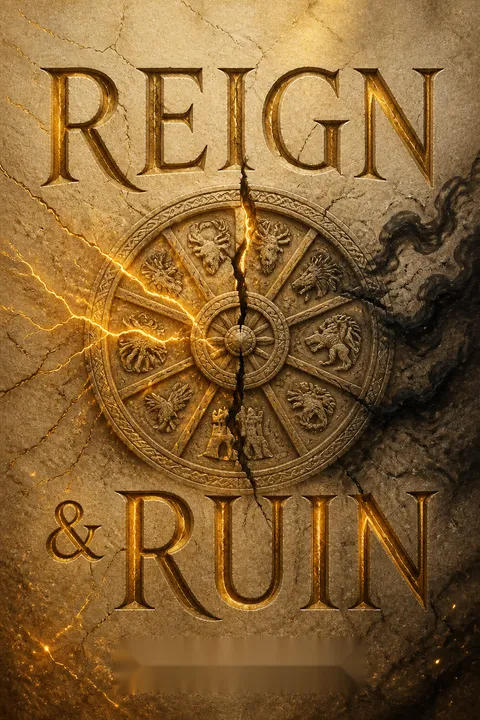
Reign & Ruinis a sweeping fantasy of political intrigue, magic, and romance, but at its heart, it is a story about the necessity of balance—between tradition and change, power and vulnerability, love and duty. J.D. Evans crafts a world where magic is both a gift and a curse, and where the wounds of history shape every choice. The novel interrogates the costs of leadership, the dangers of prejudice, and the courage required to break cycles of fear and violence. Naime and Makram's partnership is revolutionary not just because it crosses boundaries of nation and magic, but because it is built on mutual respect, vulnerability, and the willingness to remake the world together. The restoration of the Circle of Chara'a is both a magical and a moral imperative, a call to heal what is broken and to embrace the possibility of new beginnings. In a world teetering on the edge of ruin, the novel insists that hope, love, and the courage to change are the true sources of power.
Review Summary
Reign & Ruin has garnered widespread praise for its lush Middle Eastern-inspired world, intricate magic system, and compelling slow-burn romance between protagonists Naime and Makram. Reviewers consistently highlight Naime's intelligence and political savvy as standout qualities, alongside Makram's refreshingly respectful and devoted characterization. The book won the SPFBO7 competition. Critics note a slow opening weighted with court politics, and some found the romance predictable or underdeveloped. Overall, most readers consider it an exceptional blend of political intrigue and romantic fantasy.
People Also Read



Characters
Naime Sabri
Naime is the daughter of Sultan Omar Sabri, raised to be both a ruler and a reformer. Intelligent, strategic, and fiercely independent, she is shaped by her mother's ambition and her father's decline. Naime's journey is one of transformation—from a sheltered princess to a queen willing to challenge tradition, confront prejudice, and risk everything for balance and justice. Her relationships—with her father, cousin Ihsan, loyal attendant Samira, and ultimately Makram—reveal her capacity for empathy, resilience, and love. Psychologically, Naime is driven by a need to prove herself in a world that doubts her, and her arc is one of claiming agency, embracing vulnerability, and redefining power.
Makram Attaraya
Makram is the second son of Sarkum's ruling family, a powerful Charah of the Sixth House (destruction magic). Marked by his magic and his outsider status, he is both feared and needed. His relationship with his brother Kinus is fraught with loyalty, resentment, and pain. Makram's journey is one of self-acceptance, as he moves from isolation and self-doubt to partnership and purpose. His bond with Naime is transformative, allowing him to envision a future where his power is not a curse but a gift. Psychologically, Makram is shaped by rejection, a longing for belonging, and a deep sense of duty. His arc is about choosing love and justice over old loyalties.
Kadir (Grand Vizier)
Kadir is the Grand Vizier of Tamar, a fire mage whose charisma and cunning have made him the true power behind the throne. Once a friend to Naime's father, he is now her greatest adversary, determined to control the succession and preserve the old order. Kadir's psychoanalysis reveals a man driven by ambition, resentment, and a need for control. His relationship with his son Cemil is transactional, and his rivalry with Naime is both personal and political. Kadir's arc is one of increasing desperation, as he is outmaneuvered by Naime and ultimately left behind by the turning of the Wheel.
Ihsan Sabri
Ihsan is Naime's cousin and closest confidant, a water mage scarred by trauma and palace intrigue. His legitimacy is called into question, making him both a shield and a liability for Naime. Ihsan's psychological landscape is marked by pain, loyalty, and a longing for peace. He is a mirror for Naime's own struggles, and their relationship is one of mutual support and sacrifice. Ihsan's arc is about finding purpose and acceptance in a world that has always seen him as second best.
Samira
Samira is Naime's closest friend and attendant, a Fifth House mage whose boldness and devotion are both a comfort and a challenge. Her unrequited love for Cemil Kadir adds depth to her character, revealing the costs of loyalty and the pain of loving those who cannot love in return. Samira's relationship with Naime is one of sisterhood, and her arc is about learning to balance duty, desire, and self-worth.
Kinus Rahal
Kinus is Makram's older brother and the Mirza of Sarkum, a fire mage whose insecurity and resentment have made him both a tyrant and a victim. His relationship with Makram is the emotional core of the Sarkum storyline, a bond twisted by history, power, and fear. Kinus's arc is one of tragic decline, as his inability to trust or adapt leads to his downfall and the fracturing of his realm.
Tareck Habaal
Tareck is Makram's loyal companion, a former janissary captain and earth mage. He serves as both a grounding force and a voice of reason, challenging Makram's blind spots and supporting him through crisis. Tareck's psychological profile is marked by pragmatism, loyalty, and a deep understanding of power's costs. His arc is about choosing sides and standing up for what is right, even when it means risking everything.
Cemil Kadir
Cemil is the son of the Grand Vizier, a fire mage whose bitterness and self-destructive tendencies make him both a threat and a victim. His relationship with Samira is fraught with longing and pain, and his rivalry with Makram is a microcosm of the larger conflict between old and new. Cemil's arc is one of wasted potential, as he is used by his father and ultimately defeated by his own choices.
Sultan Omar Sabri
Naime's father, once a powerful Veritor and strategist, is now a shadow of his former self, his mind broken by the cost of his magic. His decline is both a personal tragedy and a political crisis, forcing Naime to step into leadership before she is ready. The Sultan's arc is one of loss, love, and the painful necessity of letting go.
Bashir Ayan
Bashir is the commander of Tamar's palace guard, an earth mage who rose from humble origins through talent and loyalty. He represents the possibility of change and meritocracy in a world dominated by birth and tradition. Bashir's relationship with Naime is one of mutual respect, and his arc is about protecting the future while honoring the past.
Plot Devices
The Wheel and the Houses
The Wheel, with its six Houses of magic, is both the literal source of power and a metaphor for the world's need for balance. Each House represents an element and a set of values, and the absence of the Third and Sixth Houses is both a magical and societal wound. The narrative structure mirrors the Wheel's turning, with cycles of rise and fall, creation and destruction. The restoration of the Circle of Chara'a is both a plot goal and a symbol of healing and unity.
Political Intrigue and Marriage
Marriage is used as a political weapon, with Naime's hand the prize in a struggle for control of Tamar. The council's machinations, Kadir's schemes, and the threat of forced alliance with Sarkum all hinge on who controls Naime's future. The betrothal ceremonies, negotiations, and betrayals are plot devices that reveal character, test loyalties, and drive the story toward its climax.
Dual Protagonists and Alternating Perspectives
The novel alternates between Naime and Makram's perspectives, allowing readers to experience both the internal and external conflicts of Tamar and Sarkum. Their parallel journeys—Naime's struggle for agency and Makram's quest for belonging—converge in their partnership, both romantic and political. This structure deepens the emotional arc and highlights the theme of balance.
War Games and Proving Worth
Makram's challenge to "take" the palace is both a literal and symbolic test, forcing the council to confront their prejudices and Makram to prove his value. The war game is a microcosm of the larger conflict, blending strategy, magic, and personal risk. It also serves as a turning point in the relationship between Naime and Makram, cementing their alliance.
The Circle of Chara'a
The awakening of the Circle is the novel's central magical and thematic device. It represents the possibility of restoring what was lost, healing old wounds, and forging a new future. The ceremony, the binding of Makram as the Sword, and the search for other Chara'a are all plot threads that drive the story forward and set the stage for future conflicts.
Foreshadowing and Symbolism
The novel is rich in foreshadowing—dead trees, broken wheels, and the recurring motif of dawn and dusk all signal the cycles of destruction and renewal. The use of color, House symbols, and magical manifestations reinforce the themes of balance, loss, and hope. The narrative structure itself, with its cycles of rise and fall, mirrors the turning of the Wheel.
Download PDF
Download EPUB
.epub digital book format is ideal for reading ebooks on phones, tablets, and e-readers.








































