
Summary Temporarily Unavailable
This summary is temporarily unavailable and is currently being updated. You can still explore the FAQs and other metadata below.
Plot Summary
War's End, New Beginnings
The story opens in a world just emerging from two centuries of supernatural war. The defeat of Nyx, goddess of night, by Zeus has brought a fragile peace. Humans, angels, demons, vampires, shifters, and gods now coexist, but the scars of conflict remain. The supernatural elite have retreated to Paradise Heights, a floating city, leaving the ruined Phoenix Valley to the humans. Rhea, an orphaned human, struggles to survive in this broken world, feeling abandoned by the powerful beings who promised restoration but delivered only neglect. The sense of hope is tinged with bitterness, as the new order is built on old wounds and deep divisions.
Rhea's Shattered Birthday
On her twenty-second birthday, Rhea's life unravels. She discovers her boyfriend Dante cheating, and in a fit of rage, she vandalizes his car, symbolically severing ties with her past. Alone and embittered, she returns to her tiny apartment, reflecting on a life marked by abandonment and disappointment. The day's events reinforce her belief that she can rely only on herself. Yet, a mysterious letter arrives, summoning her to a mandatory supernatural abilities test—a moment that will upend everything she knows about herself and her place in the world.
The Test of Power
Rhea attends the test at city hall, expecting to be dismissed as ordinary. Instead, the Box of Pandora reacts violently to her touch, unleashing visions of pain and power. The officials are stunned: the box only responds to those with supernatural potential. Rhea is told she must attend Saints Academy in Paradise Heights, the elite school for the gifted, effective immediately. Her world is upended as she's whisked away from everything familiar, forced to confront the possibility that she is not as human—or as powerless—as she believed.
Invitation to Paradise Heights
Escorted by supernatural guards, Rhea is given no choice but to pack her meager belongings and leave Phoenix Valley behind. She is thrust through a magical portal, arriving in the lush, protected grounds of Saints Academy. The contrast between the ruined human world and the opulent supernatural enclave is stark. Rhea is overwhelmed by the beauty and strangeness of her new environment, but also by the sense of being an outsider, a "Terran" among the elite. The academy's magic recognizes her, further confirming her place in this new world.
Saints Academy Arrival
Rhea is introduced to the labyrinthine academy, its magical protections, and its rigid social hierarchy. She meets Noreen, her guide, and is assigned to Agion, the most prestigious dorm. Her arrival is met with suspicion and curiosity, especially from the four most powerful students—the Elites: Xander, Adonis, Khaos, and Zen. Rhea's presence disrupts the established order, and she quickly learns that her every move is watched. The academy is a place of privilege, but also of peril, where alliances and enmities are forged in an instant.
Unwanted Attention, Uncertain Fate
Rhea's first days are a blur of confusion, rules, and subtle hostility. She is targeted by Sélène, the academy's queen bee, and by predatory male students who see her as vulnerable. Her only friend is Harmonia, a kind-hearted angel. The Elites oscillate between indifference, curiosity, and open antagonism. Rhea's status as a "Terran" makes her a target, but her mysterious magical potential also draws dangerous interest. She is forced to navigate a world where power is everything, and trust is in short supply.
The Box of Pandora's Call
The Box of Pandora's reaction to Rhea marks her as unique. She is given a golden dagger, her personal artifact, and told that her magic is more complex than anyone has seen. The artifact is both a symbol of her potential and a source of anxiety—she has no idea what it means or how to use it. The academy's staff and students speculate about her origins, and Rhea is left to wonder if her power is a blessing or a curse. The sense of destiny weighs heavily, as does the fear of what she might become.
New Room, New Rules
Rhea settles into her room in Agion, sharing a bathroom with Adonis, one of the Elites. The dorm is luxurious but feels like a gilded cage. She is bombarded with academy emails, schedules, and expectations. Her interactions with the Elites are fraught with tension—Adonis is provocative, Xander is cold, Khaos is brooding, and Zen is enigmatic. Rhea's independence clashes with the academy's culture of dominance and submission. She is determined to survive on her own terms, but the rules of this world are not made for outsiders.
The Elites and the Outsider
Rhea's presence in Agion upsets the balance among the Elites. Each of the four is drawn to her in different ways, and their interactions are charged with rivalry and desire. Sélène's jealousy turns vicious, leading to public confrontations and sabotage. Rhea's refusal to be cowed earns her both respect and enmity. The Elites' attention is a double-edged sword—protective at times, predatory at others. Rhea is forced to confront her own attraction to them, even as she resists being claimed or controlled.
First Lessons, First Enemies
Academy life is a gauntlet of magical lessons, combat training, and social warfare. Rhea excels in physical training, her orphanage-honed toughness serving her well. But her lack of magical knowledge leaves her vulnerable. She is attacked by Sélène and her cronies, paralyzed and beaten, a brutal reminder of her outsider status. The Elites intervene, but Rhea refuses to be a victim. Her resilience and refusal to submit begin to change the way others see her—and the way she sees herself.
The Claiming and the Challenge
The Elites' interest in Rhea intensifies, each drawn to her strength and mystery. Xander's wolf senses her as his mate, Khaos's vampire instincts are triggered, Adonis's incubi hunger is stoked, and Zen's angelic calm is unsettled. Rhea is caught between attraction and fear, her independence clashing with their possessiveness. The academy's culture of "claiming" women is revealed to be both tradition and power play. Rhea refuses to be anyone's prize, but the pull between her and the Elites becomes impossible to ignore.
Secrets, Scars, and Survival
Rhea recovers from her attack with the help of Harmonia and the Elites, but the scars—physical and emotional—run deep. She learns that the academy's power structure is built on secrets and lies, and that her own past is more tangled than she realized. The Elites begin to open up about their own burdens: Xander's struggle with his wolf, Khaos's hunger, Adonis's family legacy, Zen's need for peace. Together, they form a fragile alliance, united by shared pain and the desire for something more.
The Four and the One
As the Solstice approaches, the Elites and Rhea are drawn together by forces beyond their control. The academy's politics intensify, and the threat of exposure looms. Rhea's connection to each of the Elites deepens, culminating in moments of intimacy and trust. The concept of "soul sealing"—a magical, unbreakable bond—is revealed, and Rhea and Xander accidentally seal their souls during a moment of passion. This act triggers a cascade of magical awakenings, changing the dynamics of the group forever.
The Awakening of Magic
Xander's transformation into his wolf form is the first sign that the soul seal has activated his true power. Rhea's own magic begins to manifest in unpredictable ways—her eyes turn red, glass shatters, and energy crackles around her. The Elites realize that their connection to Rhea is more than physical; it is magical, fated, and dangerous. The academy's staff and the Hexagon council take notice, and Rhea's status shifts from outsider to potential threat. The question of her true heritage becomes urgent.
The Bond Sealed
The bond between Rhea and the Elites deepens as more soul seals are formed—first with Xander, then with Adonis, and the others sense their own connections growing. Each sealing unleashes new powers and new risks. The group must navigate the consequences of their choices, both personal and political. The academy's traditions are upended, and the threat of retribution from the Hexagon grows. Rhea's sense of self is challenged as she becomes both more powerful and more vulnerable.
The Truth About Family
The approach of the Solstice brings the return of families to the academy, and with them, old wounds and new dangers. Rhea's lack of family is a source of shame and suspicion, but the Elites declare her as their own, defying tradition. The revelation that her ex, Dante, is a member of the Hexagon council adds another layer of betrayal and complexity. Rhea is forced to confront the truth about her origins, her parents, and the forces that have shaped her life. The sense of belonging she finds with the Elites is both a comfort and a challenge.
The Solstice Approaches
The academy prepares for the Solstice Ball, a gathering of all the supernatural elite. The event is both a celebration and a test, as alliances are forged and rivalries reignited. Rhea is thrust into the spotlight, her every move scrutinized. The Elites stand by her, but the pressure mounts as the Hexagon and the academy's leadership plot to control or eliminate her. The sense of impending crisis grows, as does the bond between Rhea and her chosen family.
The Gathering Storm
The Solstice Ball becomes the stage for a dramatic confrontation. Rhea's powers surge, the Elites' loyalties are tested, and the academy's secrets are laid bare. Zellus, the academy's head, orchestrates a public spectacle, exposing Rhea's soul seals and her growing power. The Hexagon intervenes, and Rhea is forcibly separated from the Elites. The sense of safety and belonging she has found is shattered, replaced by fear and uncertainty. The storm that has been gathering finally breaks.
Revelations and Ruin
In the aftermath of the Ball, Rhea is brought before the Hexagon and Zeus himself. The truth of her heritage is revealed: she is the daughter of Zeus and Nyx, a child of both light and darkness, the embodiment of the world's greatest hopes and fears. The implications are staggering—Rhea is both the key to peace and the harbinger of chaos. The story ends on a cliffhanger, as Rhea's fate hangs in the balance, her future uncertain, and the world poised on the brink of a new war.
Analysis
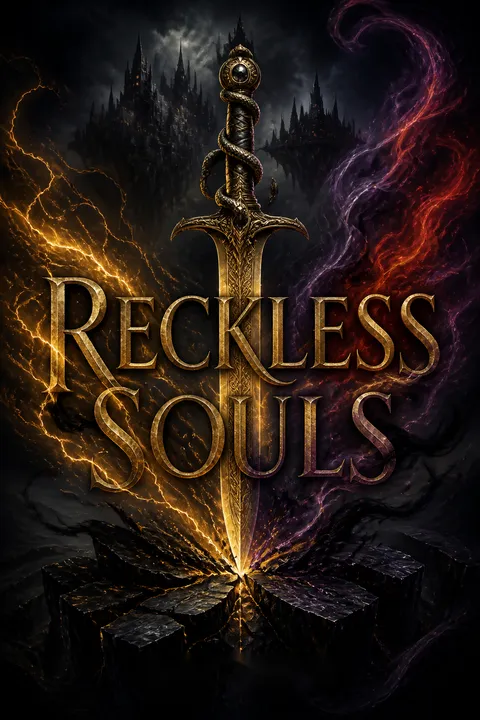
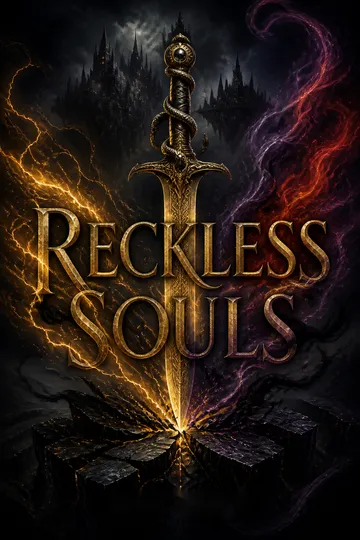
"Reckless Souls" is a dark, sensual, and emotionally charged reimagining of the supernatural academy genre, blending romance, power politics, and coming-of-age themes. At its core, the novel is about the search for identity and belonging in a world that is both wondrous and cruel. Rhea's journey from abandoned orphan to the center of a magical storm is a metaphor for the struggle to claim one's place in a society that is quick to judge and slow to accept. The soul sealing device is both a fantasy of perfect connection and a commentary on the risks and rewards of intimacy—emotional, physical, and magical. The Elites represent different facets of power and vulnerability, each forced to confront their own limitations and desires. The story's treatment of trauma, consent, and agency is nuanced, refusing easy answers or tidy resolutions. The cliffhanger ending—Rhea's revelation as the child of Zeus and Nyx—raises questions about the nature of good and evil, the legacy of violence, and the possibility of forging a new path. In a modern context, the book speaks to the challenges of navigating systems of privilege, the importance of chosen family, and the courage required to embrace one's true self, even when the world is determined to define you by your scars.
Last updated:
Report IssueReview Summary
People Also Read



Characters
Rhea Harrington
Rhea is the heart of the story—a human orphan hardened by abandonment and betrayal. Her tough exterior masks deep wounds and a longing for belonging. She is fiercely independent, quick-witted, and unafraid to stand up for herself, even when outmatched. Psychoanalytically, Rhea's defensiveness is a shield against a world that has always let her down. Her journey is one of reluctant vulnerability: learning to trust, to accept love, and to embrace her own power. Her relationships with the Elites are fraught with tension, desire, and mutual respect, each drawing out different facets of her character. As her magical heritage is revealed, Rhea must reconcile her human pain with her supernatural destiny, becoming both a symbol of hope and a potential threat.
Xander Bishop
Xander is the brooding, stoic leader of the Elites, a shifter destined to be alpha. His gruff exterior hides a deep sense of responsibility and a fear of losing control. He is drawn to Rhea's strength and vulnerability, recognizing her as his mate even before their soul seal. Xander's struggle is between dominance and tenderness, tradition and change. His transformation—both literal and emotional—mirrors Rhea's own journey. Their bond is primal, passionate, and fraught with the tension of two strong wills learning to trust and yield.
Adonis
Adonis is the charming, provocative incubi, son of Hadès and Perséphone, and a god in his own right. He uses humor and sexuality as armor, hiding insecurities about his worth and his family's expectations. His relationship with Rhea is electric, a dance of challenge and surrender. Adonis's journey is one of learning to be vulnerable, to love without manipulation, and to accept that true power lies in connection, not conquest. His soul seal with Rhea unlocks new depths of feeling and responsibility.
Khaos Black
Khaos is the most enigmatic of the Elites, a vampire with a dark past and a fierce sense of loyalty. He is protective, often silent, and struggles with his predatory instincts. Khaos is drawn to Rhea's resilience and her refusal to be cowed. Their connection is built on mutual respect and a shared understanding of pain. Khaos's journey is about mastering his hunger, finding balance between violence and care, and accepting that love can be both a weakness and a strength.
Zen Elias
Zen is the serene, meditative angel, the group's emotional anchor. He projects calm and wisdom, but beneath the surface lies a well of passion and uncertainty. Zen is fascinated by Rhea's chaos, drawn to her unpredictability and her courage. His relationship with her is a study in contrasts—peace and storm, surrender and control. Zen's arc is about embracing the messiness of emotion, stepping out of the role of peacemaker, and fighting for what he wants.
Harmonia
Harmonia is Rhea's first and truest friend at the academy, an angel who offers kindness and support without judgment. She is empathetic, wise, and unafraid to challenge the Elites on Rhea's behalf. Harmonia's presence is a lifeline for Rhea, a reminder that not all power is predatory. She represents the possibility of chosen family and the importance of compassion in a world obsessed with strength.
Sélène
Sélène is the academy's reigning mean girl, threatened by Rhea's arrival and determined to maintain her status. She is manipulative, vindictive, and skilled at weaponizing tradition and rumor. Sélène's antagonism is both personal and symbolic—she embodies the academy's resistance to change and the dangers of unchecked privilege. Her rivalry with Rhea escalates from petty sabotage to outright violence, forcing Rhea to fight for her place.
Dante / Mr. James
Dante is Rhea's ex-boyfriend, whose betrayal sets the story in motion. He is later revealed to be Mr. James, the human representative on the Hexagon council. Dante is a study in duality—charming and deceitful, vulnerable and powerful. His relationship with Rhea is a source of pain and confusion, but also a catalyst for her transformation. Dante's presence in the Hexagon complicates Rhea's journey, blurring the lines between personal and political.
Zellus
Zellus is the enigmatic, controlling head of Saints Academy. He is a master of appearances, using charm and intimidation to maintain order. Zellus is both protector and predator, his true motives always in question. He represents the dangers of institutional power and the ways in which systems can exploit the vulnerable. His obsession with Rhea's potential makes him both a mentor and a threat.
Zeus
Zeus is the architect of the new world order, a figure of awe and fear. He is charismatic, ruthless, and obsessed with legacy. Zeus's relationship to Rhea is the story's ultimate secret—he is her father, and her existence is both a triumph and a threat to his rule. Zeus embodies the paradox of power: the ability to create and destroy, to protect and to oppress.
Plot Devices
Soul Sealing
The concept of "soul sealing" is the story's central plot device—a magical, unbreakable bond formed through intimacy. Soul seals activate latent powers, forge unbreakable connections, and upend the academy's social order. The device is used to explore themes of consent, destiny, and the tension between individual will and collective fate. Each sealing triggers new abilities and new dangers, forcing characters to confront the costs and consequences of true connection.
The Outsider's Perspective
Rhea's outsider status is a key narrative device, allowing the reader to experience the academy's world with fresh eyes. Her skepticism, defiance, and vulnerability ground the story, making the supernatural politics and power plays accessible and emotionally resonant. The device also highlights issues of privilege, exclusion, and the struggle for belonging.
The Box of Pandora
The Box of Pandora serves as both a literal test and a symbolic prophecy. Its violent reaction to Rhea marks her as unique, setting the plot in motion and foreshadowing her true heritage. The artifact she receives is a Chekhov's gun, a mystery to be unraveled as the story progresses. The box's legacy is one of pain and possibility, echoing the story's themes of trauma and transformation.
Academy Politics and Social Hierarchy
The academy's rigid hierarchy, traditions, and rituals are used to explore themes of power, privilege, and resistance. The "claiming" of women, the rivalry between houses, and the pressure to conform are all devices that force characters to confront their own values and desires. The Solstice Ball, the Hexagon council, and the threat of exposure are recurring elements that drive the plot and raise the stakes.
Cliffhanger Ending
The story ends on a dramatic cliffhanger: Rhea's true heritage is revealed—she is the daughter of Zeus and Nyx, a child of both light and darkness. This revelation reframes everything that has come before, setting the stage for new conflicts and deeper questions about identity, destiny, and the nature of power.
Saints Academy Series
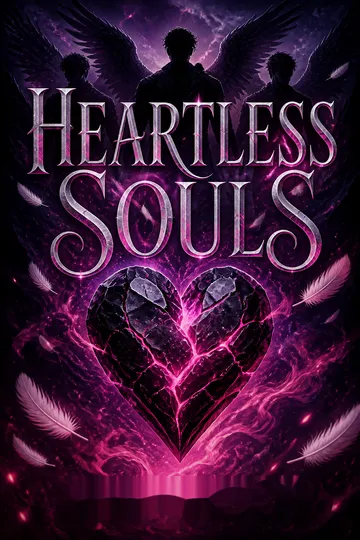
About the Author
Other books by K.C. Kean

Download PDF
Download EPUB
.epub digital book format is ideal for reading ebooks on phones, tablets, and e-readers.








































