
Key Takeaways
1. America's Enduring Ideological Divide
Although this crisis seems unprecedented, the struggle that is tearing the nation apart today is as old as the republic.
A foundational conflict. The current political turmoil in the United States, particularly the rise of the Trump movement, is not a novel phenomenon but rather a recurring manifestation of a deep-seated ideological conflict. This struggle pits the liberal principles of the American Revolution against a persistent antiliberal tradition that has sought to preserve ancient hierarchies and traditional beliefs. This tension has shaped American politics since its inception.
Myth of unity. The idea that all Americans share a fundamental commitment to the nation's founding principles is a comforting but ultimately false narrative. From the very beginning, significant segments of the population rejected the revolutionary assertion that "all men are created equal" and possess "unalienable" rights. Instead, they envisioned America as fundamentally a white, Protestant nation, dedicated to maintaining white, Christian supremacy.
A continuous lineage. A direct historical line connects various antiliberal movements throughout American history to the present day. This lineage includes:
- The slaveholding South of the 19th century
- The post-Reconstruction Jim Crow era
- The second Ku Klux Klan of the 1920s
- The Dixiecrats of the 1940s and '50s
- Joseph McCarthy and the John Birch Society
- The Christian nationalist movement and the New Right
These groups consistently feared that their vision of America was under attack by "elite cabals" and sought to "make America great again" by restoring old hierarchies.
2. The Radical Liberal Founding
The American Revolution and the founding of the liberal republic were a radical departure, and it is the reaction to that radical liberalism which is the source of today’s political and social crisis.
A historical anomaly. The emergence of liberalism, with its emphasis on individual rights and freedoms, was a rare historical aberration, not an inevitable outcome of Western civilization or the Enlightenment. Prior to the American Revolution, no regime in seventeen centuries of Christianity had successfully protected the rights of all individuals equally against the state, church, and community. The American founding was a unique confluence of ideas, events, and geographical conditions that enabled this radical departure.
Defining liberalism. The liberalism born from the American Revolution was primarily focused on protecting fundamental individual rights—life, liberty, and property—against government and community intrusion. These "natural rights" were considered inherent to being human, not granted by rulers or the populace. The government's most crucial purpose was to safeguard these rights, establishing a historically unique form of freedom rather than aiming for broader societal improvement.
A "rights-protection machine." The founders, acutely aware of British oppressions, were obsessed with securing these natural rights, leading them to create a system designed first and foremost to protect individual liberties. This included:
- A written Constitution as a higher authority, constraining even popular legislatures.
- The Bill of Rights, directly responding to British abuses.
- The principle that the Constitution guaranteed, rather than granted, pre-existing natural rights.
This framework, as Lincoln later articulated, was the "silver frame" for the "golden apple" of the Declaration's universal principles, setting in motion a "rights-recognition machine" that would continually challenge existing prejudices.
3. Antiliberalism's Deep Roots: Slavery and White Supremacy
The core and beating heart of this dissenting, antiliberal tradition was the slaveholding South.
A fundamental contradiction. The American founding was marred by a profound contradiction: a nation dedicated to universal natural rights simultaneously protected the institution of slavery. Slaveholders, while participating in the democratic system, were fundamentally antiliberal, rejecting the idea of equal rights as an absurdity. They supported democracy only if it was exclusively white and served to maintain their human "property" and traditional hierarchies.
The South's unwavering stance. Despite military defeat in the Civil War and the passage of the Thirteenth, Fourteenth, and Fifteenth Amendments, the South's antiliberal hostility persisted. White Southerners, including non-slaveholding "common whites," remained determined to restore white supremacy, viewing Northern liberalism as a threat to their way of life. This resolve led to:
- Widespread violence and murder against Black and white supporters of equality.
- New laws disenfranchising Black people and creating systems like chain gangs.
- The formation of groups like the Ku Klux Klan to terrorize freed Black people.
This unwavering commitment ensured that antiliberalism remained a potent force, even after slavery was outlawed.
"Inherited rights" vs. universal rights. Southern leaders, like Jefferson Davis, explicitly rejected the Declaration's universalist principles, arguing instead for "inherited rights" rooted in white Anglo-Protestant tradition and culture. This stance positioned them as "resisting revolution" against Lincoln's revival of radical liberal principles. The Democratic Party, captured by slaveholders in the antebellum years, continued to be the party of institutionalized racism for a century after the war, using both constitutional and extra-constitutional means to preserve white supremacy.
4. The Persistence of Prejudice: Anti-Catholicism and Nativism
For most of the first century after the Revolution, the main victims of the continuing dominance of Protestantism in American politics were Catholics.
Beyond racial prejudice. While slavery and white racism posed the most profound challenge to American liberal ideals, virulent anti-Catholicism was a close second, particularly outside the South. Despite the founders' clear intent to separate church and state, most state governments retained Protestant religious tests for public office for decades. This de facto Protestant hegemony meant that other religious practices were often penalized, reflecting a fundamental antiliberalism that thrived throughout the 19th and well into the 20th centuries.
Catholicism as a perceived threat. Many Americans, including some liberals, viewed Catholicism as inherently antiliberal and antidemocratic due to its theoretical requirement of unquestioning allegiance to the Pope. This perception was exacerbated by:
- Catholic opposition to liberal individualism, often stemming from their persecution during the French Revolution.
- The Catholic Church's historical acceptance of slavery, unlike the growing antislavery wings of major Protestant denominations.
- The influx of Irish and German Catholic immigrants in the 1830s and 1840s, who were often regarded as "subhuman" and not truly "white" by the native Protestant population.
Nativism and immigration. The massive waves of immigration in the 19th century, particularly of Irish Catholics, intensified nativism and white Protestant supremacy. This led to:
- Significant anti-Irish Catholic violence, including the burning of convents and attacks on churches.
- The rise of nativist organizations opposing immigrant voting and office-holding.
- The eventual Chinese Exclusion Act of 1882, the first major restriction on immigration, driven by racism and fears of economic competition.
Despite some temporary softening of anti-immigrant sentiment after the Civil War, the idea of America as a "melting pot" eventually gave way to anxieties about cultural dilution and the need to protect an "Anglo-Saxon Protestant" national character.
5. The 1920s: A High Tide of Antiliberalism
Today the 1920s are remembered for the Jazz Age and three bland Republican presidents, including “Silent Cal” Coolidge. But though the presidents were silent, the 1920s were a high-water mark of antiliberalism, the highest until now.
A conservative tsunami. The 1920s, often romanticized for its cultural shifts, actually represented a peak of antiliberal sentiment in American history, comparable to the present era. The 1920 election, in particular, ushered in an unprecedented nationwide conservative attack on liberalism and progressivism, leading to complete Republican control of the federal government. This period saw a strong desire for a "return to normalcy" after World War I, coupled with growing anxieties about immigration and cultural change.
The Second Ku Klux Klan. The Ku Klux Klan of the 1920s became a powerful symbol of this antiliberal resurgence, expanding its reach beyond the South to become a national organization. Unlike its predecessor, this Klan broadened its targets to include Catholics and Jews, viewing them as part of an international plot to weaken America and corrupt its cities. The Klan's ideology, articulated by Imperial Wizard Hiram Wesley Evans, lamented that the "Nordic American" was becoming a "stranger" in his own land, reflecting a deep-seated fear of cultural displacement.
Respectability and political power. Far from being a fringe group, the 1920s Klan enjoyed broad respectability and significant political influence. Its members were open about their affiliation, and elected officials often spoke at Klan events. This influence translated into concrete policy changes, most notably the Immigration Act of 1924, which explicitly aimed to preserve the "racial preponderance" of the "basic strain of our population." This legislation effectively ended the epoch of open immigration that the founders had initiated, marking a dramatic victory for antiliberal forces.
6. World War II and the Civil Rights Revolution: Liberalism's Resurgence
World War Two dealt the most devastating blow of all to all the different strains of antiliberalism—racial, ethnic, and religious.
A global catalyst for change. The Second World War profoundly shifted the balance of power towards liberalism in America. The nature of the enemy, Nazi Germany, with its explicit promotion of racist eugenics and anti-Semitism, severely discredited similar views that had been popular in the United States. This global conflict forced a re-evaluation of American ideals, making overt expressions of white supremacy and anti-Semitism socially unacceptable.
Reassertion of liberal principles. The war effort and President Roosevelt's articulation of the "Four Freedoms" (including freedom of speech and worship "everywhere in the world") reasserted core liberal principles. This led to:
- A return to the "melting pot" metaphor, fostering a sense of unity among diverse ethnic and religious groups.
- A decline in anti-Catholicism as Irish and Italian Americans fought alongside Protestants.
- Increased opportunities and migration for Black Americans, both in the military and wartime industries, emboldening them to demand an end to discrimination.
These changes laid the groundwork for a powerful civil rights movement, challenging the nation's "American Dilemma" of racial oppression versus its stated ideals.
The Civil Rights Movement's triumph. The post-war era saw a relentless push for civil rights, driven by Black leaders and activists who, through peaceful protest and legal challenges, forced the nation to confront its injustices. Key milestones included:
- Supreme Court rulings against "white primaries" and segregated facilities.
- President Truman's desegregation of the armed forces.
- The landmark Brown v. Board of Education decision in 1954, declaring "separate was inherently unequal."
Despite fierce Southern resistance, the willingness of Black people to risk their lives, coupled with the moral outrage sparked by televised brutality, ultimately compelled federal action, culminating in the Civil Rights Act of 1964 and the Voting Rights Act of 1965, signed by a Southern Democratic president, Lyndon Johnson.
7. The "New" Right's Antiliberal Revival
The leading thinkers of this school, the young William F. Buckley and the more established conservative thinker Russell Kirk, were both antiliberal on the issues of the day, and although Buckley claimed to be fighting against what he and others regarded as the distortions and excesses of modern American liberalism—to stand “athwart history, yelling Stop!”—it was not alleged liberal excesses but the core of American liberalism that he and his colleagues opposed.
Antiliberalism's intellectual resurgence. Despite mid-century liberal assumptions that antiliberal conservatism was dead, a new intellectual movement emerged in the 1950s, led by figures like William F. Buckley. This "New Right" did not aim to conserve liberalism but actively opposed its core tenets. Buckley's National Review, for instance, openly supported the South's resistance to desegregation, arguing that the "white community" was "entitled" to discriminate against Black people as the "advanced race."
Reframing the antiliberal cause. Buckley skillfully repackaged antiliberalism, presenting the fight against desegregation and other liberal advancements as a Burkean defense of tradition against "radical social experimentation" and "ideological abstractions about equality." He linked these efforts to a broader critique of "omnipotent government" and the New Deal, giving antiliberalism a seemingly loftier rationale. This strategy allowed conservatives to unite disparate issues—anticommunism, opposition to big government, and defense of "traditional" (white, Christian) values—into a coherent political program.
Political marginalization and growing discontent. Despite its intellectual vigor, antiliberal conservatism remained politically weak from the 1950s through the 1970s, often marginalized within both parties. Figures like Robert Taft and Joseph McCarthy, while appealing to segments of the antiliberal base, failed to achieve widespread mainstream acceptance. However, millions of Southerners, embittered by federal intervention in civil rights, and religious Protestants, upset by Supreme Court rulings on church-state separation, formed a growing, rancorous antiliberal coalition that would eventually find its voice.
8. Demographic Shifts Fuel Antiliberal Panic
For the first time in the nation’s history, the overwhelming majority of immigrants did not come from Europe.
A changing America. The Immigration Act of 1965, by abolishing national-origins quotas, triggered a third great wave of immigration that dramatically reshaped America's demographic landscape. Between 1965 and 2015, over 58 million new immigrants arrived, with 84% coming from Latin America, East Asia, South Asia, the Middle East, and Africa. This influx significantly altered the nation's ethnic and racial composition:
- The white population declined from 84% in 1965 to 62% by 2015.
- Hispanic and Asian populations grew substantially.
This profound demographic shift ignited powerful currents of white nativism, reminiscent of earlier periods of anti-immigrant sentiment.
The "white nativist" rebellion. The changing demographics fueled anxieties among many white Americans, leading to a resurgence of antiliberal sentiment. Concerns about cultural dilution and the perceived threat to America's "Anglo-Protestant" character, articulated by figures like Samuel P. Huntington, gained traction. This fear manifested in:
- Complaints that states like California were becoming "Mexifornia."
- The rise of conservative organizations opposing immigration.
- The Tea Party movement, which, while addressing economic issues, was clearly stimulated by rising immigration numbers and hostility to a Black president.
Obama's catalytic effect. The election of the first Black president, Barack Obama, served as a powerful catalyst for this antiliberal panic. His presence in the White House triggered a "deep-seated panic" among millions of white voters, who perceived it as a disruption of the "natural order." This led to:
- The re-emergence of overt racism, including birther conspiracies and racially charged rhetoric from figures like Glenn Beck and Newt Gingrich.
- The Tea Party's embrace of white supremacist attitudes, anti-immigrant sentiments, and hostility to the very idea of a Black president.
This period saw a significant shift in white working-class voters from the Democratic to the Republican Party, driven primarily by racial concerns rather than economic ones.
9. Christian Nationalism: A Modern Antiliberal Vision
Today, Dominionism has lodged itself firmly in the Republican Party.
A persistent belief. Despite the founders' clear intent to separate church and state, a significant portion of Americans has always believed the United States was founded as, and should remain, a "Christian nation." This belief, often taking extreme forms, has fueled the modern "Christian nationalist" movement, which seeks to fundamentally alter the nature of the American system.
Dominionist theology. A key driving force within Christian nationalism is the Dominionist theological movement, which asserts that Christ's "dominion" should extend over every aspect of life, including politics. This doctrine, rooted in Calvinist theology and 19th-century Southern Baptist thought, has historically been intertwined with white supremacy. R. J. Rushdoony, a popularizer of Dominionism, argued that the founders aimed to "perpetuate a Christian order" and that the Fourteenth Amendment represented a retreat from this vision. He explicitly opposed democracy as a "heresy," advocating for biblical law as the true law.
A call for "regime change." Christian nationalists, like Senator Josh Hawley, openly articulate an antiliberal vision, claiming America is "the heirs of the revolution of the Bible" rather than the Declaration's principles. They view liberalism as "liberal totalitarianism" that oppresses Christians by preventing them from imposing their views on society. They seek "regime change," aiming to replace America's liberal society with a "Christian commonwealth" that would:
- Preserve order and continuity, supporting religious belief and institutions.
- Promote public morality and forbid its "intentional corruption."
- Acknowledge and renew the "Christian roots of our civilization."
This vision, however, fails to address how doctrinal disputes among Christians would be resolved, or the fate of non-Christians in such a system.
10. Trump: The Antiliberal Savior and Destroyer
The result is that tens of millions of Americans will follow Trump wherever he leads, including to overthrow a system of government that they no longer value and have come to regard as inimical to their interests.
An unlikely leader. Donald Trump, with his shifting political stances and primary ambition for personal gain and brand expansion, initially seemed an improbable leader for a profound ideological rebellion. However, his uncanny ability to tap into and articulate the anxieties of white Christian supremacists and antiliberal conservatives made him their ideal champion. His 2012 "birther" campaign established his identity as a white male supremacist, a persona that resonated deeply with a specific segment of the electorate.
Race, not economics, as the driving force. Trump's success in 2016 was primarily driven by racial concerns, not economic ones. While conventional wisdom often attributes his support to the white working class, his voters were evenly distributed across income levels. Exit polls revealed that voters prioritizing immigration overwhelmingly supported Trump, while those focused on the economy favored Hillary Clinton. Trump successfully mobilized "missing white voters" across all income and education levels by appealing to their fears about declining white cultural influence and promising to "Make America Great Again" by restoring white primacy.
Unprecedented loyalty and a willingness to rebel. Trump's crude, norm-flouting persona, perceived as fearless defiance against the "liberal elite," garnered him extraordinary adoration and complete loyalty from millions of Americans. This devotion is so profound that supporters often prioritize his narrative over objective facts, as seen in their response to the COVID-19 pandemic. This fanatical loyalty has translated into a willingness to defy constitutional and democratic norms, exemplified by the January 6th Capitol attack, where many participants, often middle-class and without ties to extremist groups, explicitly stated their intent to "overthrow the government."
11. The Republican Party's Acquiescence and the Threat to Democracy
The acquiescence of almost the entire Republican Party to the leadership of Trump and his antiliberal followers was, of course, a critical factor in the movement’s triumph.
A hostile takeover. The antiliberal movement's triumph within the Republican Party represents a hostile takeover, fundamentally altering its character. Historically, party leaders have managed to suppress or distance themselves from extreme elements. However, the Republican establishment, particularly during the Clinton and Obama presidencies, increasingly ceded leadership to antiliberal forces, eventually embracing Trump's appeal for political gain. This shift was driven by a combination of ambition, tribal loyalty, and a shared animosity towards Democrats.
Erosion of institutional checks. The founders' system of checks and balances relied on each branch of government jealously guarding its prerogatives. However, under Trump, party unity has largely superseded interbranch rivalry. The Republican Party has become subservient to one man, with congressional leaders increasingly following his directives. Even the Supreme Court, with its growing "originalist" and partisan bent, may prove a "thin reed" against a determined antiliberal executive, raising concerns about its ability to uphold constitutional norms during a crisis.
A "zombie party." The modern Republican Party is described as a "zombie party," where leaders go through the motions of traditional governance while real power is wielded by Trump and his antiliberal movement. This has led to:
- The party actively enabling Trump's efforts to undermine the electoral process.
- Using institutional power to shield Trump and his followers from legal consequences.
- Glorifying January 6th perpetrators as "martyrs and heroes," thereby encouraging future illegal acts.
This transformation means that the Republican Party is no longer merely a hostile opposition but an active participant in a rebellion against the constitutional order, with few dissenting voices remaining within its ecosystem.
12. The Enduring Struggle and 2024's Stakes
If American democracy explodes in this 2024 election year, it will be because Republican voters let it happen.
A perilous crossroads. The current political climate, marked by the sorting of Democrats and Republicans into increasingly hostile and monolithic blocs, mirrors the divisions that preceded the Civil War. If Donald Trump is the Republican nominee and loses the 2024 election, he is almost certain to declare it fraudulent, with the full backing of the Republican Party. This scenario could lead to:
- Widespread refusal to recognize the legitimacy of a Biden second term.
- Several states potentially forming a "pro-Trump confederacy" and defying the federal government.
- The real prospect of national dissolution, as the voluntary compact of the Union collapses without broad popular acceptance of its legitimacy.
The threat of "retribution." Conversely, if Trump wins, the nation faces the threat of him fulfilling his promise of "retribution," using the immense power of the presidency to target political enemies. An administration staffed by antiliberal intellectuals and policymakers could systematically dismantle the liberal democratic system. The question then becomes whether Democrats, who represent half the country and control many populous states, would passively accept such a transformation or declare Trump a clear and present danger to America's liberal institutions.
The call for "republican virtue." The American founding generation, anxious about the longevity of their experiment in self-government, understood that beyond institutional checks, "republican virtue"—a love of freedom, a willingness to compromise, and a commitment to fight for everyone's rights—was essential. Patrick Henry's warning, "Virtue will slumber. The wicked will be continually watching: Consequently you will be undone," resonates today. The current crisis is not merely a partisan fight but a rebellion against the liberal foundations of the nation. The future of American liberal democracy hinges on whether citizens, particularly Republican voters, choose to resist this antiliberal assault or allow it to succeed.
Review Summary
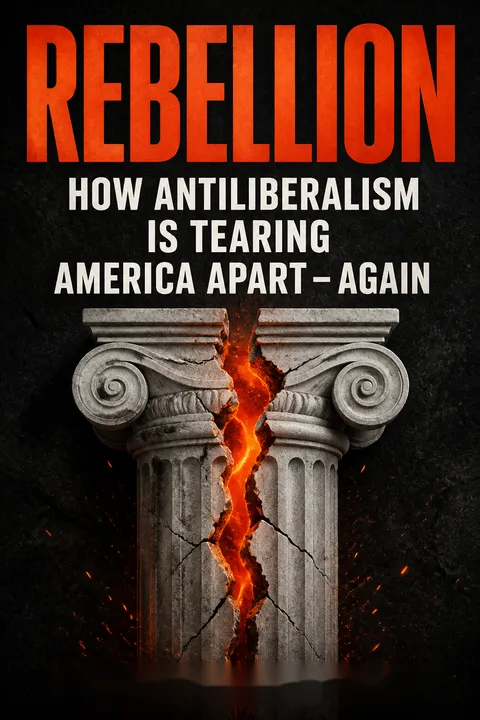
Rebellion by Robert Kagan examines the historical struggle between liberalism and anti-liberalism in American politics, tracing anti-liberal movements from slavery through Reconstruction, Jim Crow, the KKK, McCarthyism, and culminating in today's MAGA movement. Kagan, a former Republican neoconservative, argues that Trump represents a rebellion against founding principles of equal rights and constitutional democracy. Reviewers praise the book's concise historical analysis and urgent warning about threats to liberal democracy, though some criticize oversimplifications. Most find it essential reading for understanding contemporary American polarization and the anti-liberal forces threatening democratic institutions.
People Also Read




About the Author
Other books by Robert Kagan
Download PDF
Download EPUB
.epub digital book format is ideal for reading ebooks on phones, tablets, and e-readers.








































