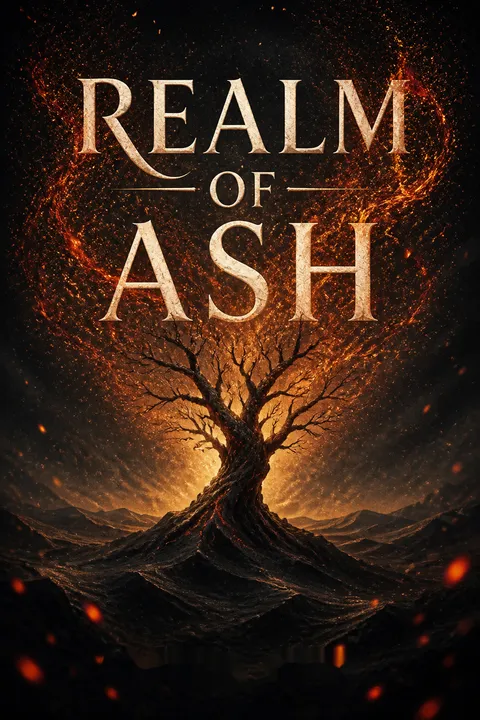

Plot Summary
Widow's Journey Begins
Arwa, recently widowed by the massacre at Darez Fort, travels through treacherous mountain roads to a hermitage for noble widows. Grieving and physically ill, she is haunted by memories and secrets she cannot share. The hermitage, a place of isolation and mourning, promises safety but also forces Arwa to confront her own vulnerability and the expectations of others. She is determined to protect herself, carrying an Amrithi dagger and the burden of her mixed blood, which she must keep hidden in a world that despises her heritage. The journey marks the beginning of Arwa's search for meaning, safety, and a place to belong, even as she fears the darkness within and around her.
Hermitage of Secrets
In the hermitage, Arwa meets a community of widows led by Roshana, Asima, and the enigmatic Gulshera. The women's curiosity and pity unsettle her, as does the constant pressure to perform her grief. Arwa's Amrithi blood, a source of both power and danger, is her secret defense against the supernatural threats she senses. She forms a wary connection with Gulshera, who seems to see through her façade. The hermitage, though outwardly peaceful, is a crucible for Arwa's internal struggles—her anger, her need for control, and her fear of being discovered. The walls are thin, and secrets, both personal and political, begin to surface.
Grief and Suspicion
Arwa's grief is complicated by suspicion from the other widows and her own inability to conform to their expectations. Gulshera's interest in Arwa is not merely maternal; she is gathering information for powerful patrons. Arwa's nights are plagued by fear of daiva—supernatural beings drawn to her blood. She maintains protective rituals, but the sense of being watched grows. The hermitage is not as safe as it seems, and Arwa's isolation is both a shield and a prison. Her interactions with Gulshera become a subtle battle of wills, as each tries to uncover the other's true motives.
The Archery of Anger
Gulshera offers Arwa archery lessons, recognizing her need for an outlet for her anger. Through the discipline of the bow, Arwa begins to reclaim a sense of agency. The lessons are also a pretext for Gulshera to probe Arwa's memories of Darez Fort. Arwa's account is fragmented and guarded, but the trauma is evident. The archery ground becomes a space where Arwa can express her pain and fury without words. Gulshera's mentorship is both a comfort and a challenge, pushing Arwa to confront the darkness within herself and the truth of her survival.
Shadows of Darez Fort
Arwa finally recounts the horrors of Darez Fort: a daiva brought by soldiers unleashed a massacre, driving everyone to madness and violence. Only Arwa survived, protected by her Amrithi blood and a ritual of blood magic. The truth is dangerous—her survival is both a miracle and a curse. Gulshera, serving the imperial family, sees Arwa's blood as a potential key to ending the Empire's growing curse. Arwa is forced to choose between hiding and using her heritage for a greater purpose. The past refuses to stay buried, and the Empire's fate becomes entwined with Arwa's own.
Gulshera's Bargain
Gulshera proposes that Arwa leave the hermitage and serve the Emperor's daughter, Princess Jihan, as a tool in the search for a cure to the Empire's blight. Arwa, recognizing that her secret is no longer safe and that her blood may be the Empire's only hope, agrees. The decision is both a sacrifice and an assertion of agency—she will not be a passive victim of her fate. The hermitage, once a place of refuge, becomes a memory as Arwa prepares to enter the heart of imperial intrigue, carrying with her the weight of her blood and the hope of redemption.
Summoned to the Palace
Arwa and Gulshera travel to the imperial palace, a place of dazzling beauty and perilous politics. The journey is fraught with anxiety, as Arwa must hide her true nature and navigate the protocols of court. Princess Jihan receives her with calculated warmth, making it clear that Arwa's presence is both a kindness and a test. The palace is a world of secrets, alliances, and surveillance. Arwa is drawn into the orbit of power, her role as a widow and a potential savior both shielding and exposing her. The stakes are higher than ever, and every gesture is fraught with meaning.
The Princess's Test
Princess Jihan, shrewd and ambitious, tests Arwa's loyalty and discretion. Arwa is assigned to assist Jihan's half-brother, Zahir, a scholar and illegitimate son of the Emperor, in forbidden research. The palace's rituals and hierarchies are both suffocating and seductive. Arwa must balance the demands of propriety with the necessity of secrecy. Her relationship with Gulshera shifts, as both women are now tools in Jihan's larger game. The test is not only of Arwa's usefulness but of her ability to survive in a world where love, power, and betrayal are inseparable.
Apprentice to Forbidden Arts
Zahir introduces Arwa to the study of the realm of ash—a mystical plane where the memories and knowledge of the dead can be accessed. Their work is heretical, blending scholarship, blood magic, and dreams. Arwa becomes Zahir's apprentice, and their partnership is marked by mutual respect, curiosity, and a growing intimacy. Together, they seek the Maha's ash, hoping to find a cure for the Empire's curse. The risks are immense: the realm of ash is perilous, and the cost of failure is madness or death. Yet, in this forbidden work, Arwa finds purpose and connection.
The Realm of Ash
Through ritual and blood, Arwa and Zahir enter the realm of ash, a place where the boundaries between self and ancestor blur. They encounter echoes of the past—traumas, wisdom, and the legacy of the Maha, the Empire's founder. The realm is both a source of power and a labyrinth of grief. Consuming the ash of the dead grants knowledge but threatens to erase the self. Arwa's Amrithi heritage becomes both a bridge and a burden, as she navigates the dangers of the realm and the demands of the living world. The journey is transformative, reshaping her understanding of identity and destiny.
Consuming the Past
Zahir consumes the ash of his ancestors, gaining memories and insights but risking his sanity. Arwa, too, is changed by the ash—haunted by the voices and pain of the dead. The process is both a blessing and a curse, offering glimpses of the Maha's power and the truth of the Empire's foundation. The knowledge they seek is elusive, and the price is steep. The boundaries between past and present, self and other, begin to dissolve. The quest for a cure becomes a confrontation with the Empire's original sin: the exploitation and destruction of the Amrithi.
The Emperor's Court
The Emperor's failing health throws the court into turmoil. The princes vie for favor, and the question of succession looms. Parviz, the militant son, returns, bringing with him a wave of executions and a crackdown on heresy. Jihan maneuvers to protect her position and her brother Zahir. Arwa witnesses the fragility of power and the cost of ambition. The court is a microcosm of the Empire's decay—rituals masking rot, loyalty masking fear. The fate of the Empire, and of Arwa herself, hangs on the outcome of these deadly games.
The Heir's Return
Parviz's return destabilizes the court, as he challenges Akhtar's claim to the throne and unleashes a campaign against heretics and mystics. The executions are both a spectacle and a warning. Jihan and Gulshera struggle to protect Zahir and Arwa, but the forces arrayed against them are formidable. The palace becomes a place of danger, where every alliance is suspect and every gesture may be fatal. Arwa's role as a tool and a weapon becomes ever more precarious, as the lines between friend and foe blur.
Nightmares Unleashed
The Empire's curse manifests as nightmares—daiva and other horrors—spreading madness and violence. Arwa's blood draws the attention of these forces, and her rituals become both shield and beacon. The boundaries between the mortal world and the realm of ash grow thin. In the House of Tears, a sanctuary for widows, Arwa confronts the nightmare directly, using her knowledge and heritage to protect the innocent. The cost is high, as the ash threatens to consume her. The Empire teeters on the brink, and Arwa's choices become ever more consequential.
The Price of Blood
Arwa's use of blood magic and the ash exacts a heavy toll. She is forced to confront the legacy of the Maha: the Empire's glory was built on the enslavement and destruction of the Amrithi, her own people. The knowledge is both devastating and liberating. Arwa's identity, once a source of shame, becomes her greatest strength. She must decide whether to use her power to save the Empire or to let it fall. The personal and the political are inseparable, and every act of survival is also an act of resistance.
The Maha's Legacy
Arwa, Zahir, and their allies journey to Irinah, the heart of the Empire's magic and the site of the Maha's grave. The desert is both a physical and spiritual trial, forcing them to confront their deepest fears and desires. In the realm of ash, they find the Maha's memory—a legacy of ambition, violence, and broken oaths. The knowledge they gain is both a weapon and a warning. The slow way, the path of healing and shared knowledge, is revealed as the only true cure. The choice is between repeating the sins of the past or forging a new future.
The House of Tears
In the House of Tears, Arwa finds a community of widows who have turned mourning into a form of power. The rituals of grief, the making of grave-tokens, and the sharing of stories become acts of defiance against the Empire's violence. Arwa's connection to the widows, and to her own lost sister, deepens her understanding of the cost of survival. The house becomes a battleground, as supernatural and human threats converge. Arwa's leadership and sacrifice inspire others, transforming grief into hope.
The Caravanserai Curse
Trapped in a caravanserai by soldiers hunting heretics, Arwa and her companions face both human cruelty and the supernatural curse. The fear is contagious, driving people to madness and violence. Arwa's knowledge of the ash and her Amrithi rites become the only defense. She must risk everything—her life, her sanity, her very self—to protect those around her. The nightmare is both a literal and metaphorical enemy, embodying the Empire's legacy of fear and oppression.
The Rite of the Cage
Arwa discovers and performs the Rite of the Cage, an Amrithi ritual that can contain the nightmare and buy time for escape. The act is both a triumph and a sacrifice, as it draws her deeper into the ash and threatens her identity. The power of prayer, ritual, and community is revealed as the true antidote to the Empire's curse. Arwa's mastery of her heritage, once a source of shame, becomes a beacon of hope for others. The cost is high, but the possibility of healing and change emerges.
The Path to Irinah
Arwa, Zahir, and their followers travel to Irinah, pursued by enemies and haunted by the past. The journey is both physical and spiritual, as they gather allies and confront the realities of the Empire's decay. Along the way, Arwa teaches others the rites and knowledge she has gained, spreading hope and resistance. The desert is a place of testing and revelation, where the boundaries between worlds blur and the possibility of transformation becomes real.
The Maha's Ash
In the heart of Irinah, Arwa and Zahir enter the realm of ash to seek the Maha's memory. The experience is overwhelming—a confrontation with the Empire's original sin and the seductive power of sacrifice. Zahir, faced with the choice to consume the Maha's ash and become his heir, hesitates. Arwa, recognizing the danger of repeating the past, intervenes. Together, they choose a different path: to share knowledge, to heal slowly, and to reject the logic of sacrifice. The future is uncertain, but the possibility of a new world is born.
The Choice of Sacrifice
Arwa and Zahir refuse to repeat the Maha's crime of sacrificing the few for the many. Instead, they choose the slow, difficult path of healing—spreading knowledge, teaching rites, and building community. The act is both a personal and political revolution, breaking the cycle of violence and exploitation. The cost is real: Arwa is wounded, and both she and Zahir are forever changed by their journey through the ash. But in their refusal to be tools or sacrifices, they claim agency and hope.
The Breaking of Chains
Captured and brought before the new Emperor, Parviz, Arwa and Zahir face execution. Arwa, drawing on the full power of her ash and her heritage, unleashes the daiva and breaks their chains. She curses Parviz, prophesying the end of his reign and the rise of a new order. The act is both vengeance and liberation, a final rejection of the Empire's logic of domination. Arwa and Zahir escape, wounded but alive, carried by the daiva's wings into the unknown.
The Return of the Sister
In the aftermath, Arwa is reunited with her long-lost sister, Mehr, who survived the Maha's service and now leads an Amrithi clan. The sisters confront the pain of their separation and the choices their parents made to protect them. Arwa finds a new sense of belonging and purpose among the Amrithi, reclaiming a heritage that was nearly lost. The wounds of the past are not erased, but the possibility of healing and forgiveness emerges.
A New World Dreamed
Arwa and Zahir, forever changed by their journey, choose to walk the slow path of healing together. They commit to sharing knowledge, teaching rites, and building alliances with the Hidden Ones and the Amrithi. Their love, forged in suffering and defiance, becomes a source of strength. The Empire remains wounded, but a new world is possible—one built on truth, community, and the refusal to sacrifice the few for the many. The story ends with Arwa, no longer a tool or a victim, but a leader and a dreamer, walking into the future with hope.
Analysis
Tasha Suri's Realm of Ash is a profound meditation on trauma, heritage, and the possibility of healing in a world built on violence and exclusion. Through Arwa's journey from isolated widow to empowered leader, the novel explores the costs of survival—personal, political, and spiritual. The realm of ash, with its recursive logic and haunting echoes, serves as both a metaphor for trauma and a literal site of transformation. The novel rejects the logic of sacrifice and purity that underpins the Empire, advocating instead for the slow, collective work of healing, knowledge-sharing, and resistance. The relationships between women—sisters, mentors, widows—are central, offering models of solidarity and care that challenge the Empire's hierarchies. The love story between Arwa and Zahir, forged in suffering and defiance, is both a personal and political revolution, embodying the novel's faith in the possibility of new worlds. Realm of Ash is ultimately a story about reclaiming agency, embracing complexity, and daring to dream beyond the boundaries of the past.
Review Summary
Realm of Ash is praised for its beautiful writing, rich worldbuilding, and complex characters. Readers appreciate the exploration of themes like colonialism, identity, and grief. The slow-burn romance between Arwa and Zahir is widely enjoyed. While some found the pacing slow, most felt the story was compelling and emotionally resonant. Many readers consider it an improvement over the first book, praising Suri's ability to create a standalone story that builds on the previous novel's foundation.
People Also Read




Characters
Arwa
Arwa is a young noblewoman marked by trauma, loss, and the burden of her Amrithi heritage. Her journey from widowhood and isolation to agency and leadership is the novel's emotional core. Arwa's psyche is shaped by grief, anger, and a desperate need for control in a world that seeks to erase her. Her Amrithi blood, both a curse and a source of power, forces her to navigate the dangers of both the supernatural and the political. Through her relationships—with Gulshera, Zahir, and her lost sister—Arwa learns to embrace her complexity, transforming her pain into purpose. Her arc is one of self-acceptance, resistance, and the forging of a new identity beyond victimhood.
Zahir
Zahir is the Emperor's unacknowledged son, a brilliant and lonely scholar obsessed with forbidden knowledge. His partnership with Arwa is both intellectual and deeply emotional, as they become apprentices and equals in the pursuit of a cure for the Empire's curse. Zahir's psyche is marked by a tension between duty and self-preservation, idealism and pragmatism. He is haunted by the legacy of his mother, a Hidden One, and the expectations of his imperial blood. Zahir's willingness to sacrifice himself is both a strength and a danger, and his ultimate choice to reject the Maha's path is a testament to his growth and humanity.
Gulshera
Gulshera is a widow of high status, serving as both protector and informant. Her relationship with Arwa is complex—part maternal, part political, always tinged with ambiguity. Gulshera's loyalty to Princess Jihan and the imperial family is both genuine and self-serving. She is a master of courtly games, but her affection for Arwa is real, if constrained by duty. Gulshera embodies the compromises and costs of survival in a world where women's power is always contingent. Her eventual betrayal is both a personal and political tragedy, highlighting the limits of loyalty in a corrupt system.
Princess Jihan
Jihan is the Emperor's daughter, a woman of intelligence, ambition, and ruthlessness. She uses Arwa and Gulshera as tools in her quest to save the Empire and secure her own power. Jihan's love for her brother Zahir is genuine, but always secondary to her sense of duty. She is both a victim and perpetrator of the Empire's logic of sacrifice, willing to use and discard others for the greater good. Jihan's arc is a study in the costs of power and the dangers of believing that ends justify means.
Parviz
Parviz is the Emperor's son, a man of violence, zeal, and unyielding certainty. His rise to power is marked by executions, purges, and the suppression of heresy. Parviz is both a product and an agent of the Empire's rot, embodying its worst impulses. His conflict with Zahir and Jihan is both personal and ideological—a struggle over the meaning of power, legitimacy, and the future. Parviz's inability to adapt or empathize ensures his eventual isolation and doom.
Mehr
Mehr, Arwa's elder sister, is a survivor of the Maha's service and a leader among the Amrithi. Her absence haunts Arwa, shaping her sense of loss and longing. Mehr's survival and reunion with Arwa represent the possibility of healing and the reclamation of a stolen heritage. She embodies resilience, forgiveness, and the power of family ties that endure beyond trauma.
Eshara
Eshara is a guardswoman and member of the Hidden Ones, tasked with protecting Arwa and Zahir. Her loyalty is hard-won, and her skepticism of Arwa's worthiness is a recurring challenge. Eshara's pragmatism and courage are essential to the group's survival. Her arc reflects the complexities of service, trust, and the negotiation of identity in a world where allegiances are always shifting.
Sohal
Sohal is a young soldier who aids Arwa and Zahir, eventually revealed to share Amrithi blood. His journey mirrors Arwa's own—struggling with shame, secrecy, and the longing for connection. Sohal's willingness to learn and his loyalty to Arwa represent the possibility of solidarity and the building of new communities across lines of difference.
The Daiva
The daiva are ancient, shape-shifting spirits connected to the Amrithi by blood and oath. They embody both danger and protection, serving as arbiters of balance in the world. Their relationship with Arwa is fraught—she is both their kin and their charge, and their interventions are both blessing and curse. The daiva symbolize the power and peril of heritage, the necessity of respect, and the limits of human control over the supernatural.
The Maha
The Maha is the legendary founder of the Empire, whose death unleashed the curse that threatens its survival. In life, he was both a visionary and a monster, building the Empire's glory on the enslavement and destruction of the Amrithi. His legacy is both seductive and toxic, offering the promise of salvation at the cost of endless sacrifice. The Maha's memory is a battleground for the novel's central questions: Who deserves to survive? What is the price of power? Can the sins of the past be redeemed?
Plot Devices
The Realm of Ash
The realm of ash is the novel's central plot device—a liminal space where the living can access the memories, knowledge, and traumas of the dead. It is entered through ritual, blood, and sleep, and is both a source of wisdom and a site of danger. The realm blurs the boundaries between self and ancestor, past and present, offering both the possibility of healing and the risk of annihilation. It serves as a metaphor for trauma, heritage, and the inescapable influence of history. The structure of the novel mirrors the realm's logic: nonlinear, recursive, and haunted by echoes.
Blood and Ritual
Blood—specifically Amrithi blood—is both a literal and symbolic source of power. Rituals involving blood protect against daiva, open the realm of ash, and mark the boundaries of identity. The use of blood magic is both a survival strategy and a political act, challenging the Empire's logic of purity and exclusion. The tension between hiding and wielding this power drives much of the plot, as Arwa moves from shame to mastery.
Foreshadowing and Recursion
The novel is rich in foreshadowing, with early hints of the true nature of the Empire's curse, the significance of the daiva, and the cost of consuming ash. Recurring motifs—dreams, nightmares, grave-tokens, and the image of the tree—create a sense of inevitability and interconnectedness. The narrative structure, with its returns to trauma and memory, reinforces the theme that healing is a slow, recursive process.
Political Intrigue and Succession
The succession crisis at the heart of the Empire is both a backdrop and a catalyst for the characters' journeys. The machinations of Jihan, Parviz, and the court reflect the larger questions of legitimacy, sacrifice, and the cost of survival. The personal is always political, and the fate of the Empire is inseparable from the fate of its most vulnerable members.
The Slow Way
The novel ultimately rejects the logic of quick fixes and grand sacrifices, advocating instead for the slow, difficult work of healing, knowledge-sharing, and community-building. The slow way is both a plot device and a philosophical stance, offering an alternative to the cycles of violence and exploitation that have defined the Empire. It is a call to imagine new worlds, even in the face of overwhelming darkness.
Download PDF
Download EPUB
.epub digital book format is ideal for reading ebooks on phones, tablets, and e-readers.








































