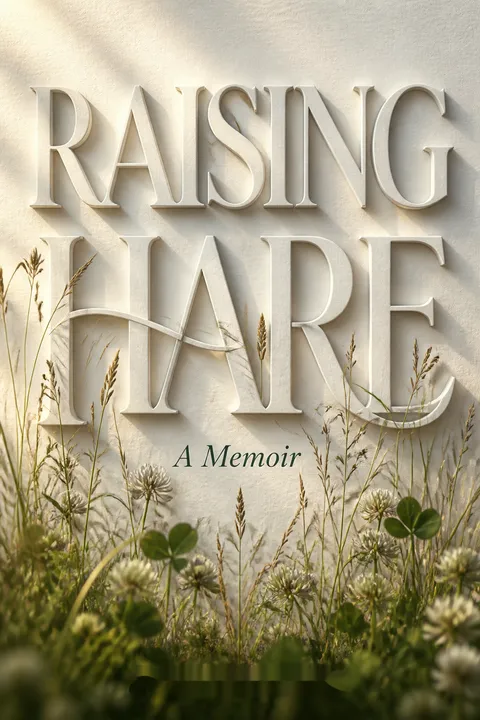

Key Takeaways
1. An Unexpected Rescue Ignites a Journey of Discovery
Acting on instinct, and still uncertain about the right course of action, I decided that I would take the leveret home until nightfall, when I would return it to where I had found it.
A chance encounter. During an arctic winter, the author, accustomed to a fast-paced urban life, found a tiny, abandoned leveret in a field. Despite initial hesitation and a conservationist's blunt warning that it would likely die, she brought the creature home, driven by instinct and a faint memory of her mother's way with animals. This impulsive act set in motion a profound personal transformation.
Initial struggles. The author faced immediate challenges in caring for the wild newborn, which was no larger than her palm and weighed less than an apple. Lacking knowledge about hares, she relied on her sister's advice for kitten milk and improvised a feeding method with a cosmetics pipette. The leveret's initial unsteadiness and the fear of causing its death weighed heavily on her, highlighting her inexperience with animal care.
A new purpose. Confined to the countryside by the pandemic, the author found herself unexpectedly tethered to the fragile life of the leveret. Her previous life of international crises and constant travel seemed distant as she grappled with the simple, yet demanding, needs of a wild creature. This forced slowing down, initially a source of restlessness, began to open her eyes to the subtle rhythms of the natural world around her.
2. Hares: A Study in Unique Biology and Elusive Behavior
Whereas baby rabbits are born blind, pink and hairless in a nest underground, leverets must fend for themselves from birth, living in the open.
Distinct species. The author quickly learned that hares are fundamentally different from rabbits, despite common confusion. Key distinctions include:
- Size: Hares are generally twice the size of rabbits.
- Birth: Leverets are born fully furred, open-eyed, and capable of movement, unlike blind, hairless rabbit kits.
- Habitat: Hares live in shallow depressions called "forms" in the open, while rabbits dig subterranean warrens.
- Behavior: Hares are solitary and rely on camouflage and speed; rabbits are social and bolt into burrows.
Survival adaptations. Hares possess remarkable adaptations for survival in diverse, often harsh, environments. Their agouti coloring provides excellent camouflage, breaking up their outline. Their nearly 360-degree vision allows them to detect predators from all directions, and their powerful hind legs enable incredible speed (50-80 km/h) and vertical leaps, essential for evading threats.
Unique biological traits. Beyond their physical prowess, hares exhibit fascinating biological phenomena. The author discovered "superfetation," where a female hare can carry two litters of different maturities simultaneously, contributing to their reputation for fertility. This complex reproductive strategy underscores their constant struggle for survival against high mortality rates, especially among leverets.
3. Dispelling Myths: The Hare's True Nature of Dignity and Calm
The simplicity and regularity of the leveret’s habits increasingly came to seem at odds with the ambivalent picture of hares that emerges from literature, folklore and mythology, each of which brims with examples of the supposedly flighty, rash, erratic and spooky behaviour of hares.
Challenging stereotypes. Through daily observation, the author found the leveret's behavior contradicted centuries of folklore that depicted hares as mad, flighty, or even malevolent "witch-hares." Instead, she witnessed a creature of profound calmness, meticulous cleanliness, and predictable routines, which defied the "mad as a March Hare" caricature.
A creature of habit. The leveret displayed an unwavering sense of order and self-possession. It meticulously groomed itself, kept its sleeping forms immaculate, and adhered to a consistent daily schedule of rest and activity. Its quiet, watchful demeanor and ability to blend seamlessly into its surroundings spoke of an innate dignity and self-reliance, rather than skittishness.
Playful and intelligent. Far from being merely timid, the hare exhibited intelligence, curiosity, and a playful spirit. It engaged the author in games of chase, demonstrating dazzling agility and speed. Its ability to learn and adapt, such as waiting by the gate for entry or navigating the house, revealed a creature far more complex and responsive than commonly believed, capable of forming unique connections.
4. The Profound Vulnerability of Wild Hares to Human Impact
The intensification of agriculture has been described as the ‘superfactor’ leading to the decline of the European hare population.
Constant threats. Hares, despite their adaptations, are incredibly vulnerable. For the first weeks of life, leverets cannot outrun predators and rely solely on camouflage and stillness, making them easy targets for foxes, hawks, and other animals. The author's constant vigilance against these natural threats underscored the precariousness of their existence.
Agricultural devastation. Modern farming practices pose the greatest threat to hare populations. The use of large machinery, frequent mowing, hedge removal, and winter-sown crops lead to:
- Direct mortality: Hares are routinely crushed or shredded by harvesters.
- Habitat loss: Hedges and wildflower margins, vital for shelter and food, are destroyed.
- Food scarcity: Reduced plant diversity and chemical spraying diminish their food supply.
- Displacement: Ploughing turns fields into "wastelands" from a hare's perspective, forcing them into dangerous open areas.
Human infrastructure. Beyond farming, human development creates "barrier effects" that fragment habitats and increase mortality. Roads, traffic, and light pollution disrupt nocturnal animals' navigation and lead to fatal collisions. The author witnessed the tragic aftermath of a potato harvest, finding dead hares and injured leverets, highlighting the unseen costs of human efficiency.
5. A Unique Bond: Trust Forged in Coexistence, Not Domestication
The fact that the leveret appeared to feel safe with me seemed a tacit approval from the wildest of the wild.
Respecting wildness. The author consciously avoided domesticating the hare, refusing to name it or treat it as a pet. Her goal was always to prepare it for freedom, fostering a relationship based on mutual respect for its wild nature. This approach allowed the hare to retain its instincts while feeling secure in the author's presence.
Unspoken understanding. The bond that formed was unique, characterized by the hare's choice to return to the house and its subtle expressions of trust. It would sleep near the author, allow itself to be carried when injured, and even give birth to leverets inside the house, demonstrating an extraordinary level of comfort and acceptance. This connection was not about control, but about shared space.
A delicate balance. The author learned to adapt her own behavior to accommodate the hare's needs, such as maintaining quiet, avoiding strong scents, and leaving doors open. This constant adjustment, initially an inconvenience, became a source of unexpected pleasure. The hare's presence was a "tacit approval from the wildest of the wild," making the author feel accepted in her environment.
6. Nature's Rhythms Reshape a Life: A Shift in Priorities
I realised now that I had toughened myself up to cope with a demanding work environment, adopting a persona and way of working that was in some respects exhausting and alien to me.
A profound shift. The experience of raising the leveret profoundly altered the author's life, shifting her priorities from a demanding, adrenaline-fueled urban career to a deeper appreciation for nature and quiet rhythms. She found herself drawn to the land, observing its subtle changes and the lives of its inhabitants, a stark contrast to her previous detachment.
Rediscovering connection. The hare's presence fostered a new attentiveness to the natural world, transforming the author's perception of her surroundings. She began to:
- Identify birds and plants by name.
- Observe seasonal passages and ecological interactions.
- Appreciate the intricate details of the landscape.
- Feel a greater sense of connection to local wildlife.
Personal transformation. The hare's calm, dignified presence acted as a silent catalyst for introspection. The author recognized how her own life had become frenetic and detached, and through the hare, she found a path to:
- Greater patience and gentleness.
- A desire for a more settled, purposeful existence.
- A re-evaluation of what truly brings satisfaction and meaning.
- A willingness to adapt her habits for the sake of coexistence.
7. The Fierce Maternal Instinct and Cycle of Renewal
Raising leverets, I came to understand, is an exclusively female activity.
Secret births. The author was privileged to witness the hare's maternal instincts firsthand, including two instances of her giving birth. The first litter of three leverets was discovered in the garden, while the second, a pair, was born in absolute secrecy and silence inside the author's office, behind a curtain. This act of trust was astounding, highlighting the hare's comfort in the author's home.
Dedicated care. Contrary to common assertions of "absentee parentism" in hares, the mother hare displayed fierce protection and diligent care for her young. She:
- Fed them multiple times a night, more frequently than scientific literature suggested.
- Vigorously cleaned them and their hiding places.
- Chased off predators like crows with fearless lunges.
- Disciplined her leverets, pushing them back into cover during daylight hours.
Life's continuous flow. The leverets' growth and eventual departure into the wild symbolized the continuous cycle of nature. The author observed their development from fragile newborns to agile juveniles, practicing the leaps and movements essential for survival. The bittersweet departure of each litter underscored the transient beauty of wild life and the enduring hope of renewal.
8. A Plea for Coexistence: Creating Space for Wildlife in a Human World
My wish now is for an environment that is safer for hares and other creatures of the land, wherever they may live: not at the expense of humans, but in balance with our priorities.
Beyond individual rescue. The author's personal journey with the hare evolved into a broader understanding of conservation. She realized that individual acts of rescue, while meaningful, are insufficient without systemic changes to protect wildlife habitats and mitigate human impact. Her experience fueled a desire for a more balanced coexistence.
Practical conservation. Inspired by the hare, the author took concrete steps to improve the local environment:
- Planting nearly a thousand new native saplings to extend hedgerows.
- Restoring a silted-up pond to create new wetland habitat.
- Leaving long grass uncut to provide shelter and food for wildlife.
- Advocating for wider wildflower margins and set-aside land in farming.
A new paradigm. The book concludes with a powerful call for a shift in human perspective, urging readers to recognize the intrinsic value of wild animals and the benefits of creating space for them. It challenges the notion that progress must come at nature's expense, suggesting that coexistence enriches human existence and fosters a deeper appreciation for the "simplicity and intricacy, fragility and glory, transience and beauty" of the natural world.
People Also Read










Download PDF
Download EPUB
.epub digital book format is ideal for reading ebooks on phones, tablets, and e-readers.








































