
Key Takeaways
1. Human Nature is a Complex Biocultural Synthesis
When we think about humans it is a mistake to think that our biology exists without our cultural experience and that our cultural selves are not constantly entangled with our biology.
Intertwined realities. Humans are "naturenurtural" beings, a true synthesis and fusion of biology and culture, not a simple addition of two separate parts. Our physical bodies, shaped by evolutionary history and genetics, are always experienced and perceived within a cultural context. This means that our biological structures and cultural selves are perpetually entangled, influencing each other throughout our lives.
Developmental journey. From birth, humans require social contact to develop fully; isolation leads to severe damage or death. Our unique genetic makeup interacts with our mother's health, birth environment, and myriad factors to shape our bodies and minds. This biocultural development means that what we consider "normal" or "common sense" is rarely an innate biological core, but rather the result of lifelong experiences and their interaction with our physical and cognitive development.
Potential vs. performance. Being human is messy, characterized by a wide range of potential outcomes rather than a single, fixed nature. Our bodies, schemata (worldviews), and cultural inheritance constrain the ways in which we can envision, construct, and experience these paths. Traits like adult height, disease resistance, or even our views on parenting are products of complex relationships that meld biological, cultural, historical, and evolutionary factors into a single, dynamic process.
2. Myths Shape Our Perceptions and Limit Understanding
Myths are most effective and dangerous when they remain unrecognized for what they are.
Common sense narratives. Myths about human nature, such as those concerning race, aggression, and sex, function as powerful stories that become ingrained as common sense. They provide ready-made explanations for observed behaviors and societal symbols, allowing us to navigate daily life without constant critical analysis. This subconscious acceptance makes them incredibly resilient, even in the face of contradictory evidence.
Impact on society. These pervasive myths create a false set of accepted "truths" that can lead to significant societal problems. For instance, the belief in biological races fuels intolerance and inequality, while the idea of an innate violent beast within us encourages fear and acceptance of abuse. Similarly, myths about fundamental differences between men and women hinder intersexual relations and perpetuate inequality, limiting individual potential.
Ignorance is not bliss. A lack of accurate knowledge or information about human behavior, biology, and history inhibits our ability to understand ourselves and others. This ignorance makes us susceptible to manipulation and prevents us from recognizing relevant information or applying it to make informed choices. Challenging these myths requires breaking free from simplistic views and delving into the complex realities of human existence.
3. Evolution is a Dynamic Process, Not a Deterministic Blueprint
Most importantly, current aspects of our bodies and behavior that are affected by evolution are not more "natural" or correct than other parts of our lives and thoughts.
Beyond "survival of the fittest." Evolution is often misunderstood as a linear path towards perfection or a brutal competition where only the "best" survive. In reality, evolution is simply change over time—a scientific fact. The theory of evolution, explaining how this change occurs, involves complex processes like:
- Mutation (generates new genetic variation)
- Gene flow (movement of alleles between populations)
- Genetic drift (random changes in allele frequencies)
- Natural selection (environmental pressures shaping variation)
These processes often result in "good enough" adaptations rather than perfect ones.
Genes are not destiny. DNA provides basic codes and signals for development, but it is not a deterministic blueprint. The relationship between genes and traits is highly complex, involving polygenic and pleiotropic effects, developmental processes, and environmental influences. While genes are integral to life, they do not solely dictate who we are or how we behave; rather, they are part of a dynamic system.
Organisms shape their world. Modern evolutionary theory includes concepts like niche construction and gene-culture coevolution, recognizing that organisms, especially humans, actively modify their environments. This means that cultural innovations and behaviors can influence evolutionary pressures, leading to ecological and symbolic inheritance alongside genetic inheritance. Evolution is an ongoing, interactive process, not a fixed endpoint for humanity.
4. Race is a Social Construct with Real-World Biological Impacts
Race is not biology, but race affects biology, experience, and social context.
No biological races. Despite popular belief, scientific evidence unequivocally shows that humans are not divided into discrete biological races like "black," "white," or "Asian." Studies of various biological markers demonstrate that the vast majority of human genetic diversity exists within populations, not between them. For instance:
- All human populations share extremely similar genetic makeup.
- There is nearly twice as much genetic variation within Africa than among all populations outside the African continent.
- Blood types, immune systems, and cranial variations do not cluster into traditional racial categories.
Visible differences are superficial. While we observe visible differences in skin color or facial features, these are superficial and do not correlate with distinct biological groupings. Skin color, for example, is an adaptation to UV light intensity, varying by latitude, not by "race." Forensic classifications of skulls into racial categories are based on averages and ranges within specific populations, not on fundamental biological distinctions, and do not apply globally.
Racism's tangible effects. Although race lacks biological validity, it is a powerful social construct with profound real-world consequences. Societal perceptions of race and associated racism lead to inequalities in health, economic status, and educational attainment. For example, studies show that racial discrimination and perceived skin color correlate with higher rates of hypertension in certain groups, demonstrating how social realities can literally "get under the skin" and impact biology.
5. Human Aggression is a Potential, Not an Innate Evolutionary Adaptation
Humans are not naturally aggressive, but they do have a great potential for aggression and violence.
Aggression is complex. The myth of an innate, aggressive human nature, particularly in males, is pervasive but misleading. Aggression is not a single, uniform trait but a spectrum of behaviors, from mild agonism to extreme violence. Its expression is highly context-dependent, influenced by individual experience, social situations, and physiological responses like the "fight or flight" system, rather than a predetermined "killer instinct."
No evolutionary mandate for violence. Comparative studies of primates show that severe, lethal aggression is rare, and even in chimpanzees, aggression patterns are highly variable and context-specific. The human fossil record provides little evidence of widespread warfare or inter-individual lethal aggression prior to 10,000-12,000 years ago, suggesting that organized violence is a relatively modern cultural phenomenon, not a deep evolutionary heritage.
Cooperation, not conflict, defines us. Contrary to the "selfish gene" narrative, humans are "hyper-cooperators," relying extensively on reciprocal positive interactions and complex cooperative behaviors for survival and success. Studies refute the notion that selfishness is a primary human characteristic; instead, cooperation is fundamental to human societies, enabling everything from daily interactions to large-scale social structures, and even warfare itself.
6. Men and Women are Biologically More Similar Than Different
The gender similarities hypothesis holds that males and females are similar on most, but not all, psychological variables.
Shared biological blueprint. Despite popular "Mars and Venus" narratives, men and women are fundamentally more biologically similar than different. Both sexes develop from the same embryonic tissues, share the same hormones (though in varying levels and patterns), and possess the same basic physical structures. Differences, such as pelvic shape or average body size, are variations on a common theme, with significant overlap between individuals.
Brain similarities. The human brain, often cited as a source of profound sex differences, is remarkably similar between men and women. While there are average size differences (men's brains are larger, consistent with larger body size) and minor structural variations, exhaustive research has found no consistent, replicated differences that mandate distinct behavioral or cognitive patterns. The idea of "male" or "female" brains is largely unsupported by neuroscience.
Beyond reproductive roles. The notion that reproductive biology dictates vastly different male and female natures (e.g., "cheap sperm" vs. "costly eggs") is an oversimplification. Human reproduction involves complex social dynamics and cooperative parenting, with both sexes investing significantly. While biological differences exist, they do not preordain distinct behavioral strategies or justify the wide array of gendered expectations.
7. Gender Roles and Sexual Norms are Culturally Shaped, Not Hardwired
Monogamy in humans is a social contract, not a biological reality.
Gender as a social construct. While sex refers to biological differences, gender encompasses the social, cultural, and psychological constructions imposed upon these differences. Gender roles, defining expected behaviors and perceptions for men and women, are acquired through biocultural development and vary significantly across societies and over time. These roles, rather than innate biological mandates, shape how individuals express masculinity or femininity.
Love, pair bonds, and marriage. Humans possess an evolved capacity for "affect hunger"—the drive to form multiple, strong social bonds, which we call love. This system facilitates social and sexual pair bonds, but these are not necessarily exclusive, lifelong, or tied to marriage. Marriage itself is a cultural institution, often serving to legitimize reproduction, inheritance, and social order, and its connection to romantic love and monogamy is a relatively recent historical development.
Diverse sexualities. Human sexuality is incredibly complex and diverse, deeply intertwined with cultural context. While there are some average differences in self-reported sexual interest or activity between men and women, these are often influenced by gendered expectations and societal norms, rather than fundamental biological wiring. The idea that men solely desire sex and women solely desire relationships is a simplistic myth, contradicted by the wide range of human sexual behaviors and attractions.
8. Busting Myths Requires Critical Thinking and Integrated Knowledge
Busting myths about human nature means breaking the stranglehold of simplicity in our view of nature and forces us to realize that being human is very complicated.
Challenge assumptions. To effectively dismantle pervasive myths about human nature, one must actively challenge common sense and question deeply ingrained beliefs. This involves moving beyond passive acceptance of popular narratives and instead engaging in critical thinking, seeking out diverse information, and being prepared to confront uncomfortable truths that contradict personal schemata.
Embrace complexity. Understanding humanity requires integrating knowledge from a wide array of disciplines—biology, anthropology, psychology, history, and more. Simplistic, one-size-fits-all explanations are insufficient and often perpetuate misinformation. By embracing the "naturenurtural" reality of human existence, we can develop a more nuanced and accurate understanding of our similarities, differences, and potentials.
The power of knowledge. Actively engaging in myth-busting has profound implications for society. Recognizing that race is a social construct, aggression is a potential, and sex differences are often overstated allows us to address inequalities, understand violence, and foster more inclusive relationships. This commitment to informed understanding empowers us to make better decisions and work towards a more just and equitable future.
Review Summary
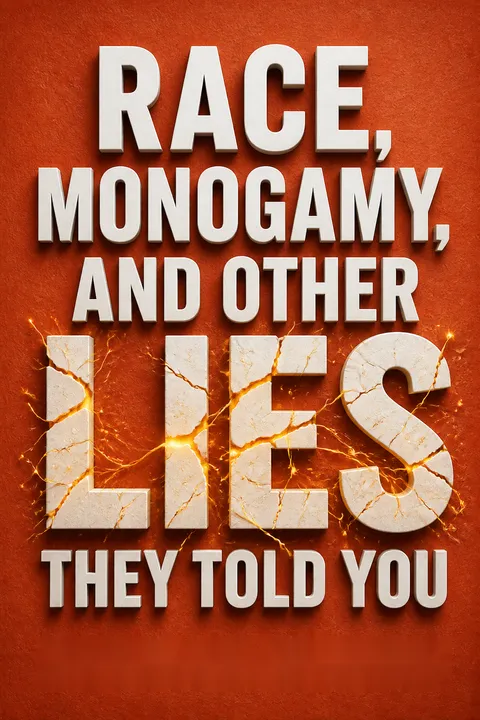
Race, Monogamy, and Other Lies They Told You receives mixed reviews averaging 3.72 stars. Readers appreciate the well-researched content debunking myths about race, aggression, and sex differences, calling it important and enlightening. However, many criticize the writing as repetitive, tedious, and overly long-winded, with excessive setup chapters before addressing main arguments. Some find it too elementary for advanced readers, while others value its accessibility for laypeople. Critics note perceived author bias and formulaic "myth busting" declarations. The dense academic style frustrates some, though others recommend it as essential reading for understanding human nature and societal biases.
People Also Read




Download PDF
Download EPUB
.epub digital book format is ideal for reading ebooks on phones, tablets, and e-readers.








































