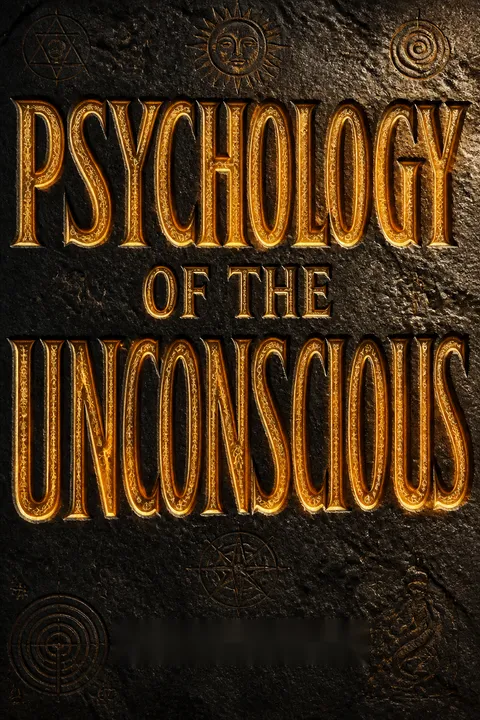

Summary Temporarily Unavailable
This summary is temporarily unavailable and is currently being updated. You can still explore the FAQs and other metadata below.
Key Takeaways
1. Libido: Life's Universal Energy, Not Just Sex
He conceived this longing, this urge or push of life as something extending beyond sexuality even in its wider sense.
Beyond Freud's definition. Dr. C.G. Jung diverged from Professor Freud's initial, narrower conception of libido as primarily sexual hunger. Instead, Jung re-imagined libido as a broader, hypothetical energy of life, akin to Bergson's élan vital. This cosmic energy manifests in all human activities, encompassing not only sexuality but also fundamental physiological and psychological processes.
Energetic concept of life. This expanded view posits libido as a dynamic, mobile force that fuels growth, development, hunger, and all human interests. It is a living power instinctively used in automatic bodily functions, with its quality of mobility and change allowing humans to consciously direct and utilize it in desired ways. This energetic perspective enables a more comprehensive understanding of human behavior, extending beyond purely sexual motivations.
Interest and its flow. When an individual loses interest in work or surroundings, it signifies a withdrawal of libido from that object, making it seem less attractive, though the object itself remains unchanged. Conversely, exaggerated interest indicates an over-investment of libido, often leading to depletion elsewhere. Psychoanalysis, therefore, aims to uncover the hidden reasons for these shifts in libido, revealing the underlying dynamics of psychic energy.
2. Two Modes of Thought: Directed vs. Phantasy
Thus we have two forms of thinking: directed thinking and dream or phantasy thinking.
Conscious, logical thought. Human thinking operates in two distinct modes. The first is "directed thinking," which is logical, intensive, and deliberate. It is reality-oriented, adjusting to actual conditions, and primarily uses language and speech concepts for communication. This mode is effortful and exhausting, serving to create innovations, adaptations, and to act upon the external world.
Spontaneous, symbolic phantasy. The second mode is "dream or phantasy thinking," which is spontaneous, effortless, and image-based. It turns away from reality, fulfilling subjective wishes and desires, and is unproductive in terms of external adaptation. This mode is akin to dreaming, where images and feelings crowd upon each other, creating a world as one wishes it to be, rather than as it truly is.
Historical evolution of thought. Directed thinking is a relatively modern acquisition, developed through centuries of education and dialectical training, as seen in scholasticism. Earlier cultures, however, were more attuned to phantasy thinking, which manifested in mythology and art. This suggests that while our capacity for logical thought has grown, the more ancient, symbolic mode of thinking remains a fundamental part of the human psyche.
3. Myths and Dreams: The Unconscious Speaks in Symbols
The myth is a fragment of the infantile soul-life of the people, and the dream is the myth of the individual.
Symbolism as universal language. Dreams are symbolic, not literal, revealing hidden meanings from the unconscious. This ancient idea, often dismissed by literal-minded science, holds psychological truth: dreams arise from an unknown part of the mind and concern unfulfilled desires. This symbolic language is not unique to individuals but is a universal human phenomenon.
Archaic echoes in the psyche. The fantastic, mythological thinking of antiquity, the thought processes of children, and the dreams of modern adults all share a similar archaic character. This suggests a profound connection between ontogenesis (individual development) and phylogenesis (species development), implying that the infantile mind and dreams re-echo prehistoric and ancient modes of thought.
Collective unconscious narratives. Myths are essentially "mass-dreams of the people," sustained fragments of humanity's infantile soul-life. They do not merely recount old events but perpetually rejuvenate and express common human thoughts and conflicts. This intimate connection between dream psychology and myth psychology demonstrates that the age which created myths thought fantastically, much as we do in our dreams today.
4. The Incest Problem: A Psychological Longing for Rebirth
The fundamental basis of the "incestuous" desire does not aim at cohabitation, but at the special thought of becoming a child again, of turning back to the parent's protection, of coming into the mother once more in order to be born again.
Beyond literal interpretation. The "incest problem" in Jungian psychology is not primarily a literal sexual desire for a parent. Instead, it represents a profound, regressive longing to return to the protective, undifferentiated state of early childhood, to be psychologically reborn from the mother. This yearning is a powerful, often unconscious, drive to escape the challenges and responsibilities of adult life.
The "terrible mother" archetype. This regressive pull towards the mother-imago, while offering comfort and security, can also become a "terrible mother" figure. This aspect of the mother-imago paralyzes the individual's energy and enterprise, acting as a psychological resistance against adaptation to reality. The fear of death and the desire to avoid life's struggles often manifest as a longing to retreat into this maternal abyss.
Mythological expressions of rebirth. Myths of sun-gods sinking into the maternal sea to be reborn, heroes enclosed in chests or trees for a "night journey," and figures emerging from caves or furrows all symbolize this deep human desire for rebirth. These narratives provide symbolic pathways to evade literal incest while fulfilling the underlying psychological need for renewal and immortality, transforming the mother into a symbolic source of new life.
5. The Hero's Journey: Sacrificing Infantile Bonds for Individuation
The hero, as we have sufficiently shown, is the infantile personality longing for the mother, who as Mithra sacrifices the wish (the libido), and as Christ gives himself to death both willingly and unwillingly.
Breaking free from the mother-imago. The hero myth, exemplified by figures like Hiawatha, Siegfried, or Christ, symbolizes the individual's arduous struggle to achieve independence from the "mother-imago." This journey involves confronting and overcoming the regressive pull towards the protective, yet ultimately stifling, infantile bond with the mother.
The sacrifice of the infantile self. The hero's battles with monsters, dragons, or even divine figures often represent the internal conflict against the "terrible mother" or the incestuous libido. This struggle culminates in a symbolic "self-sacrifice" – the renunciation of childish desires and the comfortable, irresponsible state of infancy. This act is not literal death but a psychological transformation.
Rebirth into independent life. Through this sacrifice, the hero is "reborn" into a new, independent existence, gaining strength and wisdom. This process, often depicted as a descent into the underworld followed by a triumphant return, signifies the liberation of libido from its infantile fixations and its redirection towards mature, reality-adapted goals. The hero's journey is thus a blueprint for individuation.
6. The Dual Mother Imago: Nurturer and Destroyer
The mother-imago, however, possesses its power solely and exclusively from the son's tendency not only to look and to work forwards, but also to glance backwards to the pampering sweetness of childhood, to that glorious state of irresponsibility and security with which the protecting mother-care once surrounded him.
The complex maternal archetype. The "mother-imago" is a powerful, often contradictory, unconscious representation of the mother. It embodies both the nurturing, life-giving aspect (the "good mother") and a terrifying, devouring force (the "terrible mother"). This duality arises from the individual's deep-seated longing for the security of childhood, which, if unchecked, can become a paralyzing resistance to adult life.
Projection of internal conflict. When an individual struggles to adapt to reality or to separate from infantile dependencies, the mother-imago can be projected onto external figures or even nature itself. This projection often manifests as fears, anxieties, or a sense of being pursued by a malicious force. In reality, this "malicious pursuer" is the individual's own regressive tendency, the libido striving backward towards the mother.
Mythological manifestations. This dual nature of the mother is vividly portrayed in myths:
- Nurturing: The heavenly cow, the tree of life, the fertile earth, the city of Jerusalem.
- Devouring/Terrifying: The whale-dragon, the Sphinx, Lamia, Hecate, Tiamat.
These symbols illustrate how the unconscious processes the profound influence of the maternal principle on human development, representing both the source of life and the potential for stagnation or destruction.
7. Sacrifice and Sublimation: Transforming Primal Urges into Culture
The best liberation is through regular work.
Redeeming bound libido. The process of sacrifice, particularly the "sacrifice of the infantile personality," is crucial for psychological liberation. It involves consciously renouncing the regressive longing for the mother and the associated infantile bonds that hinder adult development. This act frees the libido, which would otherwise remain fixed in incestuous ties, for higher, more productive purposes.
Work as a path to sublimation. Regular, free, and purposeful work serves as a primary means of sublimation. It provides a "drainage" for the unconscious, redirecting libido away from slothful dreaming and regressive fantasies. Unlike compulsory labor, free work allows the individual to channel their psychic energy into creative endeavors, fostering adaptation to reality and personal growth.
Cultural and religious parallels. This concept of sacrifice is deeply embedded in religious and cultural narratives. From ancient animal sacrifices to the self-sacrifice of Christ, these acts symbolize the transformation of primal, often destructive, impulses into socially and spiritually valuable forms. The goal is not mere renunciation but the active redirection of life's energy to build a mature, reality-adapted personality and contribute to the collective.
8. The Unconscious: A Reservoir of Collective Human History
From all these signs it may be concluded that the soul possesses in some degree historical strata, the oldest stratum of which would correspond to the unconscious.
Beyond individual experience. The unconscious is not merely a repository of repressed personal memories but a vast, historical stratum of the psyche. It contains differentiated remnants of earlier psychological functions, reflecting the collective psychological development of humanity. This "generally diffused" aspect of the unconscious binds individuals to their race and connects them with the peoples and psychologies of the past.
Archaic thought patterns. Introversion and regression, particularly in psychoses, can reactivate these archaic mental kinds, leading to the production of fantasies that bear unmistakable traces of mythological thought. What appears as original or individual in these productions often mirrors the creations of antiquity, demonstrating the enduring influence of these deep historical strata.
The foundation of true psychology. While conscious content is highly individualized and focused on adaptation, the unconscious reveals universal, archetypal patterns. Therefore, the unconscious, surpassing the individual in its generality, is the primary object of a true psychology. It offers a stable viewpoint from which to understand the mechanisms of ancient cultures and the fundamental, timeless conflicts of the human soul.
9. Religious Symbols: Bridges to the Unconscious and Moral Autonomy
I think belief should be replaced by understanding, then we would keep the beauty of the symbol, but still remain free from the depressing results of submission to belief.
Symbolism as a psychological necessity. Religious symbols, though often misleading from a literal standpoint, are psychologically true. They serve as vital bridges, allowing individuals to process and transform primal libido, particularly the incest wish, into higher, spiritual aims. This unconscious transformation, while culturally significant, can lead to an "ethically worthless pose" if it remains unexamined belief rather than conscious understanding.
The evolution of religious thought. Early Christianity, for instance, provided a necessary moral restraint against the brutality of antiquity by channeling powerful animal impulses into spiritual devotion. However, as society evolved, the original meaning and necessity of these symbols became lost, leading to religious doubt and a disconnect between belief and actual human nature.
Towards moral autonomy. The goal is not to discard religious symbols entirely but to replace blind belief with understanding. By consciously recognizing the psychological roots and transformative power of these symbols, individuals can liberate libido bound in infantile fixations. This path leads to moral autonomy, where actions are driven by knowledge and free will, rather than unconscious compulsion or delusion, allowing for a richer, more integrated personality.
Last updated:
Report IssueReview Summary
Psychology of the Unconscious receives mixed reviews averaging 4.16/5 stars. Readers appreciate Jung's extensive mythological scholarship and his divergence from Freud, particularly broadening libido beyond sexuality to encompass general psychic energy. Many praise his exploration of archetypes, collective unconscious, and symbolic interpretation of dreams and myths. However, critics note the work is dense, repetitive, and poorly organized, sometimes reading more like comparative mythology than psychology. Some find Jung's connections speculative and his writing style exhausting. The book analyzes Miss Frank Miller's visions extensively, drawing parallels across world mythologies to explore unconscious symbolism and the sun-hero archetype.
People Also Read



About the Author
Carl Gustav Jung was a Swiss psychiatrist and psychotherapist who founded analytical psychology. He developed influential concepts including extraversion/introversion, archetypes, the collective unconscious, and synchronicity. Jung viewed individuation—integrating conscious and unconscious while maintaining their autonomy—as central to human development. Though a practicing clinician who considered himself a scientist, Jung explored Eastern and Western philosophy, alchemy, astrology, sociology, literature, and arts. His work influenced psychiatry, religion, anthropology, and related fields. A prolific writer, many works were published posthumously. The Myers-Briggs Type Indicator derives from his psychological types theory. Jung's interest in mysticism and the occult sparked debate about his scientific credibility, yet his impact on popular psychology, spirituality, and New Age movements remains immense.
Other books by C.G. Jung

Download PDF
Download EPUB
.epub digital book format is ideal for reading ebooks on phones, tablets, and e-readers.








































