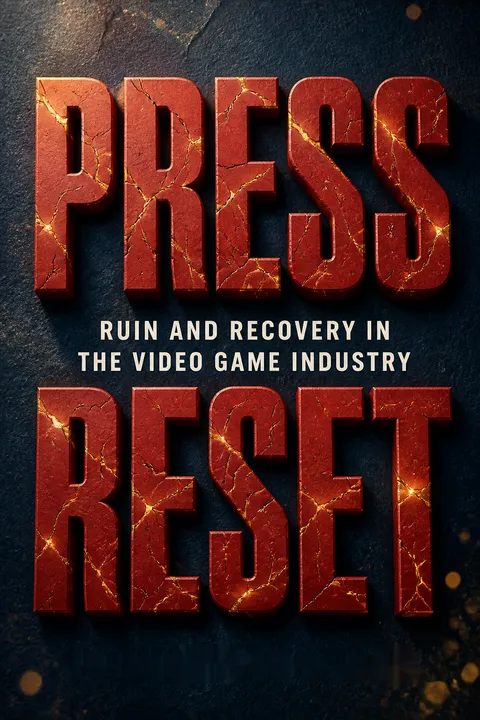

Key Takeaways
1. The Video Game Industry's Pervasive Instability and Human Cost
Volatility has become the status quo.
Constant churn. The video game industry, despite its astronomical success and multi-billion dollar revenues, is plagued by profound job instability. Developers frequently face mass layoffs and studio closures, often with little to no warning, leading to a constant feeling of anxiety among workers. This environment forces many to accept that stable employment is the exception, not the rule, despite the illusion of full-time careers offered by major publishers.
Personal toll. This instability takes a significant human toll, forcing developers to frequently uproot their lives, move across the country, and rebuild their social networks. The emotional impact of losing jobs, seeing projects canceled, and having friendships torn apart without notice is immense, leading to feelings of PTSD-like anxiety and a pragmatic acceptance of constant job mobility. Many developers, like Sean McLaughlin, learn to keep their desks barren, ready to pack up at a moment's notice.
Broken promises. Unlike Hollywood's contract-based system, the video game industry often sells the promise of long-term careers, only to discard employees once a project is finished or financial targets shift. This creates a unique tension where developers invest years into learning proprietary tools and building team chemistry, only to find that financial decision-makers prioritize short-term gains over long-term human capital.
2. The Creative-Business Conflict: A Root Cause of Volatility
The conflict between game developers trying to make art and game publishers trying to make a profit is as old as video games themselves.
Art vs. profit. At the heart of the industry's problems lies an inherent tension between creative vision and financial imperatives. Developers, driven by artistic ambition and the desire to "find the fun," often clash with publishers focused on fiduciary growth for shareholders, leading to disagreements over budgets, schedules, and creative direction. This fundamental disconnect frequently results in projects being mismanaged, overhauled, or canceled.
Publisher priorities. Publicly traded companies like Electronic Arts (EA) prioritize exponential profit growth, meaning simply making a profit isn't enough; profits must continuously increase. This often leads to:
- Demands for mass-market appeal over niche artistic vision.
- Pressure to incorporate popular, revenue-generating features like multiplayer or microtransactions.
- Reluctance to fund games that don't promise blockbuster sales, even if critically acclaimed.
Developer frustration. Veterans like Warren Spector often express resentment towards business development teams, who they feel undervalue artistic integrity and long-term creative investment. Spector's experience at Origin and Ion Storm, where his critically acclaimed but not explosively profitable games were sidelined, exemplifies this ongoing struggle, forcing him to constantly seek new avenues for creative freedom.
3. Auteur Directors: The Double-Edged Sword of Vision
The way I create video games, it’s more like sculpture.
Visionary leadership. Auteur directors, like Ken Levine of Irrational Games, can drive studios to create masterpieces such as BioShock and BioShock Infinite. Their singular vision and uncompromising artistic standards push boundaries and result in critically acclaimed games that redefine the medium. This intense focus on creative excellence often attracts top talent eager to work on groundbreaking projects.
Turbulent development. However, this auteur approach often comes at a high cost, characterized by:
- Frequent overhauls: Levine's "sculpture" method meant constantly scrapping and reworking large chunks of the game, leading to months of wasted effort for designers and artists.
- Prolonged crunch: The iterative, often chaotic development process necessitated extensive overtime, burning out staff.
- Communication challenges: Directors might struggle to articulate their evolving vision, causing frustration among teams trying to execute on shifting ideas.
Studio's fate tied to one person. The strong association of a studio with a single creative director can make it vulnerable. When Ken Levine decided to pursue smaller, more experimental projects, Irrational Games, despite its success, was shut down because 2K executives believed it couldn't exist without him. This highlights how individual whims, even those of a genius, can dictate the fate of an entire organization and its dozens of employees.
4. Publisher Demands: The Relentless Pursuit of Exponential Growth
We’re thinking about how we make this a more broadly appealing franchise, because ultimately you need to get to audience sizes of around five million to really continue to invest in an IP like Dead Space.
Blockbuster mentality. Major publishers like EA operate with a "home run or bust" mentality, demanding that games achieve exponential sales growth to justify continued investment. Even critically acclaimed games like Dead Space, which sold millions, were deemed insufficient if they didn't meet ambitious, often unrealistic, sales forecasts. This pressure forces studios to constantly chase larger audiences, often at the expense of their established identity or creative focus.
Monetization mandates. To ensure continuous revenue streams beyond initial sales, publishers push for "games as a service" models, incorporating features like:
- Multiplayer modes: Often shoehorned into single-player franchises (e.g., Dead Space 3, The Bureau: XCOM Declassified).
- Microtransactions: Especially prevalent in mobile gaming, where free-to-play models rely on in-game purchases and timers (e.g., Dungeon Keeper mobile).
- Online passes: A tactic to combat the used-game market, forcing players to pay extra for features if they bought a pre-owned copy.
Identity crisis. These mandates often lead to genre whiplash and an identity crisis for studios. Visceral Games, known for Dead Space, was forced to pivot to a Battlefield shooter, then a Star Wars action-adventure, leading to staff attrition and internal conflicts. This constant shifting of focus prevents studios from building consistent expertise and a stable workforce, ultimately contributing to their demise.
5. The Perilous Path of Ambitious Start-ups and External Funding
I always saw 38 as having questionable odds of success from a business standpoint.
High stakes, high risk. Starting a game studio, especially one with ambitions to challenge industry giants like World of Warcraft, is inherently risky. Curt Schilling's 38 Studios, despite lavish funding and top talent, exemplified the dangers of:
- Inexperienced leadership: Schilling's lack of business and game development experience led to unrealistic timelines and extravagant spending.
- Over-reliance on a single funding source: The $75 million Rhode Island loan, while massive, was quickly depleted by a burn rate of over $4 million a month and unexpected costs like employee relocation.
- Lack of transparency: Management's failure to communicate financial troubles to employees left them blindsided when paychecks stopped and the studio collapsed.
Political entanglement. The 38 Studios saga also highlighted how external factors, particularly political ones, can doom a company. Governor Lincoln Chafee's public comments about the studio's financial struggles spooked potential investors and publishers, effectively "scorching the earth" and making it impossible for 38 Studios to secure additional funding. This demonstrated that even a substantial loan guarantee couldn't protect a company from public scrutiny and political maneuvering.
Devastating consequences. The collapse of 38 Studios left hundreds of employees unpaid, without health insurance, and often saddled with mortgages they thought the company would cover. This catastrophic failure, driven by a combination of ambition, mismanagement, and external pressures, serves as a stark warning about the fragility of even well-funded ventures in the volatile game industry.
6. Crunch Culture: An Insidious Norm with Lasting Scars
I’ve never crunched on a game as much as I crunched on BioShock Infinite.
Industry-wide expectation. Crunch, the practice of working excessive overtime, is deeply ingrained in the video game industry, often presented as a necessary evil for delivering high-quality games. While sometimes explicitly mandated, it frequently manifests as an insidious social pressure, where employees feel compelled to work long hours to keep up with peers or prove their dedication. This culture is perpetuated by:
- Unrealistic schedules: Projects are often planned with insufficient time, making crunch inevitable.
- Leadership by example: Managers who work excessive hours inadvertently set a precedent for their teams.
- Fear of job loss: Developers believe working harder makes them "layoff-proof" in a volatile industry.
Personal sacrifices. The toll of crunch is immense, impacting developers' physical and mental health, and straining personal relationships. Zach Mumbach's experience at Visceral Games, where he missed crucial early months of his son's life due to Battlefield Hardline crunch, highlights the profound personal sacrifices made. Many developers, like Joe Faulstick, eventually leave the industry due to unsustainable work-life balance.
Self-imposed pressure. Even in independent studios, where developers theoretically have more control, crunch can persist. The Dodge Roll Games team, working on Enter the Gungeon, experienced self-imposed crunch driven by a desire to not let each other down and to maximize the success of their own project. This demonstrates that while external mandates are a major factor, internal drive and passion can also lead to unhealthy work habits.
7. The Unacknowledged Closures and Their Lingering Impact
That’s actually one of the 2K Marin alumni’s serious gripes, that the studio never got officially shut down.
Semantic obfuscation. Publishers sometimes avoid officially announcing studio closures, instead using euphemisms like "reallocation of creative resources" or "staff reductions." This semantic game, as seen with 2K Marin, allows parent companies to avoid negative press and maintain a facade of stability, but it deeply impacts the former employees. The lack of official acknowledgment denies developers the public recognition and support that often follows a closure.
Erosion of identity. For developers, a studio is more than just a workplace; it's a collective identity and a source of pride. When 2K Marin was effectively dissolved, and its Australian counterpart was absorbed under its name, it stripped employees of their professional identity and the sense of having built something unique. This unacknowledged demise leaves a lingering sense of injustice and frustration among those who poured years of their lives into the studio.
Missed opportunities. The lack of a clear narrative around a studio's end can also hinder future opportunities for its former staff. Public closures often generate industry-wide support, job fairs, and social media campaigns to help displaced workers. When a studio "disappears" quietly, its alumni miss out on this crucial network of assistance, making their transition to new roles even more challenging.
8. Leaving the AAA Treadmill: The Allure of Indie Autonomy
I’m tired of working eighty-hour weeks so that people like Patrick Söderlund can get a new car.
Seeking control. Many veteran developers, disillusioned by the volatility, crunch, and corporate politics of big-budget ("AAA") studios, choose to leave the "treadmill" and pursue independent game development. This path offers the promise of creative autonomy, direct ownership over their work, and freedom from the relentless pursuit of exponential growth dictated by publishers.
- Warren Spector: Left Ion Storm to found Junction Point for creative freedom.
- Dodge Roll Games: Formed by ex-Mythic developers, seeking control over their game's design and monetization.
- The Molasses Flood: Founded by ex-Irrational staff, aiming for a sustainable, smaller-scale operation.
Financial sacrifice for creative freedom. Going indie often means significant financial sacrifices, including lower pay and living off savings, but for many, the trade-off is worth it for creative satisfaction. The rise of digital distribution platforms (Steam, Xbox Live, App Store) and crowdfunding (Kickstarter) has made independent development more viable, allowing small teams to reach players directly without needing massive publishers.
New challenges. While offering freedom, indie development presents its own set of challenges:
- Financial precarity: Limited budgets and the struggle to secure funding.
- Marketing difficulties: Competing for attention in a crowded market without a publisher's marketing budget.
- Self-imposed crunch: The passion for one's own project can still lead to overwork.
Despite these hurdles, the ability to make games on their own terms remains a powerful draw for many.
9. Outsourcing and Specialization: A Model for Stability
I think the future is going to be: there’s a small team in charge of the creative vision, and then all of the other work is outsourced.
Specialized services. The rise of specialized outsourcing houses, like Disbelief, offers a potential solution to the industry's volatility. These companies focus on specific technical services—such as bug fixing, engine work, or porting games to new platforms—rather than developing original games. This model provides stability because:
- Diversified client base: They are not dependent on the success of a single game or studio.
- Constant demand: Technical challenges and new platforms ensure a continuous need for their expertise.
- Reduced risk: A contract ending doesn't mean the company shuts down, as other projects are always available.
Efficient resource allocation. This model allows core creative teams to remain small and focused on vision, hiring specialized teams only when needed. This prevents the costly cycle of hiring hundreds of full-time employees for peak production, only to lay them off once a project is complete. It also encourages clients to be more judicious with technical requests, as every hour of work is billed.
Improved worker conditions. Companies like Disbelief demonstrate that this model can also foster better working conditions:
- Transparent salaries: Eliminating pay secrecy and providing clear promotion criteria.
- Anti-crunch policies: Prioritizing work-life balance and offering compensatory time off for overtime.
This approach suggests a future where game development is a network of specialized, stable companies rather than a few monolithic, volatile studios.
10. Unionization: A Potential Solution for Worker Protection
We love the games these people make, but you can’t kill people in the process.
Addressing systemic issues. Unionization is increasingly discussed as a viable solution to the pervasive problems of crunch, instability, and poor worker treatment in the video game industry. Advocates argue that collective bargaining could empower developers to negotiate for:
- Fairer contracts: Ensuring proper pay, benefits, and severance packages.
- Work-life balance: Mandating reasonable work hours and limiting crunch.
- Job security: Providing protections against arbitrary layoffs and studio closures.
Empowering workers. Organizations like Game Workers Unite highlight that individual developers often feel powerless against large publishers and studio heads. A union would give workers a collective voice, allowing them to challenge exploitative practices and advocate for a more humane and sustainable industry. This shift would move power from executives to the creative talent who actually build the games.
Industry resistance. Despite growing momentum, unionization faces significant resistance from industry leadership, who often argue it would stifle creativity, increase costs, and make the industry less competitive. However, proponents counter that a stable, well-treated workforce is ultimately more productive and innovative, leading to better games and a healthier industry in the long run. The debate reflects a fundamental disagreement over who benefits most from the industry's current structure.
People Also Read

Download PDF
Download EPUB
.epub digital book format is ideal for reading ebooks on phones, tablets, and e-readers.








































