
Key Takeaways
1. Founding Cities: A Blend of Divine Mandate and Decisive Action
Putting aside, then, the mythological element, let us examine his story, and wherever it obstinately defies probability, and cannot be explained by natural agency, let us beg the indulgence of our readers, who will kindly make allowance for tales of antiquity.
Heroic Origins. Both Theseus and Romulus, founders of Athens and Rome respectively, were shrouded in myth, often attributed divine parentage or miraculous preservation. These legends, while defying strict probability, served to elevate their status and legitimize their foundational acts, suggesting a destiny beyond mortal men.
Bold Beginnings. Their early lives were marked by extraordinary strength and daring. Theseus cleared the land of brigands on his journey to Athens, while Romulus, after being suckled by a she-wolf, grew to be a formidable leader. These acts of personal valor were crucial in establishing their authority and attracting followers to their nascent cities.
Foundational Violence. The establishment of these great cities was not without conflict and, at times, violence. Romulus's slaying of Remus over the city's boundaries and his abduction of the Sabine women highlight the ruthless pragmatism often necessary to forge a new state and secure its future, even if it meant defying conventional morality.
2. Lawgivers as Architects of National Character
He thought that the principles of most importance for the prosperity and honour of the state would remain most securely fixed if implanted in the citizens by habit and training, as they would then be followed from choice rather than necessity; for his method of education made each of them into a lawgiver like himself.
Shaping Society. Lykurgus and Numa, through their distinct legislative approaches, profoundly shaped the character of Sparta and Rome. Lykurgus, with his austere reforms, aimed to create a warrior society, while Numa fostered a peaceful, pious, and just populace. Their laws were not merely rules but instruments of cultural engineering.
Holistic Systems. Both lawgivers understood that true societal change required more than just written statutes. Lykurgus focused on education, communal living, and economic equality to instill virtues like courage and self-control. Numa emphasized religious rites, moral precepts, and the establishment of civic guilds to promote piety and unity.
Enduring Impact. The success of their constitutions was evident in the long-lasting stability and distinct national identities they forged. Sparta's military prowess and Rome's early piety were direct results of these foundational legal frameworks, demonstrating how a lawgiver's vision could endure for centuries.
3. The Power of Prudence and Patience in Warfare
Fabius, by teaching the people to rest their hopes on religion, made them view the future with a more cheerful heart. For his own part, he trusted entirely to himself to win the victory, believing that Heaven grants men success according to the valour and conduct which they display.
Unconventional Strategy. Fabius Maximus, facing Hannibal's formidable army, adopted a strategy of attrition and delay, earning him the nickname "Cunctator" (the Delayer). This approach, though initially unpopular and ridiculed, aimed to wear down the enemy's resources and morale rather than risk decisive battles.
Strategic Foresight. Fabius understood Hannibal's strengths and weaknesses, recognizing that direct confrontation played into the Carthaginian's hands. His policy involved:
- Avoiding pitched battles
- Securing high ground
- Harassing enemy foraging parties
- Cutting off supplies
This patient approach preserved Roman strength while slowly eroding Hannibal's.
Vindication by Adversity. The disastrous defeat at Cannae, where more aggressive tactics were employed, tragically vindicated Fabius's wisdom. His steadfastness in the face of public scorn and his unwavering commitment to his strategy ultimately saved Rome from utter destruction, proving that sometimes, the greatest courage lies in restraint.
4. The Double-Edged Sword of Ambition and Popularity
For no one ever was so enclosed and enveloped in the good things of this life as Alkibiades, so that no breath of criticism or free speech could ever reach him.
Charismatic Leaders. Both Perikles and Alkibiades were figures of immense charisma, eloquence, and military talent, capable of captivating the Athenian populace. Their personal qualities and public achievements brought them great power and renown, making them central to Athens's golden age.
Fickle Favor. However, their popularity proved to be a double-edged sword. Perikles, despite his incorruptibility, faced accusations of tyranny and was temporarily deposed. Alkibiades, known for his extravagant lifestyle and controversial actions, was repeatedly exiled and condemned, demonstrating the volatile nature of public opinion.
Personal Flaws. Their ambition, while driving their successes, also contributed to their downfalls. Perikles's haughtiness and Alkibiades's profligacy and perceived treachery alienated powerful factions and fueled public distrust. Their stories serve as cautionary tales about the dangers of unchecked ambition and the ephemeral nature of popular acclaim.
5. The Fragility of Republics and the Lure of Tyranny
The whole people were in debt to a few wealthy men; they either cultivated their farms, in which case they were obliged to pay one-sixth of the profit to their creditors, and were called Hektemori, or servants, or else they had raised loans upon personal security, and had become the slaves of their creditors, who either employed them at home, or sold them to foreigners.
Internal Divisions. Both Athens and Rome, despite their republican ideals, were constantly threatened by internal strife between the wealthy elite and the common people. Economic inequality, debt, and the struggle for political power often pushed these states to the brink of civil war.
The Despot's Appeal. In times of crisis, the promise of strong, decisive leadership, even if tyrannical, often appealed to a populace weary of factionalism and instability. Solon was urged to become a despot in Athens, and Romulus's strong rule was a response to chaos. This highlights the constant tension between liberty and order.
Erosion of Liberty. The rise of figures like Peisistratus in Athens or the fear of a new king in Rome after Tarquin's expulsion illustrates how easily republican institutions could be undermined. The people, seeking relief from immediate grievances, sometimes inadvertently paved the way for authoritarian rule, sacrificing long-term freedom for short-term stability.
6. Exile and the Complexities of Patriotism
Marcius, crying out, "What have you done to me, mother?" raised her from the ground, and pressing her hand violently, exclaimed, "You have conquered; your victory is a blessed one for Rome, but ruinous to me, for I shall retreat conquered by you alone."
Banishment and Betrayal. Both Coriolanus and Alkibiades, after being exiled by their countrymen, turned their talents against their native cities. Coriolanus, driven by rage and a desire for vengeance, led the Volscians against Rome, while Alkibiades advised Sparta and Persia against Athens. Their actions blurred the lines between patriotism and personal grievance.
Conflicted Loyalties. Their stories reveal the profound internal conflict faced by those who, though wronged, still held a deep connection to their homeland. Coriolanus ultimately yielded to his mother's pleas, sparing Rome but sealing his own fate among the Volscians. Alkibiades, despite aiding Athens's enemies, still sought her restoration and refused to directly destroy her.
The Price of Return. The path back from exile was fraught with peril and often ended tragically. Both men, despite their immense abilities, found that the trust of their former enemies was fleeting, and the forgiveness of their countrymen conditional. Their lives underscore the harsh realities of political exile and the difficulty of reconciling personal honor with national loyalty.
7. The Role of Fortune and Omens in Human Affairs
However, the weakness of human nature makes it equally dangerous to put too much faith in such matters or to entirely disbelieve them, as the one leads to superstition and folly, and the other to neglect and contempt of the gods. Our best course is caution, and the "golden mean."
Divine Intervention. Plutarch frequently highlights the role of fortune, omens, and divine favor in the lives of his subjects. From the miraculous preservation of Romulus to the auspicious omens preceding Timoleon's victories, these narratives suggest that human effort alone is often insufficient without the backing of the gods.
Portents and Prophecies. Events like the Alban lake overflowing before the fall of Veii, the eclipse before Perikles's expedition, or the parsley omen for Timoleon, were interpreted as divine communications. These signs, whether real or perceived, profoundly influenced decisions and morale, shaping the course of battles and political events.
Human Interpretation. While acknowledging the power of the divine, Plutarch also emphasizes the human element in interpreting these signs. Wise leaders like Aemilius Paulus and Timoleon used omens to inspire their troops or guide their actions, demonstrating a pragmatic approach to superstition that balanced piety with strategic thinking.
8. Discipline and Education as Foundations of State Strength
No one was permitted to live according to his own pleasure, but they lived in the city as if in a camp, with a fixed diet and fixed public duties, thinking themselves to belong, not to themselves, but to their country.
Spartan Rigor. Lykurgus's reforms in Sparta created a society entirely geared towards military strength and civic virtue through rigorous discipline and communal living. From childhood, boys were trained in companies, enduring hardship and learning obedience, while girls were physically educated to bear strong children.
Communal Life. The abolition of gold and silver money, the common dining tables (phiditia), and the strict regulation of daily life ensured that citizens focused on collective welfare rather than individual luxury or wealth accumulation. This system fostered a powerful sense of unity and shared purpose.
Purposeful Education. Spartan education was not for intellectual pursuits but for practical skills essential for the state:
- Obedience
- Endurance
- Battle prowess
- Concise speech
This holistic approach aimed to produce citizens who were extensions of the state, utterly devoted to its defense and prosperity.
9. Justice and Mildness vs. Harshness in Governance
Numa, after confirming his popularity by these measures, proceeded at once to attempt to convert the city from the practice of war and the strong hand, to that of right and justice, just as a man tries to soften and mould a mass of iron.
Numa's Gentle Rule. Numa Pompilius, in stark contrast to Romulus, sought to civilize Rome through peace, piety, and justice. He established religious institutions, defined boundaries, and encouraged agriculture, transforming a warlike populace into a law-abiding society. His reign was marked by an unprecedented 43 years of peace.
Coriolanus's Downfall. Coriolanus's inability to temper his pride and harshness led to his exile and ultimately his death. His contempt for the common people and his refusal to compromise, even when it served the state, alienated him from both patricians and plebeians, demonstrating the perils of inflexible leadership in a republic.
The Balance of Power. The comparisons between Numa and Lykurgus, and the struggles within Rome and Athens, highlight the ongoing debate about the ideal form of governance. While strong discipline could forge a powerful state, excessive harshness or a disregard for the people's welfare often led to instability and the downfall of leaders.
10. The Enduring Legacy of Virtue and Public Service
All good and just men receive most praise after their death, because their unpopularity dies with them or even before them; but Numa's glory was enhanced by the unhappy reigns of his successors.
Posthumous Acclaim. Plutarch often reflects on how leaders are remembered, noting that true virtue often receives its fullest appreciation after death, when personal animosities fade. Numa's reputation for piety and justice grew in contrast to the turbulent reigns of his successors, solidifying his legacy.
Public Mourning. The public funerals and honors bestowed upon figures like Poplicola and Timoleon demonstrate the profound gratitude a city could feel for a leader who genuinely served its interests. Poplicola's death was mourned by the entire city, and Timoleon was revered as the "common father of his country."
Lasting Impact. The most enduring legacies were those that fostered long-term stability and prosperity. Lykurgus's laws endured for centuries, and Timoleon's efforts revitalized Sicily. These leaders, through their dedication to the common good, achieved a form of immortality in the collective memory and institutions of their people.
Review Summary
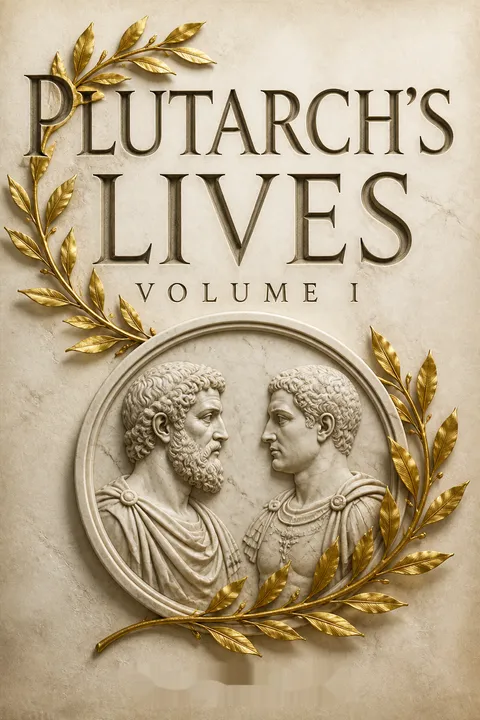
Reviewers widely praise Plutarch's Lives as an essential, enduring work of classical biography, admiring Plutarch's storytelling, moral insight, and even-handed character analyses. Many highlight its influence on Shakespeare, Montaigne, and the Founding Fathers. Readers appreciate the pairing of Greek and Roman figures, with favorites including Lycurgus, Timoleon, and Coriolanus. Some find the dense, archaic translations challenging, and note historical inaccuracies, but most agree it remains a rewarding, illuminating read for anyone interested in ancient history, leadership, and human virtue.
People Also Read


Βίοι Παράλληλοι Series

Download PDF
Download EPUB
.epub digital book format is ideal for reading ebooks on phones, tablets, and e-readers.








































