
Key Takeaways
1. The Panama Canal: A Centuries-Old Obsession with Immense Human Cost
It had been the destiny of the Isthmus ever since 1513, when the Spanish conquistador Vasco Núñez de Balboa ventured inland from Panama's Caribbean coast and, "silent upon a peak in Darién," discovered a previously unknown great ocean separated from the Atlantic by only a narrow bridge of land forty miles wide.
Ancient dream. The vision of a trans-Isthmian passage captivated explorers and engineers for over four centuries, beginning with Balboa's 1513 discovery. This narrow strip of land, just forty miles wide, promised a shortcut to the East, fueling grand schemes and fierce international rivalry among Spain, France, Great Britain, and later, the United States. The allure of connecting two vast oceans became an enduring obsession, drawing idealists, dreamers, and opportunists alike.
Repeated failures. Despite the persistent dream, all early attempts to create a waterway or even a reliable land route ended in failure or disaster. The Scottish "Darién Disaster" in the early 18th century, for instance, mirrored later French efforts, costing over two thousand lives and a nation's savings due to idealism, naiveté, and the harsh realities of the Isthmus. This pattern of ambition clashing with formidable natural and logistical obstacles defined the canal's early history.
Astronomical human toll. The construction of the canal, across all eras, exacted an astronomical human cost. The most conservative estimate of the death toll is 25,000 lives, or "five hundred lives for every mile of the canal." Many more were maimed or permanently debilitated by disease and accidents, a stark reminder of the brutal conditions and primitive safety measures that plagued the project for centuries.
2. French Ambition: Idealism, Over-Optimism, and Catastrophic Failure
To act thus after the same fashion under such different circumstances is to try to do violence to nature instead of aiding it, which is the principal purpose of the art of engineering.
Suez success, Panama folly. Ferdinand de Lesseps, the celebrated builder of the Suez Canal, embodied French national pride and a sublime belief in technological progress. His triumph at Suez, achieved with private capital and sheer will, convinced him that a sea-level canal in Panama was not only possible but easier, despite vastly different geographical and climatic conditions. This over-optimism blinded him to critical warnings from experienced engineers.
Fatal decisions. De Lesseps's unwavering commitment to a sea-level canal, against expert advice, proved to be a fatal decision. He dismissed concerns about the volatile Chagres River, the immense excavation required, and the deadly tropical climate. His refusal to consider a lock-canal plan, even when proposed by his own engineers, ultimately doomed the project, leading to catastrophic financial and human losses.
Financial and political ruin. The French effort, fueled by the savings of 800,000 small investors, became the biggest financial crash of the 19th century, dissipating over a billion francs. The subsequent "Panama Affair" exposed widespread corruption and bribery within the company and government, leading to trials, disgrace for de Lesseps and his son, and a profound blow to France's national prestige.
3. The Scourge of Tropical Disease: The Canal's True Enemy
Probably if the French had been trying to propagate Yellow Fever, they could not have provided conditions better adapted to the purpose.
Invisible killer. Tropical diseases, particularly yellow fever and malaria, were the canal's most formidable adversaries, claiming thousands of lives and demoralizing the workforce. The French, operating under the "miasma" theory that attributed fevers to foul air from rotting vegetation, inadvertently created ideal breeding grounds for mosquitoes in their unsanitized camps and hospitals.
Yellow Jack's terror. Yellow fever, or "yellow jack," was especially feared by non-immune white workers, causing agonizing symptoms like "vomito negro" and often death. Malaria, though less frequently fatal on first attack, debilitated vast numbers, with some estimates suggesting 80% of the workforce was hospitalized for it at some point. The constant threat of illness led to widespread panic and high turnover among employees.
Medical breakthrough. The American effort benefited immensely from the "miracle of Havana," where Dr. William Gorgas and his team proved the mosquito theory of disease transmission. By meticulously targeting the Aëdes aegypti mosquito for yellow fever and the Anopheles for malaria through fumigation, drainage, and screening, Gorgas's sanitation campaign dramatically reduced infection rates, making the Isthmus habitable and enabling the canal's completion.
4. Political Maneuvering: The "Battle of the Routes" and Lobbying
Talk about buying a lawsuit—the purchase of the Panama Canal would be buying a revolution.
Nicaragua vs. Panama. The choice between a canal through Nicaragua or Panama was a fierce political battle, with powerful lobbies and national interests at stake. Nicaragua was initially favored by the U.S. Congress due to its perceived "clean slate" and the scandals surrounding the French Panama project. Senator John Tyler Morgan championed the Nicaragua route, seeing it as a boon for the American South.
Cromwell and Bunau-Varilla. William Nelson Cromwell, a shrewd Wall Street lawyer, and Philippe Bunau-Varilla, a tenacious French engineer, became the primary lobbyists for the Panama route. They employed aggressive tactics, including extensive propaganda, political donations, and cultivating influential figures like Senator Mark Hanna. Their efforts aimed to discredit Nicaragua and highlight Panama's advantages, such as the existing railroad and partial excavation.
Volcanoes and influence. A key turning point was the eruption of Mount Pelée in Martinique, followed by reports of volcanic activity in Nicaragua. Bunau-Varilla famously exploited this "volcano scare" by sending Nicaraguan stamps depicting a smoking volcano to every U.S. senator. Combined with Cromwell's relentless lobbying and the New Company's reduced asking price, these tactics swayed public and political opinion, ultimately leading the U.S. to choose Panama.
5. Roosevelt's "Big Stick": Securing the Isthmus by Any Means
I am interested in the Panama Canal because I started it. If I had followed traditional, conservative methods I would have submitted a dignified State paper of probably 200 pages to Congress and the debates on it would have been going on yet; but I took the Isthmus, started the canal and then left Congress not to debate the canal, but to debate me...
Presidential determination. Theodore Roosevelt, a fervent advocate for American naval power and global influence, was determined to build the Panama Canal. He viewed it as indispensable for U.S. strategic and commercial interests, especially after the Spanish-American War. His "virile" and "strenuous" approach meant he would not tolerate delays or obstacles, particularly from the Colombian government.
The Panama Revolution. When Colombia rejected the Hay-Herrán Treaty, Roosevelt, convinced of Colombia's "folly and graft," tacitly supported a Panamanian independence movement. With U.S. warships strategically positioned, a "revolution" was orchestrated in November 1903, leading to Panama's secession. The U.S. swiftly recognized the new republic, preventing Colombian forces from suppressing the uprising.
Controversial treaty. Philippe Bunau-Varilla, acting as Panama's minister plenipotentiary, hastily negotiated the Hay-Bunau-Varilla Treaty, granting the U.S. perpetual control over the Canal Zone. This treaty, signed without the Panamanian junta's full knowledge or consent, was vastly advantageous to the U.S. and deeply resented by Panamanians, who felt "sold out." Roosevelt's actions, though widely criticized as "rape" and "theft," were defended by him as necessary for "universal public utility" and a testament to his decisive leadership.
6. American Pragmatism: Engineering, Sanitation, and Systemic Success
The problem was simply one of transportation.
Stevens's vision. John Stevens, a seasoned railroad builder, transformed the chaotic American canal effort. He recognized that the key to success lay not just in excavation, but in creating an efficient transportation system. He halted digging in the Culebra Cut to focus on building a robust railway network, double-tracking the line, and ordering powerful new American steam shovels and dump cars.
Goethals's "Army of Panama." George Washington Goethals, a military engineer, took over from Stevens, establishing an autocratic, highly disciplined "Army of Panama." He centralized authority, ruthlessly suppressed strikes, and ensured that all aspects of the Zone's administration were subordinated to canal construction. His leadership brought unprecedented efficiency and record-breaking excavation figures, particularly in the Culebra Cut.
Integrated approach. American success stemmed from an integrated approach that combined advanced engineering, effective sanitation, and centralized management. Unlike the fragmented French effort, the U.S. built a comprehensive system for labor, logistics, and disease control. This pragmatic, results-oriented strategy, backed by immense government funding, allowed them to overcome challenges that had defeated their predecessors.
7. The Gold and Silver Rolls: Institutionalized Racial Segregation
The ICC has very dexterously dodged the necessity of lining the Zone with the offensive signs ‘Black’ and ‘White,’" he wrote. "Hence the line has been drawn between ‘Gold’ and ‘Silver’ employees.
A two-tiered system. The American administration implemented a rigid, racially discriminatory labor system known as the Gold and Silver Rolls. Gold Roll employees, primarily white American citizens, received higher wages, better housing, paid sick leave, and access to superior facilities. Silver Roll employees, predominantly black West Indians and other non-whites, were paid in local silver currency and subjected to inferior conditions and treatment.
Justification and reality. This segregation was justified by prevailing racial theories of Anglo-Saxon superiority and the belief that different races were suited for different types of labor and climates. However, it led to widespread resentment and hardship for West Indian workers, who often performed the most dangerous and arduous tasks. Despite their vital contribution, they faced discrimination, lower pay, and limited opportunities for advancement.
Resistance and resilience. While direct organized protest was often suppressed, West Indian workers found ways to resist the dehumanizing system. They formed their own communities, churches, and mutual aid societies, preserving their cultural identity. Many chose to live outside ICC barracks, and their high turnover rates reflected their agency in seeking better conditions or returning home, demonstrating a quiet defiance against the imposed hierarchy.
8. Nature's Resistance: The Unrelenting Challenge of the Culebra Cut
The Cut is a tremendous demonstration of human and mechanical energy," wrote a British visitor. "It is simply the transformation of a mountain into a valley.
"Hell's Gorge." The Culebra Cut, or "Hell's Gorge," was the most formidable engineering challenge, accounting for over 70% of the canal's total excavation. As the ditch deepened, the land fought back with massive, unpredictable slides of earth and rock. These "tropical glaciers" buried equipment, destroyed tracks, and constantly altered the landscape, turning months or even years of work into instant chaos.
Geological nightmare. The Isthmus's complex and unstable geology, with its bewildering mix of rock types and subterranean pressures, made the Cut a "land of the fantastic and the unexpected." Gravity slides, collapsing rock faces, and "upthrusts" from the canal floor were constant threats. Despite all efforts to stabilize the slopes, the only solution was relentless re-excavation, pushing the estimated yardage from 23 million to over 100 million cubic yards.
Dangerous work. Working in the Cut was incredibly dangerous, marked by deafening noise from drills and steam shovels, choking dust in the dry season, and deep mud in the wet. Dynamite blasts, often premature or hitting unexploded charges, caused numerous fatalities. Workers faced constant threats from moving trains, swinging shovel booms, and falling rocks, making it a "battlefield" where human life was often cheap.
9. A World United, A Land Divided: The Canal's Complex Legacy
Americans should find solemn pride in the thought that they have added much to a world from which other nations are taking so much away.
Triumphant completion. The Panama Canal officially opened on August 15, 1914, a monumental engineering marvel that fulfilled a four-century-old dream. It dramatically shortened global trade routes, proving the immense industrial and technological might of the United States. The completion, despite initial challenges like slides and dry season water levels, solidified America's position as a global power.
Unforeseen costs. The triumph, however, came with immense human and political costs. The U.S. paid $400 million for the canal, but the lives lost, particularly among West Indian laborers, were immeasurable. The controversial "taking" of the Isthmus from Colombia and the subsequent Hay-Bunau-Varilla Treaty created lasting resentment and set a precedent for U.S. interventionism in Latin America, shaping regional politics for decades.
Enduring impact. The canal transformed Panama, creating a new nation but also a segregated Canal Zone that deeply impacted local society and culture. While it brought economic opportunities, it also fostered dependence and resentment. Today, under Panamanian control, the canal continues to be a vital artery of world commerce, with ambitious expansion plans, echoing the historical cycle of grand vision, immense effort, and complex consequences.
Review Summary
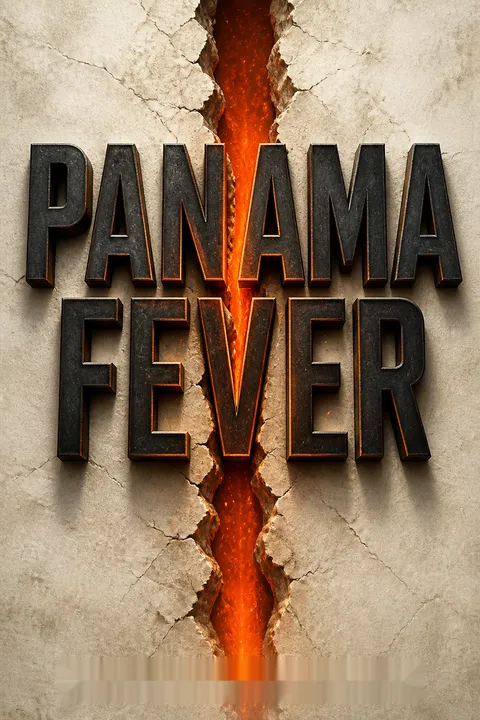
Panama Fever chronicles the decades-long effort to build the Panama Canal, from early European exploration through French failure to American completion in 1914. Reviewers praise Matthew Parker's extensive research and engaging narrative style, particularly his focus on workers' experiences, racial discrimination, and medical battles against yellow fever and malaria. The book excels in depicting the human cost—thousands of deaths—and social conditions surrounding construction. Some found it dense or overly detailed, while others appreciated the comprehensive coverage of politics, engineering, and cultural aspects. Most agree it transforms a monumental project into a compelling human story.
People Also Read



Download PDF
Download EPUB
.epub digital book format is ideal for reading ebooks on phones, tablets, and e-readers.








































