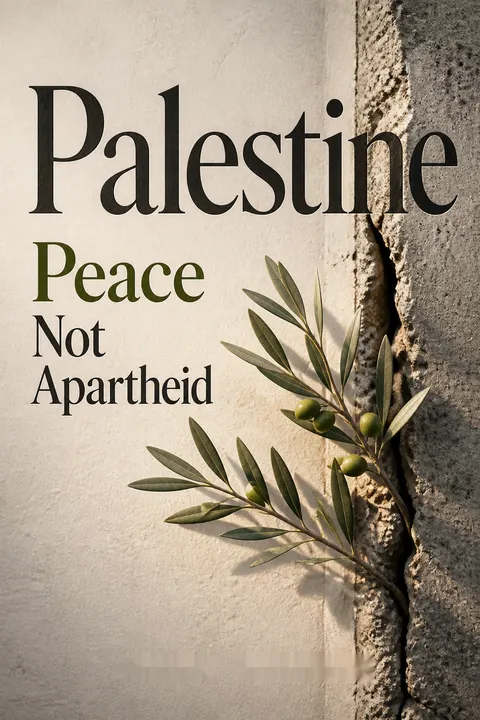

Key Takeaways
1. The Middle East's Persistent Tragedy: A Cycle of Violence and Unresolved Conflict
No fictional drama could be filled with more excitement, unanticipated happenings, or intriguing characters than this effort to end the ongoing conflict; it is certainly one of the most fascinating and truly important political and military subjects of modern times.
A volatile region. The Middle East remains perhaps the most unstable region globally, a persistent threat to world peace and a breeding ground for terrorism. Despite overwhelming desires for peace among its peoples, the conflict is fueled by complex historical, political, and religious issues, leading to growing animosity and schisms. The absence of a viable peace initiative exacerbates every individual controversy, creating a dangerous vacuum.
Endless questions. The core challenges are multifaceted, raising questions about the requisites for peace, the role of military power, and the potential for nuclear confrontation. Israel possesses a significant nuclear arsenal, and neighboring states are suspected of seeking their own, making the stakes incredibly high. Without progress, desperation on either side could trigger a catastrophic military confrontation.
Cycle of violence. The conflict is characterized by a destructive cycle: Israeli desire for Palestinian land and Arab refusal to accept Israel lead to violence, which in turn provokes retribution and further radicalization. This pattern has resulted in thousands of casualties, including many children, and has frustrated repeated efforts for peace. Only a revitalized peace process, based on international law and mutual respect, can break this tragic cycle.
2. International Law and Agreements: A Foundation for Peace, Repeatedly Undermined
The agreed basis for a peaceful settlement of the conflict between Israel and its neighbors is United Nations Security Council Resolution 242, in all its parts.
Binding principles. The foundation for peace in the Middle East rests on universally accepted international laws, particularly U.N. Security Council Resolutions 242 (1967) and 338 (1973). These resolutions, unanimously adopted and still applicable, establish two core principles: the inadmissibility of acquiring territory by force and the right of all states in the region, including Israel, to live in peace within secure and recognized borders. They also call for a just settlement of the refugee problem.
Broken promises. Despite Israel's initial approval and subsequent reconfirmation of these principles in agreements like the Camp David Accords (1978) and the Oslo Agreement (1993), many of their provisions have been systematically violated. Israel's continued acquisition and colonization of Palestinian land directly contradict the spirit and letter of these foundational documents. This disregard for international law has been a primary obstacle to comprehensive peace.
A consistent blueprint. Over decades, various peace proposals—from the Camp David Accords to the Arab Peace Proposal of 2002 and the International Quartet's Roadmap for Peace—have consistently echoed the core elements of U.N. Resolutions 242 and 338. These include:
- Israel's right to exist within recognized borders.
- Withdrawal of Israeli armed forces from occupied territories.
- A just solution to the Palestinian refugee problem.
- The right of Palestinians to live in peace and dignity in their own land.
The consistent failure to implement these agreed-upon principles perpetuates the conflict.
3. America's Critical Role: The Shift from Honest Broker to Unwavering Backer
Until recently, America’s leaders were known and expected to exert maximum influence in an objective, nonbiased way to achieve peace in the Middle East.
Historical impartiality. For decades, the United States was seen as an essential, objective, and non-biased mediator in the Middle East conflict, a trusted participant by both Israelis and Arabs. This role was crucial for fostering negotiations and building fragile understandings between antagonists who were often unwilling to engage directly. America's influence was predicated on its perceived evenhandedness and unwavering commitment to peace based on international law.
A troubling shift. In recent years, however, this vital role has eroded, with the U.S. increasingly perceived as a "knee-jerk supporter" of every Israeli action or policy. This unofficial condoning of Israeli confiscation and colonization of Palestinian territories has severely compromised America's ability to act as an honest broker. The U.S. has used its U.N. Security Council veto over forty times to block resolutions critical of Israel, further alienating the international community.
Consequences of bias. This perceived bias has profound consequences, squandering international prestige and goodwill, and intensifying global anti-American sentiment and terrorist activity throughout the Middle East and the Islamic world. The lack of a persistent, balanced effort to resolve the Palestinian issue is a major source of this hostility. To regain its essential role, America must demonstrate courage, face the facts, and return to its historic position as a trusted peacemaker for both sides.
4. The Palestinian Plight: Daily Life Under Occupation and Denied Rights
Most of the Palestinians were Muslims but a surprising number were Christians, and I talked with many priests and pastors about their ministry.
A life circumscribed. Palestinians living in the West Bank and Gaza endure a life of severe restrictions under prolonged Israeli political and military occupation. Their daily existence is marked by a constant struggle against land confiscation, home demolitions, and pervasive human rights abuses. They are deprived of basic freedoms, including peaceful assembly, unrestricted travel, and secure property ownership, often facing arbitrary arrests and imprisonment without trial.
Systematic grievances. Carter's visits revealed a litany of grievances:
- Economic strangulation: Truckloads of produce rotting at checkpoints, prohibition of sales in Israel, and restrictions on foreign aid.
- Water inequality: Israeli settlers using five times more water than Palestinian neighbors, who pay four times as much.
- Home demolitions: Thousands of homes destroyed for alleged security threats or lack of permits, often without warning.
- Legal injustice: Military tribunals, lack of access to lawyers, and confessions extracted through torture.
- Educational disruption: Schools and universities frequently closed, educators arrested, and library books censored.
The human cost. This systematic oppression has fostered deep resentment and alienation, touching almost every Palestinian family. The goal, many Palestinians believe, is to force a broader exodus of non-Jews from the occupied territories. This plight, often compared to the suffering of Jews after World War II, is seen as the core cause of political ills and a major source of anti-Israeli and anti-American sentiment.
5. Israel's Defining Dilemma: Security, Values, and the Cost of Expansion
The indomitable people of Israel are still attempting to define their future, the basic character of their nation, its geographical boundaries, and conditions under which the legitimate rights of the Palestinians can be honored and an accommodation forged with its neighbors.
A nation in flux. Israel, a nation born from centuries of Jewish persecution and a fierce struggle for survival, faces a profound internal debate about its future. While bound by a common religion, shared history, and memories of suffering, Israelis are divided on how to balance their legitimate security needs with the moral implications of occupying Palestinian land. This internal struggle is more vehement than any external criticism.
The "Two Israels." Carter observed a stark dichotomy: one Israel embodying the ancient culture and moral values of the Jewish people, and another operating within the occupied Palestinian territories, shaped by policies that disregard basic human rights. This creates a tension between democratic ideals and the realities of military occupation, leading to a "quasi-colonial situation" that torments Israel's conscience.
The cost of occupation. Maintaining control over occupied territories has come at a high price, both financially and in human terms, and has not resolved the basic causes of conflict. Military superiority has proven insufficient to subdue its neighbors, leading to cycles of violence and increasing international isolation. The expansion of settlements, often justified by security, paradoxically intensifies fear, hatred, and alienation, making ultimate reconciliation more difficult.
6. The Dividing Wall: A Physical Manifestation of Apartheid and Land Grab
The Wall is not separating Palestinians from Jews; rather, Palestinians from Palestinians.
A barrier of oppression. What Israel calls a "security fence" is, in reality, a massive dividing wall built mainly within Palestinian territory, designed to encapsulate and dispossess. This barrier, projected to be three and a half times longer than Israel's internationally recognized border, intrudes deeply into the West Bank, confiscating land, dividing communities, and isolating Palestinians from their farms, schools, and families.
Engineered segregation. The wall is not merely a fence; it's a complex system of concrete, electrified fencing, trenches, patrol roads, sensors, sniper towers, and razor wire, almost entirely constructed on Palestinian land. It effectively designates the area between the barrier and the Israeli border as a closed military region, forcing Palestinians living there to obtain "permanent resident permits" to remain in their own homes, treating them as aliens.
International condemnation. The International Court of Justice in 2004 declared the wall's construction in occupied Palestinian territory illegal, citing violations of international humanitarian law, including the Fourth Geneva Convention. The court called for its dismantling and compensation for affected Palestinians. However, Israel's Supreme Court has chosen not to accept this decision, acknowledging only that Israel holds the West Bank "in belligerent occupation" with certain conditions.
7. Camp David's Legacy: A Peace Treaty Honored, Core Promises Broken
The Camp David Accords, signed by Sadat and Begin and officially ratified by both governments, reconfirmed a specific commitment to honor U.N. Resolutions 242 and 338, which prohibit acquisition of land by force and call for Israel’s withdrawal from occupied territories.
A historic breakthrough. The Camp David Accords, brokered by President Carter in 1978, represented a monumental achievement, leading to the first peace treaty between Israel and an Arab nation, Egypt. This agreement, ratified by both governments, secured Israel's withdrawal from the Sinai Peninsula, established diplomatic relations, and guaranteed open borders and free passage through the Suez Canal. It stands as proof that diplomacy can bring lasting peace between ancient adversaries.
Unfulfilled commitments. Crucially, the Accords also contained equally important provisions regarding Palestinian rights and the West Bank and Gaza. These included:
- "Full autonomy" for inhabitants of occupied territories.
- Withdrawal of Israeli military and civilian forces from the West Bank and Gaza.
- Recognition of the Palestinian people as a separate political entity with the right to determine their own future.
- Palestinian participation as equals in future negotiations.
- A vote by elected representatives of the West Bank and Gaza inhabitants on their final status.
A deliberate breach. While the bilateral treaty with Egypt was honored, the promises concerning the West Bank and Palestinians were systematically undermined or violated by subsequent Israeli governments. Instead of granting autonomy or withdrawing forces, Israel tightened its hold on the occupied territories, escalating settlement activity. This selective adherence to the Accords allowed Israel to neutralize Egypt's military strength while pursuing its expansionist goals in Palestine.
8. Oslo's Promise and Peril: A Step Towards Self-Rule, Sabotaged by Extremism
Although Rabin, Peres, and Arafat all received the Nobel Peace Prize for their historic achievement, there was strong opposition from radical elements on both sides.
A secret breakthrough. The Oslo Agreement, secretly brokered by Norway in 1993, marked a significant, albeit unofficial, step toward peace between Israel and the PLO. It provided for a phased withdrawal of Israeli military forces from parts of the West Bank, the establishment of a Palestinian governing authority with elected officials, and a five-year interim period for negotiating more difficult issues. PLO Chairman Yasir Arafat formally recognized Israel's right to exist and renounced terrorism.
Rabin's candid assessment. Prime Minister Yitzhak Rabin, a key architect of Oslo, candidly revealed Israel's strategic advantages from the agreement. He emphasized that Oslo allowed Israel to shed formal responsibility for the welfare of the rapidly increasing Palestinian population, effectively outsourcing local administration and security to the PLO. Rabin noted that the agreement avoided the tight restrictions on settlements accepted at Camp David, allowing Israel to maintain exclusive jurisdiction over Jewish settlements and redeploy, rather than fully withdraw, its forces.
Hopes dashed. Despite the initial optimism and Nobel Peace Prizes, the Oslo process was severely damaged by extremist actions. Palestinian terrorist bombings and the assassination of Rabin by an Israeli right-wing religious fanatic derailed progress. Subsequent Israeli governments, particularly under Benjamin Netanyahu and Ariel Sharon, explicitly rejected the "land for peace" principle and accelerated settlement expansion, effectively nullifying the spirit of Oslo and leading to the second intifada.
9. The Roadmap for Peace: A Quartet's Vision, Stalled by Israeli Caveats
The Palestinians accepted the road map in its entirety, but the Israeli government announced fourteen caveats and prerequisites, some of which would preclude any final peace talks.
A global consensus. In 2003, the International Quartet (United States, United Nations, Russia, and the European Union) unveiled the "Roadmap for Peace," a step-by-step plan for resolving the Israeli-Palestinian conflict. This vision aimed for an independent, democratic Palestinian state living peacefully alongside Israel, ending the 1967 occupation based on the "land for peace" principle and U.N. Resolutions 242, 338, and 1397. The Palestinians accepted the Roadmap in its entirety, offering a clear path forward.
Israeli rejection. However, the Israeli government, under Prime Minister Ariel Sharon, responded with fourteen significant caveats and prerequisites that effectively gutted the Roadmap's core principles and timeline. These provisos included:
- Total dismantling of all Palestinian militant groups and weapons.
- Cessation of incitement against Israel, but no reciprocal demand for Israel.
- Israeli control over Palestinian entry/exit, airspace, and electromagnetic spectrum.
- Waiver of any right of return for Palestinian refugees to Israel.
- Exclusion of discussions on settlements, Jerusalem, or other final status issues.
- Removal of references to U.N. Resolution 1397, the Saudi Initiative, or the Arab Initiative.
A delaying tactic. The practical result of these Israeli conditions was to render the Roadmap moot, transforming it into a delaying tactic. Israel used it to impose an endless series of preconditions that could never be fully met, while simultaneously pursuing its unilateral goals of land confiscation and settlement expansion. This allowed the U.S. to maintain the impression of engagement in a "peace process" that President Bush himself admitted would not be fulfilled during his term.
10. The Only Path to Lasting Peace: A Two-State Solution Rooted in Justice
Peace will come to Israel and the Middle East only when the Israeli government is willing to comply with international law, with the Roadmap for Peace, with official American policy, with the wishes of a majority of its own citizens—and honor its own previous commitments—by accepting its legal borders.
A clear consensus. Despite decades of conflict and leadership failures, a clear majority of both Israelis and Palestinians consistently favor a two-state solution based on international law. Polls show over 60% of Israelis support exchanging land for peace, and over 80% of Palestinians desire a two-state agreement. This widespread public will for peace offers a crucial foundation that political leaders often ignore or undermine.
The essential framework. The path to peace is well-defined by existing international agreements and proposals:
- Israel's security: Guaranteed by open and specific Arab acknowledgment of Israel's right to exist within secure, recognized borders, with a firm pledge to end violence.
- Israel's legal boundary: Defined by the 1949-1967 armistice lines, as specified in U.N. Resolution 242 and reconfirmed in the Camp David Accords, Oslo Agreement, and Roadmap for Peace.
- Palestinian sovereignty: A viable, contiguous, and sovereign Palestinian state, with East Jerusalem as its capital, and a just resolution for refugees.
The tragic alternatives. Rejecting this path leads to two unacceptable alternatives for Israel:
- Forcible annexation: Violates international law, creates a non-Jewish majority, and isolates Israel globally.
- Apartheid system: Perpetuates oppression, denies basic human rights, and fuels endless violence, distorting Israel's democratic values.
The current trajectory of unilateral action, exemplified by the dividing wall and continued colonization, risks creating a permanent system of oppression and sustained violence, a tragedy for all involved.
Review Summary
Palestine: Peace Not Apartheid received mixed reviews. Many praised Carter's diplomatic experience and even-handed approach, though some criticized his pro-Palestinian stance. Readers found the book informative and accessible, offering valuable historical context and insights into peace negotiations. Critics accused Carter of anti-Semitism and misrepresenting facts. Some felt the book lacked nuance in addressing complex issues. Overall, reviewers appreciated Carter's courage in tackling a controversial topic, even if they disagreed with his conclusions. The book was seen as a good introduction to the Israeli-Palestinian conflict for general readers.
People Also Read




About the Author
Other books by Jimmy Carter

Download PDF
Download EPUB
.epub digital book format is ideal for reading ebooks on phones, tablets, and e-readers.








































