
Key Takeaways
1. Palestine: A Name Enduring Four Millennia
First documented in the late Bronze Age, about 3200 years ago, the name Palestine (Greek: Παλαιστίνη; Arabic: , Filastin), is the conventional name used between 450 BC and 1948 AD to describe a geographic region between the Mediterranean Sea and the Jordan River and various adjoining lands.
A Continuous Legacy. The name Palestine has a documented history spanning over 3,200 years, appearing in ancient Egyptian, Assyrian, Greek, Roman, Byzantine, and Islamic records. This continuous usage challenges the modern misconception that "Palestine" is a recent or artificial construct. From "Peleset" in the Late Bronze Age to "Palaestina" in Classical Antiquity and "Filastin" under Islamic rule, the name consistently denoted a distinct geographical and political entity.
Beyond Biblical Narratives. The book argues that the history of Palestine should be understood through the eyes of its indigenous people, not solely through biblical narratives or colonial perspectives. The name "Palestine" predates many biblical texts and was widely recognized by ancient historians like Herodotus, who described it as a distinct region between Phoenicia and Egypt, encompassing more than just the Philistine coastal strip. This historical reality underscores a deep-rooted, autochthonous identity.
Multilayered Identity. The indigenous people of Palestine possess a multi-faith and multicultural heritage, deeply embedded in the soil of the land. Their identity and historical legacy long preceded the emergence of modern national movements or Zionist settler-colonialism. The evolution of Palestine's name and identity reflects a continuous, albeit dynamic, presence of its people, whose roots are inextricably linked to the land's ancient past.
2. Challenging Colonial Narratives with Empirical History
The legend of the ‘Israelites’ conquest of Cana’an’ and other master narratives of the Old Testament (or ‘Hebrew Bible’) – a library of books built up across several centuries – are myth-narratives designed to underpin false consciousness, not evidence-based history which promotes truth and understanding.
Debunking Myths. The book directly challenges the foundational myths of Zionism and conventional Western historical teaching, particularly the narrative of the "Israelites' conquest of Canaan" from the Old Testament. It asserts that these are literary and theological constructs, not empirically verifiable historical facts. Academic and school curricula should prioritize contextualized historical facts, archaeological findings, and scientific discoveries over religious dogma.
Archaeology vs. Scripture. Extensive archaeological excavations in Palestine over 150 years have largely refuted the historicity of many Old Testament narratives.
- No material evidence for a "United Kingdom of David and Solomon" around 1000 BC.
- No empirical evidence for the "Exodus" from Egypt or "Joshua's conquest of Canaan."
- Monotheism was a gradual development, not a sudden, revolutionary event as depicted in some biblical accounts.
Leading Israeli archaeologists, like Zeev Herzog, acknowledge that the archaeological record presents a reality "completely different from the one which is described in the Old Testament."
Beyond "Land Without a People." The pernicious myth of "a land without a people for a people without a land" is a colonial construct, propagated by figures like Lord Shaftesbury and Israel Zangwill, to justify Zionist settlement. This myth deliberately ignored the vibrant, diverse indigenous population of Palestine. The book argues for reading Palestine's history through the lens of its indigenous people, reclaiming their voice and agency against narratives designed to silence them.
3. Palestine as a Crossroads of Civilizations and Trade
Palestine’s strategic and geographic location between Egypt and al-Sham (‘countries of the north’) had a lasting impact on its history, arts and culture as well as identity as a geo-political and administrative unit.
Strategic Nexus. Palestine's unique geographical position, linking three continents (Asia, Africa, Europe) and situated between the Mediterranean and Red Seas, made it a vital transit country for millennia. This centrality fostered extensive international trade, cultural exchange, and technological innovation, profoundly shaping its identity. Major trade routes, such as the Via Maris ("Way of the Philistines"), crisscrossed the land, connecting distant empires and economies.
Economic Prosperity. The country's role as a trade hub brought immense wealth and cultural diversity.
- Early Trade: Exported copper, wine, and olive oil to Egypt since the Chalcolithic period.
- Philistine Era: Flourished on international trade, controlling the Via Maris and charging tolls.
- Islamic Period: Aylah (Aqabah) on the Red Sea became a major port for trade with India and China, boosting the economy of Jund Filastin.
- Ottoman Period: Cotton, wheat, and olive oil exports to Europe fueled economic growth and early modernities.
This economic dynamism attracted diverse populations and influences, contributing to Palestine's rich cultural tapestry.
Cultural Hybridity. The constant flow of people, goods, and ideas through Palestine resulted in a unique cultural hybridity. From the Philistine city-states influenced by Aegean and Near Eastern cultures to the Greco-Roman-Byzantine influences on urban planning and intellectual life, and later the profound Arab-Islamic contributions, Palestine consistently absorbed and synthesized diverse traditions. This cultural pluralism is a defining characteristic of its long history, evident in its art, architecture, languages, and social customs.
4. Historical Autonomy and Statehood in Palestine
Conventional wisdoms are often articulated by powerful elites; they are not always based on facts. The conventional wisdom is that Palestine never in its history experienced self-government, political or cultural autonomy, not to mention practical sovereignty and actual statehood. Nothing is further from the truth.
Challenging the Narrative of Absence. Contrary to the pervasive myth that Palestine lacked self-governance before modern times, the book demonstrates a rich history of political, cultural, and economic autonomy. This autonomy manifested in various forms, from independent monetary systems to powerful regional rulers, showcasing a continuous indigenous agency in shaping the country's destiny.
Forms of Self-Governance:
- Philistine City-States (Late Bronze to Iron Age): Developed distinct political entities, strong international trade links, and the first monetary system in Palestine (Philisto-Arabian coins).
- Ghassanid Arab Phylarchates (3rd-7th centuries AD): Christian Arab kings ruled significant parts of Byzantine Palestine (Palaestina Secunda and Tertia) as client states, commanding armies and conducting foreign policy.
- Ecclesiastical Independence (5th century AD): The All Palestine Church of Aelia Capitolina (Jerusalem) achieved autocephaly, exercising religious and temporal power over the "Three Palestines."
- Dhaher al-Umar's State (18th century): A powerful indigenous leader established an effectively sovereign state in much of Palestine, defying Ottoman rule and fostering economic development.
These examples illustrate that Palestine was far from a passive territory, but rather a dynamic entity with periods of significant self-determination.
Beyond Imperial Chronologies. By focusing on these instances of local agency, the book shifts the historical lens away from purely imperial chronologies (Roman, Ottoman, British) that often overshadow indigenous contributions. It highlights how local leaders and communities actively shaped their political and economic landscapes, demonstrating that the concept of statehood, even if not always in the modern "nation-state" form, was a recurring feature of Palestine's long history.
5. Byzantine Palestine: A Flourishing "Three-in-One" Polity
And once again Palestine existed as a separate administrative entity in the form of the administrative Arab Muslim province of Jund Filastin.
A Golden Age of Antiquity. The Byzantine period (4th-early 7th centuries AD) marked an extraordinary era of cultural flourishing, urban expansion, and prosperity for Palestine. Reorganized into three administrative provinces—Palaestina Prima, Secunda, and Salutaris (or Tertia)—the region was conceived and managed as a unified "Three-in-One" polity, with Caesarea-Palaestina as its dominant capital.
Cultural and Intellectual Hubs:
- Caesarea-Palaestina: Served as the administrative capital and a major center of learning, home to figures like Eusebius and Origen, and boasting a vast ecclesiastical library. It rivaled Alexandria and Athens in intellectual prestige.
- Gaza: Emerged as a vibrant center of classical literature and rhetoric, known for its "School of Rhetoric" and its unique monastic traditions. It was dubbed the "Athens of Asia."
- Monasticism: Palestine became a global center for Christian monasticism, with thousands of monks and nuns establishing lauras and coenobia, profoundly influencing Christian spirituality worldwide.
This period cemented Palestine's reputation as a land of profound religious and intellectual significance.
Ecclesiastical Autonomy. A pivotal development was the granting of autocephaly to the All Palestine Church of Aelia Capitolina (Jerusalem) in 451 AD. This made it an independent Patriarchate with jurisdiction over the "Three Palestines," elevating it to one of the five major Patriarchates of Christendom (the Pentarchy). This ecclesiastical independence underscored a distinct Palestinian religio-cultural identity, further unifying the region beyond its administrative divisions.
6. Islamic Palestine: Prosperity and Enduring Identity
Late Bronze Age Peleset and Hellenic/Roman/Byzantine Palaestina were adapted by the Arabs and became Filastin under Islam from 638 AD onwards.
Continuity and Transformation. The Arab Muslim conquest in 638 AD did not erase Palestine's identity but rather adapted and transformed it. The Byzantine "Three Palestines" were reconfigured into the administrative province of Jund Filastin, encompassing most of Palaestina Prima and Palaestina Tertia, alongside Jund al-Urdun. This period saw the gradual Arabization and Islamization of the country, with Arabic becoming the lingua franca, building upon the existing Aramaic-speaking Christian population.
Economic and Cultural Flourishing. Under Umayyad and Abbasid rule, Jund Filastin became the richest province of the al-Sham region, benefiting from its strategic trade routes and agricultural wealth.
- New Capital: Al-Ramla was founded as the administrative and commercial capital, flourishing for over three centuries and becoming synonymous with "Filastin" in the Muslim world.
- Sacred Capital: Jerusalem (Iliya, then Bayt al-Maqdis, then al-Quds) remained the religious heart, undergoing monumental Umayyad construction, including the Dome of the Rock and al-Aqsa Mosque.
- Industries: Palestine excelled in silk production, glass-making (especially in al-Khalil), and mosaic art, exporting goods across the Muslim world and to Europe.
This era solidified Palestine's position as a vibrant economic and cultural entity within the Islamic empire.
Indigenous Memory Preserved. Despite imperial shifts, the social and cultural memory of Filastin was actively preserved by indigenous Palestinian Muslim scholars and jurists, such as Mujir al-Din al-Ulaymi (15th century) and Khair al-Din al-Ramli (17th century). Their writings repeatedly referred to "Filastin" and "Ard Filastin" (Land of Palestine), demonstrating a continuous, deeply rooted territorial consciousness that persisted throughout the Mamluk and early Ottoman periods, challenging claims of its "forgetfulness."
7. Eighteenth-Century Palestinian Statehood and Early Modernities
Far from being an aberration, the dawlah qutriyyah became common throughout the Arab and Islamic worlds, especially after the decline of the Abbasid Caliphate in the second half of the 9th century AD and many of these independent states enjoyed a great deal of prosperity and spectacular cultural developments.
Indigenous Sovereignty. The 18th century witnessed the emergence of an effectively independent Palestinian state, the Emirate of Dhaher al-Umar al-Zaydani, a form of dawlah qutriyyah (country/state). This regime, backed by the Palestinian peasantry and defying Ottoman authority, imposed practical sovereignty over much of modern Palestine, from Lebanon to Gaza, with Acre as its capital. This challenges Eurocentric views that Arab states are solely products of colonialism.
Economic Transformation and Modernities:
- New Economy: Al-Umar's state capitalized on the burgeoning European demand for cash crops like cotton, wheat, and olive oil, transforming Palestinian agriculture from subsistence to export-oriented production.
- Urban Development: Acre, under al-Umar, transformed from a small village into a fortified, wealthy metropolitan center, becoming a major trading hub in the al-Sham region. Nazareth and Haifa also saw significant growth.
- Technological Adoption: The influx of European goods and technologies, driven by the British Industrial Revolution, spurred early modernities in Palestine, preceding and influencing later Ottoman reforms.
Al-Umar's policies generated new capital, invested in infrastructure, and fostered a new political economy.
A Model of Governance. Al-Umar's rule was characterized by effective leadership, fair taxation (replacing the exploitative Ottoman Iltizam system), and religious tolerance towards Christians, Jews, Druze, and Shi'ites. His regime provided a powerful alternative to the traditional Ottoman patron-client system and the often-fractious urban elite politics. This period represents a significant, albeit often overlooked, chapter in Palestine's history of self-determination and indigenous agency.
8. The Emergence of Modern Palestinian National Identity
In Palestinian Identity: The Construction of Modern National Consciousness (1998), Rashid Khalidi argues that a distinct Palestinian national identity grounded in the land of Palestine emerged in the early 20th century.
Roots of Nationalism. Modern Palestinian national identity, while a late Ottoman development, was not created ex nihilo. It emerged gradually from deep-rooted social, cultural, and territorial consciousness, influenced by centuries of shared history and the land's unique geography. This nascent nationalism was further spurred by the cultural renaissance of late Ottoman Palestine and, crucially, by the advent of Zionist settler-colonialism.
Cultural Awakening and Print Capitalism:
- Education: Russian-funded Orthodox schools and teacher training seminaries played a vital role in fostering a cultural awakening and secular education, producing intellectuals like Khalil Beidas.
- Press: The introduction of print capitalism led to the emergence of influential Arabic newspapers like Falastin (1911-1967) and al-Karmel (1908). These publications popularized Palestinian nationalism "from below," using vernacular Arabic and articulating a distinct Palestinian identity.
- Intellectuals: Figures like Khalil Beidas and Ruhi al-Khalidi contributed significantly to this cultural nationalism through translations, novels, and political writings, emphasizing the "sons and daughters of Palestine" and the country's unique heritage.
This period saw a shift from regional patriotism to a more explicit, territorial-based national consciousness.
Resistance and Self-Determination. The growing threat of Zionist immigration and land purchases galvanized Palestinian proto-nationalism into an active anti-colonial struggle. Leaders like Ruhi al-Khalidi and Shukri al-Asali fiercely opposed Zionist plans, foreseeing the displacement of indigenous Arabs. The Palestinian national movement, crystallizing during the British Mandate, sought liberation and independence, emphasizing a two-tier nationalism combining local Palestinian patriotism (wataniyyah) with pan-Arab solidarity (qawmiyyah), as exemplified by Ibrahim Tuqan's poem "Mawtini."
9. Zionist Settler-Colonialism and the Erasure of Palestinian Heritage
The four Great Powers are committed to Zionism. And Zionism, be it right or wrong, good or bad, is rooted in age-long traditions, in present needs, in future hopes, of far greater import than the desires and prejudices of the 700,000 [Palestine] Arabs who now inhabit that ancient land.
The "Land Without a People" Myth. Zionist settler-colonialism, deeply rooted in European colonialism, propagated the racist myth of "a land without a people for a people without a land" to justify its project in Palestine. This narrative deliberately ignored the indigenous Palestinian population, viewing them as "niggers" or an "Arab encampment" unworthy of consideration, as articulated by figures like Chaim Weizmann and Israel Zangwill. The Balfour Declaration of 1917, driven by British imperial interests and Christian Zionist prophetic politics, sanctioned this project, transforming it into a major European settler-colonial enterprise.
Systematic Erasure and Toponymicide. After the 1948 Nakba (catastrophe) and the establishment of Israel, a systematic process of de-Arabization and memoricide was implemented.
- Physical Destruction: Hundreds of Palestinian villages and towns were destroyed, their ruins often covered by JNF (Jewish National Fund) forests, camouflaging the evidence of indigenous life.
- Renaming: An official "Governmental Names Committee" was established in 1949 to replace Palestinian Arabic place names with Hebrew-sounding, biblical, or Talmudic names. This process, often mimicking Arabic phonetics, aimed to create a "usable past" and assert exclusive Jewish ownership.
- Cultural Appropriation: Palestinian heritage, including mosques converted into synagogues or restaurants, and traditional landscapes, was appropriated and re-presented as "authentic" biblical or Israeli.
This systematic erasure aimed to detach Palestinians from their history and land, creating a new, exclusively Jewish landscape.
The Power/Knowledge Nexus. Israeli biblical archaeology and academic institutions became complicit in this project, constructing a "secular religion" that treated the Hebrew Bible as historical fact to legitimize Zionist claims. This "knowledge of the land" (yedi'at haaretz) was militarized and masculinized, fostering a collective identity rooted in a selectively reconstructed antiquity. The renaming of places, from "Mahlul" to "Nahlal" or "al-Majdal" to "Ashkelon," served to solidify the "New Hebrew Man's" connection to the land while simultaneously rendering the indigenous Palestinian past invisible.
Review Summary
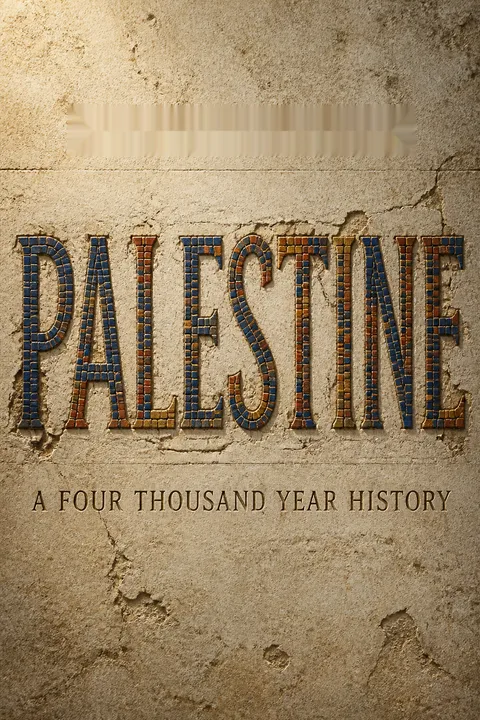
Palestine by Nur Masalha presents a historical account of the region spanning thousands of years, arguing that "Palestine" has been the most common toponym for the area. Reviews are polarized: supporters praise its comprehensive documentation and counter to Zionist narratives, while critics fault its lack of maps, contradictory arguments, selective scholarship, and perceived bias. Common complaints include dense academic writing, poor editing, and focus on etymology over chronological history. Defenders consider it essential reading for understanding Palestinian identity and challenging historical erasure, while detractors view it as polemical propaganda dismissing Jewish historical presence.
People Also Read





Download PDF
Download EPUB
.epub digital book format is ideal for reading ebooks on phones, tablets, and e-readers.








































