
Plot Summary
Journey to the Unknown
Joel Harrison Knox, thirteen and orphaned after his mother's death, embarks on a journey from New Orleans, summoned by a distant father he has never met, to the eerily decaying Skully's Landing in the deep South. The rural isolation, languid heat, and Southern Gothic mystery permeate every scene as Joel transitions from the chaos of the city to the strange quiet of the countryside. Burdened with his grandfather's battered suitcase and a sense of rootlessness, Joel navigates the last desolate stretches by truck and wagon alongside aged, cryptic locals, including Century-old Jesus Fever. This journey is more than geography—it is a descent into Joel's own ambiguous longings and identity, laced with apprehension, hope for connection, and the specter of loss that haunts him all the way to Noon City and into the tangled heart of the South.
The Landing's Eccentric Inhabitants
Upon arriving at Skully's Landing, Joel meets Miss Amy, his brittle, proper stepmother; Zoo, the wisecracking, wounded black housekeeper; and, most distantly, his father, Mr. Sansom, a mute invalid glimpsed only through strange rituals. The house is shrouded in Gothic decay and unspoken trauma, filled with eccentric, lonely figures clinging to their own routines. The routines are odd: red tennis balls, mysterious windows, whispered conversations. These rituals at once welcome and alienate Joel, amplifying his loneliness. With a setting both stifling and dreamlike, Joel's growing hunger for recognition and familial warmth is met not by his father's arms, but by riddles, evasions, and a cast of broken souls who orbit the shadow of a trauma that Joel must slowly, painfully, piece together.
Ghosts, Gardens, and Shadows
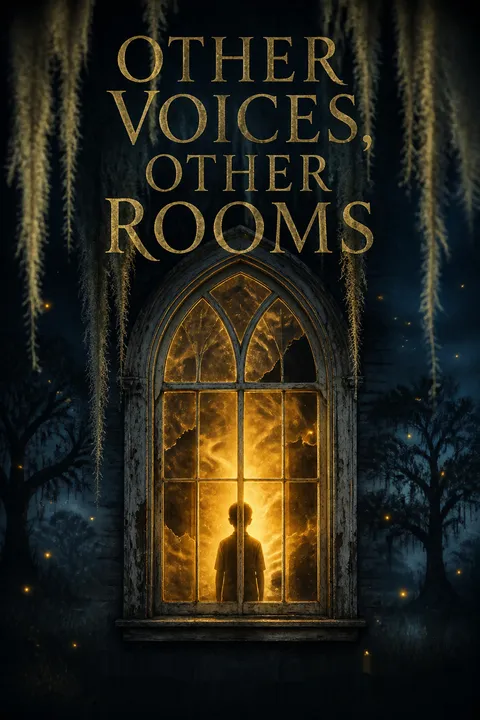
The Landing is more than a rotting mansion—it is a space suspended between memory and loss. Joel is drawn into its overgrown garden and labyrinthine halls, encountering literal and figurative ghosts. He sees, or imagines, a spectral lady in the window and gardens riotous with tangled, haunted beauty. Each window and passage speaks of both seduction and abandonment—a tangible symbol of the inner wounds each character bears. Childhood fears, the ache for parental affection, and spectral presences fuse into a dreamlike unease. Joel's exploration leaves him with more questions than answers as he is pulled further from comfort and deeper into the landscape of grief and longing.
Strange Bonds, Stranger Truths
Amid the wreckage of family, Joel finds unlikely camaraderie with the wild twin Idabel—a tempest of tomboy energy and secret tenderness. Their friendship, at first hostile, solidifies over misadventure and a shared sense of not belonging. Meanwhile, the other household inhabitants—Randolph, the effeminate, world-weary cousin, and Zoo—project their own haunted pasts onto Joel. The boundaries between affection, desire, and identity blur; Joel, searching for someone to anchor him, is led toward strange truths and new vulnerabilities. He begins to question love, friendship, and what it means to be "normal" in a world that treats difference with suspicion or cruelty. Emotional connection becomes both salvation and risk.
Letters Never Sent
Joel pours out his heart in letters—confessions to his friend Sammy and his guardian Ellen. He tells of loneliness, his loathing of the Landing, his confusion about his father and new family, and his secret hunger for elsewhere. But the letters often never leave the mailbox, are lost or intercepted, echoing the book's motif of silenced truths and broken communication. Joel's need for understanding and escape is rendered tangible through these unsent missives, crystallizing the gap between inner reality and the world's indifference. Each suppressed letter heightens Joel's ache for connection, control, and an identity that can withstand the uncertainty and ghostliness of his new home.
Zoo's Wisdom and Farewell
Zoo—sharp, resilient, marked by violence—becomes Joel's most candid teacher. She shares tales laced with humor and pain, initiates Joel into the secrets of Black Southern folk wisdom, and reveals her own traumas: abandonment, betrayal, and a desire to escape. Their fragile alliance provides Joel moments of intimacy, care, and fleeting comfort. Yet, as her grandfather Jesus Fever dies, Zoo's own restlessness grows—a mix of sorrow and freedom. Her eventual decision to leave for "Washington, D.C." (or any place "with snow") is both an act of escape and an abandonment, leaving Joel heartbroken yet wiser: every cherished attachment, it seems, is always on the verge of vanishing.
Yearning for a Father
Joel's much-anticipated encounter with his father is a study in pain and anticlimax. The man is a nearly silent, paralyzed specter, engaging with Joel through a mute ritual of tennis balls and stares that mean everything and nothing. The moment is raw and shattering—Joel's last hope for unconditional love is met with vacancy and the realization that his desperate yearning will never be fulfilled as imagined. In this crushing encounter lies the book's central wound; yet from this wound begins the deeper work of self-understanding. The father's absence, both physical and emotional, becomes a mirror for all other abandonments—Joel must now choose if he will remain lost or seek his own meaning.
Friendship and Outsiderness
Joel's kinship with Idabel deepens into a lifeline. Both are outsiders—Joel, girlish and sensitive; Idabel, brash and gender-defiant. Their bond is tested through adventure, mutual revelations, and playful conflicts that echo their mutual loneliness. In one pivotal scene, they bathe and fight, tangling physically and emotionally as they navigate the boundaries between boy and girl, friend and rival. Their unspoken, wordless connection becomes a sanctuary—brief respite from a world that refuses to make room for either of them as they are. Yet the friendship is also intensely fragile, threatened by Joel's burgeoning self-knowledge and the impossibility, for either, of complete understanding or safety in a world that rejects difference.
Randolph's Confessions
The enigmatic Cousin Randolph emerges as the novel's philosophical heart and expositor of suffering. In a powerful midnight monologue, he recounts his doomed love for Pepe Alvarez and the betrayals that have trapped him at the Landing—a story of passion, loss, failed escape, and sexual yearning. His self-exile, coded queerness, and countless unsent letters are mirrors for Joel's own struggles with identity. Randolph's confession is both a warning and an invitation, drawing Joel (and the reader) into the secret circles of desire, shame, and difference. With each revelation, Joel is both comforted and unsettled, recognizing that the courage to be oneself may mean accepting a life apart, filled with otherness and longing.
Death, Departure, and Loneliness
Death comes to the Landing with the passing of Jesus Fever, and with it, further unraveling. Zoo, burdened by new pain and old fears, flees in search of safety and snow. The fragile family around Joel crumbles as those who provided comfort and understanding depart or drown in their own needs—Amy in narcissism, Randolph in withdrawal. With each loss, Joel is more alone, forced to confront himself in the empty house and garden. The motifs of departure, funeral, and journey echo the themes of exile, drift, and the impossibility of anchoring oneself to others. Joel's ensuing solitude is both terrifying and transformative.
Flight and Carnival Night
Chafing against the boundaries of the Landing, Joel and Idabel hatch a runaway plan, leading them to the raucous carnival in Noon City—a vivid fever-dream of celebration and estrangement. Amongst sideshow wonders, Miss Wisteria the midget, and a swirl of music and lights, Joel tastes freedom and love, only to encounter further heartbreak as Idabel disappears into another's orbit. The fantasy of escape collapses as they become separated amidst rain and chaos, and Joel is forced to confront the limits of his agency, the pain of rejection, and the world's persistent indifference to his yearning. The carnival is both a fleeting paradise and a crucible for self-understanding.
Love, Rejection, and Chaos
Joel's loneliness peaks in the aftermath of the carnival, as he is seduced by Miss Wisteria's kindness and haunted by the impossibility of love. The embrace he seeks is always just out of reach, tainted by misunderstanding, shame, or fear—whether with adults, outcast friends, or even the innocent affection of a sideshow performer. In the house's echoing halls, ghosts and memories merge; Joel witnesses the world's cruelty and feels the chill of alienation. Every gesture of love is met with some form of rejection, forcing Joel to grapple with the paradox that the things he most longs for may never take the form he imagines.
Near-Death and New Identity
In the wake of loss, illness overwhelms Joel, and he drifts in fever, dreams, and hallucination. Randolph nurses him with a devotion that blurs the lines between parent, lover, and friend, while Joel's own sense of self is shattered and rebuilt through trauma. He confronts his mortality, his fragile body, and his longing to be "seen" and loved without precondition. Through suffering and near-death, Joel's identity clarifies itself—not as a duplicate of others, but as unique, resilient, and finally self-sufficient, even as he accepts his belonging among misfits, ghosts, and the aching souls of the Landing.
The House Sinks
The Landing itself becomes a metaphor—the house "sinking" into the earth as its inhabitants disintegrate or depart. Ghosts real and imagined, the weight of Southern history, and the refuse of failed promises crowd its rooms. Joel now sees the house not just as a physical ruin but as a symbol of all that stifles, confines, and corrupts—family, tradition, memory. Yet within this space, possibility flickers: to stay, to leave, to assert a new narrative for oneself. The old patterns of dependence and pain threaten to pull Joel under, yet the will to choose different, to step beyond the house's bounds, begins to stir.
Ghost in the Mirror
Mirrors, windows, reflections—Joel is haunted by the presence of a "ghost" in the window, finally revealed as Randolph in disguise. This motif, threaded throughout, becomes the existential crux: to see oneself through others' eyes, to be both subject and object of longing. Joel must confront the ways admiration and desire are intertwined, and how self-acceptance is mediated by the gaze of others. In the phantom lady, the grief clouding the house, and the mirror's ambiguous truths, Joel finds the haunting both of lost mothers and of his own transforming self. The boundary between who watches and who is watched disappears.
Twilight Choices
Forced by events to confront his own trajectory, Joel stands at a crossroads—between the stifling security of the Landing and the terrifying freedom of leaving. Old alliances crumbled, new beginnings uncertain, he is compelled to choose: remain in the familiar prison of others' expectations, or venture into a chancy world that might reward his strangeness and hunger for kindness. The landscape is autumnal, filled with decay, rain, and memory, yet the moment is charged with possibility. Joel's act of looking up at the ghost-lady in the window signifies not just recognition of his "otherness," but the acceptance and claiming of it—a wish finally, to become himself.
Becoming Oneself
The final chapter finds Joel on the threshold of adulthood, infused by suffering, loss, and love, but no longer defined by waiting for others to claim or name him. The journey, far from ending in reunion or rescue, culminates in the dizzying, brave acceptance of all that he is: the outcast, the watcher, the tender-hearted, the beloved. Joel looks back at the "boy he left behind" and steps forward, ready to claim his future not as someone else's son or echo, but as a self-fashioned soul—strong, singular, and alive. The haunting transitions to wholeness, and the rooms of childhood give way to the open air of possibility.
Analysis
Truman Capote's Other Voices, Other Rooms is a masterwork of Southern Gothic and queer coming-of-age fiction—a spellbinding meditation on loneliness, identity, and the perilous journey toward self-acceptance. Through the "slough of despond" that is Skully's Landing, Capote unpacks the wounds of childhood and the agonies of exile—emotional, sexual, and familial. The poetic, lush prose immerses readers in a world where the boundaries between dream and reality, longing and loss, are ever shifting. Joel's odyssey, ostensibly a search for parental love, becomes instead the excruciating realization that fulfillment must ultimately come from within: the courage to accept one's difference, to declare "I am me," even amid abandonment and unrequited desire. The book is profoundly empathetic toward misfits and outcasts, suggesting that love may be elusive and fleeting, but to accept oneself and find kinship in oddity is the truest—and bravest—form of growing up. At once timeless and radical, Capote's novel teaches that to listen for "other voices" is to begin to hear one's own.
Review Summary
Other Voices, Other Rooms receives praise for Capote's poetic, atmospheric prose and masterful Southern Gothic storytelling. Readers admire its haunting coming-of-age themes, eccentric characters, and explorations of love, identity, and isolation. The semi-autobiographical novel draws frequent comparisons to Harper Lee's To Kill a Mockingbird, with many noting the real-life friendship between the authors. Critics note occasional overwriting and an ambiguous, confusing ending. Standout characters include the tomboy Idabel, based on Harper Lee, and the enigmatic Randolph. Despite mixed reactions, most consider it an impressive debut.
People Also Read

Characters
Joel Harrison Knox
Joel, a delicate, dreamy, and intelligent thirteen-year-old boy, serves as the emotional and psychological core of the novel. Orphaned and uprooted from New Orleans, he is cast into an alien world at Skully's Landing, where his search for his absent father becomes a symbolic journey toward self-knowledge. Sensitive to rejection and haunted by loss, Joel struggles with feelings of inadequacy, difference, and longing—for love, friendship, and home. His effeminacy and introspection set him apart, exposing him to scorn but also enabling the empathy that anchors his friendships with Idabel and Zoo. Over the course of the story, Joel's quest transforms from a search for an external rescuer to the painful discovery of self-reliance—a journey marked by innocence lost, but also by the emergence of resilience and a kind of queer self-acceptance.
Randolph
Randolph, Miss Amy's effeminate cousin, is the novel's most complex adult—simultaneously a nurturing, philosophical mentor for Joel and a figure scarred by loss and unfulfilled desire. Openly homosexual yet deeply haunted by shame, Randolph recounts his tragic love for Pepe Alvarez and clings to rituals (letters, costumes, storytelling) as a lifeline against despair. He recognizes a kinship with Joel, both outsiders in different ways, and assumes a guiding, if sometimes predatory, role. Randolph's psychological depth lies in his oscillation between self-acceptance and self-loathing, his wit and worldliness masking wounds that echo and foreshadow Joel's own. His presence ultimately helps Joel confront his own identity, teaching by example both the pain and the necessity of living one's truth.
Miss Amy
Miss Amy, Joel's stepmother, is defined by repression, fragility, and a desperate adherence to Southern gentility. Living in denial of Skully's Landing's decay and her own disappointments, she channels her anxieties into petty routines and passive-aggressive interactions. Unable to provide true tenderness, Amy is more an anxious guardian of appearances and rituals, haunted by her own longing for love and recognition. Her need to control and "manage" the house and people around her masks her underlying panic and loneliness. Amy's psychological complexity becomes clearer as the novel reveals how survival in a world of loss and blight requires both denial and small acts of care—however insufficient.
Idabel Thompkins
Idabel is Joel's red-haired, foulmouthed twin in outsiderness: a tomboy who rejects feminine roles and aspires to the freedom and power of boys. She embodies rebellion, vitality, and a wounded vulnerability, masking her need for love behind bravado and sharp humor. In her wildness and refusal to conform, Idabel becomes Joel's closest friend and emotional mirror—his adversary, protector, and would-be brother. Their relationship moves from hostility to deep, inarticulate attachment, complicated by the changing currents of adolescence, sexuality, and rejection. Idabel's own pain and longing for acceptance mean she is both a source of courage and a reminder of the high cost of living outside the world's norms.
Zoo Fever
Zoo, the young black housekeeper, is a study in resilience—tough-talking, practical, herself deeply scarred (literally and figuratively) by violence, sexual abuse, and racial marginality. She takes on the role of surrogate mother and confidante for Joel, offering comfort, folk wisdom, and caution against trusting the world's promises. Zoo's humor and energy cannot completely mask her own sense of entrapment, and her eventual flight from the Landing underscores the limits of what even love can protect. In her complex psychology—tending both to Joel's wounds and her own—she embodies survival against trauma, as well as the ache of never truly belonging.
Mr. Sansom (Edward Sansom)
Mr. Sansom, Joel's long-absent father, is a tragic cipher—bedridden, mute, and emotionally unreachable. Despite Joel's desperate longing, Sansom's incapacity renders him a living ghost, a presence that accentuates rather than heals Joel's sense of abandonment. He is both the reason Joel's journey begins and the void into which so many of Joel's dreams and questions bleed. Though others project their own wounds and narratives onto him, Mr. Sansom ultimately incarnates the unfathomable mystery and silence of lost parental love.
Jesus Fever
The decrepit, centenarian black servant whose strange dignity and wisdom anchor the Landing's sense of tradition and decay. Jesus Fever's presence seems to collapse the distance between myth and mundane, past and present; he is at once a historical relic and a symbol of endurance in the face of endless loss. His death signals the collapse of the remnants of the old order and deepens the landing's descent toward dissolution.
Little Sunshine
Living as an outcast in the ruins of the Cloud Hotel, Little Sunshine embodies marginalized black folk wisdom and the persistence of stories—his life is woven from tales of haunting, curses, and tragedy. To Joel, he offers both a hint of protection (through shamanistic charms) and a glimpse of how difference is both feared and necessary. His presence echoes the larger theme: in a world of others' voices, survival may depend on embracing the magical, the weird, and the unassimilable.
Miss Wisteria
The carnival "midget" who briefly becomes the object of Joel's longing for love and understanding. Miss Wisteria's glamour is both enchanting and pitiful—a soul haunted by the failure to ever truly "fit," romantically or socially. Her gestures of affection toward Joel reveal the universal hunger for connection, and her own loneliness reflects his. In the carnival's unruly chaos, she stands as both a promise and a warning—candy-bright hope inevitably curdled by the world's indifference.
Florabel Thompkins
Idabel's twin, outwardly more conventional and feminine, and the foil to her sister's rebellion. Florabel represents the path of conformity, smiles, and surface piety—a route closed to both Idabel and Joel. Yet beneath her dainty manners lie jealousy and the wounds of exclusion that haunt all the novel's "insiders."
Plot Devices
Southern Gothic Setting
The atmospheric Southern Gothic world of Skully's Landing and Noon City operates not just as a backdrop but as a living, breathing character. Its crumbling mansions, overgrown gardens, swamps, and decaying social structures externalize the psychological states of the characters—especially Joel, whose inner struggles mirror the haunted houses and lost grandeur of his new home. The surreal, dreamlike layering of myth, memory, and the supernatural blurs reality and fantasy, anchoring the reader in a mood of suspense, melancholy, and a beauty laced always with menace.
Coming-of-Age Narrative Structure
Capote crafts the story as a journey both literal (Joel's physical arrival and escape attempts) and metaphorical, mapping the developmental arc from childhood innocence to painful self-awareness. The crossing of borders—geographical, sexual, cultural—serves as a structure for Joel's transformation, each episode drawing him closer to the acceptance of "otherness" within and without. The narrative follows the rhythm of initiation: arrival, estrangement, revelation, loss, and finally bittersweet affirmation.
Unreliable Memory, Ghosts, and Mirrors
Mirrors, letters, and spectral appearances (the lady in the window, ghost stories, recurring motifs of reflection) function as devices to collapse boundaries between realities, challenging the reader's (and Joel's) sense of what can be trusted. Repetition, hallucination, and unreliable narration are not just stylistic choices but commentaries on trauma, longing, and the mutable nature of truth in a damaged psychic landscape.
Letters as Voiceless Communication
Joel's struggles to communicate and be "heard" take the form of letters never sent or lost along the way. This motif amplifies the themes of silence, misrecognition, and the chasm between inner reality and external understanding. Letters become vessels for suppressed identity and desire—signals to the outside world that may never arrive.
Symbolic Objects and Recurring Motifs
Throughout the novel, objects accrue emotional significance: tennis balls as failed communication with the father; feathers—once living, now arranged and dead—mirror people's conflicting needs for beauty and preservation; Joel's sword, inherited from Zoo, becomes a symbol of both childlike fantasy and the need for self-defense in a hostile world. Such motifs serve as anchors for psychological insight, transforming the mundane into bearers of memory, hope, and pain.
Queer Desire and Doubling
Capote's subtle, ahead-of-its-time invocation of queer longing, mirrored in both Joel's and Randolph's stories, is structurally echoed in recurring doubles: twins, identities, disguises, the ghost-lady as Randolph in costume. The desire for acceptance, the dread of exposure, and the need to both see oneself and be seen frame the book's quest for selfhood—unresolved yet necessary for growth.

Download PDF
Download EPUB
.epub digital book format is ideal for reading ebooks on phones, tablets, and e-readers.








































