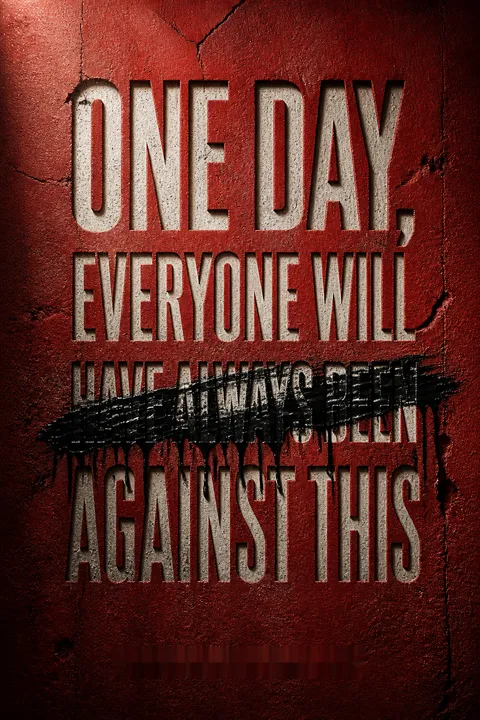

Key Takeaways
1. Western Liberalism's Moral Chasm
Whatever mainstream Western liberalism is—and I have no useful definition of it beyond something at its core transactional, centered on the magnanimous, enlightened image of the self and the dissonant belief that empathizing with the plight of the faraway oppressed is compatible with benefiting from the systems that oppress them—it subscribes to this calculus.
Hollow gesturing. The author critiques Western liberalism for its performative virtue, where eloquent statements of concern for human rights and freedom often mask a transactional core. This system prioritizes its self-image and convenience over concrete action, especially when addressing injustices that threaten its interests or require genuine sacrifice. The result is a stark disconnect between rhetoric and reality, leaving a "hollow" where moral principles should be.
Transactional empathy. This transactional nature means that empathy is often conditional, extended only when it offers a return or aligns with existing power structures. The author highlights how this leads to a "dissonant belief" where one can empathize with the oppressed while simultaneously benefiting from the systems that perpetuate their suffering. This selective application of concern is evident in the response to mass killings, where the value of lives is implicitly weighed against political or economic convenience.
Self-interest reigns. Ultimately, the system's primary use is not justice but the preservation of existing power, making rules, conventions, and morals expendable when inconvenient. This is exemplified by the Biden administration's support for a genocide while simultaneously announcing a task force on Islamophobia—a clear instance of "sloganeering without concrete action." The author argues that this approach fosters a political landscape where "meaningless pageantry" replaces genuine moral engagement.
2. Language: The Empire's Fortress of Lies
To watch the descriptions of Palestinian suffering in much of mainstream Western media is to watch language employed for the exact opposite of language’s purpose—to watch the unmaking of meaning.
Obscuring reality. Language, in the hands of empire, becomes a tool to sanitize violence and obscure truth, creating a "fortress" of distorted meaning. The author points to phrases like "collateral damage" for civilian deaths or "enhanced interrogation" for torture, which deliberately distance the audience from the horror. This linguistic malpractice is crucial for the "liberal, well-meaning, easily upset middle" to justify tragic but "necessary" actions.
Dehumanizing narratives. The systematic dehumanization of victims is achieved through subtle linguistic shifts and assumptions. For instance, labeling any man killed by the U.S. military as a "terrorist until proven otherwise" doubly defiles the dead and renders them "untouchable in polite society." This creates a "phantom reality" where victims "burn away like fog," their suffering minimized or erased, making it easier for those unaffected to look away.
The power of silence. When language fails or is deliberately withheld, silence becomes an "empty canvas" onto which any fantasy can be painted. The author notes how the absence of information allows complicity in wrongdoing, as seen in the blacked-out documents at Guantánamo Bay or the suppression of Palestinian voices. This "unmaking of meaning" ensures that the "afflicted don’t need comforting, they need what the comfortable have always had."
3. Journalism's Compromised Compass
The profession of journalism necessitates a capacity to understand things, and all who watched the killings understood what was happening.
False neutrality. The author argues that modern journalism, particularly in the West, struggles with a fundamental contradiction: the demand for self-erasing neutrality versus its core activist purpose of agitating against power. This often leads to a "flattened mode" of reporting, where "claim and counterclaim" are presented without historical context or moral judgment, reducing complex issues to a "horse race."
Economic pressures. The precarious economic state of print journalism, with layoffs and the rise of "branded content," further compromises its integrity. The author highlights how some outlets prioritize inciting "rage and fear and hatred" for profit, effectively severing the relationship between truth and what one wishes the truth to be. This "functional business model" might not be journalism, but "the checks clear."
Selective outrage. A glaring inconsistency in journalistic ethics is revealed in the differential treatment of atrocities. While Russian actions are condemned unequivocally, similar violence by Western allies is met with "utter fog." The author points to the silence surrounding the killing of Palestinian journalists, contrasting it with the outcry over Evan Gershkovich's detention. This "preemptive deference to power" bleeds into the story, or the "absence of story," for "inconvenient Brown people."
4. The Peril of the "Lesser Evil" Fallacy
For a lot of people, genocide is that point. Suddenly, an otherwise very persuasive argument takes on a different meaning: “Vote for the liberal though he harms you because the conservative will harm you more” starts to sound a lot like “Vote for the liberal though he harms you because the conservative might harm me, too.”
Moral compromise. The "lesser evil" argument, often made in good faith, sets a dangerously low benchmark for political engagement: "Be less monstrous than the monsters." The author contends that for many, particularly those directly affected by systemic injustices, a point exists beyond which "relative harm can no longer offset absolute evil," with genocide being a clear example. This forces a re-evaluation of political loyalty.
Self-serving logic. This strategy, while effective in securing votes, ultimately benefits the political establishment by ensuring continued participation without demanding substantive change. It allows parties to avoid developing a "moral compass" because they are "constantly rewarded this way." The author notes the "aggrandizing quality" of framing every election as existential, appealing to a "Red Dawn reflex" in liberals.
Erosion of principles. The reliance on "lesser evil" politics leads to a "rhetorical urgency and policymaking impotence." When mainstream liberal parties prioritize "mildly inconveniencing the rich" or "resisting an ally’s genocidal intentions," they lose moral authority. The author suggests that if the Democratic Party's leadership realized "sloganeering without concrete action means nothing," they might avoid making it "close" against a "nihilistic, endlessly cruel manifestation of conservatism."
5. Fear: The Currency of Dehumanization
My fear, on account of who I am and what place I occupy in the West, buys me nothing. Less than nothing—the majority response I expect from admitting my wariness of large American flags on the backs of pickup trucks isn’t some nuanced discussion about the fermentable nature of patriotism, but rather the insinuation that this isn’t fear at all, but hatred, ungratefulness: Well, leave, then. You don’t like it? Leave.
Irrational justification. Fear, the author argues, functions as a powerful currency, causing the world to "flower in limitless, terrible possibility" from a false premise. It is used to justify violence, dehumanization, and the abdication of restraint. The author contrasts his own "irrational" fear of large Western flags, which "buys nothing," with the "purchasing power" of other people's fear, which "moves armies, obliterates thousands."
Weaponized narratives. The "terrorist" construct, for instance, has become the "greatest totem of fear in the Western world," justifying massive killing sprees and imposing a binary existence on entire populations. This fear allows for the smearing of "entire regions of the world as parasitic insects," as seen in Thomas Friedman's comparison of Iran to a wasp, which serves to "flaunt permission" for violence.
Asymmetrical application. The application of fear is deeply asymmetrical. While the state's fear of "terrorists" justifies "unlimited violence," the fear of the occupied is dismissed as "fantastical." This asymmetry ensures that the "occupied might fear the doing of their occupier is as fantastical as the notion that barbarians might be afraid of the gate." The author questions what "unlimited fear" costs and what will "sate it."
6. The Imperative of Resistance and Disengagement
Power absent ethics rests on an unshakable ability and desire to punish active resistance—to beat and arrest and try to ruin the lives of people who block freeways and set up encampments and confront lawmakers. But such power has no idea what to do against negative resistance, against someone who refuses to buy or attend or align, who simply says: I will not be part of this.
Active and negative resistance. The author explores various forms of resistance, distinguishing between active (protests, speaking out) and negative (refusal to participate, disengagement). While active resistance faces direct punishment, negative resistance, such as boycotts or resignations, "terrifies an ordering of endless appetite" because it challenges the system's fundamental reliance on "continued participation."
Moral threshold. For many, the ongoing genocide has created a moral threshold beyond which participation in the existing system becomes untenable. This leads to a "walking away" from professional obligations, awards, and even political engagement, not out of nihilism but as a "soul-affirming" act. The author highlights examples like artists declining awards or employees resigning from the Biden administration.
The cost of silence. The author contrasts the courage of those who resist with the "institutional gutlessness" of those who remain silent, particularly in the arts and media. He questions the value of "work" when so many storytellers "suddenly finding common cause in silence." This silence, he argues, is a form of complicity, strengthening the "muscle of indifference" and allowing greater horrors to come.
7. A World Undone: The End of Western Ideals
What has happened, for all the future bloodshed it will prompt, will be remembered as the moment millions of people looked at the West, the rules-based order, the shell of modern liberalism and the capitalistic thing it serves, and said: I want nothing to do with this.
Fracture of belief. The author posits that the 2023 Gaza conflict marks a profound "fracture," an "ending" of faith in the "rules-based order" and the ideals of Western liberalism for an entire generation. This moment reveals the "hollow" at the core of the system, exposing it as a "completely malleable thing whose primary use is not the opposition of evil or administration of justice but the preservation of existing power."
Loss of normalcy. For those who bear witness to the horror, the ability to continue living "as normal" is shattered. The author describes a personal inversion of daily life, where consequential tasks become trivial, and the only paramount thing is to "spoil my kids." This inability to maintain artificial normalcy clashes with the "sociopathic" demand of a society that expects one to ignore carnage for the sake of productivity.
A new reckoning. This "severance" is not merely disgust but a "walking away, a noninvolvement with the machinery that would produce, or allow to produce, such horror." It forces a reckoning with the true nature of the West, revealing that "nothing has evolved, nothing has become more enlightened, nothing has been learned." The author suggests that this moment will be remembered as a turning point, where millions decide "I want nothing to do with this."
8. The Immigrant's Enduring Burden
In truth, I lean away from the faraway side of my daughter’s lineage on her behalf because for more than forty years I’ve seen what carrying that weight means.
Unbridgeable distance. The author reflects on the "unbridgeable distance" between his immigrant experience and his children's stable Western lives. He recounts the constant indignities—mispronounced names, cultural misunderstandings, being made to "stand in for and speak on behalf of every Muslim, every Arab, every Brown person on earth." This burden leads him to shield his children from their heritage, believing it will be "easier for her that way."
Segregation by narrative. Immigration, for many, is a series of "departure after departure," lacking the "privilege of an arrival story, a homecoming." The author notes the hierarchy of migration, where "expat" is reserved for white Westerners, while others are "aliens" or "economic migrants." This "segregation by narrative" dictates how one is labeled and treated, often forcing immigrants into "smaller selves" where their credentials and experiences are devalued.
Conditional belonging. The expectation of "perpetual gratitude" from immigrants, who are supposed to "flee their own failing society to come to a better place," is a core part of the Western narrative. However, this gratitude often comes with conditions, where freedoms are only granted "so long as what you say is acceptable." The author's personal experiences, from being denied entry at borders to being accused of "hatred, ungratefulness," highlight the precariousness of this conditional belonging.
9. History's Unrelenting Echoes
History is a debris field of such moments. They arrive in the form of British and French soldiers to the part of the world I’m from. They come to the Salvadorans and Chileans and Iranians and Vietnamese and Cambodians in the form of toppled governments and coups over oil revenue and villages that had to be burned to the ground to save them from some otherwise terrible fate.
Repetitive patterns. The author emphasizes that the current atrocities are not new but rather echoes of historical patterns of imperial violence and dehumanization. He lists numerous instances where "ambitious, upright, pragmatic voice[s]" justified the temporary suspension of humanity for "this particular group of people, from whose experience we are already so safely distanced." This creates a "debris field of such moments" throughout history.
The cost of forgetting. The system relies on "endless forgetting" for its continued functioning, expecting those unaffected to "move on, will forget." However, the author asserts that "so many will remember," particularly those who have "seen it before, who have seen their land or labor stolen, their people killed." This collective memory, often rooted in love and shared suffering, becomes a powerful counter-narrative to the empire's selective amnesia.
Unconfronted truths. The refusal to acknowledge or learn from history leads to a perpetuation of injustice. The author argues that the "imaginative obligation of progress is infinite," but those served by the system have "no reason to imagine anything better." This cycle of violence and denial will continue until the system is confronted with a language it understands: "the violent power of negation, of turning away."
Review Summary
Reviews for One Day, Everyone Will Have Always Been Against This are largely positive (4.59/5), with many praising its moral clarity, sharp critique of Western liberalism, and powerful indictment of complicity in the Gaza genocide. Admirers call it essential, beautifully written, and transformative. Critics, however, raise concerns about the author's lack of direct Palestinian connection, insufficient sourcing, surface-level historical context, and the interweaving of personal memoir with accounts of atrocity—some finding this exploitative or distracting from Palestinian voices.
People Also Read



Download PDF
Download EPUB
.epub digital book format is ideal for reading ebooks on phones, tablets, and e-readers.








































