
Plot Summary
Thrones of Power Shaken
The world of the Elder Empire is thrown into chaos as the ancient Regents—immortal, godlike rulers—are roused from centuries of slumber. Alagaeus, Regent of the East, reasserts his dominance with overwhelming force, crushing rebellion with earth-shattering magic. Yet, even his might cannot shield him from the new world's dangers. A peasant woman, seemingly insignificant, assassinates him, revealing that even the most powerful are vulnerable. This act is not just a personal vendetta but a sign of the times: the old order is crumbling, and the power structures that have held for centuries are now open to challenge. The assassination sends shockwaves through the Empire, igniting fear, ambition, and a scramble for control among the remaining Regents, Guilds, and hidden enemies.
The Assassin's Awakening
Shera, a master assassin of the Consultant's Guild, undergoes a profound transformation after bonding with Syphren, an Awakened blade. The process of becoming Soulbound grants her supernatural abilities but also burdens her with a predatory hunger and a second, insistent voice in her mind. Her new powers are tested in a brutal trial: she must hunt and execute condemned men, feeding her blade with their lives. The act is both intoxicating and disturbing, blurring the line between justice and predation. Shera's struggle to control her Vessel's influence becomes a central conflict, as she is forced to question her own morality and the cost of wielding such power. Her journey is one of self-discovery, temptation, and the ever-present threat of losing herself to the weapon's will.
Shadows of the Past
Shera's past is revealed through memories of her abduction and training by the revolutionary Maxwell, who molded kidnapped children into killers. The trauma of her upbringing, the loss of innocence, and the bonds formed with fellow captives haunt her present. The fate of Maxwell's other "students" becomes a mystery with deadly consequences, as some resurface as assassins working for rival Guilds. Shera's guilt over abandoning them, and her role in the Emperor's death, weighs heavily on her. The past is not merely prologue; it is an active force, shaping alliances, vendettas, and the psychological scars that drive the characters' choices. The shadow of Maxwell's philosophy—ruthlessness, utility, and the expendability of life—lingers over Shera and the world she inhabits.
Orders and Betrayals
The Consultant's Guild, led by the enigmatic High Councilors, is torn by internal divisions and secret agendas. Shera is caught between her loyalty to the Guild, her personal code, and the Emperor's final command: to kill him if he succumbs to Elder corruption. The Guild's leaders, especially Yala, manipulate events to their advantage, using Shera as both weapon and scapegoat. The lines between friend and foe blur as betrayals come from within, and the true motives of the Guilds are revealed to be as self-serving as those of the Regents. The Emperor's death is not just a tragedy but a calculated move in a larger game, with Shera as the unwilling executioner. Trust becomes a rare commodity, and every order carries the risk of betrayal.
The Emperor's Contingency
The Emperor, ancient and weary, foresees his own downfall and the rise of the Elders. He entrusts Shera and her team with a grim contingency: to kill him should he fall to madness or Elder influence. His training of the Gardeners is both preparation and penance, as he seeks to ensure the world's survival at the cost of his own life. The Emperor's relationship with his assassins is complex—mentor, father figure, and potential victim. His struggle against the Heart of Nakothi, a corrupting Elder artifact, is a race against time and sanity. The Emperor's willingness to die for the greater good stands in stark contrast to the ambitions of the Guilds, highlighting the burden of true leadership and the loneliness of power.
The Gathering Storm
With the Emperor's death, the ten Guilds of the Empire—Consultants, Blackwatch, Champions, Greenwardens, Imperial Guard, Alchemists, Luminians, Magisters, Navigators, and Witnesses—move to fill the power vacuum. Alliances shift, old rivalries flare, and the threat of civil war looms. The Imperialists seek to crown a new Emperor, while the Independents resist, fearing the return of tyranny or Elder manipulation. Assassinations, sabotage, and open battles erupt as each faction vies for supremacy. The Regents, once united, are now divided by ambition and distrust. The world teeters on the brink, with the fate of humanity hanging in the balance. The storm is not just political but existential, as the Elders stir and the boundaries between life and death, order and chaos, begin to blur.
The Library of Elders
A journey into the past reveals the origins of the Emperor and the true nature of the Elders. In a time before the Empire, a nameless slave escapes the dominion of Nakothi and enters the domain of Ach'magut, the Overseer. In the vast, incomprehensible library beneath Silverreach, the slave bargains with the Elder for knowledge and a future beyond servitude. The encounter is both terrifying and enlightening, exposing the alien logic and motivations of the Elders. Ach'magut's obsession with understanding and control mirrors humanity's own thirst for power. The library becomes a symbol of forbidden knowledge, the price of freedom, and the cyclical nature of history—where every victory over the Elders sows the seeds of future conflict.
The Heart of Nakothi
The Heart of Nakothi, a relic of the Dead Mother, becomes the focal point of the Empire's unraveling. Its corrupting influence spreads blight, madness, and death, warping both land and people. The struggle to contain or destroy the Heart drives much of the action, as Guilds and Regents alike seek to harness or neutralize its power. Shera's own Vessel, Syphren, is tainted by its proximity, and the line between weapon and wielder grows thin. The Heart's song tempts all who come near, promising rebirth through death and the perfection of oblivion. The battle over the Heart is not just physical but spiritual, as characters confront their deepest fears, desires, and the seductive allure of annihilation.
The Guilds Fracture
The fragile unity of the Guilds collapses under the weight of ambition, fear, and Elder manipulation. The assassination of Regents, the exposure of secret armies, and the unleashing of forbidden powers drive the factions into open conflict. The Consultants, once the Empire's secret hand, are now hunted and besieged. The Blackwatch, wielding the Spear of Tharlos, and the Imperial Guard, with their monstrous enhancements, become living weapons in the struggle for dominance. The Navigators, Magisters, and Champions each pursue their own agendas, while the Luminians and Greenwardens try to hold the line against chaos. The war is not just for territory or power, but for the soul of the Empire—and the right to define humanity's future.
The Emperor's Last Stand
In a desperate bid to save the world, the Emperor uses the Optasia, a device that amplifies his Reading powers to a global scale. The act is a double-edged sword: it allows him to combat the Elders' schemes, but at the risk of his own sanity and life. The Emperor's vision sweeps across the world, battling Elderspawn, saving cities, and ultimately confronting Ach'magut in the library beneath Silverreach. The cost is immense—Reader's burn, the threat of possession, and the certainty that every victory is only temporary. The Emperor's sacrifice is both heroic and tragic, as he buys humanity a reprieve at the expense of his own future. His final command to Shera—to kill him if he falls—becomes an inescapable destiny.
The Death of Kings
Shera fulfills her grim duty, assassinating the Emperor at his weakest moment. The act is swift, brutal, and necessary, but it unleashes a storm of consequences. The Emperor's death triggers a surge of Intent, shattering his chambers and nearly killing those nearby. The Heart of Nakothi attempts to resurrect him, and only the intervention of General Teach and the Consultants prevents a new catastrophe. The Empire is left leaderless, the Regents scattered, and the Guilds at each other's throats. Shera, once a tool of the Empire, is now both executioner and scapegoat, burdened by guilt and hunted by former allies. The death of the Emperor marks the end of an era—and the beginning of a new, uncertain age.
The Aftermath of Empire
In the wake of the Emperor's death, the survivors struggle to find purpose and direction. Shera is imprisoned, haunted by the memory of Lucan's death and her own actions. The Guilds prepare for war, the Regents plot their next moves, and the world teeters on the edge of collapse. Old friendships are tested, new alliances are forged, and the cost of loyalty becomes painfully clear. The question of what it means to serve—an Empire, a Guild, or oneself—becomes central. The aftermath is not just political but deeply personal, as each character must reckon with the choices they have made and the lives they have taken or lost.
The New Order Rises
With the Empire in ruins, the Guilds move to install a new Emperor. Calder Marten, a Navigator with a checkered past, is chosen as a figurehead, but his rule is immediately contested by Champions, Regents, and Elder cultists. The Consultants, now led by Shera as the new Guild Head, must navigate a world where old rules no longer apply. The balance of power shifts rapidly, with betrayals, assassinations, and supernatural threats lurking at every turn. The rise of the new order is fraught with uncertainty, as the lessons of the past are forgotten or ignored, and the cycle of ambition and destruction begins anew.
The Price of Loyalty
Loyalty is tested to its breaking point as characters are forced to choose between personal attachments and the greater good. Shera's willingness to kill for the Guild, Lucan's sacrifice in the Capital, and Meia's struggle to reconcile her duty with her conscience all highlight the cost of service. The Regents, once united, are now isolated by their own pride and ambition. The Guilds demand absolute obedience, but the price is often too high. The story asks whether loyalty is a virtue or a curse, and whether it is possible to serve without losing oneself in the process.
The Soulbound's Burden
The Soulbound—those who wield the power of Elders or Kameira—are both saviors and threats. Shera's battle with Syphren's hunger, Jorin's struggle with his own cursed blade, and Bliss's mastery of the Spear of Tharlos all illustrate the double-edged nature of power. The temptation to lose oneself in the Vessel's will is ever-present, and the line between hero and monster is razor-thin. The burden of power is not just physical but psychological, as each Soulbound must fight to retain their humanity in the face of overwhelming temptation. The question of who controls whom—the wielder or the weapon—becomes central to the fate of the world.
The Veil Torn Asunder
The Gray Island, home of the Consultants, is besieged as Bastion's Veil—the magical mist that protects it—is destroyed by the Blackwatch's Spear of Tharlos. The Consultants are forced into open battle against overwhelming odds, their secrets laid bare and their defenses shattered. Shera, now wielding a new Vessel infused with the Veil's power, becomes the last hope for her Guild. The fall of the Veil is both literal and symbolic: the age of secrecy and subtlety is over, replaced by open conflict and desperate gambits. The world is now exposed to the full fury of the Guilds, the Regents, and the Elders.
The Last Command
In the chaos of defeat, Shera is named the new Head of the Consultant's Guild, wielding the power of Bastion's Veil. The surviving Consultants rally around her, but the future is uncertain. The Navigators, Champions, and Imperialists close in, and the threat of Elder resurgence remains ever-present. Shera's ascension is both triumph and burden, as she must lead a fractured Guild in a world that no longer values subtlety or restraint. The last command of the Emperor—to protect humanity at all costs—echoes in her mind, even as she questions whether such a task is possible or even desirable.
The Guilt of Survival
As the dust settles, the survivors are left to grapple with the guilt of survival. Shera mourns Lucan, questions her own worthiness, and wonders whether she has become the very thing she once hunted. The world is changed, the Empire is gone, and the old certainties have vanished. Yet, in the face of loss and uncertainty, there is a glimmer of hope: the possibility of forging a new path, of learning from the past, and of building something lasting from the ruins. The story ends not with closure, but with the promise of new beginnings—and the knowledge that the struggle between darkness and dawn is never truly over.
Analysis
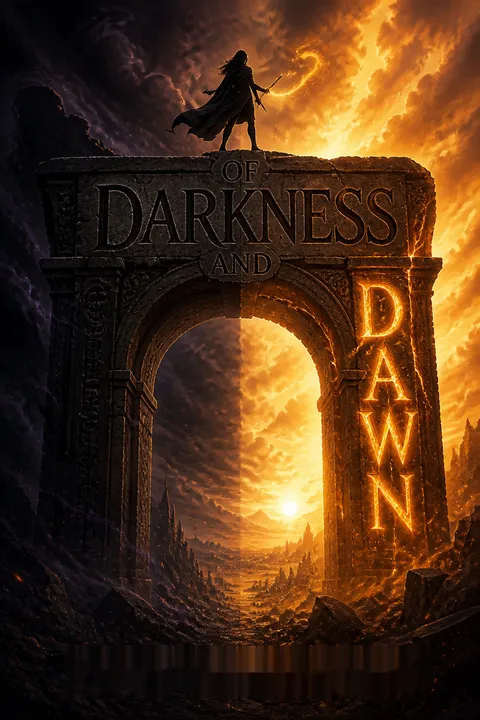
Of Darkness and Dawn is a sweeping, psychologically rich epic that interrogates the nature of power, loyalty, and survival in a world on the brink of collapse. Will Wight crafts a narrative where the boundaries between hero and villain, order and chaos, are constantly shifting. The book's central conceit—the struggle to control or resist the influence of ancient, inhuman powers—serves as both literal conflict and metaphor for the temptations of authority, the weight of history, and the cost of ambition. Through the lens of Shera and her fellow assassins, the story explores the trauma of violence, the seduction of power, and the loneliness of leadership. The fall of the Emperor and the fracturing of the Guilds mirror the real-world anxieties of institutional decay and the search for meaning in a world without clear moral anchors. Ultimately, the book suggests that survival is not victory, and that the true test of character lies not in the ability to kill, but in the willingness to bear the guilt of survival and to forge new paths from the ruins of the old. The lessons are clear: power is always double-edged, loyalty is both virtue and vice, and the dawn is never guaranteed—but it is always worth striving for.
People Also Read
Characters
Shera
Shera is the central figure of the narrative—a master assassin shaped by childhood trauma, Guild indoctrination, and the burden of supernatural power. Her relationship with her Soulbound Vessel, Syphren, is both a source of strength and a constant threat to her autonomy, as the blade's hunger for life mirrors her own struggle with guilt and detachment. Shera's loyalty is complex: she serves the Guild, but is repeatedly forced to question its motives and her own role as executioner. Her journey from tool to leader is marked by loss, betrayal, and the gradual realization that survival often means sacrificing one's own humanity. Her psychological arc is defined by the tension between cold efficiency and the longing for connection, culminating in her reluctant acceptance of leadership and the heavy cost of survival.
Lucan
Lucan is a Reader of rare talent, able to manipulate Intent with subtlety and power. His analytical mind and moral compass set him apart from his fellow assassins, often putting him at odds with the Guild's ruthless pragmatism. Lucan's relationship with Shera is one of mutual dependence and unspoken affection, providing her with a conscience she often lacks. His willingness to sacrifice himself for the greater good—and for Shera—underscores the theme of loyalty's price. Lucan's death is a pivotal moment, leaving Shera adrift and forcing her to confront the emptiness at the heart of her profession. His legacy is one of hope, compassion, and the belief that even in a world of shadows, light can endure.
Meia
Meia is a product of both Guild training and alchemical enhancement, her body and mind shaped for combat. Her loyalty to the Guild and to her friends is unwavering, but she is haunted by the fear of losing control to her monstrous side. Meia's struggle is one of identity: is she a weapon, a protector, or something in between? Her relationship with Shera and Lucan is familial, providing a rare source of stability in a chaotic world. Meia's arc is defined by her attempts to reconcile duty with conscience, and her willingness to risk everything for those she loves. Her survival, despite overwhelming odds, is a testament to resilience and the enduring power of chosen family.
The Emperor
The Emperor is both architect and victim of the world he has built. His mastery of Intent and his use of the Optasia make him a near-god, but his humanity is eroded by centuries of sacrifice and the ever-present threat of Elder corruption. The Emperor's relationship with his assassins is fraught with complexity—he is their mentor, their target, and ultimately their victim. His willingness to die for the greater good is both noble and tragic, highlighting the loneliness of power and the impossibility of perfect leadership. The Emperor's death marks the end of an era, but his influence lingers in the choices and burdens of those he leaves behind.
Yala
Yala, High Councilor of the Consultants, embodies the Guild's ethos of pragmatism and self-preservation. Her willingness to sacrifice individuals for the greater good—and to manipulate events from the shadows—makes her both formidable and morally ambiguous. Yala's relationship with Shera is adversarial, marked by mutual distrust and the knowledge that loyalty to the Guild often means betrayal of the self. Her decisions drive much of the plot's conflict, and her survival at the end is a bitter reminder that power often rewards those willing to do what others will not.
Jarelys Teach
General Teach, Head of the Imperial Guard, is a figure of strength, discipline, and sacrifice. Her body is a testament to the price of power, enhanced and scarred by alchemy and battle. Teach's loyalty to the Emperor is absolute, and her willingness to stand against her own allies in his defense highlights the conflict between personal attachment and duty. Her presence in battle is both awe-inspiring and terrifying, and her actions often serve as a moral counterpoint to the Guilds' machinations. Teach's grief at the Emperor's death is profound, underscoring the human cost of political games.
Bliss
Bliss, Head of the Blackwatch, is both innocent and monstrous—a product of alchemical experimentation and Elder power. Her mastery of the Spear of Tharlos allows her to reshape reality, making her one of the most dangerous figures in the world. Bliss's childlike demeanor masks a deep understanding of power and its consequences, and her actions are often unpredictable. She serves as a reminder that the line between savior and destroyer is thin, and that those who wield the greatest power are often the least constrained by morality or empathy.
Jorin Maze-walker
Jorin is a relic of a bygone age, his knowledge of curses and Intent unmatched. His eccentricity and humor mask a deep sadness and a sense of responsibility for the world's current state. Jorin's relationship with the other Regents is one of camaraderie and rivalry, and his interventions often tip the balance in moments of crisis. His struggle with his own cursed Vessel mirrors Shera's, and his advice is both practical and philosophical. Jorin represents the wisdom of experience, the burden of memory, and the hope that even the most broken can still make a difference.
Darius Allbright
Darius, a Luminian Knight cursed by Urg'naut, is both feared and pitied. His facelessness is both literal and symbolic—a man stripped of identity, forced to serve as executioner for his Guild. Darius's compassion and sense of justice set him apart, and his interactions with Shera challenge her to reconsider the value of mercy. His struggle to retain his humanity in the face of horror is emblematic of the book's central themes: the cost of service, the possibility of redemption, and the enduring power of hope.
Calder Marten
Calder, a Navigator with a checkered past, is thrust into the role of Emperor by the machinations of the Guilds. His ascension is both a triumph and a trap, as he is immediately beset by enemies, Elder cultists, and the weight of impossible expectations. Calder's pragmatism and wit serve him well, but he is constantly forced to choose between survival and principle. His relationship with Meia and the other survivors is marked by mutual respect and the recognition that leadership is as much a burden as a prize.
Plot Devices
Soulbound Vessels and Intent
The concept of Soulbound Vessels—objects Awakened by Intent and bonded to their wielders—serves as both a source of magic and a metaphor for the burdens of power. Each Vessel grants supernatural abilities but also imposes a psychological cost, as the wielder must constantly struggle to maintain control. The process of Awakening, the hunger of the Vessels, and the temptation to surrender to their will are recurring motifs. Intent, as the force that shapes reality, is both a tool and a trap, reflecting the characters' desires, fears, and ambitions. The interplay between wielder and weapon drives much of the character development and the plot's central conflicts.
Parallel Narratives and Perspective
The story employs a parallel narrative structure, with events unfolding simultaneously from different perspectives. The actions of the Regents, Guilds, and assassins intersect and diverge, creating a tapestry of intrigue, betrayal, and revelation. Flashbacks to the past—especially the origins of the Emperor and the training of the assassins—provide context and depth, while also foreshadowing future events. The use of Reader's visions and Elder-induced hallucinations blurs the line between reality and perception, challenging both characters and readers to question what is true.
Foreshadowing and Recursion
The narrative is rich with foreshadowing, as the past continually echoes in the present. The rise and fall of Empires, the recurring threat of the Elders, and the cyclical nature of betrayal and sacrifice all point to the inevitability of history's repetition. Characters are haunted by their own actions and those of their predecessors, and the struggle to break free from the past becomes a central theme. The book's structure reinforces this sense of recursion, with key events—assassinations, awakenings, betrayals—mirroring those of earlier generations.
Moral Ambiguity and Psychological Depth
The story eschews clear-cut heroes and villains, instead presenting a world where every choice carries a cost. The psychological depth of the characters—their guilt, ambition, fear, and longing—drives the narrative as much as external events. The use of internal monologue, conflicting motivations, and unreliable narration creates a sense of moral ambiguity. The question of what it means to serve—an Empire, a Guild, or oneself—is explored through the characters' actions and the consequences they face.
The Elder Empire: Shadow Series


Download PDF
Download EPUB
.epub digital book format is ideal for reading ebooks on phones, tablets, and e-readers.








































