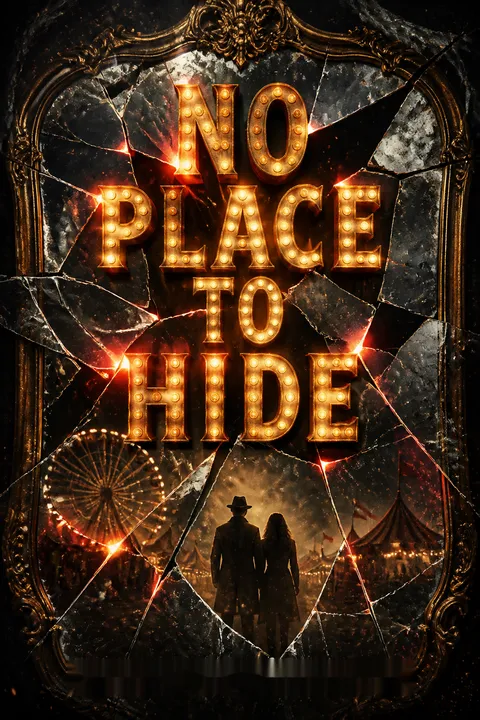

Plot Summary
Carnival Shadows Beckon
Jackson, a brooding ex-con working at a traveling carnival, sweats under the Southern sun, assembling the big top. He's a man with a past, drawn to the anonymity and chaos of carnival life, where no one asks questions and everyone's running from something. Blair, a college girl suffocating under the weight of perfection, arrives at the carnival with her best friend, craving escape from her predictable life. The carnival's garish lights and sinister undertones promise both danger and freedom. Their worlds collide at Shifty's Fun House, a dilapidated haunted house attraction, where a single act of intervention—Jackson stepping in when Blair's ex gets aggressive—sparks a connection neither expects. The air is thick with anticipation, and the carnival's darkness promises to reveal hidden desires.
Perfect Girl, Broken Rules
Blair's life is a carefully curated performance: perfect grades, perfect boyfriend, perfect image. But inside, she's restless, desperate to break free from the suffocating mold. Her breakup with Travis, the golden boy, is less about him and more about reclaiming herself. The carnival's chaos is intoxicating, a place where she can be anonymous and reckless. Jackson, with his rough edges and dangerous aura, is everything she's been warned against. Their flirtation is laced with risk, and Blair is drawn to the thrill of being seen as more than just "perfect." The rules she's lived by begin to unravel as she steps deeper into the carnival's shadows, craving the unknown.
The Fun House Pact
Jackson and Blair's banter outside the fun house is electric, both testing boundaries. Jackson warns her off, revealing his criminal past and the darkness he carries. Blair, undeterred, buys a ticket and enters the fun house alone, braving its cheap scares and claustrophobic corridors. When she emerges, adrenaline high, Jackson is waiting. Their conversation turns into a challenge: if Blair wants to know what it's like to be "bad," Jackson will show her. They strike a pact—one night, no strings, no promises. The fun house becomes their stage, and the carnival their playground for a night of dangerous games.
Temptation in the Dark
The carnival closes, and Blair chooses to stay, defying her instincts and friends. Jackson's warnings become invitations, and Blair surrenders to the thrill. Inside the fun house, darkness amplifies every sensation. Jackson's dominance is intoxicating, his touch both rough and reverent. Blair's fear and excitement intertwine, her body betraying her need for more. Their chemistry is explosive, each encounter pushing Blair further from the girl she was. The fun house's mirrors reflect not just their bodies, but the fractured selves they're both trying to escape. In the shadows, they find a freedom neither knew they craved.
Games of Power Begin
Jackson introduces Blair to a game of hide and seek, but with adult stakes: if she's caught, she'll be punished. The carnival becomes a labyrinth, Blair running barefoot through empty rides and food stalls, adrenaline and terror mingling. Jackson hunts her with predatory focus, delighting in her fear and anticipation. When he catches her, their encounters grow rougher, more primal—bondage, degradation, and pain become part of their dance. Blair's submission is voluntary, her pleasure heightened by the risk. Jackson's control is absolute, but he's careful to remind her of her agency, introducing the concept of a safe word. The line between fear and desire blurs until they're indistinguishable.
Hide, Seek, Surrender
The game escalates as Blair learns to outsmart Jackson, hiding in improbable places like the Ferris wheel's baskets. Each time she's caught, the punishments intensify—public exposure, bondage, and humiliation. Blair's body becomes a canvas for Jackson's desires, marked by bruises and pleasure. Yet, she finds liberation in surrender, discovering parts of herself she never knew existed. Jackson, too, is changed by her willingness, his own walls beginning to crack. Their night is a cycle of pursuit and capture, each round stripping away more of their defenses until only raw need remains.
Caught and Claimed
Jackson's punishments grow more inventive—cages, masks, and pain become tools for transformation. Blair's fear is real, but so is her trust. She learns to beg, to crawl, to endure, and to crave the edge of pain and pleasure. Jackson's dominance is both cruel and caring, pushing Blair to her limits but always watching for her safe word. Their connection deepens, becoming less about the game and more about mutual recognition: two broken people finding solace in each other's darkness. The carnival's emptiness mirrors their isolation, but together, they create a world where nothing is forbidden.
Boundaries and Bruises
The night leaves both marked—Blair with bruises and a scar from shattered glass, Jackson with blood drawn by Blair's hand. Their physical wounds are matched by emotional ones, as both confront the parts of themselves they've tried to hide. Blair is forced to reckon with her own capacity for violence and desire, while Jackson is confronted by the possibility of intimacy beyond domination. Their aftercare is clumsy but sincere, a brief respite before the next round. The carnival's dawn approaches, signaling an end to their night of abandon.
The Monster's Confession
As exhaustion sets in, Jackson and Blair share their darkest secrets. Blair confesses the childhood loss of her twin sister, a wound that never healed. Jackson reveals he killed his best friend in a fight, serving time for manslaughter. The confessions are raw, stripping away any remaining pretense. Blair's fear of Jackson becomes real, but so does her understanding—he is both monster and man, and she is drawn to both. Their honesty is a new kind of intimacy, more terrifying than any game they've played.
Safe Words and Sins
With the night waning, Jackson insists on a safe word, acknowledging the need for boundaries even in their depravity. Blair chooses "bumper cars," a nod to the carnival's absurdity. The negotiation is awkward but necessary, a reminder that even in surrender, she retains power. Jackson promises to push her further, but only with her consent. Their dynamic shifts from predator and prey to something more collaborative—partners in transgression, each responsible for the other's limits.
Breaking and Becoming
The final hours are a blur of sensation—pain, pleasure, degradation, and tenderness. Blair is broken down and rebuilt, her old self left behind in the fun house's shattered mirrors. Jackson, too, is changed, his cynicism eroded by Blair's willingness to meet him in the dark. Their connection is forged in blood, sweat, and tears, a bond that feels both dangerous and necessary. As dawn breaks, the game ends, but neither is ready to return to the world outside.
The Dawn After
The sun rises, signaling the end of their pact. Blair dresses in Jackson's sweatshirt, her body and soul marked by the night. Their goodbye is awkward, both unsure how to bridge the gap between fantasy and reality. Blair leaves, returning to her sterile apartment, haunted by memories and longing for more. Jackson is left alone, questioning whether one night can ever be enough. Both are changed, unable to return to who they were before the carnival.
Haunted by Hunger
Blair struggles to reintegrate into her old life, her scar a constant reminder of what she's lost and gained. Her best friend Mallory senses the change, but Blair cannot explain the depth of her transformation. She is haunted by Jackson's touch, his words, and the freedom she found in surrender. The hunger for more gnaws at her, making ordinary life feel hollow. Jackson, too, is restless, unable to forget the girl who matched his darkness.
The Scar Remains
Blair's scar becomes a symbol of her night at the carnival—a mark of survival and transformation. She clings to Jackson's sweatshirt, unwilling to wash away his scent. The pain is bittersweet, a reminder that she is no longer the girl she was. The world feels too bright, too clean, and she longs for the chaos of the carnival. The scar is both wound and badge, proof that she has been changed forever.
One Night, Never Enough
Weeks pass, but Blair cannot move on. The memory of Jackson is an ache she cannot soothe. She realizes that one night was never enough, that the rules they set were always meant to be broken. The hunger for danger, for surrender, for Jackson, becomes unbearable. She decides to reclaim her agency, to seek him out rather than wait for fate. The carnival's promise of transformation calls to her once more.
Return to the Carnival
Blair tracks the carnival to a new town, determined to find Jackson. The reunion is tense, both wary of reopening old wounds. Jackson tries to push her away, insisting their deal was for one night only. But Blair refuses to accept his rules, confessing her need for more. Their confrontation is explosive, both desperate and afraid. In the end, desire wins—Jackson claims her again, promising another night, and perhaps more. The carnival's lights flicker, signaling that their game is far from over.
Analysis
A modern descent into darkness and self-acceptance"No Place to Hide" is a provocative exploration of the boundaries between fear and desire, control and surrender, self-destruction and self-discovery. Through the lens of a single night at a haunted carnival, the novel interrogates the ways in which trauma, repression, and longing shape identity. Blair's journey from perfectionist to willing participant in her own undoing is both a cautionary tale and a celebration of agency—her willingness to embrace her darkness is portrayed not as a fall from grace, but as a necessary step toward wholeness. Jackson's struggle with guilt and intimacy reflects the difficulty of accepting love when one feels unworthy. The carnival, with its masks and games, becomes a crucible for transformation, where the only rule is honesty about one's desires. Ultimately, the novel suggests that true freedom lies not in running from our monsters, but in learning to dance with them—and that sometimes, the only way to find ourselves is to risk being broken apart.
Review Summary
No Place to Hide is a 99-page dark romance novella set in a Halloween carnival featuring Jackson and Blair's intense encounter involving hide-and-seek and primal play. Reviews are polarized: fans praise the spicy content, well-written scenes, and atmospheric setting, rating it 4-5 stars. Critics found it boring, emotionally flat, and excessively degrading, with Jackson coming across as verbally abusive rather than attractively dark. Common complaints include lack of character depth, poor kink negotiation, and pacing issues despite the short length. The ending hints at a potential sequel.
People Also Read



Characters
Jackson
Jackson is a man running from his past—a violent crime, a stint in prison, and a lifetime of anger issues. The carnival offers him anonymity and a place to channel his darkness, but he remains isolated, mistrustful, and emotionally guarded. His dominance is both a shield and a form of connection, allowing him to control what he cannot in life. Jackson is drawn to Blair's innocence and her willingness to surrender, but he is terrified of intimacy and the possibility of redemption. His journey is one of reluctant vulnerability, as Blair's trust and submission force him to confront his own capacity for care and change. He is both monster and protector, and his struggle is to reconcile those parts of himself.
Blair
Blair is the quintessential "good girl," raised to be perfect in every way—academically, socially, romantically. Beneath the surface, she is suffocating, desperate to break free from expectations and experience something real. The carnival is her escape, and Jackson is the catalyst for her transformation. Through submission, pain, and degradation, Blair discovers her own agency and desires, embracing the parts of herself she was taught to repress. Her journey is one of self-discovery, as she learns to negotiate boundaries, claim pleasure, and accept her own darkness. Blair's willingness to return to Jackson is both an act of rebellion and a declaration of selfhood.
Mallory
Mallory is Blair's best friend and the voice of reason. She is wary of the carnival and deeply suspicious of Jackson, sensing the danger he represents. Mallory's concern for Blair is genuine, but her inability to understand Blair's transformation creates tension. She represents the world Blair is leaving behind—a world of safety, predictability, and judgment. Mallory's presence highlights the cost of Blair's choices and the difficulty of returning to "normal" after crossing certain lines.
Travis
Travis is Blair's ex-boyfriend, the embodiment of her old life. He is controlling, unable to accept their breakup, and blind to Blair's need for change. His aggression at the carnival serves as the catalyst for Blair's encounter with Jackson. Travis's presence is a reminder of the expectations Blair is rebelling against and the emptiness of a life lived for others.
Hank
Hank is an older carnival worker and Jackson's closest confidant. He provides comic relief and a sense of camaraderie in the otherwise bleak world of the carnival. Hank's acceptance of Jackson, despite his flaws, offers a glimpse of the possibility of belonging and redemption.
Sylvester
Sylvester is the carnival's boss, a man who values discretion and efficiency. He represents the rules and structure of carnival life, providing both order and a sense of exile for those who work under him. Sylvester's presence underscores the transient, marginal nature of the carnival and the people it attracts.
Shifty the Clown (Symbolic)
Shifty is the fun house's animatronic clown, a grotesque figure that haunts both the attraction and the narrative. He symbolizes the thin line between terror and excitement, the carnival's promise of transformation, and the masks people wear to hide their true selves. Shifty's presence is a constant reminder that pleasure and fear are often intertwined.
The Carnival
The carnival is more than a backdrop; it is a living, breathing entity that shapes the characters' journeys. Its darkness offers anonymity, its games provide structure for transgression, and its impermanence mirrors the fleeting nature of the night's pleasures. The carnival is both sanctuary and danger, a place where rules are suspended and anything is possible.
Blair's Twin Sister (Memory)
Though deceased, Blair's twin sister represents the innocence and wholeness Blair has lost. Her absence is a wound that shapes Blair's need for escape and her willingness to embrace pain as a form of healing.
Jackson's Best Friend (Memory)
The friend Jackson killed is a ghost that haunts him, fueling his self-destructive tendencies and fear of intimacy. This unresolved guilt is both a barrier and a catalyst for his connection with Blair.
Plot Devices
The Carnival as Liminal Space
The carnival serves as a liminal space where societal rules are suspended, and characters can explore forbidden desires. Its transient nature mirrors the fleeting, transformative quality of the night. The setting enables anonymity, risk-taking, and the blurring of boundaries between pleasure and fear.
The Game Structure
The recurring game of hide and seek is both literal and symbolic. It structures the narrative, providing escalating stakes and opportunities for power exchange. The game becomes a metaphor for the pursuit of self-knowledge, the thrill of being found, and the danger of surrendering control.
Dual Narration
The story alternates between Jackson and Blair's points of view, allowing readers to experience both the predator and prey, the dominant and the submissive. This duality enhances empathy and tension, revealing the psychological complexity of their dynamic.
Safe Word and Consent
The introduction of a safe word foregrounds the importance of consent, even in the most extreme scenarios. It serves as a plot device to explore the paradox of surrendering control while retaining agency, and it marks a turning point in the characters' relationship.
Physical Scars as Symbol
The scars both characters acquire—Blair's on her cheek, Jackson's on his neck—are physical manifestations of their emotional journeys. They symbolize the cost of transgression, the permanence of change, and the impossibility of returning to innocence.
Foreshadowing and Repetition
The narrative uses foreshadowing—references to monsters, masks, and broken mirrors—to hint at the characters' inner turmoil and the inevitability of their collision. Repetition of phrases and motifs (e.g., "no place to hide," "my perfect little slut") reinforces the cyclical nature of their game and the inescapability of their desires.
Download PDF
Download EPUB
.epub digital book format is ideal for reading ebooks on phones, tablets, and e-readers.








































