

Key Takeaways
1. Embrace "No": The Liberating Power of Rejection
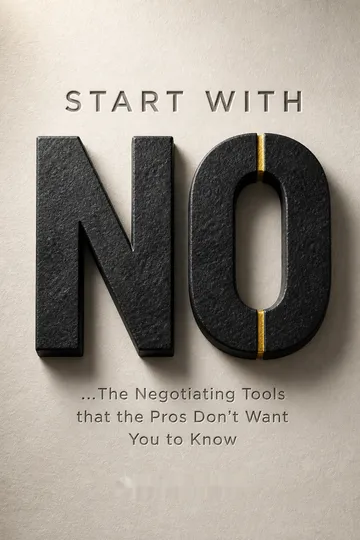
“No,” the word you have been trained to fear, is, in fact, the word that will change your life for the better, forever.
Flip the script. Contrary to popular belief, "yes" is often the worst word in negotiation, leading to fear, compromise, and rushed deals. "No," however, is the best word. It liberates and protects you by maintaining the status quo, allowing for thoughtful decision-making rather than emotional reactions. It's a safe framework to determine the best course of action.
"Maybe" is worthless. While "yes" can be a trap, "maybe" is even worse, leading to wasted time, energy, and emotional turmoil without any real progress. It leaves both parties guessing and prevents genuine understanding. By contrast, a clear "no" forces both sides to justify their position, leading to elucidation and a solid foundation for discussion.
"No" builds trust. Politely saying "no," calmly hearing "no," and inviting "no" from the other side immediately lowers emotional intensity and breaks down barriers. It signals that all parties are adults, ready to talk rationally without fear of failure or rejection. This openness fosters respect and allows for honest communication, leading to stronger, more durable agreements.
2. Conquer Neediness: You Do Not Need This Deal
You do not need this agreement.
Neediness is a killer. In negotiation, showing neediness makes you vulnerable to predators who will exploit your fear of failure. Whether it's talking too much, offering unsolicited discounts, or exaggerating scenarios, any sign of desperation puts you at a disadvantage. Many negotiators are experts at creating neediness in others to gain the upper hand.
"Want" versus "Need." Distinguish between what you truly need (basic survival) and what you want (aspirations, deals). You may want a particular deal, but you never need it. This mindset shift from "need" to "want" instantly changes your attitude, projecting confidence and control, which is perceived by the other side.
Control your emotions. Neediness is an emotional state that leads to poor decisions and unnecessary compromises. By controlling your own neediness, you can remain calm and disciplined, allowing you to focus on facts rather than fear. If the other side senses your detachment, they are more likely to engage in a fair negotiation.
3. Focus on Behavior, Not Results: The Folly of Chasing Outcomes
Think behavior. Forget results.
Control your actions. Just as a home-run hitter focuses on mechanics, not the outcome, a successful negotiator concentrates solely on controllable actions and behaviors. Setting quantitative targets or "performance goals" (e.g., closing a deal by a certain date, selling X widgets) is futile because you cannot control the other party's decisions or external factors.
"No closing" rule. The urge to "close, close, close" betrays neediness and a focus on results, often leading to premature compromises. Instead, allow the other party ample time to consider their decision, even inviting them to say "no." This approach builds confidence in the deal and in you, as it shows you're not desperate.
Beware unworthy activities. Differentiate between "payside" activities (directly related to a specific negotiation) and "nonpayside" activities (necessary but not directly advancing the deal). Avoid wasting time on nonpayside tasks or confusing them with productive work. Focus on activities that drive decisions with real decision-makers, not just busywork.
4. Root Your Mission in Their World: The Greatest Negotiation Secret
In any negotiation, your mission and purpose must be rooted in the world of the other side.
Their world, their benefit. Your Mission and Purpose (MP) is not about your personal ambitions or company profits; it's about what you bring to the table that benefits the other side. A valid MP guides your decisions by focusing on solving their problems and enhancing their future, ensuring long-term agreements that stick.
Crafting your MP. Develop your MP by:
- Listing all features of your product, service, or role.
- Identifying the specific benefits each feature provides to the other party.
- Prioritizing these benefits based on their importance to the other side.
- Writing a concise statement of your continuing task/responsibility and long-term aim, always from their perspective.
MP provides insulation. A strong, valid MP acts as a "missile defense shield" against threats, demands, and emotional manipulation. It provides unwavering guidance, allowing you to calmly say "no" to offers that don't align with your purpose, regardless of how tempting they may seem in the short term. This conviction is crucial for high-stakes negotiations.
5. Build Their Vision: Decisions Follow Seeing, Not Telling
No vision, no decision.
Vision drives action. People make decisions based on a vision of a problem to be solved or a desired future state. Your primary task as a negotiator is to build this vision for the other side, helping them see their problem and your solution without explicitly telling them what to think. Without a clear vision, they will not take action or make a decision.
Uncover hidden problems. Sometimes the other side isn't even aware of their true problem, or they're actively hiding it. Your role is to gently peel back the layers, asking questions that lead them to discover these issues for themselves. Avoid direct confrontation or exclamations like "You don't get it!" as this only creates defensiveness and destroys vision.
Seeing precedes understanding. You cannot simply "tell" someone something and expect them to rationally understand and act. People must see the implications and benefits in a visceral way before they can rationally comprehend. Like Thomas Edison letting his ticker-tape machine run silently, allow the other party to experience the value, then guide their understanding with questions.
6. Master Interrogative Questions: The Art of Uncovering Truth
“Who,” “what,” “when,” “where,” “why,” “how,” and “which”: These famous interrogatives are the safest questions in a negotiation.
Avoid verb-led questions. Questions starting with verbs (e.g., "Should you...?", "Is this...?") typically elicit "yes," "no," or "maybe" answers. "Maybe" is useless, and "yes" can be misleading. Verb-led questions often feel manipulative, putting the other party on the defensive. They hinder genuine information gathering and vision building.
Interrogatives build vision. Questions beginning with "who," "what," "when," "where," "why," "how," and "which" are open-ended and invite detailed responses. They encourage the other side to articulate their thoughts, problems, and vision, providing you with invaluable information. These questions are non-threatening and help you enter their world.
Nurture and simplify. Ask short, precise, interrogative-led questions, one at a time, and listen intently to the answers. Avoid jargon and overly complex phrasing. Your tone of voice and body language should be nurturing, putting the other person at ease. This approach helps them feel "okay" and encourages them to share more, fostering a collaborative environment for problem-solving.
7. Blank-Slate to Success: Discard Assumptions and Expectations
Be a blank slate. Work with the best possible facts and information, not with assumptions and expectations that are so often dead wrong.
Assumptions are dangerous. Our tendency to "know" or "read" others often leads to unwarranted assumptions about their thoughts, needs, and intentions. These assumptions can derail negotiations, leading to missed opportunities or costly mistakes, as seen in the example of Oscar's $25 million acquisition that became $60 million due to unasked questions.
Expectations are killers. Both positive and negative expectations are detrimental. Positive expectations (e.g., "This deal is a lock!") can lead to neediness and vulnerability, making you susceptible to manipulation. Negative expectations (e.g., "They'll never agree to this price") can cause you to give up prematurely or miss opportunities. Recognize them, then discard them.
Research and note-taking. Combat assumptions and expectations by diligently researching the other party, their industry, and market conditions. More importantly, cultivate the discipline of "blank-slating" by taking meticulous notes during every interaction. Note-taking forces you to listen, silences your internal monologue, and captures crucial non-verbal cues, ensuring you work with facts, not guesswork.
8. Identify the Real Decider: Navigate the Shell Game of Authority
Who’s calling the shots?
Uncover the true authority. In any negotiation, it's critical to identify the real decision-makers. Organizations, especially large ones, often have complex and shifting decision processes, with many individuals acting as "messengers" or "blockers" rather than ultimate deciders. Failing to reach the true authority can lead to wasted time and failed negotiations.
Negotiate access. When dealing with messengers, don't simply hand over your proposal. Instead, negotiate an agreement on how your information will be presented to the decision-makers, ensuring your continued involvement. If a blocker obstructs access, respectfully work to circumvent them, perhaps by starting at the top or negotiating a coaching role for your contact.
Respect blockers, but proceed. Blockers often act out of a need to feel "okay" or to protect their territory. Always show them respect, but don't let them derail your progress. Your ability to identify and navigate these individuals, whether by gaining their cooperation or finding alternative routes, is crucial for reaching those who can genuinely make decisions.
9. Negotiate Every Agenda: Clarity for Every Interaction
The only valid agenda—the only agenda that will produce results—is the one that has been “negotiated” with the other side.
Agendas for all communications. Every interaction, from a phone call to an email or a formal meeting, requires a clear agenda. This isn't just a list of topics; it's a structured plan that clarifies your purpose, helps prioritize issues, and keeps the negotiation on track. For teams, negotiated agendas are vital for cohesion and consistent messaging.
Five essential categories. A valid agenda includes:
- Problems: Issues holding back progress (yours or theirs).
- Our Baggage: Your own attitudes or past experiences affecting your decisions.
- Their Baggage: Your educated guess about their attitudes or past experiences.
- What We Want: Your specific desired outcome, framed as a decision for them to make.
- What Happens Next: The agreed-upon next steps, ensuring clear follow-through.
Transparency is key. There are no hidden agendas in the "No" system. Every element of your agenda must be openly shared and negotiated with the other side. This transparency builds trust, prevents surprises, and ensures that all parties are aligned on the purpose and direction of the interaction, making "yes" or "no" decisions more informed and productive.
10. Budget Beyond Money: Manage Time, Energy, and Emotion
Budget is the only way to take into careful account these four factors that are so important and yet so often overlooked as a total package that can undermine any negotiation.
Comprehensive budgeting. A negotiation budget extends beyond financial costs to include time, energy, and emotion. These four elements are interconnected: an increase in one often drives up the others. Monitor your investment in each category to prevent overcommitment and maintain control.
Relative value of budget items:
- Time (1x): Be disciplined with your schedule; don't waste time on unproductive activities.
- Energy (2x): Conserve mental and physical energy by avoiding pointless meetings or chasing "maybes."
- Money (3x): Understand your financial limits and those of the other side. Don't get drawn into bidding wars you can't afford.
- Emotion (4x): This is the most volatile factor. Excitement or fear can dramatically inflate your overall budget, leading to poor decisions.
Strategic budget management. Aim to keep your own budget low while strategically increasing the other side's budget (e.g., by making them do more research or travel). This isn't gamesmanship; it's a way to focus their attention and build their vision of the issues. If your budget becomes uncontrollable, be prepared to walk away, as a compromised deal is rarely worth the cost.
11. Utilize Power Tools: 3+, Stripping, and Not Presenting
The greatest presentation you will ever give is the one the other party never sees.
"3+" for clarity. The "3+" principle involves repeating a question or statement at least three times, often with slight variations. This ensures clarity, reinforces key points, and gives the other side ample opportunity to process and respond, including saying "no." It's a tool for verification, not pressure, and helps solidify agreements.
Stripping lines for emotional control.
- Positive Strip Line: Gently dampen overly positive emotions (e.g., "That's great, but we still have challenges.") to prevent buyer's remorse and bring the negotiation back to a neutral, rational zone. It acts as a gentle brake.
- Negative Strip Line: Join the other side's negativity (e.g., "You're right, this is a mess. It's probably worse than you think.") to startle them into re-evaluating their stance and shifting towards a more moderate position.
Avoid formal presentations. Formal presentations often put the other side in a judgmental mode, inviting objections and revealing your hand prematurely. If you've effectively built vision through questions and research, a presentation is often unnecessary. If required, ensure it's negotiated, addresses their specific problems, and is delivered to the real decision-makers, focusing only on relevant information.
People Also Read




Download PDF
Download EPUB
.epub digital book format is ideal for reading ebooks on phones, tablets, and e-readers.








































