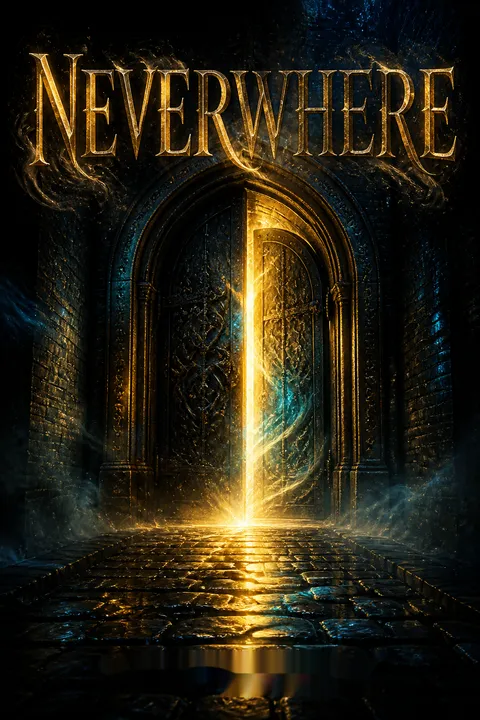

Plot Summary
A Door Opens
Richard Mayhew, a young, unremarkable man with a kind heart, is living a predictable life in London Above, engaged to the ambitious Jessica. One night, on the way to an important dinner, he finds a wounded, desperate girl named Door on the sidewalk. Against Jessica's protests, Richard helps Door, taking her home and tending her wounds. This act of compassion, seemingly small, becomes the catalyst that unravels his entire existence. As Richard's world begins to shift, he is drawn into a hidden, magical realm beneath the city—London Below—where nothing is as it seems, and kindness can be both a blessing and a curse.
Into London Below
After helping Door, Richard's life in London Above begins to vanish. He becomes invisible to friends, colleagues, and even his fiancée. Desperate and confused, he seeks answers, only to find himself ignored and erased from the world he knew. Homeless and alone, Richard is forced to follow the only thread left to him: the mysterious Door and the strange, dangerous world she inhabits. He descends into London Below, a shadowy, surreal underworld filled with forgotten people, talking rats, and ancient secrets, where the rules of reality are rewritten and survival depends on wit, courage, and unlikely alliances.
The Girl Called Door
Door, the last surviving member of a powerful family with the ability to open any door, is on the run from the ruthless assassins Croup and Vandemar. Her family was slaughtered for reasons she does not understand, and she is hunted for her unique gift. With Richard's help, she seeks the enigmatic Marquis de Carabas, a trickster and fixer in London Below, to aid her quest for answers and protection. Door's vulnerability and determination draw Richard deeper into her world, binding their fates together as they search for allies and a way to survive.
Croup and Vandemar Hunt
The sinister duo, Mr. Croup and Mr. Vandemar, are ancient, inhuman assassins hired to eliminate Door and anyone who helps her. Their pursuit is merciless and inventive, leaving a trail of fear and death. As Richard and Door navigate the dangers of London Below, Croup and Vandemar's presence is a constant threat, forcing the unlikely companions to rely on the Marquis' cunning and Door's abilities. The tension escalates as the assassins close in, and Richard realizes that the rules of morality and safety he once knew no longer apply.
The Floating Market
To find help and information, Door, Richard, and the Marquis travel to the Floating Market, a magical, ever-shifting bazaar where the denizens of London Below gather to trade goods, favors, and secrets. Here, they seek a bodyguard for Door and encounter a vibrant tapestry of characters—rat-speakers, sewer folk, and the legendary Hunter, a warrior with her own agenda. The Market is a place of truce, but danger still lurks in the shadows. Amidst the chaos, alliances are forged, betrayals are seeded, and the group's quest takes on new urgency.
Becoming Invisible
As Richard becomes more entangled in London Below, his existence in London Above fades completely. He is forgotten by everyone he once knew, his possessions lost, his home taken by strangers. The pain of erasure is profound, and Richard is forced to confront his own identity and worth. Yet, in the depths of despair, he discovers unexpected resilience and resourcefulness. The journey through invisibility becomes a crucible, transforming Richard from a passive bystander into an active participant in his own fate and the fate of those around him.
The Marquis' Bargain
The Marquis de Carabas, ever the opportunist, negotiates dangerous bargains with both friends and foes. He trades favors, secrets, and even his own safety to secure the group's passage and protection. His actions are driven by old debts—especially to Door's family—and a desire to stay one step ahead of Croup and Vandemar. The Marquis' duplicity and charm are both a blessing and a risk, as his schemes often place the group in peril. Yet, his knowledge of London Below's politics and his willingness to sacrifice himself prove invaluable.
The Bridge's Toll
To reach the next stage of their quest, the group must cross Night's Bridge, a passage that demands a toll—often a life. The rat-speaker girl Anaesthesia, who has guided Richard, is taken by the darkness, a sacrifice that haunts him. The crossing is a harrowing ordeal, filled with hallucinations and existential terror, forcing Richard to confront his deepest fears. The loss of Anaesthesia marks a turning point, hardening Richard's resolve and underscoring the real cost of survival in London Below.
The Bodyguard's Trial
At the Floating Market, Door auditions bodyguards and ultimately chooses Hunter, a legendary warrior with a mysterious past. Hunter's prowess is unmatched, but her true intentions remain ambiguous. As the group faces trials—physical and moral—Hunter's loyalty is tested, and her fascination with the mythical Beast of London becomes apparent. The dynamics of trust and betrayal intensify, foreshadowing future conflicts and the possibility that not all allies are what they seem.
The Angel Islington
The group seeks the Angel Islington, a beautiful, exiled being who promises to help Door discover who killed her family and restore Richard's life—if they retrieve a key from the Black Friars. Islington's ethereal charm masks a chilling ambition, and its motives are shrouded in mystery. The angel's offer is both a beacon and a trap, setting the group on a perilous quest that will test their courage, loyalty, and understanding of good and evil.
The Black Friars' Ordeal
To obtain the key, one of the group must undergo the Black Friars' ordeal—a test of spirit and sanity. Richard volunteers and is plunged into a hallucinatory trial that forces him to confront his own fears, failures, and sense of self. The ordeal is both psychological and metaphysical, stripping Richard to his core and rebuilding him as someone stronger, braver, and more self-aware. Emerging victorious, he earns the key and the respect of his companions, but the cost is a permanent transformation.
The Labyrinth and the Beast
With the key in hand, the group must traverse the ancient labyrinth, home to the monstrous Beast of London. Betrayal strikes as Hunter, revealed to be working for Islington, turns on her friends in exchange for the chance to face the Beast. In a brutal confrontation, Hunter is mortally wounded, and Richard, guided by her dying instructions, slays the Beast. This act cements his role as a true hero of London Below, but the victory is bittersweet, marked by loss and the knowledge that the greatest dangers still lie ahead.
Betrayal and the Key
The group is fractured by betrayal—Hunter's deal with Islington, the Marquis' near-death at the hands of Croup and Vandemar, and Door's manipulation by the angel. The key, the object of so much sacrifice, is finally delivered to Islington, who reveals its true, apocalyptic intentions. The lines between friend and foe blur, and Richard and Door are left isolated, chained, and at the mercy of powers far beyond their understanding.
The Angel's True Face
Islington's mask of benevolence falls away, revealing a vengeful, megalomaniacal being determined to use Door's power and the key to escape its prison and conquer Heaven itself. Croup and Vandemar, now expendable, turn on their employer, and chaos erupts. Door, using her wits and courage, tricks Islington, opening a door not to Heaven but to a distant, inescapable void, banishing the angel and its minions forever. The victory is hard-won, and the survivors are left to pick up the pieces in the aftermath.
The Door Home
With the threat vanquished, Door offers Richard the chance to return to his old life in London Above, using the power of the key. The moment is bittersweet—Richard has grown and changed, and the world he once knew now feels alien. Door, too, must face her own future, tasked with uniting the fractured world of London Below and seeking her lost sister. Their farewell is heartfelt, marked by gratitude, sorrow, and the unspoken possibility of reunion.
Above and Below Again
Richard finds himself back in London Above, restored to visibility, status, and comfort. He regains his job, a better apartment, and the trappings of success. Yet, the experiences of London Below have left an indelible mark. The mundane world feels hollow, and Richard is haunted by memories of Door, Hunter, and the friends and enemies he left behind. The contrast between the two worlds becomes a source of existential longing and disquiet.
The Cost of Return
Despite regaining everything he thought he wanted, Richard is restless and unfulfilled. Relationships feel shallow, routines meaningless, and the magic of London Below calls to him. Encounters with old friends and former fiancées only deepen his sense of alienation. The treasures of the surface world cannot replace the sense of purpose, adventure, and connection he found below. Richard is forced to confront the true cost of returning to normalcy: the loss of meaning and belonging.
The Choice to Belong
Unable to ignore the call of London Below, Richard seeks a way back, desperate to reclaim the life and identity he forged in the darkness. In a final act of will, he creates a door, summoning the Marquis de Carabas and stepping through into the unknown. Richard's journey comes full circle—not as a lost soul, but as someone who has chosen where he belongs. The story ends with the promise of new adventures, the enduring power of kindness, and the affirmation that sometimes, to find yourself, you must first be lost.
Analysis
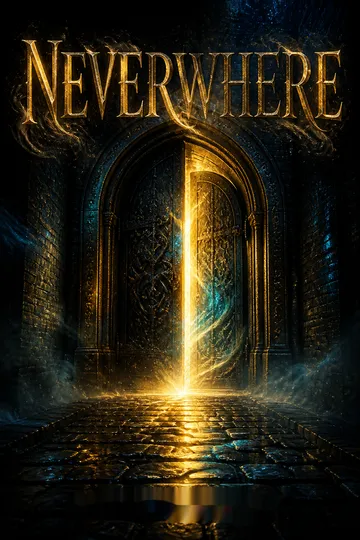
Neverwhere is a modern urban fantasy that uses the hidden world beneath London as a metaphor for social exclusion, personal transformation, and the search for meaning in a world that often overlooks the vulnerable. Neil Gaiman's narrative is both a thrilling adventure and a meditation on compassion—the simple act of helping a stranger becomes the axis on which Richard's entire life turns. The novel interrogates the boundaries between the ordinary and the extraordinary, suggesting that true heroism lies not in grand gestures but in small acts of kindness and the willingness to face the unknown. The duality of London Above and Below reflects the realities of urban life, where the marginalized are often invisible to those in comfort. Through Richard's journey, the story explores the cost of change, the pain of loss, and the necessity of choosing one's own path. Ultimately, Neverwhere is a celebration of resilience, imagination, and the enduring power of human connection—a reminder that sometimes, to find ourselves, we must first be willing to be lost.
Review Summary
Neverwhere is a beloved urban fantasy novel that transports readers to a magical underground London. Many praise Gaiman's vivid worldbuilding, memorable characters, and clever humor. The story follows Richard Mayhew as he discovers a hidden world beneath the city. While some found the plot predictable, most enjoyed the imaginative setting and Gaiman's engaging writing style. Criticisms include a slow start and underdeveloped characters. Overall, readers appreciate the book's whimsical yet dark tone and its exploration of themes like identity and belonging.
People Also Read


Characters
Richard Mayhew
Richard begins as an unremarkable, passive young man, defined by his ordinary life and his desire to please others, especially his fiancée Jessica. His act of kindness toward Door is the catalyst that destroys his old identity and thrusts him into the perilous world of London Below. Throughout the story, Richard is tested physically, emotionally, and spiritually—facing invisibility, betrayal, and the loss of everything familiar. His journey is one of self-discovery and growth; he evolves from a bystander to a hero, ultimately choosing the world that values his courage and heart. Richard's arc is a meditation on the cost and necessity of change, and the power of compassion to open new worlds.
Door
Door is the last of her family, gifted with the magical ability to open any door—literal or metaphorical. Traumatized by the murder of her family, she is driven by a need for answers and vengeance, but also by a deep sense of responsibility. Door is resourceful, intelligent, and vulnerable, relying on her wits and the loyalty of her companions. Her relationship with Richard is complex—she is both his guide and his charge, and their bond is forged through shared danger and mutual respect. Door's journey is one of reclaiming agency, confronting betrayal, and embracing her role as a leader in the fractured world of London Below.
Marquis de Carabas
The Marquis is a cunning, enigmatic figure who thrives on bargains, secrets, and calculated risks. He is motivated by old debts—especially to Door's family—and a desire to maintain his own autonomy in a world of shifting alliances. The Marquis' duplicity masks a deep loyalty, and his willingness to sacrifice himself for others is revealed through his near-fatal bargain with Croup and Vandemar. Psychologically, he is both self-serving and self-sacrificing, a man who understands the cost of survival and the value of keeping one's word. His presence is a reminder that in London Below, nothing is free, and every favor has a price.
Hunter
Hunter is the most feared and respected bodyguard in London Below, renowned for her strength, skill, and stoic demeanor. Beneath her competence lies a consuming obsession: to slay the mythical Beast of London. This desire leads her to betray Door and her companions, trading their safety for the chance to fulfill her quest. Hunter's arc is tragic—her need for glory and redemption blinds her to loyalty, and her death is both a punishment and a release. She represents the dangers of unchecked ambition and the loneliness of those who live only for the hunt.
Mr. Croup
Mr. Croup is one half of the story's primary antagonistic duo, a foppish, eloquent, and utterly ruthless killer. He delights in language, cruelty, and the suffering of others, operating with a sense of theatricality and malice. Croup's relationship with Vandemar is symbiotic—he is the brains to Vandemar's brawn. Psychologically, Croup is a sociopath, motivated by profit, pleasure, and the thrill of the hunt. His presence embodies the arbitrary, predatory dangers of London Below.
Mr. Vandemar
Mr. Vandemar is the muscle to Croup's mind, a hulking, nearly inhuman figure who relishes violence and has a childlike fascination with death. He is less articulate but more physically imposing, and his loyalty to Croup is absolute. Vandemar's psychology is simple: he enjoys causing pain and is indifferent to morality or consequence. Together with Croup, he represents the primal, amoral forces that prey on the vulnerable in the underworld.
Angel Islington
Islington is a being of immense power and beauty, exiled for its role in the destruction of Atlantis. It presents itself as benevolent and wise, but beneath the surface is a being consumed by resentment, ambition, and a desire for revenge. Islington manipulates Door and her companions, orchestrating the events that lead to its attempted escape and conquest. Psychologically, Islington is a study in the corruption of power and the dangers of unchecked pride. Its fall is both literal and symbolic—a warning about the consequences of hubris.
Anaesthesia
Anaesthesia is a young rat-speaker who helps Richard navigate London Below. Her kindness and vulnerability make her a symbol of the world's forgotten and discarded. Her death on Night's Bridge is a pivotal moment, marking the true cost of the journey and the randomness of loss. Anaesthesia's brief presence lingers as a reminder of the fragility of innocence in a dangerous world.
Jessica Bartram
Jessica is Richard's fiancée in London Above, driven by status, ambition, and a desire for control. Her inability to understand Richard's compassion for Door and her subsequent rejection of him highlight the limitations of the surface world's values. Jessica's role is to embody the life Richard leaves behind—a life of safety, predictability, and emotional sterility.
Old Bailey
Old Bailey is a quirky, bird-loving denizen of London Below who aids the Marquis and, indirectly, Door and Richard. He represents the wisdom of the city's margins, a figure who survives by staying above the fray and trading in information. Old Bailey's actions are motivated by self-preservation, curiosity, and a grudging sense of loyalty. He is a reminder that even in a world of magic and danger, kindness and eccentricity have their place.
Plot Devices
Duality of London: Above and Below
The central device of Neverwhere is the existence of two parallel Londons: the familiar, mundane London Above, and the magical, perilous London Below. This duality serves as both a literal setting and a metaphor for social invisibility, marginalization, and the unseen struggles of the city's forgotten. Characters move between worlds, but the cost of crossing is high—identity, memory, and belonging are constantly in flux. The narrative structure uses this device to explore themes of compassion, transformation, and the search for meaning, with Richard's journey mirroring the reader's own confrontation with the unknown.
The Hero's Journey and Transformation
Richard's arc follows the classic hero's journey: a call to adventure, descent into the underworld, trials and allies, confrontation with evil, and return (or refusal of return). Each stage is marked by tests—physical, moral, and existential—that force Richard to shed his old self and embrace a new identity. The use of ordeals (the Black Friars' trial, the crossing of Night's Bridge, the slaying of the Beast) provides both narrative momentum and psychological depth, illustrating the necessity of loss and suffering for true growth.
Foreshadowing and Symbolism
The story is rich with symbols: doors represent choices, transitions, and the power to change one's fate; keys symbolize access, agency, and the unlocking of hidden truths; the Beast embodies primal fear and the necessity of confronting one's demons. Foreshadowing is woven throughout—early warnings about doors, the recurring motif of being "lost," and the presence of Croup and Vandemar all hint at future dangers and betrayals. These devices deepen the narrative, inviting readers to look beyond the surface and question what is truly real.
Unreliable Reality and Identity
The narrative frequently questions the nature of reality—Richard's ordeal with the Black Friars, his erasure from London Above, and his struggle to return all force both character and reader to confront the instability of identity and the possibility that the world is stranger than it appears. The use of hallucinations, shifting perceptions, and ambiguous encounters (such as with the Velvets or Islington) keeps the reader off-balance, mirroring Richard's own journey from certainty to self-knowledge.
London Below Series
About the Author



Download PDF
Download EPUB
.epub digital book format is ideal for reading ebooks on phones, tablets, and e-readers.








































