
Key Takeaways
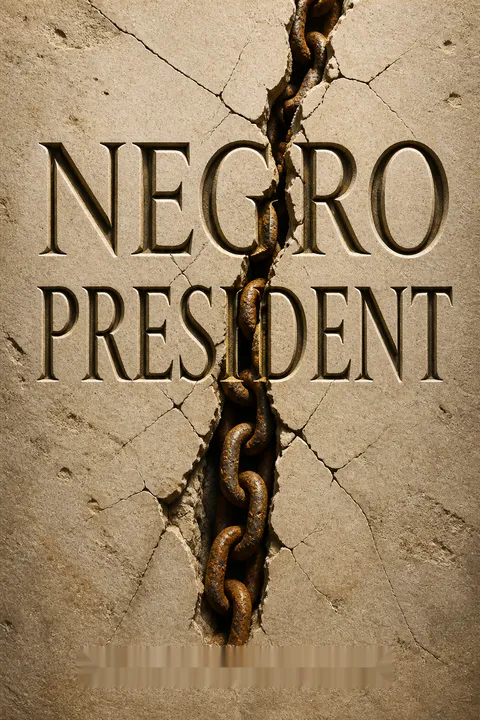
1. Jefferson's 1800 victory was dubbed "Negro President" due to slave representation.
Jefferson hailed his 1800 victory as a triumph of democracy and majority rule when, as the Mercury and New-England Palladium of Boston said (January 20, 1801), he had made his 'ride into the temple of Liberty on the shoulders of slaves.'
Federalist criticism. Opponents of Thomas Jefferson, particularly New England Federalists, derisively called him the "Negro President" after the 1800 election. This label underscored their belief that his victory was not a true reflection of popular will but rather a consequence of the Constitution's three-fifths clause. They argued that his claim of a "Second Revolution" based on majority rule was disingenuous, as a significant portion of his electoral support derived from non-voting enslaved individuals.
Electoral advantage. While Jefferson won by a narrow margin of eight electoral votes, at least twelve of his votes were directly attributable to the three-fifths clause. This meant that if only the votes of free citizens had been counted, John Adams would have secured re-election. Federalists like Timothy Pickering and Senator William Plumer highlighted this disparity, pointing out that:
- "Negro votes made Mr. Jefferson president."
- "Negro electors exceed those of four states, and their representatives are equal to those of six states."
- The half-million slaves affecting the outcome had "no more will in the matter than New England horses, cows, and oxen."
Undermining democracy. This criticism was not merely partisan; it struck at the heart of democratic principles. Federalists argued that counting slaves, who had no political agency, to boost the representation of their owners was immoral and created an incentive to acquire more slaves, further increasing Southern political power. This fundamental flaw, they contended, distorted the very foundation of representative democracy.
2. The Three-Fifths Clause, a compromise, disproportionately empowered slave states.
The admission of slaves into the representation, when fairly explained, comes to this: that the inhabitant of Georgia and South Carolina who goes to the coast of Africa and, in defiance of the most sacred laws of humanity, tears away his fellow creatures from their dearest connections and damns them to the most cruel bondage, shall have more votes in a government instituted for protection of the rights of mankind than the citizen of Pennsylvania or New Jersey who views with a laudable horror so nefarious a practice.
Origins in taxation. The three-fifths ratio originated not in representation, but in debates over taxation under the Articles of Confederation. Southern states initially opposed counting slaves for tax purposes, arguing they were property. However, when the discussion shifted to representation in the new Constitution, Southern delegates insisted on counting slaves to boost their political power.
Southern ultimatum. During the Constitutional Convention, Southern states, particularly from the Deep South, made it clear that they would not ratify the Constitution without this concession. Delegates like William Davie of North Carolina stated that his state "would never confederate on any terms that did not rate them at least as three fifths." This threat forced a compromise, despite strong moral objections from some Northern delegates like Gouverneur Morris, who called it "a nefarious institution."
Distorted representation. The clause ultimately granted slave states one-third more seats in Congress than their free population warranted. This disproportionate power was not merely about immediate numbers but about future influence, as Southern delegates anticipated significant growth in slave populations and the addition of new slave states in the West. This foresight proved accurate, giving the South a permanent political advantage for decades.
3. Slavery's influence permeated all levels of early American government and policy.
The federal ratio was, therefore, just the starting point for seizing and solidifying positions of influence in the government.
Beyond direct votes. The impact of the three-fifths clause extended far beyond simply boosting electoral votes. It fundamentally shaped the balance of power in Congress, particularly in the House of Representatives, and consequently influenced presidential nominations and elections. This systemic advantage allowed the "slave power" to control key legislative and executive functions.
Strategic control. For over half a century leading up to the Civil War, slaveholders consistently dominated national politics. This control manifested in:
- Presidency: Slaveholders held the presidency for 50 out of 62 years.
- Speaker's Chair: Slaveholders occupied the Speaker's chair for 41 years.
- House Ways and Means: Slaveholders chaired this crucial committee for 42 years.
- Supreme Court: 18 out of 31 Supreme Court justices were slaveholders.
This entrenched power ensured that policies favorable to slavery were consistently advanced or protected.
Political maneuvering. The federal ratio also influenced party caucuses and conventions, guaranteeing that Democratic presidential nominations were friendly to slave interests. When control seemed to wane, a two-thirds requirement for nominations was introduced, giving the South veto power over unacceptable candidates. This pervasive influence meant that even when the clause didn't directly determine a vote, its underlying power shaped political calculations and alliances.
4. Timothy Pickering consistently championed abolition and opposed the slave power's expansion.
David McLean says this clause made Pickering 'one of the first public men in any part of the world to propose concrete measures for limiting black slavery.'
Early abolitionist. Timothy Pickering, a prominent Federalist from Massachusetts, was a lifelong opponent of slavery, a stance inherited from his abolitionist father. In 1783, a year before Jefferson's proposal, Pickering drafted a plan for a new state in the Northwest Territory that included "the total exclusion of slavery from the state to form an essential and irrevocable part of the Constitution." He actively lobbied Congress to adopt this clause without any grace period, unlike Jefferson's later, less effective version.
Moral and political opposition. Pickering's opposition to slavery was both moral and pragmatic. He saw the three-fifths clause as an unjust reward for slaveholding and a threat to New England's political and commercial interests. He consistently fought against:
- The three-fifths clause itself, advocating for its repeal.
- The expansion of slavery into new territories like Louisiana.
- Policies that he believed benefited the slave power at the expense of national unity and Northern prosperity.
Support for black freedom. His commitment extended to supporting the Haitian Revolution, where he, as Secretary of State under John Adams, actively aided Toussaint Louverture's black rebellion against French control. He also defied criticism by hiring black men for the postal service, demonstrating a practical commitment to racial equality that was rare among his contemporaries. Pickering's unwavering stance made him a hero to later abolitionists like William Lloyd Garrison.
5. Jefferson's stance on slavery in new territories evolved with political and economic calculations.
By 1820, Jefferson had experienced the importance of adding slave states, with the swollen power given them by the 'representation' of slaves.
Shifting principles. While Thomas Jefferson proposed banning slavery in the Northwest Territory in 1784, his commitment to this principle waned significantly as the political landscape changed. In 1784, under the Articles of Confederation, banning slavery would not have impacted Southern representation, as each state had one vote. However, after the Constitution's adoption and the implementation of the three-fifths clause, the calculus shifted dramatically.
"Empire of Liberty" and slave power. Jefferson's vision of an "empire of liberty" in the West became intertwined with the expansion of slave states. By 1820, during the Missouri Compromise debates, he vehemently denied Congress's right to ban slavery in any territory where inhabitants desired it. This reversal was driven by the realization that new slave territories, with their "representation" of slaves, would bolster the "agrarian interest" and the political power of the South.
Economic incentives. The acquisition of territories like Louisiana and the Floridas, and the potential for more, offered immense economic benefits to slaveholders. Virginia, with its depleted tobacco lands, saw a growing surplus of enslaved people. The expansion of slave territories created new markets, driving up prices for these "capital-replenishers." Jefferson himself, despite condemning the international slave trade, sold 85 of his own slaves, many through auction, likely to out-of-state buyers seeking labor for new plantations.
6. The Haitian Revolution exposed deep American divisions on black freedom and self-governance.
The first revolutionary regime in the New World was coming to the aid of the second one.
Contrasting responses. The Haitian Revolution (1791-1804), where enslaved people overthrew French colonial rule, presented a stark challenge to American ideals and exposed deep divisions. Under President John Adams and Secretary of State Timothy Pickering, the U.S. actively supported Toussaint Louverture's black rebellion. Pickering saw this as a blow against France and a step towards freedom, even arranging for the first-ever dinner between an American president and a man of color.
Jefferson's fear and betrayal. Thomas Jefferson, however, viewed the Haitian Revolution with profound fear and hostility. Despite his rhetoric of liberty, his sympathies lay with the white plantation owners, whom he saw as his "caste." He feared that a successful black republic would incite slave rebellions in the American South, lamenting "such a spirit of revolution among the blacks." Upon becoming president, Jefferson reversed U.S. policy, withdrawing support for Haiti and even offering American aid to Napoleon's forces to crush the rebellion.
Lasting impact. After Haiti declared independence in 1804, Jefferson and subsequent Republican administrations refused to grant diplomatic recognition, imposing an embargo that crippled the new nation's economy. Pickering vehemently protested this double standard, arguing that if French revolutionaries deserved American sympathy, the "hapless, the wretched Haitians" deserved it tenfold. This betrayal by the U.S. reflected a deep-seated racial anxiety and a commitment to protecting the institution of slavery, delaying U.S. recognition of Haiti until 1862.
7. The 1800 presidential election was a complex interplay of slave votes and political strategy.
But the steadiest, least fluctuating element in all these shiftings of the equation is the twelve to fourteen votes given to the southern candidate, no matter what.
A narrow victory. The election of 1800, often hailed as a peaceful transfer of power, was far from a clear mandate. Thomas Jefferson's victory over John Adams was secured by a mere eight electoral votes. Crucially, at least twelve of Jefferson's votes came from the three-fifths clause, meaning that without the "slave bonus," Adams would have won re-election. This fact was a constant source of Federalist outrage.
Burr's pivotal role. Aaron Burr's strategic brilliance in New York was equally decisive. He orchestrated a masterful campaign in New York City, securing all twelve of the city's assembly delegates, which in turn ensured New York's electoral votes went to the Republicans. This maneuver, combined with the slave count, created an electoral tie between Jefferson and Burr, forcing the election into the House of Representatives.
House deadlock and compromise. The House faced a six-day, thirty-six-ballot deadlock, with Federalists attempting to choose between the two Republicans. While Jefferson's supporters accused Burr of trying to "usurp" the presidency, Burr maintained a principled refusal to negotiate, believing the House should make its own choice. Ultimately, Federalist James Bayard, after receiving assurances from Jefferson (via an intermediary) that he would not dismantle Federalist programs, abstained from voting, allowing Jefferson to win without a single Federalist vote cast directly for him.
8. Jefferson's "Second Revolution" involved unprecedented partisan purges and executive power.
Jefferson’s stealthy removals from office looked like the political proscription so unhappily familiar to a later generation.
Inaugural rhetoric vs. reality. Despite his inaugural address proclaiming, "We are all Republicans, we are all Federalists," Jefferson swiftly initiated a partisan overhaul of the federal government. He and his allies, adhering to a "country ideology" that condemned executive appointments for political purposes, paradoxically used executive power to dismantle Federalist influence. This marked a significant shift in American political practice, laying the groundwork for future "spoils systems."
Assault on the judiciary. The most immediate target was the Federalist-dominated judiciary. Jefferson pushed for the repeal of the Judiciary Act of 1801, which had created sixteen new federal judgeships. This move, which effectively removed judges for their political views rather than "bad behavior," was a direct challenge to judicial independence. The subsequent impeachment and conviction of the insane Judge John Pickering, and the impeachment of Justice Samuel Chase, further demonstrated Jefferson's determination to purge the judiciary.
Patronage and party loyalty. Jefferson initially claimed he would only remove officials for incompetence, but soon adopted a more aggressive patronage policy. He aimed to balance federal offices with Republicans, eventually seeking a two-thirds to three-quarters Republican representation. He used appointments to reward allies and punish opponents, as seen in his treatment of Aaron Burr, whose friends were showered with posts when Jefferson needed Burr's cooperation in the Chase impeachment trial.
9. The Louisiana Purchase dramatically expanded the slave power's territorial and political reach.
This addition of slave states was widely denounced in New England.
Constitutional dilemma. The Louisiana Purchase, while celebrated as a triumph, presented a significant constitutional challenge for Jefferson, who typically advocated for strict construction. He initially considered an amendment to legitimize the acquisition and the incorporation of its inhabitants, but quickly set aside his scruples due to fears that Napoleon would withdraw his offer. This expediency allowed for a vast expansion of federal power, contradicting Jefferson's stated principles.
Fueling the slave power. The acquisition of Louisiana was a major victory for the slave power. Jefferson's plan to divide the territory and create new slave states in the South, while moving Native American tribes north, was explicitly designed to bolster Southern political influence. New England Federalists vehemently opposed this, arguing that:
- It would "seal the vassalage of these states" by increasing the slave count in national politics.
- The money for the purchase would be raised from Northern industry, while the political power would shift South.
- It contradicted the "principles of our original union" by adding states that would benefit from the three-fifths clause.
"Ideology of the Thirteen." This opposition led to the "ideology of the original thirteen," which argued that the three-fifths clause was a specific concession for the original states, not an eternal principle to be extended to new territories. They believed that adding new slave states fundamentally altered the original compact, threatening the Union's balance and prompting calls for constitutional amendments or even Northern secession.
10. Jefferson's Embargo, though framed as neutral, targeted commerce and favored agrarian interests.
During the last six months of his presidency, Jefferson could not contain his hatred of this commercial class.
Frustrated policy. Jefferson's Embargo of 1807, enacted in response to British impressment and maritime depredations, was intended as a temporary, defensive measure. However, it quickly evolved into a coercive policy aimed at forcing England to capitulate, a strategy that his Treasury Secretary Albert Gallatin warned was "entirely groundless" and "suicidal." Jefferson's deep-seated anti-commercial bias, rooted in his "agrarian virtue" philosophy, fueled his determination.
Economic devastation. The Embargo proved disastrous for the American economy, particularly for the mercantile North. It led to:
- Widespread smuggling: Merchants defied the law, often with local support.
- Economic decline: The nation plunged into a recession, with the South, lacking shipping infrastructure, suffering disproportionately.
- Executive overreach: Jefferson, frustrated by defiance, resorted to increasingly tyrannical measures, deploying the army for enforcement and even seeking treason charges against smugglers.
Sectional conflict. The Embargo exacerbated sectional tensions, with New Englanders viewing it as a deliberate attack on their way of life. Pickering's widely circulated "Letter to Governor Sullivan" brilliantly articulated these grievances, accusing Jefferson of:
- Imposing an "unnecessary and ruinous war" on commerce.
- Acting out of "hostility to New England."
- Aligning with Napoleon against England.
Jefferson, in turn, denounced his critics as "parricides" and "traitors," further polarizing the nation.
11. The strategic placement of the U.S. capital entrenched slavery at the heart of government.
Southerners were so concerned that official activities be associated with their own institutions, including the most controversial of them, that one reason for their strong resistance to the Bank of the United States was that its charter established it in Philadelphia, not at the national capital.
The "dinner table bargain" myth. The conventional story of the capital's location, involving a dinner between Jefferson, Hamilton, and Madison, oversimplifies a complex process. While a deal was struck, it was primarily driven by President Washington's resolute desire for a Potomac site, and Madison and Jefferson's willingness to use executive authority to secure it, often bypassing Congress. This "discretion" masked the true, unconfessable motive behind the choice.
Protecting slaveholding. The Virginians' intense drive to place the capital in the Potomac region was fundamentally about entrenching slavery. Northern cities like Philadelphia, with their Quaker heritage and anti-slavery laws (e.g., automatic manumission after six months), posed significant challenges for slaveholders. Washington and Jefferson both resorted to elaborate deceptions to prevent their enslaved people from gaining freedom while serving in Philadelphia.
A slave capital. By moving the capital to a swampy, rural area between Maryland and Virginia, the founders ensured it would be embedded in slave territory. This decision:
- Incorporated the slave city of Alexandria into the federal district.
- Allowed slavery to flourish during the city's construction.
- Made the District a busy center for slave trading.
The resulting "hick-town atmosphere" of Washington, D.C., devoid of major intellectual or commercial centers, ensured that no outside values would challenge the prevailing Southern folkways, making slavery a taken-for-granted institution at the seat of government.
12. John Quincy Adams, late in life, became a fierce advocate against the slave power and for free speech.
The more outrageous his petitions seemed, the more they were guaranteed to evoke southern indignation, giving him new grounds for personal defense.
A late transformation. John Quincy Adams, after a distinguished career as a diplomat, Secretary of State, and President, entered the House of Representatives in 1831. Initially cautious on slavery, his conscience was awakened by the South's aggressive suppression of free speech and the right to petition. He became a relentless opponent of the "gag rules" that systematically ignored or rejected anti-slavery petitions, transforming his final seventeen years in Congress into a powerful crusade.
Weaponizing procedure. Adams brilliantly turned his opponents' procedural tactics against them. When Southerners tried to silence petitions by tabling them or refusing to receive them, Adams used every parliamentary trick to force debate. He would:
- Present petitions that subtly challenged slavery without explicitly mentioning it.
- Name petitioners before revealing the petition's subject, creating suspense and debate.
- Ask if petitions from slaves could be received, exposing the racism underlying the gag rules.
His inventive strategies often provoked outrage, which he skillfully used to extend debate and highlight the absurdity of the gag rules, making them a "laughingstock" in the North.
Defeating the gag rule. Adams's nine-year battle culminated in 1844 with the repeal of the Johnson gag rule, which had been passed only by the margin provided by the three-fifths clause. He also championed the cause of the Amistad rebels and openly advocated for British interference to abolish slavery in Texas. Though he died before the final abolition of slavery in the District of Columbia, his relentless fight, echoing Pickering's earlier struggles, put the slave power on the defensive and laid crucial groundwork for the eventual triumph of abolition.
Review Summary
Negro President examines the 1800 election through the lens of the three-fifths clause, which gave Southern slave states disproportionate political power by counting enslaved people as three-fifths of a person for representation. Reviews praise Garry Wills' insight into how this "slave power" enabled Jefferson's victory and dominated early American politics. Many appreciate the focus on Timothy Pickering, an overlooked Federalist abolitionist, though some felt the book strayed too far from Jefferson. Readers value Wills' erudite analysis but note the dense writing can be laborious. Overall, reviewers recommend it for understanding slavery's foundational impact on American democracy.
People Also Read



About the Author
Other books by Garry Wills

Download PDF
Download EPUB
.epub digital book format is ideal for reading ebooks on phones, tablets, and e-readers.








































