
Key Takeaways
1. NATO's Secret Armies: A Post-War Reality Across Western Europe
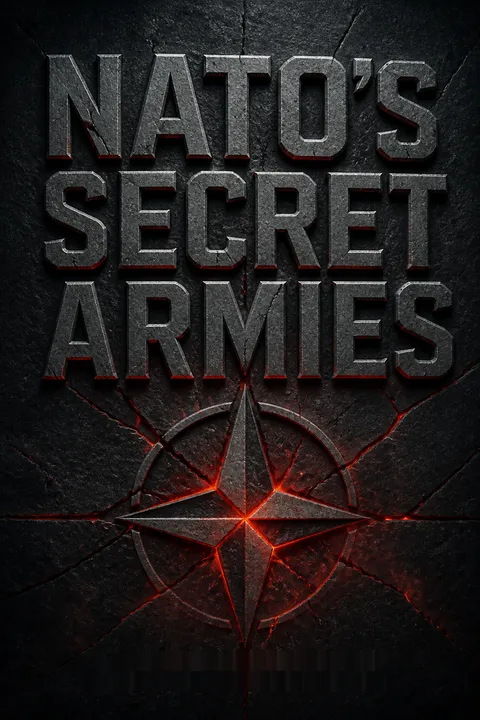
This book tells the story of NATO’s secret anti-Communist stay-behind armies that were set up by the CIA and MI6 after the Second World War in all countries of Western Europe and in some countries became tragically linked to right-wing terrorism.
Post-war necessity. Following World War II, Western European nations, with the backing of the US and UK, established clandestine "stay-behind" armies. These networks, coordinated by NATO, were designed to operate behind enemy lines in the event of a Soviet invasion, providing resistance, intelligence, and sabotage capabilities. The concept was a direct copy of the British Special Operations Executive (SOE) from WWII.
Widespread implementation. These secret armies, known as "Gladio" in Italy and by various other names elsewhere (e.g., "Absalon" in Denmark, "ROC" in Norway, "SDRA8" in Belgium), were established in all 16 NATO countries, and even had indirect links to neutral nations like Sweden, Finland, Austria, and Switzerland. Their existence was largely unknown to parliaments and populations, with only select high-ranking officials aware of their operations.
Strategic purpose. The primary, publicly stated purpose was to form a nucleus of resistance against a potential Soviet occupation, evacuating downed pilots, and disrupting enemy supply lines. However, a deeper, more controversial purpose emerged: to combat the perceived threat of strong Communist parties in Western European democracies, even in the absence of an invasion.
2. CIA and MI6: The Architects of Covert Anti-Communist Networks
The executive agents in the creation of the stay-behind networks were the Central Intelligence Agency (CIA) of the United States and the Secret Intelligence Service (SIS or MI6) of the United Kingdom.
Anglo-American initiative. The CIA and MI6 were the primary forces behind establishing these clandestine networks across Western Europe. They recruited individuals, provided training, and supplied caches of arms, ammunition, and communication equipment, often hidden in remote locations. This collaboration was rooted in shared anti-Communist objectives.
Operational coordination. These networks were coordinated internationally by secretive NATO bodies, specifically the "Allied Clandestine Committee" (ACC) and the "Clandestine Planning Committee" (CPC), both linked to NATO's Supreme Headquarters Allied Powers Europe (SHAPE). These committees, often dominated by US and British officers, oversaw the planning and execution of "unorthodox warfare."
Training and equipment. Leading officers of these secret armies received specialized training from elite units like the US Green Berets and the British SAS. They were equipped with advanced gear, including the "Harpoon" radio transmitters, capable of encrypted communication over vast distances, connecting the various stay-behind units across the Atlantic.
3. The "Strategy of Tension": Blaming the Left for Right-Wing Terror
The secret armies, as the secondary sources now available suggest, were involved in a whole series of terrorist operations and human rights violations that they wrongly blamed on the Communists in order to discredit the left at the polls.
Domestic subversion. In the absence of a Soviet invasion, the focus of some stay-behind networks shifted to internal political processes. They engaged in a "secret war" against left-wing political forces, particularly strong Communist parties in countries like Italy and France, which were seen as a threat to Western alignment.
False flag operations. A key tactic was the "strategy of tension," where right-wing extremists, often linked to the stay-behind networks, carried out acts of violence and terrorism. These attacks were then falsely attributed to Communist groups, aiming to spread fear among the population and discredit the left, thereby pushing public opinion towards more conservative, "stabilizing" governments.
Examples of alleged tactics:
- Bomb massacres in public places (Italy)
- Systematic torture of political opponents (Turkey)
- Support for right-wing coups (Greece, Turkey)
- Smashing opposition groups (Portugal, Spain)
This strategy aimed to "destabilize in order to stabilize," creating a climate where the state could justify repressive measures and maintain a firm anti-Communist stance.
4. Italy's Gladio: Deep Entanglement in Massacres and Political Manipulation
Figures of a war, with no parallel in any other European country.
Unprecedented violence. Italy's post-war history, particularly from 1969 to 1987, was marked by an extraordinary level of political violence, with 491 deaths and 1,181 injured. This period, known as the "Years of Lead," saw numerous massacres initially blamed on the left, but later linked to right-wing extremists and state security apparatuses.
Gladio's exposure. The existence of Italy's secret army, code-named Gladio, was confirmed in 1990 by Prime Minister Giulio Andreotti, following investigations by Judge Felice Casson. Casson's work revealed that Gladio, a sub-branch of the military secret service (SIFAR/SID), was linked to NATO and the CIA, and had collaborated with right-wing groups like Ordine Nuovo in terrorist acts.
Key incidents:
- Peteano car bomb (1972): Blamed on Red Brigades, later proven to be a right-wing attack using C4 explosive, covered up by police.
- Piazza Fontana massacre (1969): 16 killed, 80 injured; blamed on Communists, but later linked to right-wing groups and alleged CIA support.
- Bologna railway station bombing (1980): 85 killed, 200 injured; one of Europe's largest terrorist attacks, also linked to right-wing extremists.
These operations aimed to create a "strategy of tension" to prevent the powerful Italian Communist Party (PCI) from gaining governmental power, with former Italian counterintelligence head General Giandelio Maletti testifying that the CIA "may have made use of right-wing terrorism" for this purpose.
5. Coups and Brutality: Gladio's Role in Greece and Turkey
The most important actions of the Special Warfare Department were the three military coups.
Greece's "Gladio coup." In Greece, the secret army, known as the Hellenic Raiding Force (LOK) or "Operation Sheepskin," was deeply involved in the 1967 military coup d'état. This coup, based on the NATO-designed "Prometheus plan," saw the LOK take control of the Defence Ministry and arrest over 10,000 political opponents, leading to a brutal dictatorship characterized by torture. The CIA, through its station chief Jack Maury, was heavily implicated in supporting the junta.
Turkey's Counter-Guerrilla. Turkey's secret army, the "Counter-Guerrilla," operated under the "Special Warfare Department" (OHD), heavily influenced and funded by the CIA. This unit, drawing recruits from the ultra-nationalist Grey Wolves, was linked to widespread torture, massacres, and assassinations throughout the 1970s. The Counter-Guerrilla was directly involved in the 1971 and 1980 military coups, with US officials reportedly celebrating the latter.
State-sanctioned terror. Both in Greece and Turkey, the stay-behind networks were not merely defensive but actively engaged in suppressing political opposition through extreme violence.
- Greece: Torture chambers, blacklisting of opponents, and manipulation of elections.
- Turkey: Assassinations of journalists and activists, false flag operations (e.g., 1955 bomb in Thessaloniki), and later, brutal campaigns against the Kurdish minority.
These cases highlight how the anti-Communist mandate of Gladio-style operations could be twisted to support authoritarian regimes and undermine democratic processes.
6. The Pervasive Lack of Democratic Oversight and Accountability
The growth of Intelligence abuses reflects a more general failure of our basic institutions.
Executive secrecy. The core of the Gladio phenomenon lay in its absolute secrecy, often extending beyond parliamentary and even governmental knowledge. Prime Ministers, Defence Ministers, and other high-ranking officials in various countries claimed ignorance or were only partially briefed, with the networks operating under strict "need-to-know" principles.
Parliamentary impotence. Despite revelations and public outcry, parliamentary investigations were often hampered by stonewalling from intelligence services and governments.
- Belgium: Generals refused to disclose names of agents, citing NATO secrecy, leading to humiliation for the parliamentary commission.
- Italy: Crucial documents on massacres and Gladio disappeared from archives.
- Germany: Initial investigations into the BDJ-TD network were suppressed, and later governmental reports downplayed the extent of the issue.
"Babushka doll" structures. Secret armies were often hidden within military intelligence services, which themselves were often opaque. This layered secrecy made oversight nearly impossible, allowing these units to operate with impunity and without accountability to the democratic institutions they were ostensibly meant to protect.
7. The Silence and Denials of NATO, CIA, and MI6
The CIA can neither confirm nor deny the existence or non-existence of records responsive to your request.
Official stonewalling. Upon the initial revelations in 1990, NATO, the CIA, and MI6 consistently denied involvement or refused to comment, citing "military secrecy." NATO initially issued a categorical denial, only to retract it the next day with a terse statement about not commenting on such matters.
FOIA failures. Freedom of Information Act (FOIA) requests filed by researchers and even European parliamentary commissions (e.g., Italian Senate, Austrian government) to the CIA regarding Gladio were met with standard refusals, citing exemptions related to national defense and intelligence sources and methods. This effectively shielded the US government from accountability.
Contradictory statements. Despite official denials, evidence of CIA and MI6 involvement emerged from various sources:
- Former CIA Director William Colby's memoirs detailing his role in setting up Scandinavian stay-behind networks.
- Imperial War Museum exhibition in London confirming MI6's "stay-behind" preparations.
- Testimonies from former agents and military officials in various European countries.
The persistent refusal to acknowledge or provide information fueled suspicions that these agencies had much to hide regarding the networks' activities and their links to terrorism.
8. The "Breschnew Doctrine of Washington": Limited Sovereignty in Western Europe
Operation Gladio was the Breschnew doctrine of Washington.
Erosion of sovereignty. The existence and operations of NATO's secret armies revealed a subtle but profound limitation on the sovereignty of Western European nations during the Cold War. While Eastern European countries faced overt Soviet control (the "Brezhnev Doctrine"), Western European democracies experienced a covert form of external influence, primarily from the US and UK.
US dominance. The US, through the CIA and its command over NATO's military structures (like SHAPE and the SACEUR), exerted significant control over these networks. This influence extended to dictating anti-Communist policies, even when they contradicted the democratic will expressed through elections, as seen in Italy and Greece.
Secret protocols. Allegations of secret NATO protocols, requiring member states to establish anti-Communist security authorities and even allowing US intervention in domestic unrest without host government consent, further underscore this limitation of sovereignty. These protocols were denounced by figures like French President Charles de Gaulle as infringements on national independence.
9. A Legacy of Fear and the Unresolved Questions of State Terrorism
Where the manipulation and the violence originate from and where they lead to, is at times very difficult to dissect.
Unanswered questions. Despite extensive investigations in some countries, many questions surrounding Gladio remain unresolved. The full extent of foreign intelligence involvement in domestic political manipulation and terrorism, the identities of all agents, and the precise chain of command for violent operations are still largely shrouded in secrecy.
The spiral of violence. The "strategy of tension" employed by some Gladio networks, which involved creating fear and blaming it on political opponents, highlights a dangerous precedent. This manipulation of public fear for geopolitical ends has echoes in later conflicts, including the "War on Terrorism," where narratives of fear are used to justify military actions.
Lessons for democracy. The Gladio scandal serves as a stark warning about the dangers of unchecked executive power and the erosion of democratic oversight over intelligence and military operations. It underscores the critical need for transparency and accountability to prevent state-sponsored violence and manipulation, ensuring that democratic institutions truly serve the people.
Review Summary
NATO's Secret Armies by Daniele Ganser examines Operation Gladio, CIA and MI6-backed stay-behind networks in Western Europe during the Cold War. Reviews praise the book's comprehensive country-by-country analysis drawing from parliamentary reports, though many criticize the poor English translation, repetitive structure, and lack of primary sources. Readers note the book documents false-flag terrorism, political manipulation, and recruitment of far-right extremists including former Nazis. Critics question Ganser's methodology and conspiracy theory associations, while supporters consider it essential reading for understanding Cold War European history and democratic erosion.
People Also Read


Download PDF
Download EPUB
.epub digital book format is ideal for reading ebooks on phones, tablets, and e-readers.








































