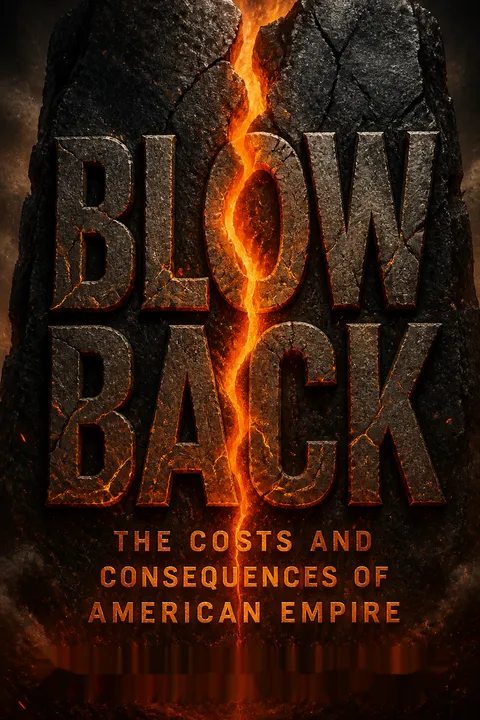

Key Takeaways
1. The Unacknowledged American Empire
But only when we come to see our country as both profiting from and trapped within the structures of an empire of its own making will it be possible for us to explain many elements of the world that otherwise perplex us.
Global dominion. The United States maintains a vast, yet largely unacknowledged, global empire, particularly evident in East Asia. This empire is not built on traditional colonial conquest but on a network of military bases, economic dependencies, and political influence, often masked by comforting euphemisms like "indispensable nation" or "global leadership." This pervasive presence shapes international relations and domestic policy in ways most Americans fail to grasp.
Military footprint. At the core of this empire are hundreds of thousands of American troops stationed on over sixty-one major base complexes in nineteen countries, with the total number of installations exceeding eight hundred globally. These bases, often established during the Cold War, continue to operate long after their original strategic justifications have vanished, serving as tangible symbols of American power projection and de facto occupation. For instance, Italy, a close ally, hosts numerous US bases, yet the idea of Italian bases on American soil is unthinkable.
Cold War origins. This imperial structure emerged from the Cold War, where the US, much like the Soviet Union in Eastern Europe, established satellite states in East Asia. These dependencies, including Japan and South Korea, were cultivated through military protection, economic aid, and preferential market access, all designed to counter communism. This historical context is crucial for understanding the enduring nature of America's global commitments and the complex web of relationships that define its unacknowledged empire today.
2. Blowback: The Unintended Consequences of Empire
The term “blowback,” which officials of the Central Intelligence Agency first invented for their own internal use, is starting to circulate among students of international relations. It refers to the unintended consequences of policies that were kept secret from the American people.
Secret operations' fallout. Blowback describes the unforeseen and often violent repercussions of covert operations and imperial policies hidden from the American public. When innocent civilians become victims of retaliatory strikes, they are unable to understand the sequence of events that led to it, as the original actions were shrouded in secrecy. This ignorance prevents a proper understanding of global events and hinders effective policy-making.
Manifestations of blowback. Blowback can take various forms, from direct terrorist attacks to economic destabilization and the erosion of democratic values at home. Examples include:
- The 1988 Pan Am flight 103 bombing, seen as retaliation for a US raid on Libya.
- The 1993 World Trade Center bombing and subsequent attacks, linked to US support for Afghan mujahideen against the Soviets, who later turned against their former patrons.
- The epidemic of cocaine and heroin use in American cities, fueled by drug trafficking by US-supported Central and South American military officers.
A nation reaps what it sows. While individuals usually understand the consequences of their actions, nations often do not, especially when imperial acts are kept secret. The American people may not know what is done in their name, but those on the receiving end—from Iran (1953) to Chile (1973) to Afghanistan (1979)—surely do. This creates a reservoir of resentment that inevitably leads to future retaliations, often striking innocent Americans who are unaware of the historical context.
3. Military Overreach and Civilian Disconnect
For any empire, including an unacknowledged one, there is a kind of balance sheet that builds up over time. Military crimes, accidents, and atrocities make up only one category on the debit side of the balance sheet that the United States has been accumulating, especially since the Cold War ended.
Human cost of presence. The extensive global deployment of US military forces frequently results in tragic incidents involving foreign civilians, generating profound outrage and resentment. These are not isolated events but a recurring pattern, often ignored or downplayed by American officials. The lack of accountability for US personnel, shielded by "extraterritoriality" clauses in agreements like the Japan-U.S. Status of Forces Agreement (SOFA), exacerbates feelings of injustice among host populations.
Examples of impunity:
- Okinawa (1995): The gang rape of a twelve-year-old Okinawan girl by US servicemen, followed by Admiral Richard C. Macke's callous remark, "For the price they paid to rent the car, they could have had a girl."
- Italy (1998): A Marine Corps jet cut a ski-lift cable, killing twenty people. The pilots were exonerated in a US court-martial, despite evidence of reckless flying.
- Okinawa (ongoing): Thousands of crimes, including sexual assaults and traffic accidents, committed by US servicemen, often with minimal accountability or compensation for victims.
Beyond civilian control. The US military's vast global footprint and its operational autonomy increasingly place it beyond effective civilian oversight. This disconnect allows for actions that undermine diplomatic efforts and human rights, such as the Special Operations Command's Joint Combined Exchange Training (JCET) program, which trains foreign militaries in "foreign internal defense"—often a euphemism for state terrorism—without congressional or State Department scrutiny. This unchecked power fuels resentment and future blowback.
4. Economic Hegemony and Its Costs
I believe the profligate waste of our resources on irrelevant weapons systems and the Asian economic meltdown, as well as the continuous trail of military 'accidents' and of terrorist attacks on American installations and embassies, are all portents of a twenty-first-century crisis in America’s informal empire...
Wasteful military spending. The maintenance of America's global empire incurs immense economic costs, often at the expense of domestic priorities. Profligate spending on irrelevant weapons systems, such as the F-22 fighter jets or nuclear-attack submarines, drains trillions of dollars from the national budget. This military-industrial complex, deeply entrenched in Washington, prioritizes arms races with no participants and perpetuates a cycle of demand for new, expensive equipment, regardless of actual defense needs.
Hollowing out industries. The economic arrangements of the American empire, particularly the "export-led growth" model imposed on East Asian satellites during the Cold War, have had devastating consequences for American industries. By sacrificing domestic manufacturing to maintain alliances and provide open markets for foreign goods, the US experienced a "hollowing out" of key sectors like steel, textiles, and automobiles. This led to job losses, stagnant wages for many American workers, and the decline of inner cities, a form of blowback seldom recognized as such.
"Sympathy budget" and dependency. The US extracts significant financial contributions from its allies, such as Japan's "omoiyari yosan" or "sympathy budget," which covers a substantial portion of the costs of US bases. This arrangement, while financially beneficial to the Pentagon, creates a dependency that prevents allies from asserting independent foreign policies. The overall cost of maintaining the empire, including military spending and trade deficits, has created an unsustainable economic burden, leading to "imperial overstretch" that threatens long-term American prosperity.
5. The Cold War's Lingering Grip
World politics in the twenty-first century will in all likelihood be driven primarily by blowback from the second half of the twentieth century—that is, from the unintended consequences of the Cold War and the crucial American decision to maintain a Cold War posture in a post–Cold War world.
Outdated structures. Despite the collapse of the Soviet Union in 1991, the United States has imprudently chosen to maintain and even strengthen its Cold War alliances and military posture. This decision, rather than adapting to a new global landscape, has perpetuated anachronistic arrangements and generated new forms of blowback. The US continues to deploy vast military forces globally, often justifying their presence by inventing nebulous "threats" like "instability" or "power vacuums."
New justifications for old policies:
- NATO expansion: Eastward expansion of NATO, partly to sell arms to former Soviet bloc countries, provokes Russia and then uses that reaction to justify further expansion.
- East Asian alliances: Maintaining 100,000 troops in Japan and South Korea, ostensibly for "stability," despite the absence of a comparable military threat.
- "Deterrence by example": Intervening in conflicts like Somalia or Kosovo to show resolve, often with ineffective or counterproductive results, as seen in the humanitarian disaster in Kosovo.
Ignoring historical lessons. The US seems to have forgotten the lessons of its own history, particularly the "domino theory" that justified the Vietnam War. By clinging to a Cold War mindset, it fails to recognize that many of the problems it now faces are direct consequences of its past actions. This ideological rigidity prevents the US from pursuing more prudent and diplomatic solutions, instead relying on military force as its primary tool of foreign policy.
6. East Asia: A Crucible of Imperial Blowback
The enrichment of East Asia under the cover of the Cold War was surely the most important, least analyzed development in world politics during the second half of the twentieth century. It remains to this day intellectually indigestible in the United States.
Okinawa's enduring burden. Okinawa, a tiny Japanese island, bears a disproportionate burden of the American empire, hosting 75% of US military facilities in Japan. Decades of military presence have led to:
- Environmental degradation: Soil erosion, coral reef damage, and toxic contamination from military activities.
- Noise pollution: Constant aircraft noise disrupting daily life and education.
- Economic stagnation: Bases occupying prime land, hindering tourism and local development, despite claims of economic benefit.
- Social friction: Crimes by servicemen, extraterritoriality, and a deep sense of injustice among Okinawans.
South Korea's suppressed history. The US played a critical role in shaping South Korea's authoritarian past, supporting dictators and suppressing democratic movements.
- Cheju massacre (1948): US-backed regime slaughtered tens of thousands of dissident peasants.
- Kwangju uprising (1980): US tacitly approved the military's brutal suppression of pro-democracy demonstrators, killing hundreds.
- Operational control: The South Korean army remains under the operational control of a US general, fueling anti-American sentiment.
China's complex re-emergence. US policy towards China is fraught with contradictions, oscillating between "engagement" and "containment."
- Taiwan Strait: US arms sales to Taiwan and military posturing exacerbate tensions, despite China's legal claim to the island.
- Human rights hypocrisy: Selective criticism of China's human rights record, while ignoring abuses by US allies, undermines American credibility.
- Trade imbalances: US demands for China to adopt American-style capitalism ignore China's successful state-guided development model, leading to massive trade deficits and "systems friction."
These examples illustrate how US imperial policies in East Asia have generated profound resentment, instability, and long-term challenges that continue to shape regional and global politics.
7. The Perils of "Globalization" and Financial Manipulation
The world economy needs leadership to re-create something comparable to the Bretton Woods agreement of 1944 to 1971, with fixed exchange rates and controls over the movement of capital.
The 1997 Asian financial crisis. This crisis was not merely an economic downturn but a direct consequence of the US-led "globalization" campaign, which pushed East Asian economies to deregulate and open their financial systems. This exposed them to "hot money" and speculative attacks by international financiers, leading to:
- Currency devaluations: Currencies like the Thai baht and Indonesian rupiah plummeted, making foreign debts unpayable.
- Bankruptcies: Companies with high debt-to-equity ratios, typical of the Asian developmental model, quickly collapsed.
- Economic devastation: Millions plunged into poverty, and decades of economic gains were wiped out, as seen in Indonesia where half the population fell below the poverty line.
The IMF as an imperial tool. The International Monetary Fund (IMF), dominated by the US and its allies, acted as a "covert arm of the U.S. Treasury." It imposed harsh austerity measures and demanded fire sales of national assets to foreign investors, effectively dismantling the "Asian model" of capitalism. This was not about economic recovery but about asserting American economic primacy and forcing global adherence to its free-market ideology.
"Vulture capitalism" and resentment. The crisis allowed American companies to acquire valuable assets in East Asia at "fire-sale" prices, leading to accusations of "vulture capitalism." This exploitation, coupled with the triumphalist rhetoric of American leaders, generated deep resentment among affected nations. The failure to acknowledge the role of US policies in causing the crisis and the insistence on further deregulation have created an "anti-globalization time bomb" that threatens future global economic stability.
8. Erosion of Democratic Values at Home
Even when blowback mostly strikes other peoples, it has its corrosive effects on the United States by debasing political discourse and making citizens feel duped if they should happen to take seriously what their political leaders say.
Lack of transparency. The secrecy surrounding imperial operations abroad directly undermines democratic accountability at home. When the public is kept ignorant of covert actions, it cannot hold its leaders responsible for the consequences. This lack of transparency debases political discourse, making it difficult for citizens to trust official narratives or understand the true motivations behind foreign policy decisions.
Executive overreach and militarism:
- Presidential power: The executive branch increasingly bypasses Congress and international law in foreign interventions, as seen in President Clinton's cruise missile strikes against Sudan and Iraq, timed to divert attention from impeachment proceedings.
- Military autonomy: The US military, now an all-volunteer, mercenary force, operates with increasing autonomy, prioritizing its own corporate interests over broader national goals. This fosters militarism, where military solutions are favored over diplomatic ones, and the armed forces become separated from the society they are supposed to serve.
Hypocrisy and moral authority. The selective application of American values, such as human rights, exposes deep hypocrisy. The US criticizes other nations for abuses while ignoring or even endorsing similar actions by its allies (e.g., Turkey's treatment of Kurds, Pinochet's atrocities in Chile). This undermines America's moral authority on the global stage and makes its pronouncements on democracy and human rights seem disingenuous, further eroding trust both at home and abroad.
9. The Illusion of Indispensability
American officials and the media talk a great deal about “rogue states” like Iraq and North Korea, but we must ask ourselves whether the United States has itself become a rogue superpower.
Self-proclaimed exceptionalism. The belief in America as the "indispensable nation" or "lone superpower" fosters a dangerous hubris, leading to unilateral actions and a disregard for international norms. This self-perception, often articulated by officials like Madeleine Albright, suggests that the US is uniquely virtuous and possesses superior foresight, justifying interventions without international consensus or legal sanction.
Rogue superpower behavior:
- International Criminal Court: The US vehemently opposed the establishment of an international criminal court, demanding immunity for its personnel, effectively placing itself above international law.
- Landmine ban: The US refused to sign the Ottawa Treaty banning antipersonnel landmines, citing "special global responsibilities" and military needs, despite widespread international support and the devastating civilian toll of these weapons.
- Unilateral force: The increasing reliance on military force and "economic bullying" over diplomacy and multilateral institutions, as demonstrated by interventions in Yugoslavia or the handling of the Asian financial crisis.
Imperial overextension. This hubris ensures imperial overextension, as the US feels compelled to intervene everywhere, regardless of vital interests. The notion that withdrawing US forces would create dangerous "power vacuums" or lead to nuclear proliferation (despite evidence like India and Pakistan's tests occurring with US forces widely deployed) is a self-serving justification for maintaining global hegemony. This illusion of indispensability prevents the necessary adjustments to a multipolar world, making a crisis of empire inevitable.
10. A Call for Prudence and Adjustment
The United States should seek to lead through diplomacy and example rather than through military force and economic bullying.
Rethinking global engagement. To avoid further blowback and the eventual unraveling of its empire, the United States must fundamentally reorient its foreign policy. This requires abandoning the hubris of global hegemony and embracing a more prudent, modest, and diplomatic approach. The current path of perpetual police actions, wars, and bailouts is unsustainable, both economically and morally.
Concrete steps for reform:
- Adjust to China: Recognize China's re-emergence as a major power and seek accommodation rather than containment.
- Korean Peninsula: Establish diplomatic relations with North Korea and withdraw ground forces, supporting peaceful reunification.
- International cooperation: Pay dues to the United Nations, support global economic diversity over forced "globalization," and sign treaties like the landmine ban and the International Criminal Court.
- Military re-evaluation: Re-emphasize "defense" in the Department of Defense, reduce nuclear arsenals, and declare a no-first-use policy.
- Economic fairness: Extricate from trade-for-military-bases deals, establish minimum-wage levels for goods exported to the US market, and advocate for a new Bretton Woods-like system with fixed exchange rates and capital controls.
Embrace humility. The US must understand that its efforts to maintain imperial hegemony inevitably generate multiple forms of blowback. History offers few examples of declining hegemons giving up power peacefully, but the Soviet Union's collapse serves as a cautionary tale. By leading through diplomacy and example, prioritizing citizen welfare over imperial pretensions, the US can foster creativity and growth globally, rather than perpetuating instability and resentment.
Review Summary
Blowback examines U.S. foreign policy's unintended consequences, focusing primarily on East Asia. Written before 9/11, Johnson argues America maintained an outdated Cold War imperial stance through military bases and interventions, creating resentment abroad. He details U.S. involvement in Japan, Korea, Okinawa, and China, highlighting economic manipulation through institutions like the IMF and support for dictatorships. Reviewers praise Johnson's expertise and prescient warnings about inevitable retaliation, though some criticize his anti-American bias and limited geographic scope. Most find it essential reading for understanding why foreign populations harbor anti-American sentiment and how imperial overreach undermines U.S. security.
People Also Read








Download PDF
Download EPUB
.epub digital book format is ideal for reading ebooks on phones, tablets, and e-readers.








































