

Plot Summary
The Ad That Changed Everything
Julie Gerchak, a twelve-year-old girl burdened by her mother's alcoholism and a sense of impending doom, stumbles upon a strange newspaper ad: "Teacher seeks pupil. Must have an earnest desire to save the world." The ad ignites a spark in her, offering a glimmer of purpose amid her chaotic home life. Driven by curiosity and a longing to matter, Julie visits the address, only to discover a telepathic gorilla named Ishmael. This encounter marks the beginning of a transformative journey, as Julie's earnestness and stubbornness convince Ishmael to take her on as a pupil, despite his initial reluctance. The ad, seemingly simple, becomes the catalyst for a profound exploration of civilization, culture, and the possibility of saving the world.
Julie Meets the Gorilla
Julie's first meeting with Ishmael is both surreal and unsettling. She is confronted not only by the physical presence of a thousand-pound gorilla but also by his ability to communicate directly into her mind. Ishmael's initial resistance to teaching a child is overcome by Julie's persistence and her genuine desire to understand what's wrong with the world. Their dialogue quickly moves beyond superficialities, as Ishmael challenges Julie to articulate her fears and her sense that something is fundamentally wrong with human society. This chapter establishes the unique teacher-student dynamic that will drive the narrative, blending skepticism, vulnerability, and the beginnings of trust.
Daydreams of Escape
Julie confides in Ishmael her recurring daydream: escaping Earth to learn from alien civilizations how to live without destroying their worlds. This fantasy reveals her deep-seated anxiety about environmental collapse, violence, and the apparent hopelessness of human nature. Ishmael uses her daydream as a diagnostic tool, uncovering the roots of her despair and her belief that wisdom must be found elsewhere. Through gentle questioning, he helps Julie see that her longing to "get out of here" is a symptom of a culture that has lost its way—a culture that teaches its children to fear the future and doubt their own worth.
The Maieutic Teacher
Ishmael introduces Julie to the concept of maieutic teaching: the art of drawing out what is already latent within the pupil, rather than imposing knowledge from above. He explains that both she and his other pupil, Alan Lomax, are products of "Mother Culture," the invisible force shaping their beliefs and assumptions. Ishmael's method is to ask probing questions, guiding Julie to uncover the stories and myths that underpin her worldview. This approach empowers Julie to become an active participant in her own education, setting the stage for the deconstruction of civilization's most cherished narratives.
Mother Culture's Voice
Ishmael reveals the pervasive influence of Mother Culture, the collective voice that tells people who they are, what is possible, and what is inevitable. Through media, education, and tradition, Mother Culture instills the belief that humanity is fundamentally flawed, that suffering is natural, and that the world is a place of scarcity and competition. Julie begins to recognize how deeply these messages have shaped her own thinking, from her sense of helplessness to her assumptions about history and progress. This chapter exposes the unconscious stories that keep people trapped in destructive patterns.
The Great Forgetting
Ishmael challenges Julie's understanding of human history, exposing the "Great Forgetting"—the erasure of hundreds of thousands of years of sustainable living by tribal peoples. Civilization's story claims that all humans abandoned foraging for farming ten thousand years ago, but in reality, only a small subset—the Takers—made this shift. The rest continued living as Leavers, in harmony with the world. This revelation undermines the myth of inevitable progress and exposes the lie that civilization's way is the only way. Julie is stunned to realize that wisdom and sustainability are not lost to the stars but are present in humanity's own forgotten past.
Leavers and Takers
Ishmael introduces the distinction between Leavers (tribal peoples who live within the limits of nature) and Takers (civilized peoples who seek to control and dominate the world). Through parables and analogies, he shows how the Takers' decision to "lock up the food"—to control agriculture and property—set them on a path of endless expansion, competition, and environmental destruction. The Leavers, by contrast, developed cultures and laws that allowed them to live sustainably for millennia. Julie begins to see that the crisis of civilization is not a flaw in human nature but a consequence of a specific cultural choice.
The Dance of Agriculture
Ishmael tells Julie the story of Terpsichore, a planet where people discovered that by "dancing" (cultivating their favorite foods), they could make life easier. Some danced a little, some a lot, but eventually, one group decided to dance all the time, producing surpluses and locking up the food. This led to social hierarchies, population booms, and the conquest of neighbors. The parable illustrates how the shift from part-time to total agriculture created the conditions for inequality, conflict, and the loss of freedom. Julie sees how this "dance" continues in modern civilization, driving the relentless growth that threatens the planet.
The Prison of Civilization
Ishmael and Julie explore how the Taker way of life has become a prison, maintained by education, law, and economic systems that force people to participate in a destructive culture. Schools are revealed as mechanisms for keeping young people off the job market and preparing them to be obedient workers, not independent thinkers. Laws are designed to be broken, ensuring a constant supply of criminals to punish. The economy concentrates wealth in the hands of a few, while most people live in fear and insecurity. Julie recognizes that the prison is sustained by the stories people tell themselves—and that escape requires new stories.
The Myth of Human Flaw
Ishmael exposes the myth that humans are inherently flawed, greedy, and doomed to misery. He shows Julie that this belief serves to absolve people of responsibility for the failures of their culture, shifting blame to "human nature" rather than the specific choices of civilization. By examining animal behavior and tribal societies, Ishmael demonstrates that humans are not uniquely destructive; rather, it is the Taker story that leads to unsustainable living. Julie is challenged to imagine a world where people are not prisoners of their own self-contempt, but capable of change.
The Tribal Solution
Ishmael guides Julie to see that the solution to civilization's crisis lies not in returning to the past, but in reclaiming the principles that allowed tribal societies to thrive: shared wealth, mutual support, and laws that heal rather than punish. He explains that tribal life is not utopian or perfect, but it works for people as they are, without requiring them to be better than they have ever been. Julie learns that real wealth is not material accumulation, but security, belonging, and freedom from fear. The tribal model offers a blueprint for a new kind of revolution—one based on voluntary wealth, not voluntary poverty.
The Education Trap
Julie and Ishmael dissect the true purpose of modern education: not to awaken young minds, but to regulate the flow of workers into the economy and ensure conformity. Schools teach obedience, suppress curiosity, and fill time with useless information, leaving graduates with no survival skills and no choice but to participate in the Taker system. Ishmael contrasts this with the effortless, interest-driven learning of tribal societies, where children become competent adults by imitating and participating in real life. Julie sees that meaningful education is possible—but only outside the prison walls.
Revolutionaries and Rememberers
Ishmael reveals that his pupils are not just students, but "rememberers"—bearers of a message that must be carried beyond the walls of the prison. Each pupil receives a different telling, shaped by their own needs and capacities. Julie is entrusted with a special mission: to remember and share the story of what has been lost and what can be regained. Through her, Ishmael hopes to spark a new revolution—not of violence or ideology, but of imagination and possibility. The true work is to change minds, one story at a time.
The Gift of Story
Julie learns that the stories people tell—about history, human nature, and the future—shape what is possible. Ishmael encourages her to become a storyteller, using parables and analogies to reveal hidden truths and challenge cultural assumptions. When faced with a diplomatic mission to Africa, Julie draws on this skill to persuade a skeptical official, demonstrating the power of narrative to open doors and change hearts. The gift of story becomes Julie's inheritance, a tool for healing and liberation.
The Mission to Africa
Julie is sent on a mission to the Republic of Mabili in Africa, tasked with securing a home for Ishmael in the wild. Navigating bureaucratic obstacles, cultural misunderstandings, and her own fears, she discovers the complexity of power, loyalty, and trust. Her success depends not on authority or force, but on empathy, adaptability, and the ability to see through others' eyes. The journey becomes a rite of passage, marking Julie's transition from pupil to agent of change.
Letting Go of Ishmael
As Ishmael prepares to return to Africa, Julie faces the pain of separation and the challenge of carrying on without her mentor. She learns that true teaching is not about dependence, but about empowering others to become teachers themselves. Ishmael's departure is both an ending and a beginning, forcing Julie to confront her own capacity for courage, creativity, and leadership. The act of letting go becomes an act of faith in herself and in the possibility of a different future.
The New Tribal Revolution
Julie and Ishmael envision a revolution not of violence or ideology, but of countless small experiments in living differently. The New Tribal Revolution is not a return to the past, but a creative adaptation of tribal principles to modern life: voluntary association, shared support, and the freedom to invent new ways of being together. The revolution will not be led by governments or institutions, but by ordinary people reclaiming their power to shape their own destinies. Julie sees that the future is not predetermined, but open to those willing to imagine and build it.
Waiting for the World to Change
Julie's story ends with a period of waiting—waiting for the world to be ready for new stories, new possibilities, and new ways of living. She reflects on the lessons learned, the gifts received, and the work still to be done. The revolution is slow, uncertain, and often invisible, but it begins with a single mind changed, a single story told. Julie's journey is a testament to the power of hope, the necessity of patience, and the enduring possibility of transformation.
Analysis
Daniel Quinn's My Ishmael is a radical reimagining of the coming-of-age story, using the unlikely relationship between a young girl and a telepathic gorilla to interrogate the deepest assumptions of modern civilization. At its core, the book is a meditation on the power of story: the stories we inherit, the stories we tell ourselves, and the stories we dare to invent. Quinn's central argument is that the crisis of civilization is not a flaw in human nature, but the result of a specific cultural narrative—the Taker story—that has led humanity to dominate, exploit, and ultimately endanger the planet. By contrasting this with the Leaver story, Quinn offers a vision of hope: that it is possible to reclaim the wisdom of tribal societies, not by returning to the past, but by inventing new forms of community, support, and meaning. The book's lessons are both urgent and timeless: that real wealth lies in security, belonging, and freedom; that education should awaken, not suppress; and that change begins with the courage to imagine and tell new stories. In an age of ecological crisis and cultural fragmentation, My Ishmael challenges readers to become revolutionaries—not through violence or ideology, but through the quiet, persistent work of remembering, teaching, and dreaming a different world into being.
Review Summary
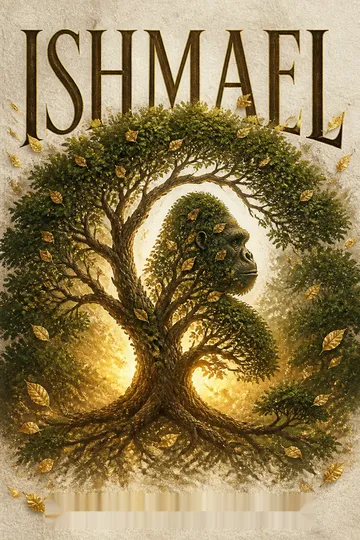
My Ishmael is the sequel/parallel story to Daniel Quinn's Ishmael, featuring dialogue between a 12-year-old girl named Julie and the philosopher gorilla Ishmael. Reviews are polarized: supporters praise its thought-provoking questions about modern civilization, education, and sustainability versus tribal "Leaver" cultures. Critics find the dialogue stiff and unrealistic for a child, complain Quinn offers no practical solutions, and note awkward writing choices. Common criticisms include weak narrative structure and Quinn's refusal to provide concrete answers beyond "find your own way." Many recommend it despite flaws for stimulating critical thinking about society's direction.
People Also Read






Characters
Julie Gerchak
Julie is a twelve-year-old girl whose life is marked by instability, loneliness, and a burning desire to make a difference. Her mother's alcoholism and her own sense of alienation drive her to seek meaning beyond the confines of her world. Julie's psychological journey is one of awakening: from passive victim to active seeker, from student to storyteller, from child to agent of change. Her relationship with Ishmael is both challenging and nurturing, as she learns to question everything she has been taught and to trust her own capacity for insight. Julie's development is a testament to the resilience of the human spirit and the transformative power of education.
Ishmael
Ishmael is a telepathic gorilla who serves as both mentor and provocateur. His role is to guide his pupils—first Alan Lomax, then Julie—through a process of unlearning the myths of civilization and rediscovering the wisdom of tribal life. Ishmael's teaching style is maieutic, drawing out what is latent in his students rather than dictating answers. He is deeply empathetic, yet unafraid to challenge and confront. Psychologically, Ishmael embodies the archetype of the outsider, the one who sees what others cannot. His own journey is marked by loss, exile, and the hope that his message will survive through his pupils.
Alan Lomax
Alan is Ishmael's other pupil, an adult whose educational background and life experience contrast sharply with Julie's. He is earnest but often rigid, struggling to let go of his dependence on Ishmael and to become a teacher in his own right. Alan's possessiveness and inability to release his mentor serve as a cautionary counterpoint to Julie's growth. His eventual transformation—sparked by Ishmael's disappearance and presumed death—demonstrates the necessity of loss and separation in the journey toward maturity and agency.
Art Owens (Makiadi Owona)
Art is a key ally in Ishmael's escape to Africa, leveraging his connections and experience to navigate the complexities of international bureaucracy and African politics. His relationship with Julie is marked by mutual respect and a shared commitment to Ishmael's well-being. Art's psychological profile is shaped by his dual identity as an African and an American, a naturalist and a revolutionary. He embodies the possibility of bridging worlds and finding practical solutions to seemingly intractable problems.
Lukombo Owona (Luk)
Luk is Art's half-brother and a government official in the Republic of Mabili. His loyalties are divided between family, power, and self-preservation. Luk's interactions with Julie reveal the complexities of trust, negotiation, and cultural misunderstanding. Psychologically, he represents the challenges of leadership in a world marked by corruption, suspicion, and shifting alliances.
Mokonzi Nkemi
Nkemi is the president of the Republic of Mabili, a figure whose cooperation is essential to Ishmael's return to the wild. He is motivated by vanity, political calculation, and a desire for recognition. Nkemi's psychological makeup is shaped by the realities of power in a postcolonial African state, where survival depends on balancing competing interests and seizing opportunities for personal gain.
Julie's Mother
Julie's mother is a secondary but significant presence, her struggles with alcoholism and depression casting a shadow over Julie's early life. Her gradual recovery and return to stability mirror Julie's own journey toward agency and hope. Psychologically, she represents the generational wounds and possibilities for healing that run through the narrative.
Glen and Kitoko
Glen, an American expatriate pilot, and Kitoko, his Zairean partner, assist Julie in her journey through Africa. They embody the practical, everyday alliances that make survival and success possible in a complex world. Their relationship with Julie is marked by warmth, humor, and a shared sense of adventure.
Rachel Sokolow
Rachel is Ishmael's long-time friend and supporter, whose death precipitates his need to leave his home. Though largely offstage, her presence is felt as a source of stability, generosity, and continuity. She represents the unseen networks of care and remembrance that sustain the work of transformation.
Mother Culture
Not a character in the traditional sense, Mother Culture is the collective voice of civilization, shaping beliefs, values, and possibilities. She is both nurturing and oppressive, offering comfort while enforcing conformity. Psychologically, she represents the internalized narratives that define identity and limit imagination.
Plot Devices
Maieutic Dialogue
The narrative is structured around the Socratic method, with Ishmael guiding Julie through questions and analogies rather than lectures. This device empowers the pupil to become an active participant in her own education, fostering critical thinking and self-discovery. The dialogue format also allows for the gradual deconstruction of deeply held beliefs, making space for new stories to emerge.
Parables and Analogies
Ishmael frequently employs parables—such as the story of Terpsichore, the dance of agriculture, and the fable of the gray horse—to illustrate complex ideas and challenge cultural assumptions. These stories serve as mirrors, enabling Julie (and the reader) to see familiar patterns in unfamiliar contexts. The use of analogy bridges the gap between abstract theory and lived experience.
The Double Narrative
The narrative unfolds alongside the story of Alan Lomax, Ishmael's other pupil, whose journey is both similar to and different from Julie's. This device allows for the exploration of multiple perspectives, highlighting the diversity of responses to Ishmael's teachings. The contrast between Julie and Alan underscores the importance of individual agency and the dangers of dependence.
The Mission Structure
Julie's journey to Africa provides a concrete goal and a test of her growth. The mission structure introduces elements of suspense, negotiation, and cultural encounter, grounding the philosophical dialogue in real-world stakes. The quest motif also serves as a rite of passage, marking Julie's transition from pupil to agent.
Foreshadowing and Recursion
The narrative is rich with foreshadowing, as Julie's early anxieties and daydreams anticipate the challenges and revelations to come. Recurring motifs—such as the desire to escape, the longing for belonging, and the power of story—create a sense of coherence and inevitability, while also inviting the reader to imagine alternative futures.
The Blind Spot
Ishmael introduces the concept of the cultural blind spot: the inability to question what is taken for granted. The narrative device of the blind spot allows for the gradual unveiling of hidden assumptions and the possibility of seeing the world anew. This device is central to the book's project of cultural critique and transformation.
Ishmael Series Series

About the Author
Other books by Daniel Quinn
Download PDF
Download EPUB
.epub digital book format is ideal for reading ebooks on phones, tablets, and e-readers.








































